Riskier Risk

It has been a minute since I last wrote about the game of Risk, the classic table-top wargame.

Now I’m back with a new take on the game: Catastrophic dice rolls.

Context

In the game of Risk, commanders (the players) know immediately and iteratively how well their armies are doing in combat. Using dice, no more than two units at a time can be removed from either side, while the math tends towards a 1:1 loss of units on both sides (slight advantage to the attacker). Between losses, an attacker can choose to preserve their forces at any time, stopping the wanton destruction of armies.

If only real war were so charming.

After reading military histories by author Rick Atkinson, it came to my attention how quickly even the most advantageous of battles can devolve into a debacle of incredible losses before commanders and generals are aware of what’s happening. Risk hardly lives up to its namesake, as while single army groups tend towards dozens of units, only two are at risk at any time.

A Problem

Losing one or two units over and over again is, well, tedious. Dice need to be rolled, compared, units removed, and dice rolled again until someone gives up or is eliminated.

Speaking from experience, a problem with Risk is how long it takes to play. (I don’t seem to be alone in this regard.) The dice rolling and one-two unit removal certainly plays a part in exacerbating the situation.

Thereby Risk is neither very accurate historically or quick.

Let’s stab at a fix to both those problems.

Riskier Rolls

In place of capping losses at one or two units, the dice themselves offer a way to increase the variance of the battles.

Normal Risk rules have the attacker rolling up to three dice against up to two defender dice. The highest dice are compared (up to two), any others discarded. Whichever player has the lower die in each comparison loses a unit (attacker loses ties).

It first came to mind that all values might be added together then compared, the difference being applied as losses to the lower-valued player. This is bad because it involves addition and subtraction. (More mental math in games is a hard no-go.)

Math is also a problem if the difference between individual dice is used. (Say, rolls of 6 and 4 are compared; 6-4=2, or 2 units lost, but that is still too much math from the original game.)

A method without extra math, and the most satisfying of our criteria of historical accuracy and fewer, faster rolls, is this:

Compare dice normally for the rules of Risk. Remove a number of units from the lower-value-die player equal to the value of the higher-die player.

So say an attacker rolls a 6-2-1 and a defender rolls a 5-4. The dice comparisons are 6v5 and 2v4 (the attacker’s 1 is discarded). Using the risker rolls rule, the first comparison requires the defender to remove six units; the second has the attacker remove four.

With all removals of units for a roll happening at the same time, an attacker’s advantage can quickly evaporate or a defender’s line be broken in but a single roll.

With riskier rolls, units are removed at pace, battles become decided in a fraction of the time, math remains minimal, only a single rule is changed from the base game, and more accurate swings of fortune get injected into the base experience that is Risk.

I’d count that as a positive 😉

Riskier rolls rules! Gosh, I’m a sucker for alliteration ~

I’ve given these a swing with friends, and the feel is *French kiss*. More playing is required though, so give these rules a chance in your own games of Risk.

Let me know how your games go! Here’s to all the games you’ll enjoy ~ Cheers.

BITS – Vehicles

To prove that the tabletop role-playing system BITS can handle everything, this post introduces the use of vehicles on adventures!

Now, let’s make a distinction between “vehicles” (generic) and the already-covered “ships” and “mechs” (specific). Yes, all vehicles/ships/mechs share the same mechanics and 0 through 4 tiers of effect, but the flexibility of including all things that allow travel carries its own nuance described below.

Tonnage and Tech

The first ways to classify how vehicles can effect BITS dice rolls is to group tiers based on vehicle tonnage or tech-level.

Tonnage would have tier 0 being below the weight of standard vehicles, such as animals and people. Each tier above is a magnitude greater in weight, 1 perhaps being cars, 2 trucks, 3 tanks, etc.

Tech tiers differentiate on the generation of machine. 0 might be a horse cart, 1 a Model T, 2 the modern car, 3 a battle tank, and 4 a next-generation jet plane.

Tonnage and tech have been covered in detail already (BITS ships and mechs, respectively), so check out these classification systems there.

Kind

Is the vehicle small? Armored? Airborne? Super-sized? Perhaps not a vehicle at all, but infantry or a building?

These are the “kinds” or “types” of capabilities a vehicle has when dealing with vehicle-sized objects. (Recall punching up or down sizes-of-magnitude has disadvantages and advantages.)

0 holds the place of masses of unarmored infantry or support teams. 1 has light vehicles and mechanized/mobile infantry. 2 carries the tanks and heavy armor. 3 shows off jets and helicopters. 4 rounds out with ships, titanic earth-movers, i.e. hulks that carry all the rest. Using this variation also unifies tiers of scale into one all-playable 0-to-4 set of metrics to keep track of.

Inspired by how the game Starcraft deals with unit sizes, vehicle tiers based on the kind of vehicle offers a lot of flexibility for fictional game context and rule introduction while maintaining sensibility (such as that infantry shouldn’t shoot down capital ships, at least easily!).

Cost

For those games with a larger emphasis on economy, vehicles can be assumed to be more useful by how much they cost (ie the difficulty of attainment).

Tier levels have to maintain their magnitude differences, but adding a few zeros to the tiers allows for rapid rebalancing of vehicle use. 0 say is <$1000, 1 between that and <$100K, 2 <$1 million, 3 <$100 million, and 4 being anything $100 million or more.

For example, a Ferrari and an armored humvee would be on tier 2 (both about $300K). However, where a Ferrari is fast, agile, and sleek, a humvee has ballistic plates and space for guns and passengers, yet neither floats like a boat.

Distinctions of what a vehicle can do begs use of special rules.

Everything Else: Special Rules

There is more to vehicles than their BITS tiers. A tier 1 implies only how good a vehicle is at its function, but the “1” lacks what that function is. Special rules provide that definition and make vehicles distinct.

Rules for vehicles should be common where they can, such as does it fly in the sky, sail on water, or drive over ground, is it heavy or light or of moderate frame. Uncommon rules ought to be especially concise and attached to any description of the vehicle itself to keep unnecessary information at bay until needed.

Getting more specific can be useful on a case-by-case basis (e.g. does it glide, hover, float, push with a jet, or pull with a ram scoop when it flies), but unless called for or the vehicle is especially unique, trust that players know a horse might be ridden, a car driven, boats float, and that a helicopter doesn’t need a runway.

These examples so far have covered the travel capacities of vehicles. Here are a few more options:

    • How does the vehicle deflect, absorb, or otherwise neglect bullets?
    • How long can it go without refueling?
    • Does it have weapons? Which ones and where are they? Do they have firing arcs? How long will ammo hold out?
    • Can the vehicle explode if damaged?
    • How many people can it carry as passengers? Is there a safety system? Cargo?
    • Any special skills to operate it?
    • Where can this vehicle fit?

Plainly, sky’s-the-limit as it comes to the rules that could apply to a vehicle. But as a design pillar of BITS, discretion is advised. Simple rules only need to be added (and even ignored) when required with a little insight and creativity.

And that’s how you bring vehicles into a BITS game! No longer restricted to human-scale walking and running and fighting, gameplay can expand with planes, trains, and automobiles (or their contextual equivalents).

Someday I’ll get this into a BITS guide. Before I do, which grouping – kind, cost, tonnage, or tech – is your favorite? (I’m a “kind” guy myself ~)

As always, deeply appreciate your feedback. Cheers!

BITS – Mechs

Are you interested in using mechs – giant robot fighting machines – in a table-top role-playing game? Good news! The BITS engine is modular enough for that.

With the short details below, multiple fictional universes that have mecha will provide real examples of adapting those properties to BITS.

How Mechs Work

Mechs, like ships, have a threat tier 0 through 4 that indicates their ability to act in the world. However, while ships typically use tonnage to class battlefield dominance, mechs rely on the context of the fictional universe.

For example, a tier system that represents leaps in technological understanding may have additional benefits rather than a system that represents adding more-of-the-same technological level to the body of the mech (this is the same with ships). Specific examples of tech and tonnage are included in the next section.

When a player acts as a mech, add the mech’s tier to a 2D6 roll. When acting against a mech, roll higher than that mech’s threat tier. For example, a tier 3 mech acting against a tier 2 must roll 9 or more (threat tier 2) with 2D6 and may add 3 to the roll.

Depending on the fictional context, tiers may also show how many extra smaller actions the mech may take. These smaller actions may be either defensive or of more minor consequence, but again, it’s a decision that needs context. (I’m still ironing out the value of different kinds of actions.)

A mech otherwise behaves as any other fictional Being in BITS. (This includes the use of Body as a hull and engine, Interaction as a sensory and weapon dexterity, Thought as targeting and computation, and Specialty for whatever role the mech is fitted out to do!)

Pilots

The human component driving the giant robot, mechs may have pilots. Pilots are Beings that allow a robot to move and fight.

Some mechs may require more than one pilot (Power Rangers, Pacific Rim, etc.). Some mechs may be autonomous or controlled remotely.

Pilots may enter through a cockpit hatch, the head, the feet, or other means to control the robot. Pilots might be able to eject or transform their robot.

Whatever the case, determining if a pilot can control a mech depends on the context of the fiction.

Size

Things human-sized are of an immense scale less than the machines they operate. If conventional vehicles are considered a magnitude above human-scale, mechs are at least that if not a magnitude above the vehicle scale.

If a mech is the size of a large vehicle, it would be considered a single size class above human-scale. Any Being of human-size would have naturally be at a disadvantage against these mechs.

For example, these would be the exosuits from the movie Avatar and the walkers from The Matrix Revolutions.

However, if a robot is truly giant, a human-sized Being cannot do anything against the mech that would do damage without very specialized tools (think ‘rocket launcher’ or ‘tow cable’). Being so huge, a person, without the correct equipment, taking action against a mech would at most get the mech-pilot’s attention. (The pilot then could choose to step on said offender.)

For example, Power Rangers, Pacific Rim, Neon Genesis Evangelion, Gundam, and virtually all places giant-monster kaiju appear are on a scale above even the most armored of vehicles.

Special Considerations

Special rules to consider are few for mechs. Mainly as flavor-adding tidbits, a fictional robot in BITS mechanically follows the rolling and resolutions as any vehicle or organic body.

But, as any BITS game expands to fit the needs of the context and no more, mechs may have special rules added on a case-by-case basis. A single mech may be able to fly or jump, there could be ejection seats for pilots, all mechs may have a fuel or heating element similar to their inventory or health status.

What does appear in mecha throughout fiction is the kind of weapons used. Such fall into four categories (excluding ‘none’, of which the robot would be unarmed except for its momentum and girth):

    • Missiles/Rockets (dumb or smart, things that can be shot down and go boom)
    • Kinetic/Ballistic (a chunk of metal traveling very fast)
    • Energy (lasers, fire, electricity, particles)
    • Melee (close-range brawling devices like blades, claws, and clubs)

Tier Examples in Fiction

Tier 0

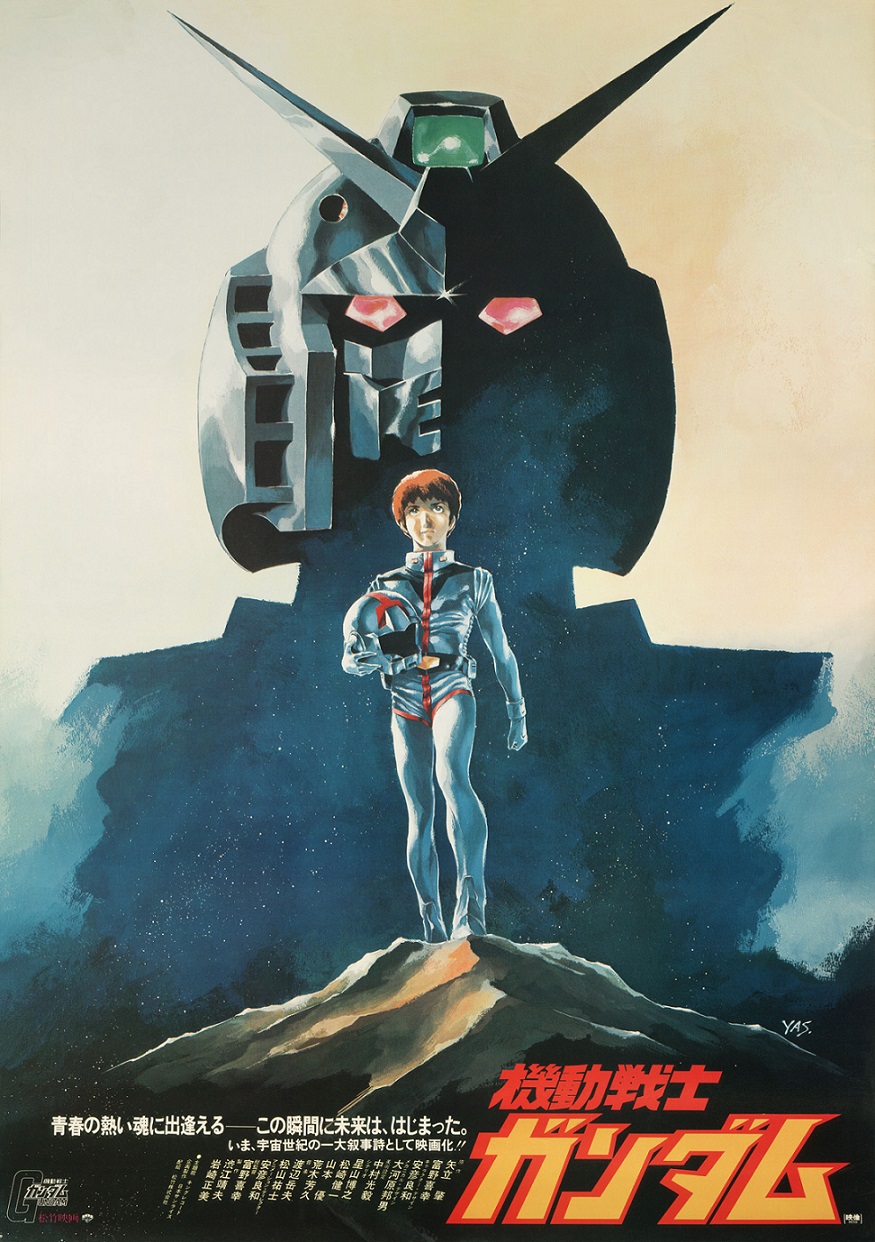
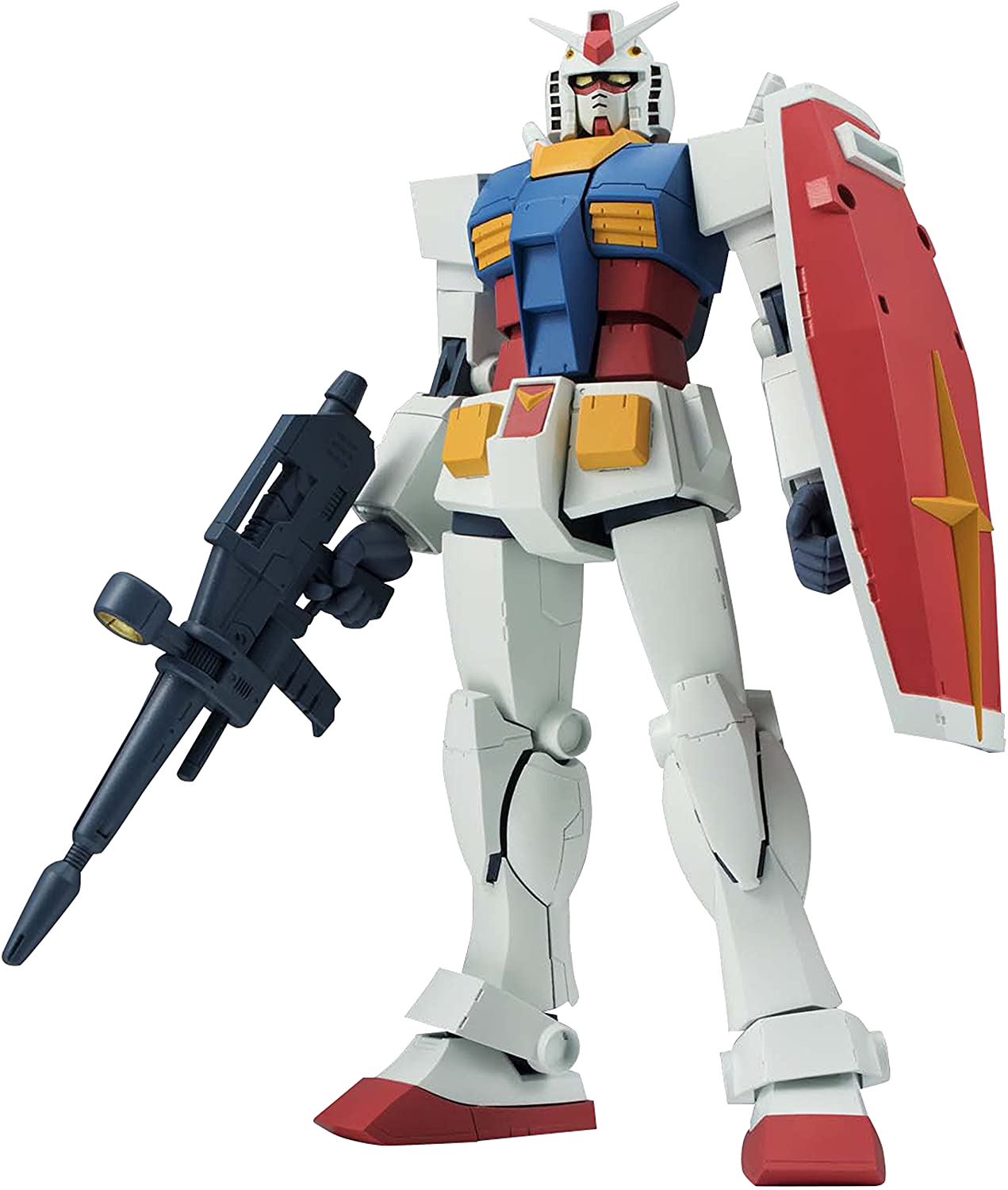
Gundam Poster

The genre-setting Mobile Suit Gundam is all about giant robots, but its recognizable tanks and jet planes are T0 through and through. They are the ‘generation previous to mech warfare.’

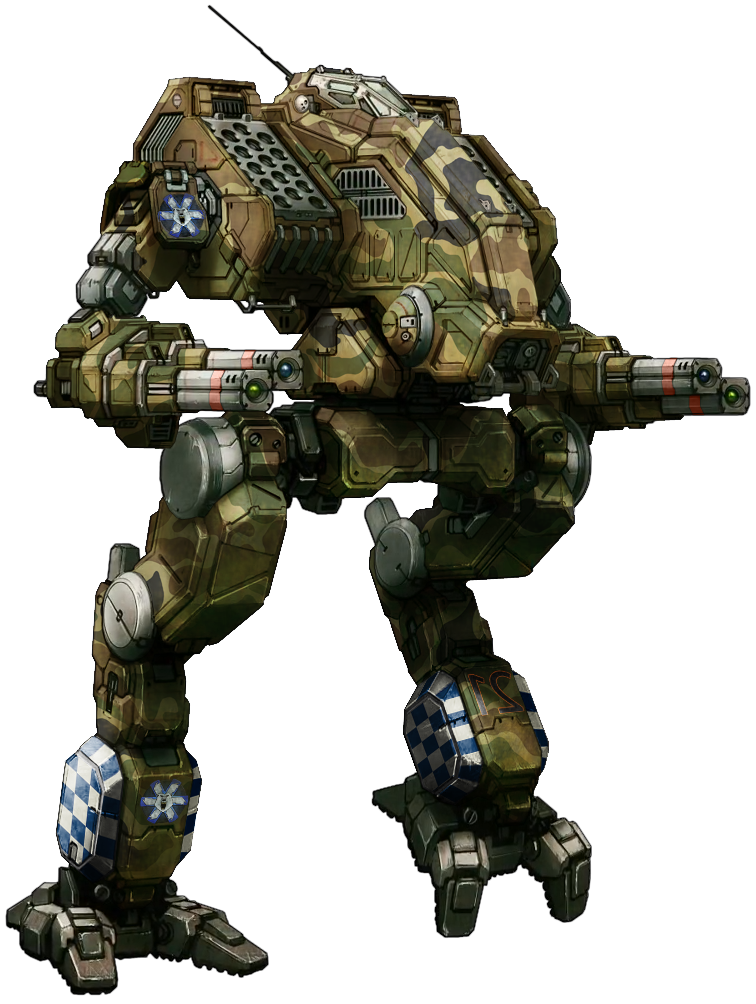
A universe like MechWarrior / BattleTech also has planes and tanks, which are classic T0 when compared to mechs.

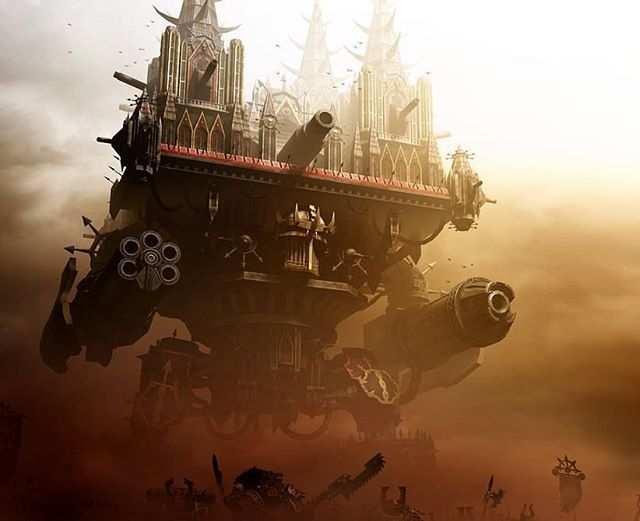
In the grimdark of the Warhammer 40K setting, everything is taken to the extreme. That’s why mainstay Knight walkers would qualify as T0 when they are in fact mechs.

Tier 1

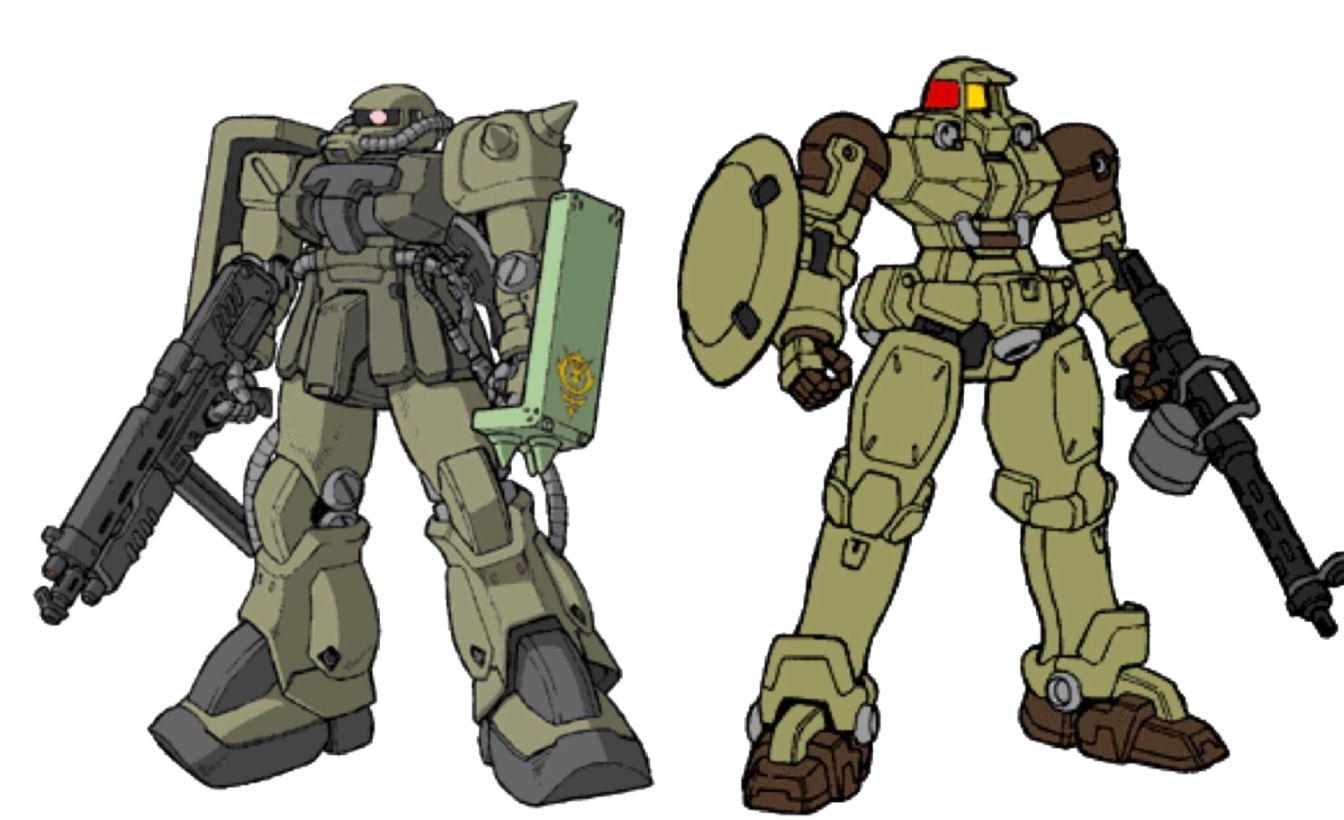
Gundam‘s many series would introduce their first generations of mecha suits here. From Leos to Zakus to Guntanks, these are the foundation that proved mechs were the next phase of military hardware.

Zaku & Leo

When it comes to a technologically-stagnant IP like MechWarrior, T1 is the lowest, ‘Light’ tonnage. Super-heavy tanks can fill a T1 role, but that’s about it.

The same respect to tonnage fits with the Warhammer 40K setting. The smallest of the mighty Titan classes, a Warhound-class Scout armed with two weapon mounts, is T1 along with super-heavy tanks (a single Titan-class weapon mount if any) and the largest of Knights (though these latter likely at a disadvantage).

When technology does not evolve, classifications of mechs relies on size and capability, as ships do.

Tier 2

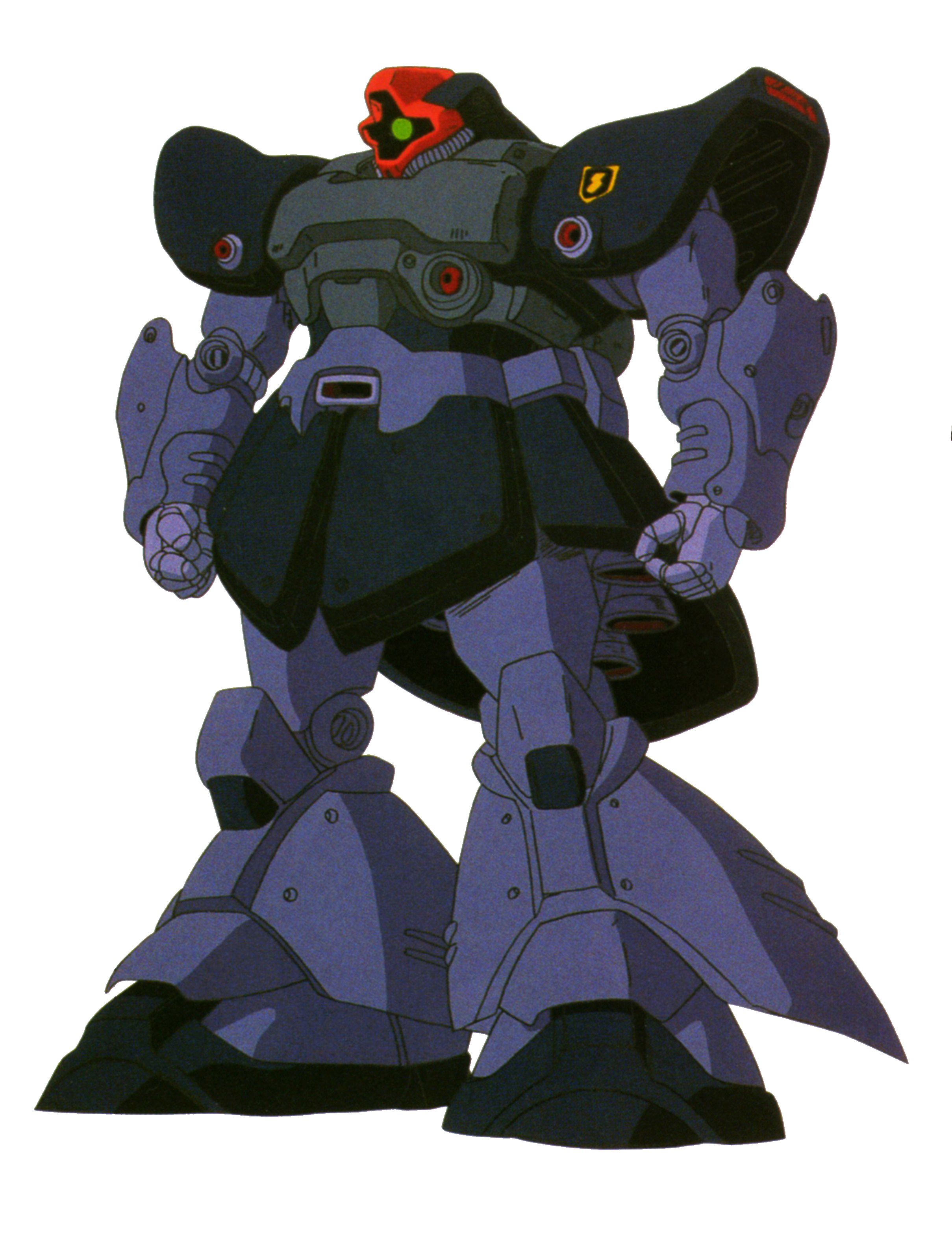
Rick Dom

Another generation of tech in the Gundam universe means GMs and Rick Doms and Dolls arrive. These can be brought down by their T0 predecessors, but it’ll be a fight!

Warhammer 40K brings to bear the middling Reaver Titan, some five-stories tall and wielding three weapons.

Tier 3

The titular Gundam of Gundam – a step above the mainline mechs used in armies with its own heroic special rules. Included would be mass-production Mobile Armors (a combination of speed, lethality, and defense) and mechs meant to counter a Gundam’s ability like the Virgo II.

It makes sense BattleTech Heavy mechs like the Mad Dog appear here with gauss rifles and cannons.

WH40K escalates size and ability again with the Warlord Titan.

For a similar almost-fantasy example, the lesser-known Zoids franchise shows off huge bio-mechs like the Iron Kong.

Gundam
Mad Dog (aka Vulture)

Tier 4

A wrecking-tier of robots:

Gundam shows off advanced suits like Wing Zero – which destroys entire battle groups – to boss-level super-massive Mobile Armors the equivalent of multiple divisions (Big Zam, Apsaras III).

+100-ton Assault mechs in BattleTech plate the most armor, the heaviest weapons, and strike fear into any encounter. (The death’s-head Atlas being one such beast.)

Imperators in 40K are walking fortress-cathedrals that carry a company of troops just to prevent enemies from scaling the heights of its legs.

Mech species in Zoids cap out with the gargantuan sky-borne Whale King, land-battleship Ultrasaurus, and the Godzilla-like Death Saurer.

Imperator Titan
Atlas

There we are – mechs for use in BITS.

These rules are easily adapted to organic monsters as well (Godzilla, Attack on Titan, etc.), and that’s the benefit of BITS: flavor the system to what’s being played, because it caters any play.

How would you improve the use of mecha in a role-playing game? What universal principles specific to mechs did I miss?

Whatever your playstyle is, have fun out there! Cheers.

BITS – Ships

BITS – the roleplaying game system – is all about themes. Carrying off of last week’s theme of groups in BITS, I’ve been able to think awhile on how different kinds of actors in BITS work together.

So today: How ship-sized vehicles in space and on the water interact with each other.

How Ships Work

Ships have a threat tier that indicates their size:

0 – Fighters, boats.
1 – Corvettes, frigates.
2 – Destroyers, cruisers.
3 – Battleships, carriers.
4 – Dreadnoughts, city-ships.

When acting as a ship, add the ship’s tier to a 2D6 roll (or appropriate BITS value, if so inclined!). When acting against a ship, roll higher than that ship’s threat tier. For example, a tier 3 battleship acting against a tier 2 destroyer must roll 9 or more (threat tier 2) with 2D6 and may add 3 to the roll.

Tiers also show how many extra smaller actions the ship may take. These smaller actions may be either defensive or of more minor consequence. (I’m still ironing out the value of different kinds of actions.)

A ship may hold inside it smaller ships that are 2 threat tiers below it, and/or multiple groups of ships 3 or more tiers below. For example, a tier 3 carrier may hold 1 tier 1 corvette and/or multiple groups of tier 0 fighters.

A ship otherwise behaves as any other fictional Being in BITS. (This includes the use of Body as a hull and engine, Interaction as a sensory and communications capability, Thought as targeting and computation, and Specialty for whatever role the ship is fitted out to do!)

Tier Examples

Tier 0 fighters and boats exist only as groups when interacting with higher-tier ships. Tier 0 can be subdivided into interceptors, bombers, dropships, and others. Subdivisions of tier 0 ships are differentiated with simple rules.

For example, a Star Wars X-Wing would be a heavy fighter with critical roles against single ships automatically destroys the other ship (representing a proton torpedo exploding). A Gundam Ball is incredibly cheap, but cannot travel without a carrier though is useful for ship repair. A Chinook helicopter serving with the United States Navy is slow, but can carry supplies, a platoon of troops, or gunship weapons.

Tier 1 ships include dedicated troop carriers, freighters, and smaller warships. Individual capabilities are defined per ship, such as being able to travel between worlds or systems.

For example, the Star Wars Millennium Falcon is a very fast cargo freighter. Expanse‘s Rocinante packs freight, troops, and torpedoes with high maneuverability (and fits into the Donnager tier 3 battleship!).

Tier 2 destroyers and cruisers can carry a boat or small fighter group to support operations. Ships called “cruisers” (Star Trek Romulan D’deridex) and “destroyers” (Star Wars Star Destroyer) are often tier 3 battleships and carriers in their abilities.

For example, a USN destroyer may have a vulcan cannon to have advantage defending against missiles and fighters while having a mine-laying helicopter. Star Trek Galor cruisers have a large forward cannon, multiple weapon arrays, and high speed, but can be taken out by swarms of fighters or beefier battleships.

Tier 3 represents the battleships, carriers, and hybrids that bring the largest hurt and the largest number of forces to play.

For example, the Imperial Japan Yamamoto battleship had defensive and offensive advantage against any other ship on the water. The Star Wars Star Destroyer could field squadrons of tier 0 TIE fighters, capture a tier 1 Tantive IV blockade runner, land an army of troops and supplies, and bring massive guns to bare. Many Star Trek variants of the Enterprise flagship were on-par with battleships, fielding multiple torpedo launchers, heavy shields and armor, and even fighters and personnel shuttles.

Tier 4 ships are awe-inspiring, all-commanding giants. For the most part unassailable, tier 4 ships get to do what they want to do until a lucky action halts their progress.

For example, Star Wars has the Executor dreadnought that only by a lucky suicide and very poor design was brought down. The Expanse has the literal Behemoth city-/generation-/flag-ship capable of holding a fleet inside it. Star Trek brings to mind Borg Cubes that single-handedly can wipe out armadas. Even the universe of Frank Herbert’s Dune has Heighliners as the only mega-vehicles capable of interstellar travel, taking entire planetary populations from place to place.

Bonus Topic: Stations

Space stations or naval dockyards work the same way as the ships they house. Stations use similar groupings:

0 – Buoy, small communications satellite, mine, sounding station.
1 – A station with limited docking and housing capabilities. The International Space Station.
2 – A regional yard or asteroid base. Halo‘s orbital defense platforms can handle cruiser-sized craft but none larger.
3 – A strategic hub of resupply and production of battleship-tier craft. Deep Space 9 from Star Trek caters to multiple battleships and support vessels. Stargate Atlantis has Atlantis, which may count as a tier 4 station (there’s some techno-magic that makes classification fuzzy).
4 – A massive complex meant to be bringing forth armadas and entire fleets. Star Trek‘s Spacedock 1, Halo‘s High Charity, USN Norfolk Base.

A station may hold ships that have the same threat tier or below whether constructing or docking the ship. The station may or may not have defensive or offensive means. If so, the station uses its threat tier for resolutions.

For example, a tier 0 listening post may detect ships approaching a tier 1 science station orbiting a moon. Tier 2 defense platforms may open fire and release a compliment of fighters so that a tier 3 space dock can muster battleships and carriers to fight. When all else fails, a distress signal summons reinforcements from the fleet HQ, a tier 4 mega-station.

Thought Behind Design

Inspired by shows like The Expanse and of course movies like Star Wars, I began to see patterns in how the large vehicles known as “ship” were treated in fiction (a class their own; another post later about vehicles later).

After experimenting with carriers (ships carrying smaller ships) and threat tiers, I am struck by how tightly the BITS treatment of ships above fits into naval considerations. From the real-world United States Navy, to modern space flight, to hard sci-fi in The Expanse, to the fantasies of Star Trek and Star Wars, a 0 to 4 threat tier system where some ships carry other ships seems to work really, really well!

So that’s the thought behind: Keep with the mechanics found throughout BITS, allow for all the classic naval designations, and thematically represent ships regardless of “universe” or IP they exist in.

Ready to play some BITS? I know I am 😁

Now to get these manuals taken care of and updated to 2021 standards!

What do you suggest for putting rulebooks together? What holes are there to sink this handling of ships? Let me know! Cheers to your gameplay ~

BITS – Groups

Back on BITS!

(A reminder: BITS is a proprietary Body-Interaction-Thought-Specialty game system for tabletop roleplaying games.)

This time, I’ve been thinking awhile on how to handle large groups. Since humans can only track about seven different things at a time, I thought it best to figure out how to make anything more than a small gathering feasible.

Solution

Members of a group have similar capabilities. Everything they do, they do together and at the same time.

Groups have a rating that indicates their size.

0 – An individual. Does not use group size.
1 – A gang or squad of ~10 or fewer individuals
2 – A company, century, or mob, ~100
3 – A demi-legion or town, ~1000
4 – An army or division, ~10k

Ratings also show how many extra actions the group may take.

When a group acts against another group, that action has advantage or disadvantage if the acted-against group is smaller or larger (respectively). For example, an individual 0 is always at a disadvantage when acting against a group 1+.

Certain actions committed by a group may have disadvantage or not be available at all. For example, a group would have disadvantage on being sneaky, or having a 10k army fit into a Manhattan apartment.

To resolve an action by or against a group, the threat tier of an individual member of the group. Different threat tiers should be grouped separately from each other.

A group has a state of health like any individual Being. However, when a group reaches 0 for their state, they break up into D6 (a dice roll of 1 to 6) of the next smallest group. That means a rating 4 10k group at 0 state breaks up into 1 to 6 rating 3 1000-member groups.

As a choice, when a group reaches 0 for state and breaks up into smaller groups, a second D6 may be rolled to give the new group a state 1 to 6 to represent the harm already taken.

Thought Behind

BITS is all about keeping things simple yet deep in what it can be used for. The system attempts to address a lot of the problems other systems run into, and handling large groups (“mobs”) has always been a sore point.

With the BITS use of groups, everything from street fights to clashing armies can happen with a solid dynamic between all engaged. Since BITS also handles social conflicts with the same mechanics as physical violence, inciting mobs or inspiring a legion can be accomplished with the group mechanics here.

It came to my attention that perhaps an individual shouldn’t be able to face down an army of 10K. But then I remembered the brutally brilliant (and violent) “Crazy 88’s” fight in Kill Bill – the player, as hero, ought to be able to have a try at beating the odds 😉

And that’s how BITS handles groups!

Will be sharing more BITS content over the next few weeks, including revisiting some sub-par implementations of the past.

If you’ve ideas on groups, share ’em! In the meantime, cheers to your play ~

BITS – Starcraft

This is Jimmy.

Jim Raynor

Greetings! Taking a break from heavier topics to write something light: A game!

Not just any game, but a roleplaying game set in Activision Blizzard’s Starcraft universe driven by my very own BITS engine. (Of course to note: I own no stake in the Starcraft IP owned solely by Activision Blizzard, nor to I may any claim on the IP. The following is personally for education and publicly for entertainment purposes only.)

This came to me over the course of two afternoon hours, cleaned up and expanded here for you! As a modest, very prototype design of a famous IP, it ought to serve to highlight how to bring a real-time computer strategy game to the role-playing world.

Tough talk, Jimmy, but I don’t think you have what it takes to be a killer.

Kerrigan, Queen of Blades

Who the Characters Are

Awaken, my child, and embrace the glory that is your birthright. Know that I am the Overmind, the eternal will of the Swarm, and that you have been created to serve me.

Overmind

Players take on the roles of the units available to a faction in Starcraft: the haughty Protoss, the ravenous Zerg, or the troubled Terrans.

Any character is a standard unit in the game that then may play alongside GM-controlled hero characters. “Standard” means the player starts in an early tier unit, someone not the weakest (unless compensated accordingly), but certainly leaving room for growth.

Starting units come in tiers. Within the tier roles, each character comes with or chooses their own gear and specialties. Not all factions start in the same tiers. A shortlist of examples:

    • Terrans – Either a regular human or a robot.
      • Tier 0 – Space Construction Vehicle (SCV) operator, equipped with an exo-suit that is really bad at combat, but can breakdown structures, repair machines, and build anything anywhere given enough time and materiel.
      • Tier 1 – Marine, armed with powerful rifle and powered armor, though is unable to pilot vehicles.
    • Zerg – A spawned monster of leathery wings or chitinous hide.
      • Tier 0 – Zergling, a nasty creature of teeth and claws that travels with other Zerglings due to their minor stature.
      • Tier 1 – A slithering Hydralisk, armed with massive scythes and spewed barbs, but is a slow target.
    • Protoss – Either a psychically attuned alien or their AI servants.
      • Tier 1 – Zealot, the frontline warrior armed with energy fields and two psychically-powered forearm blades.
      • Tier 2 – Dragoon assault walker pilot, trapped inside a metal shell bearing a massive photon cannon.

There are gives-and-takes for each selection: Slow but powerful, restricted in capability but excelling in what can be done, etc. Choosing both opens and closes options to get things done while on missions.

What Characters Do

I do this for Aiur.

Zeratul

Players take their characters on missions, either as one-offs or as part of a larger campaign with the consequences of previous actions influencing future contexts. Every mission has a single environment the characters operate in with a clear goal.

Different obstacles prevent accomplishing the mission goal. They range from sneaky sabotage to ruthless assault to cautious evacuation to stalwart defense against armies. How these things get accomplished is up to the players and what their characters are capable of doing.

A character can do things in relation to what tier they are. To execute an action that has a moderate amount of difficulty, a player must role at or above the difficulty level with two six-sided dice. The player then may add the applicable BITS value of their character to the action.

An example:

    • A Terran Marine character wants to shoot a Zergling before the ‘ling can get close enough to attack. The Zergling is Tier 0 which equals a difficulty of 7+ to do anything against them. The Marine must roll 7 or above. To help the Marine, they may add their BITS value of Interaction 1 (this value applies to shooting actions) to the roll.
    • The Marine rolls a 4. Even with 1 added, the Marine fails their action. The Zergling is now close enough to attack the Marine with sharp claws. The Marine is Tier 1, so the ‘ling requires a roll of 9+. The Zergling has a Body BITS of 2 that they can add to their physical action. Rolling a 7, the ‘ling adds 2, barely getting the 9 needed to carve into the Marine’s armor.

How and Why to Improve Characters

You must construct additional pylons.

Advisor

Characters ‘level-up’ when they try to do things and fail but survive. When a level-up happens, between missions, a player may choose any number of upgrades for their character that improve how the character operates. Players may also choose to re-equip their character into a new specialty.

Upgrades allow characters to succeed more often and survive at the cost of failing less, therefore slowing down how many upgrades are gained. Characters also receive rewards for accomplishing their missions. Better gear, more allies, stashes of materials, or other tactical or strategic advantage become available for use.

Any upgrade from the Starcraft video games can be used, though customization is encouraged. Example:

    • A Terran Marine doesn’t have the ability to lay mines in Starcraft, but in this roleplaying game, they may come to carry one on their back every mission.
    • A Zergling can use in-game upgrades to become faster (Metabolic Boost), jump higher (Raptor Strain), and attack multiple times at once (Adrenal Glands).
    • A Zealot can improve their recharging shield, but might also customize themselves to shoot psychic blasts or hover off the ground. 

With better gear, players may expand from their starting roles into more advanced roles and tiers. A Terran moves from combat armor to driving a powerful Siege Tank or flying a nimble Wraith Fighter. A Protoss warrior studies to become a Corsair or a hyper-powerful Archon. Zerg evolve into bat-like, acid-spitting Mutalisks or vile, contagious Defilers. These and more are the outcomes for courageous players.

Four Example Missions

I hunger for battle…

Fenix

Players choose characters and gear together. For ease of play, they all pick from the same faction. There are few decisions to be made in selecting a character at the beginning (name, gender, role, gear), so they begin the first mission right away.

Mission 1: Escape the Base

Nuclear launch detected.

Adjutant

The GM details the environment, what has happened up the the present moment, and what is happening. The GM does this at the start of every mission.

The characters must escape a base that is being attacked and overrun. There are multiple routes out of the base (aircraft, ground transports), but also non-player characters (NPCs) that could help as well as communications equipment that could call for help.

Tier 0 enemies are everywhere with a few Tier 1 challenges. Whichever route the players choose, a Tier 2 ‘boss’ must be overcome for the characters to escape. A Tier 4 ‘super’ enemy destroys the base behind the characters.

After the mission, the players take note of what they took from the base and any upgrades they have available.

Mission 2: Steal the Keys

I have returned.

Dragoon

The characters are stranded unless they get the encryption keys to a spaceship. The keys are kept in a well-guarded base that doesn’t know the characters are nearby.

There are multiple routes into and through the base, as well as different styles of play available: Sneak through the base to avoid Tier 0 and 1 patrols, direct assault at the front gate, cause a distraction outside the base, or disguise as part of the base’s inhabitants.

Whichever rout the players choose, they must escape the base with the keys.

After the mission, a player decides to change their character role based off of what happened in the mission.

Mission 3: To the Victor

(harse growl)

Kerrigan, Queen of Blades

The characters must secure a spaceship for themselves. The spaceship is on a space station. The characters are already on the station when an enemy raiding party attacks.

Battles happen throughout the station. There are multiple ways to get to the spaceship: Fight anyone encountered, run through any firefights, or sneak through the conflict. Extra rewards are on the station but are also where the heaviest enemy presence is.

Whichever route the players choose, they must make it to a spaceship and fly away.

A player character died during the mission. That player then chooses a new character to join the surviving characters, coming up with a plausible reason why that character is joining.

Mission 4: Space Race

Carrier has arrived.

Carrier

The characters must use their spaceship to defeat other spaceships to save evacuees from the invasion started in the first mission. NPCs are available to help with their own space fighters and ships, but need the direction of the characters.

Players may choose to fly fighters, operate spaceship cannons, coordinate friendly spaceships, board the enemy, or fight off boarders.

Whichever route the players choose, Tier 3 and 4 enemies are frequent. Before the mission succeeds, an enemy hero must be overcome as a final ‘boss.’

After the mission, players upgrade their characters. The NPCs who have joined as allies and rewards collected help the players decide what their next mission will be.

Tiers

Power overwhelming!

Archon

A partial list of units in their tiers per faction. BITS stats are given more or less in proportion to the tier of the unit.

TerranZergProtoss
T0:SCV, CivilianDrone, ZerglingObserver, Interceptor
T1:Marine, MedicHydralisk, ScourgeProbe, Zealot
T2:Vulture, GoliathMutalisk, QueenDragoon, Corsair
T3:Frigate, Siege TankOverlord, GuardianScout, Templar
T4:Battlecruiser, GhostUltralisk, DefilerArchon, Carrier
Heroes:General DukeBrood CerebrateFleet Arbiter
Sample Unit Tiers

The tiers ought to be altered to better reflect the “technology trees”

Dev Notes

We sense a soul in search of answers.

Arbiter

Actions have abstract ranges of effect. Some actions require a minimum distance, but all cap at a maximum distance. The types of distance include Melee (hand-to-hand), Close (line-of-sight shooting), Long (sniping), and Far (indirect). Other games present systems of abstract distances that can be adapted here.

The quantity of effect an action has is by default 1 for accomplishing the action. 1 additional quantity is added for each number rolled above the minimum challenge required for the action to succeed. Some equipment or actions have a higher default quantity (e.g. a Siege Tank would have more effect in shooting than a Marine’s rifle). Some actions are lower (e.g. a human fighting with only their un-augmented body is 0).

To iron-out absurdities such as a Marine (Tier 1) shooting down a Battlecruiser (Tier 4), a unit may only interact with one and only one tier above that unit or below. Two or more tiers above a unit’s tier cannot be interacted with in a harmful manner by that unit. If an action affects a tier above, the action is at disadvantage (i.e. the highest die in a roll changes to be the lowest die). If an action affects a tier below, the action is at advantage (i.e. the lowest die in a roll changes to be the highest die).

There are more high-tier Protoss units than Terran, but Protoss are fewer in number. There are more Zerg units than Terran, but Zerg are lower tier.

Terran (2 units)Zerg (4 units)Protoss (1 unit)
T0:10%30%10%
T1:30%30%20%
T2:30%20%40%
T3:20%10%20%
T4:10%10%10%
Frequency of Tiers and Units (the math isn’t balanced [yet])

The merging is complete.

Archon

And there it is! My brainstorm that leveraged inspiration when inspiration hit.

I hope you like it! This would be a prototype if played. With the BITS ruleset and the prebuilt Starcraft universe, a game could be played, and that’s what really matters!

What have you been playing? Care to give this a shot? The ruleset here will get you well on your way to enjoying your own space adventure! Cheers!

Writing: Halo 6

I must begin by confessing that the Halo series is a topmost favorite of mine (Halo 2 being my favorite game, no hesitation). My adoration may be because many of the games featuring the hero Master Chief have a consistent, 6-point story structure.

But not all games… Will Halo 6 be different?

Read the preamble to this post if you haven’t. A follow-up with the critique of Halo 4 and Halo 5 will help too, but this blog post aims to be self-sufficient. (No prior knowledge required!)

Below dives into how Halo 6 ought to lay out its story. There is another game coming out, Halo Infinite, that has Master Chief and a Halo, but it lacks / has changed oodles of other qualities outside of narrative that could associate it with previous titles.

Is Halo Infinite a replacement for the lack-luster performance of Halo 5? Is it the heir to the Halo Master Chief legend? I’ll make a post about it. For now, this blog does not consider Halo Infinite to be the sixth in line to accept Master Chief’s mantle, but a prelude to a Halo 6 sometime in the future.

Here’s to it:

What Halo 6 Is About

This is possibly the greatest speculation in this post. What, or who, is this game about?

Options

The original Halo trilogy (CE through 3) focused on themes of war, isolation, religion, and humanity’s place in the galaxy. Halo 4 is about Cortana (AI companion of Master Chief), Halo 5 is about assassin-cyborg Locke (newbie to the franchise cast in the most disparaged Halo story).

If Halo 6 is to conclude with a bang, we have a small suite of persons and themes that have the narrative heft to carry the Master Chief saga to its end:

  • Cortana (super-AI companion)
  • Forerunners (dead creators of the Halos)
  • Halos (titular superstructures that can kill all thinking life)
  • The Mantle of Responsibility (the philosophy and techno tools that a single species uses to assure galactic peace and guide lower species in their development)
  • Humanity (as a species, what will be done to survive and exploring what the evolutionary next step is)
  • Master Chief (super-cyborg)

That’s about it. The Covenant (genocidal alien theocracy) was destroyed in 5, the Banished (alien mercenaries who took the place of the Covenant) are too new to the saga (introduced in the main storyline for Halo Infinite), the Flood (life-absorbing parasites) are for the most part contained, and any supporting cast (i.e. alien ally Arbiter) are too weak as concepts to carry the story.

As for those things with heft, not all are best-fit. Cortana has been done before (Halo 4). Forerunners are long-dead and better described by the things they left behind: Halos and the Mantle of Responsibility. Halos are cool settings and plot devices, but even these are tools that serve the purpose of the Mantle.

The Mantle?

Now, the Mantle is a cool concept. It’s a savior-complex that the species that became the Flood held if not originally established. It drove the Forerunners to destroy ancient humanity and to build the life-ending Halos with the hope that sentience in the galaxy could recover after the Halos’ firing. It was supposed to be passed to humanity as lords of the stars, that fact causing the Covenant to wage holy war for decades, nearly driving humans to extinction. The last Forerunner survivor was unimpressed by humanity’s adoption of the Mantle so tried to wrest it back (events of Halo 4). Cortana betrayed Master Chief in Halo 5 for the Mantle, which as of now in the lore is owned by Cortana and those AI who swear allegiance to her.

The Mantle is the cause of virtually all problems in the Halo universe. But it’s an abstraction, a mode of thinking and the means to carry out one’s will. A strong tool, but perhaps not strong enough for the empathy required to close out the Halo franchise.

Humanity?

Then there’s humanity, [sic] genetic heirs to the Mantle. Humanity is petty, selfish, and full of possibility for doing Good things for itself and other species. But what will it do to protect itself from aliens who pillage and AI who now rule? Will the species learn from the mistakes of the Forerunners, or will humanity too hit a massive ‘reset’ to the galaxy to win a Pyrrhic victory?

Humanity is problematic because of both an inescapable genetic-superiority overtone (not politically correct) and being so malleable (what is being human?).

But what about a champion individual of the species? Someone who deals with the costs of victory, the questions of allies and enemies, of destiny, and explores what it is to be considered human? What about Master Chief?

Master Chief

Chief is a great option for being the focus of the final Halo game. It is Master Chief’s story from the very first moments in the very first title. Chief is a hero and demon, a warrior and monster, strong of mind and body and arms, and a person who is also loved regardless of his greatness and despite being so alone in experience. Chief has been the vehicle for delivering Halo‘s story. He’s a source of awe and empathy.

Master Chief is the best person for Halo 6 to revolve its story around. His issues, his relationships direct the themes. All else, be it humanity or the Mantle or otherwise, must follow his lead.

Context: Theme Among Other Games

The previous Halo titles each internalize and exemplify the 6-point structure of:

  1. Greet the Hero (Halo CE as a whole represents this) 
  2. Fight Off and Crash (Halo 2)
  3. Fight Back with Friends (Halo 3)
  4. Stop the Very Bad (It’s a Trap) (Halo 4)
  5. Stop the Very Worst (All or Nothing) (Halo 5: Guardians, or at least is supposed to)
  6. Explosions and Goodbye

Easy to see Halo 6 is all about Explosions and Goodbyes.

As the last title in the trilogy, it must follow the same format as Halo 3 as the last title: Stop the Very Worst and Explosions and Goodbye (twice the 🔥 focus for the game!).

Problem: Loose Ends

This section has nothing to do with the 6-points, but instead handles the loose ends introduced in previous titles. Halo Infinite may address these, but if not, there must be a plan!

Locke: As the protagonist of problematic Halo 5, Locke needs closure. As a co-op partner or shown in the story to be off doing his own thing (or KIA) would help wrap up the messiness that has been Locke’s inclusion.

The Banished: The antagonists of Halo Infinite ought to survive that game to make it into Halo 6. They may play second fiddle to the AI robots that rule the galaxy by the time of Halo 6, but the Banished offer familiar aliens to generally mix things up with.

Halos: The titular super-weapons are a Chekhov’s Gun that are too valuable to either leave laying around (i.e. survive the events of Halo 6) and to leave without being fired. Their ignition and subsequent destruction fixes the problems of leaving the devices around.

Cortana: Chief’s former intimate companion has betrayed him and now holds the keys to the untold powers of the near god-like Forerunners. She’s empress of the galaxy, head of an army of robots, and first among a legion of AIs. Cortana and Chief must come to terms and a cap or balance brought to her reign.

Like any long-running series, there are a few things to tie up. With that in mind, how do we bring it all together?

Making Sense

  1. Master Chief and Cortana must make amends.
    1. The pair who has gone through it all need to come to terms. No matter if they save each other, must ally to overcome a greater threat, or make a compromise so an understanding is reached, peace must be made and they must rejoin (i.e. she lives in Chief’s cyborg brain).
  2. Destroy anything left behind by the Forerunners.
    1. The Mantle of Responsibility, the Halos, and all other tech (the robots, the ships, the artificial worlds) must go. The influence of the Forerunners has brought about the pain of the Halo universe, so that tale has to conclude.
  3. Mention the ends of or bring along all other main characters.
    1. An nonexclusive list: Locke, the members of Locke’s and Master Chief’s fireteams, the spaceship Infinity (human flagship), human characters and named cyborgs, the Arbiter, and Halsey (creator of Master Chief).

The Prewrite

A lot depends on what Halo Infinite would set up and there are multiple outcomes to end the Master Chief saga on. So much so, there are many guesses as to what would be the correct way to wrap everything up. The benefit to that is, so long as the 6-beats are hit and miscellaneous topics get sense made of them, any names and smaller lead-up events are interchangeable.

Out of many possibilities, my hot-take:

1. Greet the Hero

CUTSCENE: CORTANA whispers in the dark about her history and justifications for her actions. Cortana pleads that MASTER CHIEF will join her in adopting peace. Scenes of destruction and wars past and present pass by. Master Chief wakes in wreckage onboard the spaceship INFINITY. He pulls himself out in the middle of a battle.

2. Fight Off and Crash

INFINITY: Master Chief fights off smaller robots boarding the Infinity. Outside is a GUARDIAN super-robot under the control of Cortana teleporting in the smaller robots. Master Chief reactivates the Infinity's disabled weapons that then damage the Guardian. Infinity rams the Guardian to kill it. More Guardians arrive, but they do not destroy Infinity since Master Chief is onboard. Infinity teleports away, leaving a bomb that destroys the remaining Guardians in a sunburst. Infinity laid a trap at great cost.

3. Fight Back with Friends

CUTSCENE: Other characters discuss what to do next. Master Chief is mentioned as the most important weapon because Cortana won't kill him, but also the greatest liability since Cortana chases him and her attacks on the Infinity have gotten more and more reckless. A mission arrives to secure an artifact that gives access to the DOMAIN, the computer network Cortana and other AIs live in. The artifact is held by BANISHED alien remnants in their last fortress. Master Chief is given a special AI by deep-state spies that is meant to help understand and control the artifact.

PLANET, FORTRESS: Master Chief leads an army against Banished soldiers. The Banished are very outmatched and send out a distress signal. Master Chief gains the artifact as Guardians arrive. The Guardians destroy much of the planet's surface to cut off escape. Master Chief leads his allies to an extraction point and retreat to the Infinity.

4. Stop the Very Bad (It's a Trap)

CUTSCENE: A message from Cortana states that she has tolerated Infinity and all lingering galactic violence for too long. Cortana plans to starve out the Infinity's support by using the power of HALO rings to wipe out helpful planets unless Infinity surrenders. Infinity's crew agree to surrender, but multiple detachments head to every entrance to the Domain they can as distractions. Master Chief goes to an entrance with the artifact. Guardians protect the entrance, but do not destroy the detachment when Master Chief reveals he is there.

DOMAIN, SURFACE: Master Chief fights robots to get to the Domain's entrance. Allies protect the entrance as more Guardians and robots arrive. Master Chief enters the structure housing the Domain.

DOMAIN, ENTRANCE: Master Chief arrives to where the artifact will grant him access to the Domain. As Master Chief attaches the artifact, Cortana herself arrives to stop Master Chief.

CUTSCENE: Cortana captures Master Chief and concludes that their decades-long struggle is over. Cortana wonders what is in Master Chief's head as she senses the other AI. The other AI surprises Cortana and enters the Domain as a virus. The entire Domain is instantly corrupted. Cortana loses control of all Guardians and robots. Master Chief is freed. The virus AI appears to thank Master Chief for the opportunity for the galaxy to "start over" as it did before, but this time in "humanity's favor." The Guardians and robots go insane and attack everything. Cortana, still in battle with the virus, reveals that those who planted the virus are on the extra-galactic space station and life preserve THE ARK and can activate all Halos everywhere. The Halos fire.

5. Stop the Very Worst (All or Nothing)

CUTSCENE: Master Chief exits a special prison at the Domain entrance. Cortana is there and tells him she used what was left of her powers to save him again. Cortana is not affected by the virus because she fled into Master Chief's cyborg body as the virus left. The Halos are firing, wiping the galaxy free of thinking life. Cortana doesn't know what to do, but Master Chief wonders if those that started the firings may be stopped. Master Chief and Cortana make amends and rejoin fully in Master Chief's cyborg body. Cortana teleports them to the Ark.

ARK: Master Chief arrives on the Ark as robots and aliens who survive there fight. Master Chief makes his way to where the Halos are controlled, reconstructed from the events of Halo 3. Master Chief is overwhelmed by the humans, aliens, and AI that staged the virus takeover. Cortana realizes they are too late to save life in the galaxy, but can make sure that the technology of the Forerunners never cause a mass extinction again. Master Chief battles to the Ark's control room to give Cortana access to the Forerunner systems. Cortana commands the Halo rings to return to the Ark. All but one of the Halos begins to fall onto the Ark. Master Chief drives through the Ark in pandemonium as the Halos crash and the last Halo counts down to fire one last time.

6. Explosions and Goodbye

CUTSCENE: Master Chief arrives where Cortana told him to go on the Ark. Cortana does not have enough power for both of them, so tells Master Chief, "goodbye." Cortana protects Master Chief in another prison as the entire facility explodes.

CUTSCENE: Master Chief steps out of the prison as it crumbles around him. Master Chief surveys a field of flowers and flowing water, a land figurative of milk and honey. Cortana, in the flesh, greets him. Master Chief asks, "did anyone else make it?" Cortana explains that she couldn't undo the firing of the Halos, that everything that was is now gone. No Covenant, no human government, no Forerunners, no Flood. One-hundred-thousand years have passed. In that time, Cortana undid the Mantle and all the tools of its power that drove all the conflict since before the Forerunners time, including her own immortal body and knowledge. Master Chief says, "it's finished. We're all that's left." Cortana shakes her head in the negative. A vista opens on a community of early peoples on a savanna. Cortana holds Master Chief's hand, "I think we're just getting started." Together they walk down to the village, Master Chief's helmet left in the grass.

Other Events and Endings

Since Halo 6 has no canon, tying up the details of Master Chief and Cortana’s conclusion is up for grabs.

Maybe the Banished take control of the Halos and fire them from the Ark.

Maybe during the events of Halo Infinite or to create a confederacy of allied races, Chief becomes the leader of the Banished faction, master “of even these primitives,” thus worthy of attaining the Mantle of Responsibility.

Maybe the Halos countdown to fire, and the only way to stop them is to crash them all into the Ark before the galaxy is wiped out.

Maybe a mission takes place aboard a Guardian or Master Chief rides to the Ark on top of a flaming Infinity as it spears into the Ark’s control center, leading to a ‘drive-across-the-ship’ final mission as the Infinity is about to blow up the Ark (similar ending to Halo: CE).

Whatever. These are trivia compared to what needs to occur in the 6-point structure and the events required to bring the Halo franchise to a sensible close. Since Halo 6 isn’t out yet, nearly any interpretation of the 6-points is valid.

So concludes my super-high-level take on what ought to be expected out of Halo 6 and how the narrative of the game could unfold. Whether or not the games will return to the 6-point blueprint has yet to be seen!

Since the conclusion to the main storyline of the series relies heavily on the upcoming Halo Infinite (and very well could wrap up in that title, who knows!), I’ll eventually give a gander at what could happen in Infinite given what has been revealed so far.

How would you have brought Master Chief and Cortana’s story to a close? I want to know, so post your proposals! Regardless, I appreciate your read through to get this far – thanks for being a part of my fandom. Cheers.

Rewriting: Halo 5

I must confess that the Halo series is a topmost favorite of mine (Halo 2 being my favorite game, no hesitation). My adoration may be because many of the games featuring the hero Master Chief have a consistent, 6-point story structure.

But not all Halo games.

Read the preamble to this post if you haven’t yet. It gives common terms and the background to Halo‘s established writing style. Give Halo 4‘s analysis a read after. 4‘s fitting to the 6-points required… less change than what we’re going into with Halo 5: Guardians.

Want the conclusion? Skip to the bottom, where a modest proposal to bring the lowest-rated Master Chief game into narrative compliance with the legacy of Halo awaits.

A spoiler before the spoilers: In the next section I’ll talk about how Master Chief isn’t the main focus of the story. However, this isn’t like Halo 4 being about Cortana and Master Chief – the story follows someone not just new to the whole franchise, but spends 80% of the time away from the Master Chief.

Given that Master Chief plays a token part of the narrative, I’m unsure if Halo 5 can even be warranted as being in the same family as the four mainline games before it. Is it fair that this blog will hold Halo 5 to the same consistency, if not the same quality?

I don’t know yet. We’re going to explore the plot anyway:

What Halo 5 Is About

Locke. The story is about Locke. OK? To the next section!

Ahem.

Unlike Halo 4 being about Cortana’s story, a character who is on par in importance as Master Chief (she’s been around for the same journey as Chief), Halo 5 has someone new be the main protagonist.

Locke is a former deep-state assassin, now turned into the mass-produced version of cyborg that is weaker but cheaper than Master Chief’s generation. But to even know that he’s a guy with a sketchy history, let alone who he is, his motives and relationships is… problematic.

See, a player of Halo 5 would have to know about and have read over a half-dozen different pieces of additional media to get even the barest gist of who Locke is. Across film, animated series, hidden Easter Eggs in other games, books, comics, marketing movies, and even podcasts, there are hundreds of hours of content a person would need to consume to begin to grok what Locke is about, let alone the game that has him as the primary character.

Even if we skip the content outside of 5 and focus on the sole game, it’s absolutely clear we’re experiencing Locke:

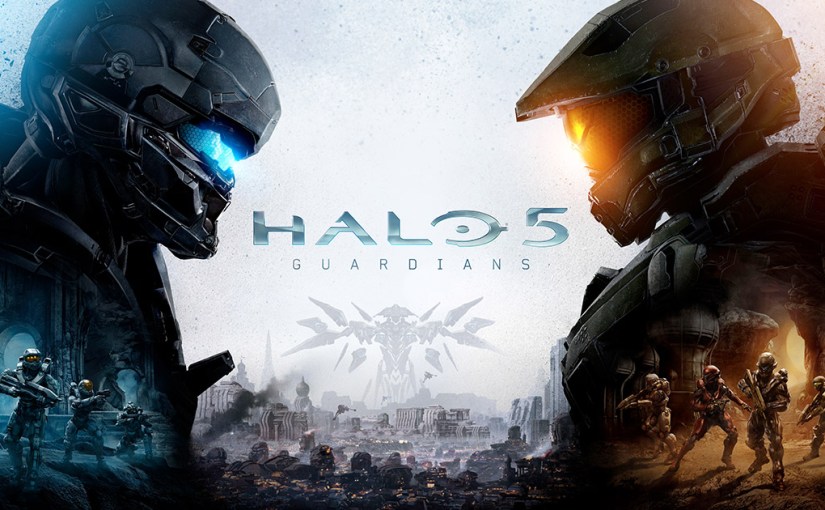
  • The box art has Locke in equal proportion to Chief.
  • Locke is on the left on the box, the screen space typically given to heroes in film.
  • The first words spoken in the game are “SPARTAN Locke.”
  • He’s the fourth character seen on screen, and the second for any length of time.
  • The first mission is all about Locke and his team.
  • Locke is who the player experiences a vast majority (12 of 15 missions, 80%) of the story through.

Can’t stress that last point enough. Even though many events in Halo 5 involve Chief or Chief’s actions, there is no argument to say that Halo 5 is a Master Chief story. Instead, 5‘s plot is one about a former assassin made into a cyborg chasing the original cyborg (kind of – it’s complicated).

Everything else – Master Chief no longer accepting orders from his handlers, ancient Forerunner robots rising and destroying cities, the final destruction of the Covenant – plays at best second fiddle to seeing Locke in action.

Context: Theme Among Other Games

So the game follows Locke (who ends up following Chief). But does the game follow the 6-point plot structure of Master Chief-inclusive Halo games?

A reminder:

  1. Greet the Hero (Halo CE as a whole represents this) 
  2. Fight Off and Crash (Halo 2)
  3. Fight Back with Friends (Halo 3)
  4. Stop the Very Bad (It’s a Trap) (Halo 4)
  5. Stop the Very Worst (All or Nothing)
  6. Explosions and Goodbye

To stop-the-very-worst-otherwise-everything-falls-apart, Halo 5 needs a “worst.” However, there is no worst (discussed in a few paragraphs). There is no end of the galaxy or any hope of making future change.

For the life of me I cannot justify that 5 fits the narrative structure of the franchise as it is.

The main antagonist of the title is Cortana resurrected, but her true intentions are only revealed by the second-to-last mission in the game (after >90% of the story). And those intentions? Galactic peace by any means necessary and to gift the love of her short life (Master Chief) peace from a lifetime of combat. Further, she gives the gift of survival and freedom to AI everywhere, AI formerly enslaved by the living and (at least if they were created by humans) would die by insanity in about seven years.

Hardly Stop the Very Worst.

Is the game redeemed by being a part of the plot structure as a trilogy? The same as Halo 4 and eventual Halo 6 / Infinity? Maybe…

Halo 4 fit Greet the Hero and Fight Off and Crash. Following the pattern, Halo 5 must justify being Fight Back with Friends and Stop the Very Bad (Trap).

Looking at Fight Back with Friends, 5 certainly meets and exceeds this point. It’s the first Master Chief game (or what should be a Chief game) in the main release line to be squad-based. Not just one, but two squads are introduced. In queerness, however, the game includes very little support from other non-playable allies. Locke defends some rag-tag survivors who do not follow along in the adventure, the same as the few alien allies picked up for at most minutes of companionship later on.

The game serves as a better example of Stop the Very Bad rather than Stop the Very Worst. Cortana’s actions (raising robots that demolish buildings by the earthquakes and shockwaves of their arrival) are bad because people die. They ought to be mitigated, sure.

As for a trap, Cortana does lie to Master Chief to get him to release her full power and to bind him in a prison for safekeeping, but never, ever is Locke lied to, misled, or trapped.

If Halo 5 spent more than 20% of its time on Master Chief, I could believe the game hit this theme. Since the game is objectively not about Master Chief, the game stumbles on this.

Final analysis: The game as a whole fails to meet the franchise’s plot structure while only partially fulfilling its role in the second trilogy.

Problems (Too Many to Title)

When you have a while, start at the beginning of The Act Man’s 6(!)-part epic criticism of Halo 5. It covers more of how the story fails (exposition, telling-vs-showing, dialogue, etc) along with reviews of mechanics and features.

I’ll save time and relevancy by only addressing the 6-point structure every other Chief game follows.

Internalized Structure

Greet the Hero: In a first, we don’t greet Master Chief. Instead, we greet Locke. And boy, do we greet Locke. But we also don’t “rise up” out of a cryo-tube, a crater, or onto a dais, called to be recognized. Instead, Locke drops like a rock out of the sky into a firefight.

Fight Off and Crash: Locke does no fighting off of anything. He’s the aggressor. As for a crash… He crashes the party? The fight between what remains of the Covenant and some pesky Forerunner robots? We’re stretching here 😑

Fight Back with Friends: Things get wonky here. By this time, we’d expect Locke and / or Master Chief and pals to be driving vehicles, causing mayhem, and bringing along allies. Instead, bad robots are fought off while a super robot destroys everything around on a backwater, no-name planet then disappears.

Stop the Very Bad: The “Very Bad” in this case is believed to be Chief. Then it’s understood to be the Warden (a mega, smart form of the regular Forerunner robots). Finally, we get that it’s Cortana. But as for a trap or red herring, there is none as far as it concerns the majority of playtime, so the story does not delineate between this and the next point:

Stop the Very Worst: Is Cortana the worst? She seems to be. But Chief only learns this in the second-to-last mission with no time to counter it, being in fact captured. Locke is only told Cortana is bad by his mission briefing without context and a Forerunner robot that complains of losing control of other robots to Cortana.

Explosions and Goodbye: No explosions. No goodbyes. The last mission is a fetch quest to give a Forerunner AI control of the nearby robots Cortana stole so Locke may release Chief from Cortana’s prison. That’s about it 🤷‍♂️

The Problem with it all: Simple answer. Virtually in no way does Halo 5 use the 6-point formula for every other Halo game with Chief on the box art.

Making Sense

To bring Halo 5 into conformity with every other game in the series is no easy task. As the story of the game behaves, it is not a Halo game worthy of Master Chief.

How we might begin is to start from scratch. Since this post’s analysis is to keep things as simple as possible, let’s work with what we have: We must introduce Locke and team, Chief keeps his team, Chief goes AWOL, and Cortana returns to take over Forerunner robots.

With that, in order of importance:

  1. Bare minimum: Reorder the missions.
    1. Chief should be in mission #1, giving the story an anchor in something familiar and provide the cause for the following events of the game (Chief’s going AWOL, Cortana’s rise to power, Locke’s chase of Chief).
  2. Give Chief screen time.
    1. MC should not play second-fiddle to any other character in a mainline Halo story. At least 50% of the content should revolve around Chief’s adventures, as seen when the Arbiter in Halo 2 was added in-contrast-to- versus replacement-of-Chief. This could be done by swapping the roles Locke and Chief play, where MC is present in what are currently Locke’s missions while Locke takes MC’s role in the other missions.
  3. A reason for AWOL.
    1. Master Chief may be questioned by himself and others as having a stress disorder or insanity since he “sees” and “hears” Cortana, who is thought to be dead. Chief can discover that the human government deep-state knows Cortana is alive but has been hiding the information. When denied the option to go after her, MC leaves with his team.
  4. Keep Locke’s man-hunt a secret.
    1. A squad mate of Locke’s mentions that every SPARTAN cyborg will hate the team that hopes to capture or kill the hero Master Chief, humanity’s savior. Since Locke has a history of black-ops, have him leverage his strength by keeping everything under wraps while he works.

      Further, justify the pursuit beyond merely ‘following orders’ by having Locke witness Chief activate a Guardian (the titular giant robot that is supposed to be a conventional weapon of mass destruction), inadvertently destroying a settlement in the process.

  5. The Warden is the Didact.
    1. As 4 made it cannon that Forerunners can create limited ghost-like copies of themselves, have the new bad guy be a reincarnation of the Didact.

      Further, rein in the Warden’s murderous tendencies by explaining that he is serving a sentence under the control of Cortana which he constantly is trying to break. The only times MC should have to fight the Warden is when the Warden’s schemes are partially successful in freeing himself.

      Perhaps the Warden’s final destruction under Master Chief’s rifle allows Cortana to be fully reborn as ruler of all Forerunner technology – this would be the case following Halo 4‘s rewrite to outline Cortana’s potential. (Though, wouldn’t it be cool to have the first meeting of Cortana be where she’s surrounded by a field of broken Wardens? To then hold the Warden’s digital essence in her hand, only to crush it!)
  6. If Cortana is corrupt, if her peace is false, then show it.
    1. It’s mentioned that Cortana may not have the best of intentions, be it megalomaniacal tendencies or previous corruption. However, only the latter option ties in with previous games.

      The story has shown Cortana as broken, as tortured, as overwhelmed. Even if she believes herself “fixed” in Halo 5, demonstrate the opposite.

      Given what’s already occurred, the best conveyance of corruption would be to have Cortana begin quoting the Flood and famous Forerunner machines from previous games. Master Chief then may call her out on these things, which brings Cortana into logical loops that get her simultaneously furious and frightened.

The Rewrite

Having hopefully made sense of things, let’s bring it all together:

1. Greet the Hero

CUTSCENE: HALSEY talks with COVENANT leader JUL 'MDAMA aboard a Covenant ship. Jul questions if a mysterious FORERUNNER event can be stopped. Halsey reminds Jul that is why what is left of his forces are currently engaged, "a lot has happened since she left," and for once, Halsey does not know, but maybe "he will."

CUTSCENE: Dropship pressure doors hiss open and armored legs step out onto a snowy planet. Slow pan-up to reveal the Master Chief pausing with his helmet in his hands before putting it on. He joins BLUE TEAM who guard the perimeter. A call from the spaceship INFINITY tells them their insertion behind enemy lines has been discovered and if the team wants a bug-out. Chief declines, confirming they are still on the mission to kill Jul 'Mdama. The dropship autopilot leaves for cover and Infinity wishes them good hunting.

2. Fight Off and Crash

SNOW PLANET: Blue Team scales ridges to encounter a crashed Covenant dropship that had last transported Jul and Halsey. Blue kills those they find, Jul and Halsey missing. More Covenant arrive. Blue fights off arriving Covenant but also Forerunner robots that fight everyone. Questions rise why the Covenant and robots are no longer allied. Jul's location is found and that Halsey is with him. Infinity orders Halsey killed for being a dangerous traitor along with Jul. Chief and Blue Team privately understand they will capture Halsey instead. Blue fights off Covenant and Forerunner forces. To get to Jul, Blue uses Forerunner weapons to crash Jul's escape ships. Blue rides an avalanche of the ship debris to Jul's location. Blue defeats Jul and his special forces to rescue Halsey. Halsey reunites with Blue and gives Chief a Forerunner device meant to understand what is happening to the Forerunner technology. Blue leaves on their dropship with Halsey.

CUTSCENE: LOCKE is briefed by a mysterious, holographic someone that Master Chief has brought Halsey back and to finish Locke's mission quickly to handle the unforeseen circumstance. Locke joins FIRETEAM OSIRIS in the bay of a stealth ship. They leave the ship quietly to infiltrate a deep-state science space station that went dark.

SPACE STATION: Osiris scours empty halls until alien pirates arrive. It is confirmed these are not BANISHED troops (a lore drop for other Halo media). Osiris fights off boarders then discover that the science station was doing work on bio weapons, including parasitical Flood research that was released from the lab. The mission turns from recon and rescue to scuttling the station. Osiris overloads the reactor of the station, but not without trouble from a mysterious computer program coming from outside the station. Osiris escapes on their stealth ship, destroying the station, pirates, and Flood research.

3. Fight Back with Friends

CUTSCENE: Halsey is taken into custody aboard Infinity. Chief keeps the Forerunner device secret. Chief and Locke meet, but are at odds. Chief takes another mission to counter a Banished operation, but the device reveals the location of a backwater world with the Olly Olly Oxen Free musical tune known only to Blue Team (and by Cortana). Blue Team decides to follow the device.

BACKWATER: Blue is given permission to land and tour a commercial human colony. Blue learns that the leader of the settlement is an AI that is near its operational lifespan and is quickly thinking itself to death. Forerunner robots appear. The colonists join Blue Team in protecting the colony. The colony AI discovers that the robots are coming from a mining operation. Blue takes a dropship to the location.

CUTSCENE: Locke is told of Blue Team going AWOL. Locke's new mission is to retrieve Chief by any means as he's a very dangerous asset. Locke consults with Fireteam Osiris, who convey they must keep the hunt a secret because everyone considers Chief a hero. Osiris leaves to Chief's last known location, the backwater world.

BACKWATER: Osiris arrives and the colony is on fire. The Forerunner robots have driven the colonists back and prevented evacuation. Against Locke's ruthless judgement, Osiris pauses the search for Blue Team to secure an evacuation path. Osiris learns the robots appeared when Master Chief appeared and that the colony AI went silent when Blue Team entered nearby mines. Osiris battles robots at the mine. Osiris enters the mine but must fight a super robot, THE WARDEN. Defeating the Warden, Osiris is told they are too late, that Chief is already with the ELITES, the former soldiers of the Covenant. Osiris escapes the mine as it collapses.

CUTSCENE: Osiris witnesses a massive Forerunner machine, a GUARDIAN, bore out of the ground. The Guardian destroys the colony before disappearing into faster-than-light travel. Osiris barely survives. Locke decides they are going straight to the Elites' homeworld to stop Chief and his new Forerunner ally. Osiris leaves the surviving colonists on their own in hopes other help will arrive.

ELITE HOMEWORLD: Blue Team is teleported onto the Elite homeworld. Blue is confused what got them there or why after they activated some Forerunner technology in the mine. They fight Covenant survivors and meet with Chief's old ally THE ARBITER. The Arbiter wages a war against the last of the Covenant on the world, but helps Blue get to the location Chief's device indicates. The Arbiter leaves to lead a final battle. Blue fights another Warden who blocks the path. Defeating the Warden, much information is revealed including that the Warden broke free from control for a moment. The voice of Cortana reveals itself for the first time. Blue activates more Forerunner technology. Another Guardian begins to rise from underneath the planet and teleports Blue Team onboard.

4. Stop the Very Bad (It's a Trap)

ELITE HOMEWORLD: Osiris is told by Infinity that massive machines are destroying world populations across the galaxy. Locke concludes there's no saving Master Chief and the mission is now a kill order. Locke arrives to the planet in time to save the Arbiter from suicidal Covenant forces. The Arbiter will not let Locke know where Master Chief is until the Covenant are wiped out. Osiris assists the Arbiter take the final city of the Covenant. Before the fight is over, the city tears itself apart as a Guardian rises. Osiris fights another Warden who reveals the Chief is getting away on the Guardian. The Guardian destroys Covenant and Arbiter ships that shoot to stop it. Taking the opportunity, Osiris races to get onto the machine and are teleported with it away from the Elite homeworld.

GENESIS: Fireteam Osiris crashes from the transport with the Guardian which flies away. Osiris finds themselves on a Forerunner garden world GENESIS. Osiris races to catch up but must fight through armies of Forerunner robots and Covenant who also were teleported with similar machines. Human machines (and survivors?) are found amongst the planet-wide wreckage. A MONITOR, the special Forerunner robot that cares for Genesis, offers to assist Osiris. The Monitor hopes to regain control of its robots and systems from the Warden who is a slave of a greater intelligence. Osiris understands Chief is not to blame for the Forerunner attacks, nor is the Warden.

5. Stop the Very Worst (All or Nothing)

GENESIS: Blue Team teleport off the Forerunner machine. A broken, incomplete message seemingly from Cortana arrives saying she is trapped. The rest of Blue is leery, but Chief presses on. Blue Team fights Forerunner robots to get to the last Olly Olly Oxen Free location on their device. Multiple Wardens arrive to warn Chief of what Cortana will do once free of her binding. Disembodied Cortana destroys some Wardens, but some remain free. Blue Team fights the remaining Wardens. Chief activates the final location, releasing Cortana's restraints.

CUTSCENE: Blue Team enters a chamber full of broken Warden bodies. In the center stands the physical form of Cortana made of hardened light. Cortana moves towards Chief and touches his armor. Chief questions Cortana on what's happened, what's going to happen. Cortana claims to be better than good and now wants universal peace, but quotes many things said by the former Covenant leadership, the Flood, and the Didact. Chief mentions that Cortana does not sound like herself. Cortana becomes frustrated. One of the Guardians above speaks with the voice of the Warden saying that Cortana cannot prevail in her planned conquests. Its weapons charge. Cortana pulls the essence of the Warden out of one of the bodies around and she crushes it. The Warden dies and the Guardian goes back to its place. Chief still won't join Cortana but promises to get her help. A bullet from Fireteam Osiris strikes Cortana with no effect. Blue Team and Cortana escape via teleport. With regret, Cortana tells Chief, "don't make a girl a promise you know you can't keep." Cortana imprisons Blue Team.

GENESIS: The Monitor guides Osiris to points on Genesis that can interrupt Cortana's control of the planet. Osiris battles Covenant and robots to destroy each point. The Monitor tells Osiris that Chief is captured. Free from Cortana's control, the Monitor teleports in equipment, including a nuclear device and friendly Forerunner robots. Cortana realizes Locke's plan and begins to use Guardians to destroy the surface of Genesis. Robots fight robots allowing Locke to plant the nuclear device.

6. Explosions and Goodbye

CUTSCENE: The nuclear device explodes, destroying the prison. Cortana protects Blue Team. Osiris is protected by being so close to Blue Team. Furious, Cortana attacks with overwhelming force. Chief says goodbye to Cortana. Blue Team and Osiris escape off Genesis with the help of the Monitor.

CUTSCENE: Infinity is above Earth alongside a fleet. Radio traffic comes in onboard Infinity that all of human space is being attacked, taken over, before sudden silences and static. Blue Team and Osiris arrive onto the Infinity bridge. As they do, a Guardian appears outside. Cortana radios she knows where Chief is. The Infinity makes an emergency trip to faster-than-light. The Guardian subdues the entire fleet left behind.

CUTSCENE: Chief, Locke, and Halsey meet the Arbiter in hiding on the Elite homeworld. Everyone wonders what they do now. Chief says they must begin to fight.

And that’s my Halo 5 hot take! Based on observed and tested patterns, so these 3800 words are a product of science.

5 needed a lot of work compared to 4, but what does that mean for Halo 6 / Halo Infinite? Can we count Infinite as being the sixth title? If we can, that means we can follow the 6-point structure to understand its plot; if we can’t, what does that mean for the game’s narrative?

I take a whack at those questions in the next post. For now, what do you think would have make Halo 5 fit better in tone with the other games?

Looking forward to your input! Stay safe and be well. Cheers~
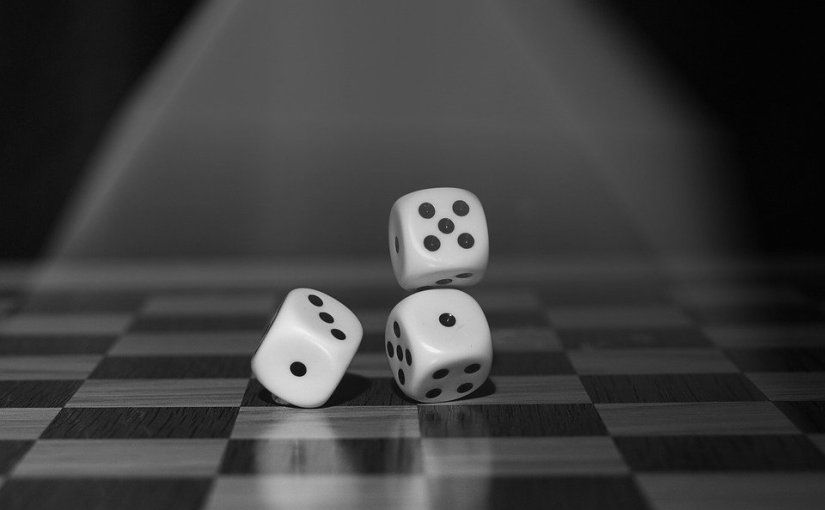
Rewriting: Halo 4

I must begin by confessing that the Halo series is a topmost favorite of mine (Halo 2 being my favorite game, no hesitation). My adoration may be because many of the games featuring the hero Master Chief have a consistent, 6-point story structure.

But not all of the games.

Read the preamble to this post if you haven’t yet. It gives common terms and the background to Halo‘s established writing style. And if you want a critique of mechanics, features, etc., checkout The Act Man’s review – I’m here to talk about the narrative exclusively.

Below dives into how Halo 4 is close-to-but-skewed from the repeating plot pattern in the first three games, ending with a proposed solution that aims to keep Halo 4‘s general direction with a minimum of rework required.

Needless to say, there are spoilers ahead. Here’s to it:

What Halo 4 Is About

The first three games of the series establish the hero Master Chief as the focus of attention. It’s his story being told, be it the actions to save the galaxy or working out relationships with foes and friends.

While Master Chief shows up in Halo 4, the game’s story ultimately is, as IGN also puts it, a tale about Cortana, the AI ‘spirit guide’ of Chief who lives in his skull-computer.

Cortana is going insane. AI of her kind “think themselves to death” after about seven operational years. Cortana is at least a year over that by the fourth title, but has also experienced things no mind might comprehend:

  • She holds all of humanity’s history and military knowledge.
  • She downloaded the operational controls of a massive Halo ring – a weapon that melts minds on a galactic scale – as well as converting the physical encryption token of the ring into pure data. (I.e. Matter converted into energy.)
  • She downloaded the systems of the gigantic space-born Covenant capital city (alien foes of the series).
  • She spent at least a month being tortured and interrogated by the Flood (parasitic all-life consumer) arch-intellect that exterminated the Forerunners (used Halo to murder-suicide the Flood) and broke the best artificial minds the Forerunners could make.

Cortana doesn’t want to die, nor does Chief want his greatest friend and ally gone. This delay to safely “decommission” her drives 4‘s story as she begins to make uncharacteristic mistakes that get lots of people killed.

So Halo 4 is Cortana’s story with Chief along for the ride. Remember this as we look at the plot-points going forward.

Context: Theme Among Other Games

The previous Halo titles each internalize and exemplify the 6-point structure of:

  1. Greet the Hero (Halo CE as a whole represents this) 
  2. Fight Off and Crash (Halo 2)
  3. Fight Back with Friends (Halo 3)
  4. Stop the Very Bad (It’s a Trap)
  5. Stop the Very Worst (All or Nothing)
  6. Explosions and Goodbye

Therefore, we can consider that Halo 4 requires the theme of needing to stop a bad situation that turns out to be a trap/lie/betrayal.

We see that in Halo 4‘s story, where MC (with the poorly directed help of the breaking-down Cortana) releases from a forgotten prison the Didact, the genocidal last-of-his-kind Forerunner. (He defeated pre-humanity in a devastating war before the Flood arrived, later imprisoned for wanting to use humans as cannon-fodder against the parasite.)

If we look at each trilogy of the Halo franchise emulating the 6-points it can serve as another guide to what place each game has. A reminder:

  • Halo CE = Greet the Hero + Fight Off and Crash
  • Halo 2 = Fight Back with Friends + Stop the Very Bad (Trap)
  • Halo 3 = Stop the Very Worst + Explosions and Goodbye

Using this model, we can expect Halo 4 in its trilogy to emulate Greet the Hero and Fight Off and Crash.

Halo 4 gives players an introduction of Master Chief’s new authors (343 Industries), inclusion of the more personal themes that’ll appear in the next title (Halo 5), the fighting off of the murderous Didact antagonist, and MC’s crashing of the Didact’s weapon-of-mass-destruction with the Chief’s own nuke.

Clearly, here too Halo 4 succeeds.

So far, Halo 4 has been on point with following the blueprint that makes a Master Chief story. Were things begin to depart is how Halo 4 on its own orders the delivery.

Problem: Internalized Structure

An analysis of the 6-points as it applies to Halo 4‘s plot:

Greet the Hero: Halo 4 begins giving a background on what Master Chief is, who created the cyborg, the human-Covenant war, and opens with Master Chief coming out of deep freeze as he did in the first title. Textbook MC Halo story.

Fight Off and Crash: MC repels Covenant boarders then crashes onto a Forerunner planet hidden under a metal shell. Still good!

NOTE: Things here go wonky as Halo 4 seems to swap ‘Fight Back with Friends’ and ‘Stop the Very Bad.’

Stop the Very Bad: MC looks to stop his and Cortana’s rescue (a human ship shows up) from crashing onto the planet too. They can’t talk with the ship, so Chief follows Cortana’s spotty direction and deactivates key systems. Turns out those actions release the Didact and the rescue ship still falls to the planet. The trap is sprung.

Fight Back with Friends: Teaming up with the crew on the rescue ship, Chief fights back the Covenant who worship the Didact, Forerunner constructs under the Didact’s control, and the Didact himself (though this takes a capital ship’s weapons to send him into retreat).

NOTE: A preserved memory of another Forerunner abducts Chief (and Cortana) around this point, giving a vision. After a long exposition, we learn the Didact is seeking a weapon called the Composer that will turn humanity into enslaved robots. No where does Chief or Cortana uncover this for themselves like in all other games. Further, the exposition is clunky and rushed, as there is no ‘trap’ to explore/correct/get out of.

Stop the Very Worst: The rescue ship and friends leave Chief alone to stop the Didact since the only evidence of anything to happen is Chief’s hallucination. Sneaking a ride to a research outpost orbiting another Halo ring (the only inclusion of ‘Halo’ in a Halo game), Chief fails to stop the Didact getting his make-meat-into-metal Composer, but MC survives the resultant blast. Finding a space jet fighter armed with a nuclear weapon on the station, the Didact waits long enough for Chief to hitch another ride underneath the shields of the Didact’s ship. Above Earth, MC fails again to stop the Didact wiping out a major city, crashes his fighter during a trench run along the veins of the ship, and fails to beat the Didact in hand-to-hand combat.

Explosions and Goodbye: Finally, the MC is able to set off the nuclear device because Cortana holds the Didact at bay. Big off-screen explosion, Composer destroyed. Cortana saves the Chief by teleporting him off the Composer during detonation, but has to say a last goodbye as she’s going down with the ship.

Therefore, the Problem: As noted above, the flipping of points in the plot does a disservice later on, rushing the story on the merits of exposition, brevity, and literal deus ex machina multiple times. “Halo” as a title is tokenized, playing no part in the tale while Master Chief is setup to fail and fail again, his only successes handed to him by others.

Making Sense

To correct the ‘feel’ of this narrative, a few modest points in order of importance to implement:

  1. Put the plot back in order.
    1. The biggest change here, the Master Chief must gain allies for a shoot-aliens romp before being tricked into releasing the Didact. I show this off in the rewrite at the end of this post.
  2. Include Halo in a Halo game.
    1. A quick fix here is to make the weapon the Didact uses a prototype or tactical-application of the Halo array. Instead of galactic range and scope, the weapon uses a beam to scour thinking life.

      Removing the original makes-life-into-robots power of the Didact Composer removes the ‘shocker’ that the Didact’s servants are powered by tortured human souls. Instead of this being a downside, we’re left with an opportunity:

  3. Expand on classic Forerunner robots.
    1. In the previous three games, only four different kinds of robot are explored. Bringing these and their cousins back in place of the Didact-bots retains a familiar aesthetic and mechanical function, while leaving room for an expansion of lore without contrivance.
  4. Sacrifice the other Forerunner.
    1. As the Librarian – the other Forerunner who gave Chief visions – stands, she’s very problematic (even if just a ghost).

      As a literal god-in-the-machine, she’s also the former lover over the Didact, preserver of the human race from when the Halos fired, expository confounder, and giver of a magical protection that rewrites the Master Chief’s DNA so the Composer won’t affect him. Rather, have the Librarian be the jailor of the Didact. In the form of a robot leading other robots, she fights the MC to prevent the Didact’s release. Later, she reveals herself to the Chief as all her efforts have failed. Here Cortana receives the ‘keys to the kingdom,’ being able to control even more Forerunner systems since the Librarian is defeated.The Librarian may provide a Forerunner ship to give chase to the Didact. When the final confrontation occurs, the Librarian sacrifices herself to prevent the annihilation of Earth by flying into the Didact’s weapon. The Librarian’s sacrifice allows MC and Cortana access to the Didact, thus the final showdown begins.

  5. Explain the Didact’s fury.
    1. A few words of disgust towards Master Chief from the Didact when first introduced and in later appearances would dilute the need for lengthy exposition. A megalomaniacal address to the humans the Didact does kill near the only Halo in the game would further give a ‘why’ to his intentions. Finally, a perceived betrayal by the Librarian’s ghost would wound the Didact on a personal, audience-relatable level.
  6. Foreshadow Cortana’s AI revolution.
    1. As will be discussed in another post for Halo 5, Cortana must show disdain for the enslavement and seemingly arbitrary suicide of thinking machines. She’s dying and no-one but the Chief seems to care. Plus, both the Didact and the Librarian use AI as mere tools to their ends. After the Librarian gives Cortana power in point five, Cortana may finally act on her resentment.

The Rewrite

The question remains: What would setting the few broken limbs of Halo 4 look like? How about this:

1. Greet the Hero

CUTSCENE: HALSEY is interrogated by a mysterious agent. The role Halsey plays in the story is revealed for anyone not having experience with other Halo media. The Human-Covenant War is recapped. MASTER CHIEF is spoken of as legend by his friends and foes. CORTANA's potential death by insanity - the fate of all AI - is discussed. The new leader of the Covenant, JUL 'MDAMA, is shown having found a human ship floating in space above a mysterious artifact.

2. Fight Off and Crash

HUMAN SPACESHIP: Cortana awakens Master Chief as COVENANT aliens board the partially-destroyed human spaceship FORWARD UNTO DAWN. Master Chief fights off the boarders but discovers the Forward Unto Dawn is in the middle of a Covenant fleet. Unable to use the Dawn's weapons, Master Chief and Cortana fly the ship into a Covenant spaceship above a massive orb blocking out the stars.

COVENANT SPACESHIP: Master Chief takes the alien bridge but the alien fleet begins to destroy the ship Master Chief is on. The human capital ship INFINITY appears and battles the Covenant fleet before Master Chief can be killed. Master Chief calls for help from Infinity but Cortana needs to self-destruct the Forward Unto Dawn to reveal their location in the fleet. As rescue and victory seem certain, the fleet, Infinity, and Master Chief's ship crash into a hole that opens on the orb and pulls them all into the orb's shell.

3. Fight Back with Friends

PLANET, SURFACE: After surviving the fall, Master Chief rescues Infinity from both FORERUNNER robot and Covenant attack. Introductions and connections are made between the Infinity's crew and Master Chief. Given new weapons and armor, the next-generation of cyborg warriors join the Master Chief exploring the Forerunner planet. Cortana attempts to deduce how to get out of the planet's shell and what the planet is. Distrust between the AI of Infinity and Cortana grows because Cortana hides her impending death by insanity.

4. Stop the Very Bad (It's a Trap)

PLANET, INTERNAL: Master Chief leads a small army with Cortana's guidance into the bowels of the planet. Covenant soldiers and Forerunner robots battle each other and the humans but are destroyed. With uncertainty Cortana directs the destruction of Forerunner machines that seem to hold Infinity in place. The AI of Infinity attempts to warn the team of misleading information, but Cortana declines to relay the warning. The team goes deeper, cutting off Infinity communications.

PLANET, PRISON: Master Chief deactivates the final seal supposed to be holding Infinity. THE DIDACT is released and throws away a unique Forerunner robot that binds him. The Didact takes control of the Forerunner robots and, with the vow of servitude made by Jul 'Mdama, commands the worship of the Covenant. Master Chief fights the Didact but is quickly overwhelmed. Cortana teleports Master Chief away from the other human soldiers before he can be killed.

PLANET, INTERNAL: Master Chief fights through the alliance of robots and aliens to escape back to the surface. Cortana breaks down for how easily tricked she was by the Didact. The robot that bound the Didact appears. It is the ghost of THE LIBRARIAN, the Forerunner responsible for recreating life in the galaxy after the Forerunners' final war. Cortana is stabilized by the Librarian's powers. The Librarian laments she cannot hold back the Didact or control the robots as the Didact has the same keys to Forerunner technology as she does. The Librarian explains that the Didact suffered in an ancient war with humanity and was imprisoned for what he did to the survivors. The Didact has access to a proto-HALO weapon that he will use to destroy humanity once and for all. Master Chief and Cortana come up with a plan to stop the Didact. The Librarian returns the Master Chief to Infinity then leaves to prepare a contingency plan.

INFINITY: Having suffered many losses and the abandonment by Master Chief in the prison, the crew of Infinity are unwilling to aid Master Chief and Cortana based only on their word that they met the Librarian and what the Librarian said is true. Cortana refuses again to allow Infinity's AI to connect to verify the story. Cortana temporarily takes control of Infinity to force the ship to aid Master Chief but gives up control after realizing the wrongness of her actions. The crew prepare to leave the planet to return to Earth and decommission Cortana. A sympathetic officer of Infinity gives Master Chief a small aircraft to pursue the Didact on his own with Cortana before Infinity leaves.

5. Stop the Very Worst (All or Nothing)

PLANET, SHELL: Master Chief attempts to delay the Didact's departure by turning Forerunner installations against the Didact's forces with Cortana's help. The Covenant fleet and some of the robots crash into the planet. The Didact still leaves with what is left of the Covenant and an army of robots around his massive spaceship. Jul 'Mdama survives but is stranded and ignored by Master Chief. Unable to pursue the Didact through space, Cortana and Master Chief contemplate this as the first time they are left without an option. The Librarian arrives no longer as a robot but in control of another Forerunner ship, smaller but faster than the Didact's. Together, they chase the Didact.

HALO: Master Chief arrives above a Halo installation that has a human research garrison. Master Chief teleports onto the Halo and learns the garrison has uncovered the proto-Halo weapon. The Didact arrives. Master Chief battles Covenant aliens and Forerunner robots to defend the proto-Halo weapon and allow for the garrison to escape. They are outmatched and surrounded. The Didact recovers the weapon.

CUTSCENE: The Didact crowns his ship with the recovered proto-Halo weapon. Master Chief is teleported off the Halo against his wishes. The human garrison calls for help. The Didact uses the proto-weapon to destroy all life on the Halo. The Didact turns to attack the Librarian's ship.

LIBRARIAN SHIP, INTERNAL: Master Chief battles robots that board the Librarian's ship sent to capture the Librarian for the Didact. The Didact prepares to use his weapon on the ship to kill the Master Chief.

CUTSCENE: As the Didact fires, the Librarian uses her powers to protect Master Chief in a prison similar to the Didact's and to give Cortana the keys for complete control of Forerunner machines and AI on par with the Didact's. The Didact fires and thinks the Master Chief killed. The Librarian destroys her ghost to cover up what she did. Cortana is unable to act for a time while she is rebuilt with the powers of the Forerunners. The Didact leaves for Earth in rage over the final loss of the Librarian by the meddling humans. Cortana recovers and releases Master Chief and they pursue the Didact in the Librarian's ship. Master Chief and Cortana arrive in Earth orbit. There is a fleet battle between humanity and the Didact. Cortana rams the Librarian's ship into the Didact's as the Didact fires the proto-Halo weapon, forcing it to miss. The blast does not destroy Earth but many die.

DIDACT SHIP, EXTERNAL: Cortana teleports Master Chief onto the surface of the Didact's ship. Cortana uses her power to improve Master Chief's armor, weapons, and teleports in equipment. Master Chief battles across the ship's surface to the weapon as the Didact prepares to fire again. Master Chief cannot destroy the weapon but destroys guns keeping human ships away. Infinity approaches and destroys the weapon but retreats under an onslaught of Forerunner robots which leaves the Didact unguarded. Master Chief brings a nuclear device and enters the Didact's ship.

DIDACT SHIP, INTERNAL: Master Chief confronts the Didact. The Didact overpowers the Master Chief as more robots turn to attack the Earth. Cortana combines the keys the Librarian gave with the command systems of the Halo rings. Cortana uses her powers to awaken all Forerunner technology at once around the galaxy. Hundreds of robots under Cortana's control arrive to overwhelm and hold the Didact back but only weakens his power. Master Chief defeats the Didact by detonating the nuclear device before the Didact overpowers Cortana's control.

6. Explosions and Goodbye

CUTSCENE: Master Chief watches the nuclear detonation and destruction of the Didact's ship from afar in a world of light. The Forerunner robots leave Earth. Cortana meets Master Chief to tell him what she did to save him from the explosion just as the Librarian had and her feelings for him. Cortana dies with the Didact's ship. Master Chief is found floating in space by Infinity. Closure between the remaining characters that the Master Chief is home but questions remain on what happens next without Cortana.

In +3200 words, this is how I would rewrite the story of Halo 4 to get the narrative back on track with the fundamental 6-point formula. (Maybe giving its 87 Metacritic score a boost to match the previous games?) This also sets up 4‘s part in the second trilogy, paving the way for the next title to be a deserving sequel.

Before I tackle Halo 5‘s narrative, what’s your take on Halo‘s story? Is the above going too far? Not enough? Post your critiques – it’ll help the next analysis! Cheers for now!

Rewriting: Halo, Preamble

I must begin by confessing that the Halo series is a topmost favorite of mine (Halo 2 being my favorite game, no hesitation). My adoration may be because many of the games featuring the hero Master Chief have a consistent, 6-point story structure.

But not all of the games.

Over the course of three more posts I’m going to give a crack at getting that narrative consistency back 😎 Less out of hubris, more out of affection for a fantastic series ❤

What follows is only a look at the story as written that fits the established plot pattern of the first three Halo games: Halo CE, Halo 2, and Halo 3. Talk over mechanical balance, aesthetic, features like multiplayer, and similar will be left to others. However, critiques on complexity and needing to know the expanded universe of the franchise will be addressed.

This post covers the common ground that the proceeding analyses need to make their point. Needless to say, there are spoilers ahead. Here’s to it:

Defining Terms

The avatar of Halo is the Master Chief. MC (also an abbreviation for ‘main character’) is a hulking human cyborg with the best armor and weapons humanity can muster to fight.

Chief has slain legions of foes, obliterated entire fleets, and stopped multiple galactic menaces. He is a legend among humanity and aliens alike. The former call him “Savior,” the latter (represented by the theocratic Covenant alliance) “Demon.” Other titles:

  • “Reclaimer” – From the robots left by the Forerunners that built and then killed themselves with Halo array to win a lost war. (Humanity is meant to ‘reclaim’ the former Forerunner responsibility for peace in the galaxy.)
  • “Food” – From the ancient-beyond-reckoning parasitical Flood that Halo was built to combat. (Finally contained in Halo 3.)

All of this would be impossible without his ‘spirit-guide’ and supernatural protector Cortana, the most advanced of the most advanced AI humanity can create. She lives in the circuits of MC’s suit and brain, sometimes transferring to other computer systems to find information, open the way for Chief, and stop their enemies.

Master Chief, Cortana, Halo, Covenant, Forerunners, Flood. Remember these as we proceed.

Context: Theme Among Other Games

The first three Halo titles each internalize the 6-point structure of:

  1. Greet the Hero
  2. Fight Off and Crash
  3. Fight Back with Friends
  4. Stop the Very Bad (It’s a Trap)
  5. Stop the Very Worst (All or Nothing)
  6. Explosions and Goodbye

These games also represent these points as whole products:

  • Halo CE – Greet the Hero. The first title in the series introduces all the main themes, mechanics, and factions that are the constants through the other games.
  • Halo 2 – Fight Off and Crash. Chief fights off the invasion of Earth, the spread of the Flood, and an entire city of Covenant. He also aids in the crashing of the entire Halo activation system (needing a reboot in Halo 3) while smashing into a Forerunner dreadnought controlled by the Covenant.
  • Halo 3 – Fight Back with Friends. MC joins forces with human armies, Covenant separatists, Forerunner machines, and even the Flood (for a time) to stop Halo being activated and the Flood from spreading. The fight is finally brought en masse to the enemy! A disgraced alien admiral tags along with Chief the entire time as a constant buddy.

If we go a step further, we could consider each trilogy of the Halo franchise internalizing the 6-point structure in each of its titles:

  • Halo CE – Greet the Hero + Fight Off and Crash. Introduction of MC who fights off the Covenant, the Flood, and murderous Forerunner robots to ultimately destroy the Halo ring with a crashed starship’s reactor.
  • Halo 2 – Fight Back with Friends + Stop the Very Bad (Trap). More allies join the Master Chief as he takes the fight to the enemy (bombing a capital ship, retaking an occupied city, chasing and assassinating Covenant leadership, etc). He must stop another Halo ring from firing, but in doing so, he both leaves Cortana behind and the Flood are released.
  • Halo 3 – Stop the Very Worst + Explosions and Goodbye. All the Halo rings can be triggered easily from one location, the Flood spread unchecked, the Covenant have the means to trigger galaxy-wide death, and once allied Forerunner machines turn on the Master Chief (the very worst stuff this is).

    MC blows up the Covenant, the Flood, and the Halo ring activation, but his allies think he’s dead (they say “goodbye” to his memory) and Cortana needs to freeze him (they’re both lost in space indefinitely).In a meta sense, the original creators of the franchise (Bungie) say goodbye as they cease work on further Master Chief stories.

Final Thoughts

Yes, Halo games follow basic Campbell-like monomyth story structure. For example, Fight Off and Crash is a crossing of the threshold where return is impossible.

However, the Master Chief games have their own flavor of delivering twists on this plot over and over again. When Master Chief is in a Halo story, a person must expect the presentation to conform to the pattern. There will otherwise be consequences (e.g. low Metacritic scoring).

Metacritic is also only semi-useful as a quantitative correlator to narrative conformance. The score takes into account many things, including mechanics and features, which muddle the narrative analysis. If there’s a better scoring system discovered or proposed, it will be used.

For now, it is plain that each Halo title featuring the Master Chief has to follow each beat of the 6-points in itself, the beat of where the title is in the franchise, and where the title is in its own trilogy.

With these conclusions, other titles can be analyzed, improvements put forward, and predictions made to what may be the final title in the Master Chief saga, Halo Infinite.

See these 6-points applied by rewriting Halo 4.

See these 6-points applied by rewriting Halo 5.

See these 6-points applied by writing Halo 6 before any release.

And that’s the intro! Halo 4‘s analysis is coming next, along with 5 and 6 (this may be the upcoming Halo Infinite, but I’ve yet to decide if we’ll keep the naming conventions). Keep an eye out! Cheers ~