Mörk Borg – Part 3: Eyes and Ash

Read part 1 for a synopsis of the Mörk Borg game, this story’s start, and part 2 for dangerous encounters:

Part 1: Murder and Worms – Three from death-row scour the rooms and horrors of the buried den of the addictive Rotblack Sludge.

Part 2: Meat and Statues – The trio meet the ruler of the underground complex.

Rude Awakening

Something twists and strangles.

The passed-out party awakes to bulbous plants using their roots to dig into skin, vines tangling around necks.

After the initial shock, it should be a cakewalk to snap apart weeds. Yet the first attempt fails. And the second! And…

Health falls. Struggling leads to naught as Invisible, the naturally lowest in health of the group, finally reaches zero hit points. He is on the verge of death, unless something, someone can save him.

Bubble Guy, in the nick-of-time, breaks their bonds. With a free action, Bubble Guy Blinks into the side of Invisible’s murderous creature, knocking it off the helpless companion.

Cat then escapes and together Cat and Bubble Guy pulp to mulch the plants most vile.

Getting Invisible awake again, he has a broken arm and is still on the brink of death. Cat stays with Invisible and purrs (a healing factor for others) while Bubble Guy Blinks rapidly through the complex to find… Anything at this point.

Desperation drives action now.

A woman (not Lesdy) is in Fletcher’s ‘workshop,’ the fires burnt out and Bubble Guy leaves unseen. Through the rooms and halls, bodies are where they were left, doors open where left ajar. However, in the grand dining hall, Lesdy and 2 other women are sitting at the massive table there. Bubble Guy is not so lucky this time and is seen before Blinking away.

Lesdy and the women leave down the dark corridor. Bubble Guy, thinking ahead, activates their Bubble power and follows.

Down the spring door Lesdy’s group climbs. Bubble Guy follows but at such haste, falls down the ladder in the dark and one-handed (the other sustaining the Bubble magic).

Bubble Guy suffers only lite damage from the fall. An aid to Lesdy is not so lucky. Caught between hard rock and the impenetrable Bubble field, momentum carries Guy into the aid, and they squished into stone.

After witnessing their kin’s death, Lesdy and the other woman make greater haste into the greenhouse, daggers drawn, watching their backs.

Lesdy ought to have watched her front.

Cat, hearing the commotion, jumps into a tree before jumping down onto these two returned with weapons out. Without mercy and without words exchanged, Cat slays Lesdy and her ilk.

Breakout!

The trio, now rejoined, searches the corpses for anything useful, as one does. On Lesdy is a pocket full of bleeding eyeballs – large, small, grey, green, blue, brown, utterly black.

Eureka! The characters understand these are eyes for the one-eyed statue they found before.

A short journey later, an eye from the pile gets settled in the stone-king’s socket. With a crack and crumble, the wall behind the characters falls apart, rolling into empty spots in the cobble as by some unseen will.

Within the dreary apartment before hidden is the sought Aldor. The spawn is starved, slightly maddened, desperate for Rotblack, and unwilling to leave.

After what they’ve been through, Cat, Bubble Guy, and Invisible give but few words before hauling the youth out. Muscling Aldor through the ravages of the complex, Aldor is unable to break free before being matched back to the locked surface gate to a welcoming party… of no-one.

No sound echoes through the falling ashes, no form breaks the smooth monotony of mounded char. As above, so below goes the grey waste endlessly.

The characters barely have time to shrug at each other and rattle the bars before a collection of dark coaches rumble through the drifts.

Sleeker steps out to welcome them and welcome back Aldor. The Shadow King’s favorite rants and rages all for naught as hulking, shapeless things of flickering smoke and shadow guide Aldor into a windowless carriage.

The return of any of the party, not to mention all three, was quite unexpected for Sleeker, especially when the first day waned. So much is the surprise, Sleeker can only give a gift in the moment of the trio’s lives. Should they want more, they perhaps could inquire at the Shadow Keep.

As Sleeker boards the last coach, it has little worry all of them may meet again. After all, the prisoners-turned-heroes-of-the-kingdom have managed to cheat death so far…

The End of Days

Left alone in the falling grey, the characters must delay any decision making once more as the second day passes and darkness begins to settle.

Above, the clouds part to a blacker-than-black sky, a void that touches at the very foundations of one’s soul. From the expanse fall legions of stars that sound like a million million screaming trumpets. Yet all this is forgotten as between the visions seen in the nothingness above and fundamental, undeniable feelings of despair, comes meaning, as prophesied in the holy Calendar of Nechrubel:

OF THOSE WHO BUILD MIGHTILY, STONE BY STONE, SO SHALL THEY FALL, STONE BY STONE.

Divinity has ordained the end is nigh! Thus concludes one of the last days at the death of the world 💀

By sword and fire and word and spell, Cat, Bubble Guy (formerly Untouchable), and Invisible managed to make it back onto the surface of their dying world…

… in time to see a herald sign of the end 🔥🤘💀🤘🔥

Where will the party go next?

That is a story for another time 🙂 What I can do is say to check back next week for Part 4: A Reckoning where I explore what worked (or not) and how that has affected the BITS system of tabletop roleplaying.

Big, big thanks to player C for being exquisite in roleplay, rolling, and patience as we got through a long and deadly adventure ~ Lots of fun in Rotblack Sludge!

See you next week! Cheers to your own dungeon delves 🐉

Mörk Borg – Part 2: Meat and Statues

Read up on what the Mörk Borg game this is, how it works, and who is trying to survive in the dank and dark:

Part 1: Murder and Worms – Three from death-row scour the rooms and horrors of a buried den, origin of the addictive Rotblack Sludge.

Down the Hall…

A surprise awaits Cat, Bubble Guy, and Invisible in what appears to be a pump room: four more guards.

Thinking quick, Invisible, still in the hallway, drops weapons and listens unnoticed. Bubble Guy carries the old man, so is in an awkward position. Though Cat can still fight, the band would be vastly overwhelmed.

Using talk, Bubble Guy asks after Aldor. The guards, unimpressed, take Bubble Guy and Cat prisoner. Through a trap door in the same room, all but Invisible are led into parts reeking and sweltering.

Invisible is left behind as the trap shuts. Horror awaits the other two.

Chains with hooked flesh hang from the ceiling, tables crusted with viscera carry jagged implements, fires burn hot in open furnaces, a yawning pit to where the great worm drops from where a wall ought be, and working among it all: a giant of a man, bald and tattooed and sweating, the master of this place, the boss, Fletcher.

Fletcher and Bubble Guy question each other on what they are doing there. With some charisma, Bubble Guy gains Fletcher’s liking after disclaiming any knowledge of Lesdy, the troublesome witch who has been Fletcher’s bane.

Only a minor interruption of Invisible botching a silent entry through the trap door sends two of the guards to investigate. Bubble Guy claiming it is only they and Cat, a deception believed by the boss.

Fletcher continues his work while monologuing the process of creating Rotblack Sludge and the incompetences of the Shadow King. From chains dangled into the depths of the pit, skulls and ribcages are drawn up. Cracking these vessels on his workbench, Fletcher shows off the crystalized black material that is Rotblack.

The drug is a source of control over others for him with the added benefit that users will eventually return to the place it is made. Fletcher emphasizes his points with grand gestures to the dripping pieces hung from the ceiling.

Through the trap door two guards return with word of a massacre of the other guards in the complex. Fletcher turns dark in tone at this not because he now disbelieves his guests, but when he understands that all the meat on those bodies was, with remorse, wasted.

Waste is something Fletcher cannot abide by. No, not at all.

Not. At. All.

Cue the music.

From a furnace Fletcher pulls a white-hot rod out with but one huge hand. From it rattles a fiery chain and the bright, spiked ball of a massive flail.

Swoosh. Swoosh. Swoosh.

The flail gently swings in the air.

Bubble Guy puts the old man down, trying to explain away things going awry. A guard points out the sword Bubble Guy carried was one of their own.

Swoosh swoosh swoosh.

Unarmed, surrounded, Cat and Bubble Guy edge away towards the pit. Begging and promises go nowhere.

Swooshswooshswoosh.

Fletcher gags! A chain is tight around his neck! Invisible, high on the giant’s back, causes a distraction to both Fletcher and the guards, letting Cat and Bubble Guy pounce.

The beast of a man Fletcher is hardly harmed by the chain around his trunk of a neck, nor the clawing of a cat, nor an unarmed magician. Yet also Fletcher fails to grab Invisible off his back or Cat off his chest. The guards are hardly about to slash at their leader, so stand at length away from the thrashing melee.

Bubble Guy thinks of what is available… The urn! This is thrown into Fletcher’s face as further distraction, perhaps incurring blindness until something better can be found. Effects are…

Incredible.

The powder is variably poisonous. To Fletcher, it happens to be maximally poisonous in just the same amount as Fletcher has hit points!

(I, the GM, unbelieving that through very rare cases the ‘big boss’ has been downed in one shot,) Fletcher takes a saving action to perhaps retain at least a single hit point from the poison.

In that too, Fletcher fails.

Eyes and nose and teeth and tongue and all things melting from his bones, Fletcher dies horribly on the very floor he had done such wrong over. Cat and Bubble Guy barely escape the collapse. A great gurgling death-cry rises from the pit as the sound of sucking muck deafens the chamber as Fletcher sputters his last.

Prisoners

In short order, the frightened guards are slain one by one. However, the last guard surrenders, offering to tell all!

With him, the trio march through an unexplored room of junk and into what must have been a statue room before its backside collapsed into the pit. The only things there are another door, some scuffed cobblestones, and a monument to a one-eyed king.

Finding nothing but a bloody eye-socket in the room’s statue, the trio head through the far door. There they find a screaming man who attempts to crawl away shrieking.

This distraction gives the former guard a chance to flee back through the statue room. After a messy chase of the crawling man and killing the guard as the guard took the chance to flee, the crawling man calms knowing the trio is not sent from Fletcher nor will they eat him. He lets know he is a Shadow King agent who was the last survivor of his particular group. The rest?

Eaten.

The man is starving and can offer little new information. No child of the King was ever encountered, nor clues to any whereabouts. As the party decides what to do (they have no food to feed the man), the agent dies in the bounty of filth.

Without more clues, the party heads back to the garden to council with Lesdy again. However, only her caldron of roots and mushrooms remains in the garden.

Now sampling the food once before offered, the group regains much of their lost health. Without Aldor, they may not return above. But here below, there is water, food in the garden… Could they live there indefinitely?

A decision for the morrow. As the day wanes, two sleep with a guard, Cat, posted.

Not even the strong Cat can stay awake as the room swims and shimmers before Cat’s very eyes. The stew! The. Stew…

With no guard standing, not even nightmares disturb the company’s slumber, though they are not alone…

Dun dun dun!

Stay tuned for Part 3: Eyes and Ash next week! A… deadly conclusion to the rampages in Mörk Borg‘s Rotblack Sludge 🔥🤘💀🤘🔥

Cheers to the grim and the dark ~

Mörk Borg – Part 1: Murder and Worms

Long after the Halloween when I had the privilege of Game Moderating the grimdark OSR Mörk Borg tabletop roleplaying game, I share with you what went on, the changes made, and how I made it fit the BITS RPG ruleset!

Right to it:

What is Mörk Borg?

MB is a grimdark rules-lite game that takes place in a dying world. As mentioned in a post about RPG modes of play, this game “lets players know and know often that their fumbling is pathetic” when compared with the horrible troubles of the world.

There is great strangeness in MB. There are great monsters and great despair. All of these are included in the sample dungeon-delving scenario provided with Mörk BorgRotblack Sludge.

This is the game I (Game) Moderated on the all too appropriate Halloween 🎃🔪

Who Played

Other than myself as GM, there was only player C who knew nothing of TT RPGs. Because the starting scenario didn’t include an estimate of how many player characters should be involved, I delved into other plays of the scenario posted online.

It came down to about six randomly created characters were needed to have just a few survive the adventure.

Because C had no experience with RPGs, I would create characters they could choose from, including based on character types they’d be most interested in playing as. Further, to be kinder for a first-time experience with RPGs, I made it my duty to make these characters heroic:

    • The Cat – Based on the the large cat from Dungeons & Dragons, this character was a furry fury of claws and teeth and too many hit points, especially considering their special ability included a number of lives they could be reincarnated by!
    • The Untouchable – A magician with three spell powers: Broil (control any fire in a room), Bubble (magical barrier; untouchable so long as the spell is maintained, but doesn’t stop momentum while in the bubble), and the overpowered Blink (no cap on the number of uses with this spell; as a free action, teleport anywhere you can see instantly).
    • The Invisible – Just that. Invisible at all times, anything swallowed also disappearing. However, picking up or wearing items, leaving footprints, and any sounds or smells could be detected. Delicate with the least number of hit points and of course, no gear.
    • The Gunslinger – Carries two revolvers (similar to the MB pepperbox pistolet) and knows how to use ’em. While each gun has 6 rounds inside, there is only one box of bullets that could deplete after critically failing any reload.
    • The Space Wizard – A personal favorite. Heavily armored environment suit and a cut-anything energy sword (treated as a tier-6 magic item). Powers include a gravity gauntlet to push/pull a target and a hologram projector. However, any damage taken is doubled (the suit is punctured) while the suit being destroyed or removed is instant death!
    • The Everyman – A randomly generated ‘meh’ person. No bonus, no nada (though perhaps I would include the best of the random gear available 🙂 ).

Since these folks had a touch-better abilities than a randomly created character would and they would be united in intention under the control of one player, C, only three were allowed to be chosen. (The rest were saved as backups if the adventure really went to pot.)

Adventurers on this mission: The Cat, The Untouchable, and The Invisible.

This trio was perhaps a bit too heroic for the horrors soon faced 💀

Introduction

The three characters share a cell together in the Shadow King’s prison. Soon to be executed for dealings against the King, a personal representative, Magistrate Sleeker, offers a deal the prisoners cannot refuse:

Raid a buried complex where comes a potent drug – Rotblack Sludge – that, more importantly than its horrific side effects, goes untaxed. Further, rescue one of the King’s favorite spawn, Aldor, who seems to have gotten involved, disappearing some days ago into the underground abode. Failing any of these things, the prisoners best not leave Rotblack Sludge, joining all the other agents sent, none who have returned 🔥

After an armored carriage ride, Sleeker lets the characters know it has done them a minor justice: they have waited until the couriers for the Rotblack drug have left, therefore it is suspected the chambers below will be fairly empty this time.

On that note, Sleeker releases the characters to tread down underneath the mounds of falling ash that bury the world. There, the adventure begins…

Day 1

Quickly Cat, Untouchable, and Invisible explore their surroundings. The way behind is locked by Sleeker who will kill them should they emerge empty handed. The ways tangent lead off into dark tunnels, but each is barred by gates or rubble. The only way ahead is an ornate door on the left, a ruddy door on the right.

Through the latter they go, sad violin music playing for them somewhere far off.

A library is found with skeletal bodies about. Nothing is investigated, but through the next door they go without pause.

How rude. Or so the four guards inside find it. The first battle is brought!

Cat mauls many while Untouchable – hereafter known as Bubble Guy – has both armor and shield smashed apart. Invisible runs away to go pick up bricks from the collapsed entries seen earlier. It is here that Bubble Guy learns how to use the Blink power to pop behind enemies every turn to get a surprise attack on their backside.

Together, after taking a little punishment from the guards, the trio murders all four found. Finding on the bodies and in the room a key, a mysterious urn of powder, and all the swords of the guards, they follow bloody footprints farther down into places clearly excavated more recently.

The first room holds nothing but bloody chains, a wedged and handleless door, and a hole.

Through the hole is a cave glittering with jewels and a sharp drop into sulfuric mists. Blinded by greed, gems are torn from the wall, but not without notice.

Behind, from the depths, rises a magnificently immense worm. Rows of teeth like blades in a maw as wide as a man, body pale as pus, the hissing thing creeps upon the trio.

Taking the wiser route and acting fast, Cat, Bubble Guy, and Invisible squeeze through a crack in the cave before the worm can smash its face at the gap behind them.

Crawling along, the trio emerge into a greenhouse choked with exotic plants underneath a sooty glass ceiling where dim sunshine makes itself known.

Exploring, Cat and Bubble Guy meet mysterious girl Lesdy at her fire and bubbling caldron. Lesdy offers rest and refreshment, but the offer is repeatedly declined. There is only one concern: Where is Aldor?

Lesdy does not know and the trio leaves. But, as Invisible remained hidden and is the last to traverse back into crack, they look back to see other people staring at the departed from the bushes…

In the crack, there are bolted-on handholds up to a spring door. Through it the trio comes into a dark corridor with dim paintings. Following one direction, they enter a grand chamber meant for feasting, but where guests would be and feed, only an unresponsive old man sits.

Reconnoitering the location, the trio is in the place behind the first ornate door they found, along with the connecting guard room. Nothing else of value but the man remains.

They take the old man away down the corridor. To where? The trio does not know. Only death waits for them above… at least if the King’s spawn is not found.

Careful to avoid the spring floor door, Cat and Bubble Guy and Invisible march through the corridor to a light at the other end and… a surprise.

Gah!!! What is going to happen??

Look for Part 2: Meat and Statues next week 🙂

Cheers!

P.S. I totally forgot to introduce a random encounter in the room full of chains… this will be corrected 😈

RPG Advantage Rolls

Roleplaying games are all about putting imaginations into fictional contexts of peril and adventure.

Sometimes, the characters imagined find themselves in a position of opportunity, or one of particular danger…

Thus, that character may have (dis-)advantage!

How that advantage gets reflected in the random outcomes of the situation is where the G – game – of RPG comes in. And that is where I’ve been struggling myself in consideration.

Follow me as I explore what kinds of advantage a game can have, and which my RPG system BITS might use.

Defining Terms

In RPGs, a character rolls dice and adds/subtracts value from those dice to randomly determine outcomes that are dangerous or might fail. In BITS, that roll is with 2d6 – two six-sided dice.

A roll can be altered in a few ways, one of which is having advantage, disadvantage, or neither. When disadvantage applies, it is virtually always the same-but-opposite of advantage (e.g. advantage gives a +2 to the final roll value? Disadvantage gives -2).

For brevity, when I talk about rolls, I will only talk about advantage – assume the opposite applies to disadvantage.

Advantage can come under many terms: Easy v. Hard Roll, Extra v. Less, etc. They all mean the same thing as advantage.

BITS has a few principles that apply to any game design with the system in mind:

    • Fewer Rolls (minimize the clatter of dice)
    • Less Math (adding one or two values is OK, subtracting values is iffy, multiplication should be avoided, and division must be avoided)
    • Rule of Two (BITS games are played with two and only two dice six-sided dice; link unrelated 🙂 )
    • Simplify (less is more for everything in BITS, the same systems reused for every context)

We must keep that list in mind when evaluating the following.

Mechanics For Advantage

In no particular order:

Reroll

The classic. Whatever you are rolling, roll all the dice a second time. Take the better result.

Dungeons & Dragons uses this and so do myriad other games. It is simple and can apply to any roll. Also, if the game uses ‘criticals’ (extreme success or failure on low-probability rolls; i.e. ~5% or less), rerolling increases the chance for these.

The only problem is that it involves picking up the dice and throwing again. While it can boost the feeling of anticipation a player has by waiting for that second roll, it can boost the feeling of disappointment too when the second roll fails to improve the situation of the first.

Increase Range

When rolling in an RPG, rolls are expected to hit target value ranges or they fail.

In D&D, X+ is needed where ‘X’ or more succeeds. Call of Cthulhu requires X-, where the roll must be at or lower than ‘X’. Tiny Dungeon succeeds when a roll of 5 or 6 happens; a special move can expand that range to also include 4 in a next turn.

For BITS, an ‘X’ target is an odd number and increases or decreases by 2 for each target level (e.g. 7 is easy, 9 is moderate, 11 hard, etc.).

To give advantage by increasing the range means hard things become moderate, etc.

This is cool because it is decently simple math and it may increase the chances of a critical success depending on system. (In BITS, doubles like 5-5 that are above the target ‘X’ count as criticals; the lower the ‘X’, the higher the chance of criticals!)

The downside is that does do subtraction for disadvantage (-2 in the BITS case; would be -5 in D&D‘s case). Can we find something better?

Add Flat Modifier

Pure math based on the average change introduced by a rerolling of dice.

For a d20 (the die D&D uses), rerolling the value of a d20 leads to an average 3.325 difference. That’s a +/- 3 or 4, depending on how the system wants to swing it. An example would be Index Card RPG with its flat +/- 3 modifier.

Rerolling 2d6 leads to ~1.37, so +/- 1 or 2. As an aside, if we look back at the Increase Range section, the +/- 2 matches up quite well 🙂

BUT, a flat modifier does not increase the changes of critical hits. Therefore, for the same math as the previous, gameplay does not increase in intensity with that added critical chance.

Multiply / Divide Results

Let me start by saying, “yuck!”

For the sake of completeness, I’ll touch briefly here.

Some games would have advantage multiply results together instead of add them if rolling multiple dice, or multiply/divide the final value by, say 2.

This has been primarily suggested for some d100 games (e.g. Call of Cthulhu where you have to roll under a number, so advantage would divide your result by half, helping you come under the target).

Is this not obviously sucky? Math must be kept to a minimum in a game lest it become a simulation. Not just that, but math must be kept to the simplest forms possible: addition, subtraction sometimes, and perhaps a multiplication by 10 occasionally (adding a 0 to the end of a value is OK).

Doing any other multiplication/division on results is preposterous. No apologies.

Analysis

Rerolling for advantage is the classic. Pick the better roll, add any modifiers to that. For saving the mental effort of extra math, time taken rolling is increased.

Increasing ranges and adding a flat modifier are closely aligned, though the former is a better option for players because of the manipulation of critical probabilities. Despite saving time in rolling though, it adds mental complexity with a bit of math being applied before the roll.

Let us let die the thought of using multiplication and division in any game ever.

So which is superior? …

That is a tough one. The rerolls get people to pay attention and can lead to dread or hopefulness for the second roll. The changing difficulty gives an immediate result, but removes anticipation and only increases chances at a critical for systems that don’t have a flat critical success number (e.g. D&D wouldn’t benefit because crits only happen on a value roll of 20).

With that in mind, perhaps the classic and tried-and-true method of rerolling dice has been roleplaying games’ default for decades for a reason. However, if a system would benefit from it, flat increases or decreases to difficulty target numbers is definitely worth one’s consideration.

I’m still kind of torn for which advantage system to use for BITS. What do you think BITS should ‘roll’ with? What systems do you use in your games?

Looking forward to your advice. Happy gaming! Cheers 🎲🎲

Not a BIT, Special

The roleplaying game system BITS was made to simplify and speed-up all a person needs to do in the famous Dungeons & Dragons while also being crunchier and less weak-wristed than rules-lite systems such as Powered By the Apocalypse.

To achieve that, the bodily statistics of a fictional character get compressed into the Body, Interaction, and Thought (BIT of BITS) values. To handle things like profession and life experience, Specialties exist to add advantage to any actions that involve the character’s expertise.

I’ve been thinking: If everyone is about the same (i.e. everyone is a human being, capable of about the same median skills and outcomes as anyone else), why include the minor distinctions of Body and Interaction and Thought?

What if a character’s training and life-lived were all that influenced how that character overcomes the challenges in their way?

Gunslinger

For this October’s goals, I choose to explore this question by applying it in implementation. The result is Gunslinger, a dusty RPG set in The West where players only have different traits (i.e. specialties) to help them sling their guns (or knives, or fists, or harsh words – the game doesn’t discriminate).

To my surprise, the premise worked really well!

A character is advanced by gathering more traits. They can of course find better guns and supplies, but these items are available to everyone else, too. The only way to gain an edge is to have some experience with the thing in question.

The traits also speak to the premise of the game. Sure, a player may request some expertise not provided in a list of suggestions, but it is the suggestions that mean to convey what will be important to the player. Suggestions such as:

    • Fast Draw (always the first to shoot before anyone without this trait)
    • Short-Barreled Firearms (revolvers, shotguns)
    • Fist Fightin’ (advantage when in a scuffle)
    • Throwin’ (knives, axes, bottles, or, if creative, insults)
    • Horses (riding, easing, taming, etc.)

With these, not only are players given mechanical- and narrative-context tools for their roleplay, but the tone is also set to help the Game Moderator in guiding the other players through the game.

Applying Specialty Traits

So what does a special trait actually do?

In short, a Specialty gives a player’s action that requires a roll of dice Advantage. (This only applies if the Specialty can apply in the fictional context the roll is happening, e.g. a ‘Stabbing’ Specialty will not help a player’s character ride a mule).

What’s Advantage?

Advantage improves the odds of a roll succeeding.

Advantage can be applied in many ways that I will explore in more depth in another post. Some examples include: Adding a value to the dice rolled, rerolling a certain number of dice, and, expanding the range of what is considered a success.

Other Games

As a complete surprise last month, I was introduced to the RPG Tiny Dungeon.

This excellently concise game doesn’t have attribute stats (Strength, Dexterity, Wisdom, etc. in D&D or Body, Interaction, Thought for BITS). Instead, a character only has their health (“HP”, defined by what species they are) and a set of three or more traits the player selects when creating their character.

As for adding narrative ‘flavor’, not all traits give flat advantage – some give extra hit points, alter actions, and more!

Character advancement comes in the form of additional traits. As discussed, traits help a character succeed, so as advancement happens, characters succeed more and more against harder and harder obstacles.

With a 4.6/5 on DriveThruRPG (unaffiliated link) and 4.4/5 on Amazon (also unaffiliated), traits-based games seem to do all right 🙂

I’ll have a separate post for v0 of Gunslinger soon – keeping it as v0 since it really is a draft!

Where have you seen traits-based play before? How did you feel about it?

Checkout my other BITS posts when you get the chance – lots of RPG discussion on more than just this roleplaying game system!

Cheers for now.

Bringing d100 to 2d6

With the conversion of d20 table-top roleplaying game systems into BITS’s 2d6, I figured we should follow up with another incredibly popular system of d100.

About d100

In d100, two 10-sided dice are rolled, one being the 10s spot on a number, the other being the 1s spot.

A player’s character has stats or attributes that represent how good they are at certain things. These could be numbers from 1 to 99, 0 and 100 reserved for critical failure or success on rolls.

There are two kinds of d100 system: roll target or under, and, roll target or over. Because the latter requires a lot more math for reasons I’ll leave out here, the rest of this post only deals with rolling at a target number or under 🙂

When a roll needs to happen, the rolling player picks their best applicable attribute. When rolling, the value of the roll must be at or under that target. So while the attributes of the character increase as they experience the game, so too do rolls get easier!

That’s d100 at a glance.

Roll %s

To get from d100 to 2d6, we need to talk percentages.

A d100 has an average value of 50.5, or that ~51 and above will happen half the time. Makes sense. 2d6 averages at 7, where any number at or above that comes out 58.33% of the time.

But 58.33% is a significant departure from 50.5%! However, if we consider percentages are rounded down, that 58.33% can become 50%. With that bit of fudging, percentages are back in safe waters.

Ability Score to BITS

This is where the conversion happens.

How can a player know what their d100 stat is in BITS 2d6?

Easy: consider everything below average is a 0 in BITS while dividing everything above into decreasing proportions.

A simple use of the 1-2-3-4 nature of BITS is we invert how much weight is put on each element. A 1 should have 40% ownership of anything next above average, 2 30% after that, 3 20%, and 4 10%.

Starting at the lowest percentage of 10%, 10% of the 2d6 average percent of 58.33 is 5.833. Since it has already been decided rounding down is key here, the value of 4 in BITS will own the last 5% of all scores and 1 will get 20% of the total.

That’s a bit wordy. Here’s a chart:

d100 Value RangeBITS Value
1-500
51-701
71-852
86-953
96-1004
Give or take 1 on the d100 Value Range.

Easy, right?

And, depending on what’s available for a given game, group skills and abilities equally under each BIT (Body, Interaction, Thought) to get that BIT’s value. Average together the values there, round down (if needed), compare with the chart above.

Easy!

Other Considerations

Now I know some d100 systems use additional scores that aren’t based on 100. Some systems use poly-dice.

For those numbers in those systems, I refer you back to my d20 poly-dice conversion post. That can convert Dungeons & Dragons and it can convert here too.

Applicable Games

Any game that uses a d100 system!

(Though I must admit my exposure to d100 systems is much lacking compared to d20s and polyhedrals.)

If it is a weird one with a roll-over mechanic, there shouldn’t be too much fiddling with the values to get things back on track. Set everything below-average to 0, then divide-up the remainder with 40%-30%-20%-10%.

Some games using the d100 system:

Missteps Along the Way

That’s the end of the d100 conversion so you may move on to another article on this site.

If you’d like to know what was was reviewed before the above was settled on, keep reading ~

Don’t think that I had all of the formulas and math pop into my head at once. I looked up dice probabilities and ran multiple graphs to confirm what was both mathematically sound and friendly (i.e. easy) for player use.

However, starting off with the wrong premise can make any outcome moot.

The first failure was looking at the value of 1 as a percentage of 2d6. That’s 14.3% (1/7, the average value). Because it handles better, say 15%. 15% per point of BITS value (best calculated starting at 4 and going down to 1 at 60%.

This looked fine to start:

    • BIT Value – d100 Conversion
    • 0 – top 100%, nothing special.
    • 1 – top 60%, a 40 and above in d100 gets 1, OK.
    • 2 – top 45%, 55+, good.
    • 3 – top 30%, 70+, great.
    • 4 – top 15%, 85+, excellent.

But you can see already that a value of 1 allows below-average performance to attain above-average results. Further, the progression is linear, whereas 2d6 is inherently parabolic (lines and curves don’t mix).

Scrap that.

Next I figured out the value of 1 in 2d6 for above-average values. I.e., what is 14.3% of 41.67% (difference of 58.33% average)?

The answer is 6, but already the premise is wrong – I was using the below-average range to affect the above-average allocation of BITS values.

Lame!

But that didn’t stop me from using 42% with the 40%-30%-20%-10% conversion. This actually got really close to the final result, but I rounded down first (i.e. I stepped by 4% of the total):

    • 0 – >0
    • 1 – >60
    • 2 – >76
    • 3 – >88
    • 4 – >96

Ignoring that these numbers look kind of ugly, if we round up (4.2% is 10% of 42%, rounding up to 5%), we get what turns out to be the final conversion:

    • 0 – >0
    • 1 – >50
    • 2 – >70
    • 3 – >85
    • 4 – >95

So despite starting from the wrong place, we got to the correct answer 🤷‍♂️ Wild how that works!

Anyway, I caught these mistakes before and during writing, so now you can see some of the method that goes into the consideration of BITS and other systems 🙂

The End

Appreciate you getting this far, reader.

For the d100 games you’ve played, what considerations are missing from the above? Did they get handled in last week’s d20 poly-dice blog? How could this all be improved?

Will be writing more on BITS for a while yet, so stick around! Cheers ~

Bringing d20 Poly-Dice to 2d6

My favorite game system BITS uses at its core 2d6 (two six-sided dice). With 2d6, monsters are slayed, gold plundered, and crowds wooed.

2d6 is virtually unseen in the most popular roleplaying games (i.e. the Don and uncontested king of roleplay, Dungeons & Dragons), only showing up in well received though still pretty niche engines like Powered By the Apocalypse.

Yet, where 2d6 does show up, the dice are used in mechanics that are nearly untranslatable to the bread-and-butter d20 and poly-dice systems in use by mainstream games a la D&D.

BITS fixes that by using similar modification and resolutions to D&D (the crunchier part) while using only 2d6 instead of an entire rock-quarry of *d* rolls.

Here’s how:

Roll %s

First, a comparison of percentages in rolls between D&D (which uses a d20 at its core) and BITS 2d6.

D&D uses various difficulty levels that a player has to roll at or above to succeed depending on context. The player can add different modifiers to their rolls to help them get the number they want. However, as a general guideline, challenges can be divided into the following:

    • Roll at or above.
    • 5 – Very easy, 80% success rate.
    • 10 – Easy, 55% success.
    • 15 – Moderate, 30%.
    • 20 – Hard, 5%.
    • 25 – Very hard, cannot be accomplished without some value boost.
    • 30 – Godly, cannot be accomplished without major value boosts.

The percentages above seem really low. That is, until you consider they take into account adding everything from -5 to +10 to the rolls based off the the six abilities a game character has.

Further, “natural” criticals are when a player rolls either a 1 or a 20 (ignoring all modifiers). These crits have a 5% each to give a player something especially harmful or helpful, relatively.

Now 2d6, both with and without D&D‘s heavy use of modifiers.

    • Roll at or above.
    • 5 – BITS has this as easy, 83.3% success chance. D&D would have this as very easy.
    • 7 – BITS moderate, 58.3%. D&D easy.
    • 9 – BITS hard, 27.8%. D&D moderate.
    • 11 – BITS very hard, 8.3%. D&D hard.
    • 13 – BITS very, very hard, and can’t be done without some help. D&D very hard.
    • 15 – D&D‘s god-tier difficulty needing top-level characters and lots of luck.

BITS also has criticals when “natural” doubles are rolled (1-1, 2-2, etc.) above or below the target difficulty number. This means criticals scale with the difficulty of the challenge encountered: easier targets offer more opportunities to really wallop ’em.

However, if the linear scale of D&D roll probability needs to be kept, natural 1-1 and 6-6 (both a 2.8% chance) can be adopted for BITS, no problem. But why? 2.8% does not equal 5%…

Take a look again at those percentages. 55% and 58.3%, 30% and 27.8%, even the 5% and 2.8% for criticals! The conversion from d20 to using 2d6 as a core mechanic is never more than 4%, a sneeze of a difference in gameplay. Fundamentally, swapping 2d6 for d20 has no noticeable effect on outcomes.

Therefore, as a core mechanic, 2d6 can substitute for D&D-like d20. Though, there are still modifiers to add 🙂

Abilities

D&D has six abilities that have both a base number and a modifier that slowly scales with the base. These six abilities are Strength, Constitution, Dexterity, Charisma, Intelligence, and Wisdom. Each ability’s modifier applies to challenges that are primarily in those abilities’ wheelhouse.

BITS has three abilities that are the modifiers added to the kinds of challenges that best fit their use. They are Body, Interaction, and Thought.

Now, the BIT of BITS has a 1:1 correlation with D&D: Body (Strength and Constitution), Interaction (Dexterity and Charisma), Thought (Intelligence and Wisdom).

If given a D&D character, the modifiers of that character’s abilities translate into a BIT value. By adding together the D&D modifiers, dividing by 2, and rounding down, new BIT values are found.

For example, let’s use the level 1 Fighter, Mage, Rogue, and Cleric starting characters for D&D.

Their stats (including health, aka HP, for later discussion):

StrConDexChaIntWisHP
Fighter+3+2+1-1+0+113 (d10)
(BITS value)B =+2I =+0T =+05 / 7
Mage-1+2+2+0+3+18 (d6)
B =+0I =+1T =+23 / 3
Rogue-1+2+3+2+1+08 (d6)
B =+0I =+2T =+03 / 3
Cleric+2+2-1+1+0+310 (d8)
B =+2I =+0T =+14 / 6

BITS expects starting characters to have no more than 1 or 2 in any given BIT, so the numbers above for abilities work brilliantly. Not all classes in D&D are created equal, so in exchange for a BIT value perhaps a BITS specialty (the S in BITS; describes history or role and gives advantage when that context applies to a challenge) is gained, or unique equipment acquired, or HP gained (more on these things next).

Since some ability modifiers can be negative, thus resulting in a negative BITS value, what should be done?

Well, BITS could flatline the BIT value as “-“, meaning whenever a challenge would be solved by that particular BIT, the roll has disadvantage. Or maybe a “anti-specialty” where if certain situations come up, all failures are critical failures.

Even though BITS on principle refrains from using negative numbers, a conversion of d20 to 2d6 doesn’t need to use that tenet of BITS, maybe in this one case negative modifiers can remain 🙂

HP

Health, the lifeblood of player characters, the timer of how long a fight can possibly last.

The chart in the previous section has two numbers for BITS HP: the average of the die used in D&D (specified by class; d6, d8, d10, etc.) divided by 2, and that die average with the Body BITS value added.

That’s done because in D&D, HP is a certain die roll (d6, d8, d10, etc.) plus the Constitution modifier. For BITS, Body can be added to the average of the die for a class to achieve the same result.

Including the Body value in HP calculation can lead to HP bloat. While this may give more a feeling of heroic superiority to the player characters, it also leads to longer fights, less caution, and more flippant actions when the consequences aren’t that, well, consequential.

Depending if the Body value is added or not, and if there is any cap on HP (BITS typically likes to aim to cap at 12 HP), that changes the way combat and the use of equipment as a mechanic occur in the 2d6 conversion.

Equipment

BITS divides both fictional beings and their equipment into six tiers:

    • BITS Fantasy Weapon Tiers
    • 0 – Fists, unarmed combat.
    • 1 – Knives, small swords, cudgels, sticks, brass knuckles, hatchets, throwing spears.
    • 2 – Swords, axes, clubs, maces, short bows, light crossbows.
    • 3 – 2-handed mauls and bastard swords, pikes, longbows, flails, heavy crossbows.
    • 4 – Ballistae, claymores, halberds, tree-trunks.
    • 6 – Especially heroic or magical devices, such as Excalibur or Hercules’ club.
    • BITS Armor Tiers
    • 0 – No armor, clothing, robes, a buckler used as a shield in hand.
    • 1 – Leathers, round shields.
    • 2 – Mails, full-body shields.
    • 3 – Partial plates (a mix of mail and plate), 2-handed massive shields.
    • 4 – Full plate, a rolling barricade of treated wood used as a shield.
    • 6 – Heroic suits that are probably enchanted.

Gear can play into the BITS 2d6 conversion two ways. Either A) gear does nothing to a roll and gives its value as damage or reduced by 1 to negate damage, or B) gear adds to the roll value and the difference between the roll value and the target value is the damage given to a target (in the case of armor, it increases the chances of deflecting damage).

Let’s call option A the realism option, and B the heroic option.

Realism ought apply when a character’s HP is limited, either capped or very slow growing. Some characters ought die in a hit or two from a sharp object (just like real life!).

Heroic damage comes into play when characters feel overpowered. They smite small threats and can weather harsher punishment because their HP grows to accommodate.

Non-Player Characters

Whichever equipment mechanic is used to match the HP mechanic, non-player characters (NPCs; beasts, town guards, etc.) have their own tiers 0 to 6.

I personally am a =huge= fan of reducing enemy complexity in simulators games like D&D. Thereby in BITS, NPCs have HP equal to their tier and do damage equal to their tier. Players have to roll at or above the tier equivalent if wanting to either act against or defend against an NPC (e.g. a tier 1 may require a 7+ roll).

No rolling extra damage, no having to calculate HP, no having to figure out what every goon is wearing and carrying!

Keeping it simple like this should remain balanced between d20 and 2d6 implementations. Since I can’t vouch completely for it, if taking a D&D NPC into 2d6 territory, determine its abilities, HP, and equipment the same way done for characters detailed above.

(It does help that there are a plethora of NPC creation and balancing tools for D&D available, each ripe for conversion to BITS!)

And that’s it! Just about all that’s needed to convert a poly-dice d20 system into a 2d6 BITS-like.

The joy of having the tools to do this means a lot of games can be converted into a concise system shared between multiple fictions and titles for faster-yet-still-hefty play.

What’s your take? Any sections of d20 and poly-dice mechanics from games like D&D missing here?

Hit me up and let me know! If you’ve any other suggestions or would like to see a test IP get converted into 2d6 and BITS (even if the IP doesn’t have a widely-recognized game with it!), I’d be happy to walk through the challenge of the conversion.

In any case, do well! Cheers ~

RPG Action

Action is how things happen.

Since there are opposite reactions, conflict arises and story develops.

This is especially true for tabletop roleplaying games. What a player has their character do (and the mechanical resolution to opposing reactions) is the core of these kinds of games.

I’ve been wrestling with actions in the BITS TTRPG system for awhile. I think I have it, but what do you think? Here’s my analysis:

First Things First

I’m going to avoid talking in depth about who goes when or in what order things happen (aka initiative). No rolling, no going clockwise, no group or simultaneous happenings.

Today’s focus is all about the action!

Twofer

A person cannot discuss TTRPGs without invoking the name of Dungeons & Dragons.

D&D uses a two-action system that really comes down to this: You can move, and you can do anything else (attack, prepare, prepare, move again, etc.).

The two-action economy is classic, in use all over the gaming landscape. You move, you act (and perhaps you get a free action of speaking or dropping whatever’s in your hand).

In all honesty, that sounds like one-action, with movement as a passive condition every character has regardless of any other action.

The only explicit limitation D&D places on action is that a character can only attack once without other special rules affecting that. To paraphrase D&D‘s terms, “you can always move but you may only attack once.”

Got it.

Free-Automatic-Focused

BITS can reimagine the “twofer” as Free, Automatic, and Focused actions.

Free actions are like those in D&D – letting go and shouting. Can be used anytime!

Automatic actions are muscle memory – moving, drawing, reloading, speaking, etc.

Focused actions require just that: focus. Anything requiring attention or caution, such as attacking, giving detailed information, doing something delicate like sneaking, etc.

Take two actions a turn, with exceptions: one and only one free action doesn’t count, and one and only one focused action at most per turn.

Free-Automatic-Focused is nice. It liberates the options of a player with distinct language and increase flexibility over D&D.

But what can a player do? There are examples above, examples that don’t do justice to actual expectations in gameplay.

Always Action

Whether swooning lovers, bartering goods, or stabbing robbers, BITS seeks to bring action to everything that can fail a player’s intention.

BITS divides conflicts into Environmental (passive bodily danger), Combative (active bodily danger), and Social (“sticks and stones” but words always can hurt). The same mechanics for action and resolution apply to each.

We’re not talking about conflict types here, but keep in mind how actions can apply to any of the conflicts above.

Kinds of Actions

Other than Free actions (which almost exclusively are shouting and dropping), I have found four kinds of action that fits any action a player could take: Move, Attack, Defend, Prepare. MADP.

Move actions see a player character walking, running (might need to take some caution), sneaking (definitely needs caution), jumping, crawling, swimming, or getting up. A social action would “move” the conversation on to another topic or point.

Attack actions slash, smash, stab, throw, cast spells, grapple, or commit other acts of aggression and violence. Social intimidation, charm, and deception apply.

Defend actions help others, escape from another, prevent others from passing, or stop the consequences of personal or potential violence. Social defense proves a point or deflects blame and provides excuses.

Prepare actions increase the probability a future action is successful, pick up or get out equipment, operate machinery, build up, tear down, search, or ready a future response. Social preparedness means keeping silent only to improve the next action taken in conversation.

Wow! That’s a lot!

But its utility is limited – MADP only applies when a ruleset takes it into effect.

What could use this method?

No Two of a Kind

Instead of Free-Automatic-Focused actions, up to two actions of any kind (Move-Attack-Defend-Prepare) can happen in a player’s turn.

Attack-then-Move, Move-then-Attack, Defend-then-Prepare, Prepare-only, Attack-and-Attack, etc. Whatever happens, the player must declare what they intend to do in their turn before they do it.

However, if the second action is the same as the first, both actions have disadvantage in their rolls.

If there is only one action taken (not two of the same kind), that single action has advantage.

MADP adds a little more realism to the actions of play. As a reflection of Free-Automatic-Focused, actions that get the complete focus of the player character get a boon while dividing attention or being speedy-but-reckless give progressively worse boons.

Does a fighter focus all effort into one strong attack, duel with an opponent while defending against future attacks, or flail strikes with multiple attacks at once?

A curated and concise set of choices are offered to the player, enabling them to weigh pros and cons to make their own decision. If working with a two-action economy, this seems to be the best bet!

Multiple Actions?

We’re back at the start: have two or kinda-two actions in a turn.

Whatever the case, having multiple actions in a turn – even if in name only – slows play down.

Heck, in BITS critical success rolls, an extra action comes as a reward, exacerbating the problem. And it is a system meant to be quick!

So what can be done?

Call of Cthulhu

The most popular tabletop roleplaying game in Japan, Call of Cthulhu gives a character five possible kinds of actions on their turn (I paraphrase): Attack (harm another), Maneuver (attack without harming), Flee (run away!), Other (healing, investigating), and Spell (use Eldritch terribleness).

A character can only do one of these on their turn. Any movement is implied in the action being taken within the area of engagement.

While having a concise list of actions, removing the tactical tediousness of movment and exact positioning, and limiting the number of actions-per-turn to one, CoC does well to speed up play.

Where CoC stumbles is how many times the dice need to be rolled for any action. Further, the action list may be too concise – it tends to rob creativity as any in-game act must be shoehorned into one of the five kinds specified, regardless of context.

Another game though takes the metacontext into consideration:

PBtA Moves

Powered By the Apocalypse is a game system lauded for its ease of play. A major mechanic contributing to that are the “Moves” it uses.

Every player has a common set of Moves they can use on their turn, along with Moves unique to the kind of character they chose. Every Move is meant to feed back into whatever “vibe” or “feel” the game means to convey.

During a turn, a player can pick a Move and do it (rolling dice dependent on context). One turn, one action, fast play.

While PBtA has streamlined action, it has also railroaded what players can do. Moves are extremely specific to the context of the game being played, further niched to the character role a player has.

Yes, PBtA characters can adopt the Move talents of other characters as they advance in skill. Yes, PBtA players can work with each other to “hack” or introduce new Moves or do something outside the guardrails of the game.

Yet, this does not address allowing players freedom to act in the ways they see fit depending on the situation they find themselves in.

Can it be better?

Freedom to Act

I think it can be better.

BITS adopts the one-action turn of PBtA but opens up the possible actions of a player to whatever they can and want to do.

Shoot a bow or gun? Throw a rock? Climb a tree? Balance on a wall? Socialize with the bartender? BITS handles that with a unified resolution system.

However, exact positioning is not required with the BITS system. If needing to attack someone but a few steps would be needed to get there, that attack happens. If a potion needs to be unloaded from a bag, do it and be ready to act again on the next turn.

Games like D&D act as “simulations-as-games” and would care about the exact distances and contexts of the simulation in progress. With BITS one-action, so long as a declared action doesn’t blend together seemingly different actions too much, BITS cares more about the consequences of intention rather than the consequences of inches.

This rewards players with carrying out their intention for their turn, keeps turns flowing quickly because beans need not be counted, and offers extra actions as a prize (i.e. critical successes in rolls).

Conclusions About Actions

There are improvements available for the current two-action system in use by the most popular roleplaying games.

Despite those improvements, the more actions a player takes, the slower the game goes.

The more actions are tied to the meta-narrative of the game and not the context of the player’s current situation, the more agency is taken away from the player. Game context should provide actions and other verbs as inspiration to what might be done, but cannot dictate what a player may or may not do.

Like Captain Barbossa put it in Pirates of the Caribbean:

The code is more what you’d call ‘guidelines’ than actual rules.

Therefore, to increase agency and reduce time taken on a turn, a single action-per-player-per-turn that focuses more on intention than precision is the best gameplay option for rules about actions.

Phew – this was a long one. I wanted to bring forward multiple analyses for popular game systems’ action-economies.

Though I’ve clearly looked over games like Lasers & Feelings or any of the Blades games, the principles remain the same: more actions taken slows the game, but reducing the actions ever able to be taken (i.e. PBtA) comes with its own consequences.

Therefore, for BITS, one-action is the way to go. Further, one-action breeds an economic scarcity, forcing players to think critically of what’s possible to get them closer to their goals.

And adding an extra action for a critical success is something I’ve not come across in my studies – what I feel is a sharp improvement as “critical success” has been so far relegated to either extra damage (not always applicable) or an allowance for narrative dictation by a player for just that moment. I’m not much a fan of keeping player participation in the narrative sequestered away as a reward for play 🙂

OK – enough about actions for now! If you think a one-action economy is not the optimal, why? I must know! Cheers to when we get to talk it out.

BITS – Vehicles

To prove that the tabletop role-playing system BITS can handle everything, this post introduces the use of vehicles on adventures!

Now, let’s make a distinction between “vehicles” (generic) and the already-covered “ships” and “mechs” (specific). Yes, all vehicles/ships/mechs share the same mechanics and 0 through 4 tiers of effect, but the flexibility of including all things that allow travel carries its own nuance described below.

Tonnage and Tech

The first ways to classify how vehicles can effect BITS dice rolls is to group tiers based on vehicle tonnage or tech-level.

Tonnage would have tier 0 being below the weight of standard vehicles, such as animals and people. Each tier above is a magnitude greater in weight, 1 perhaps being cars, 2 trucks, 3 tanks, etc.

Tech tiers differentiate on the generation of machine. 0 might be a horse cart, 1 a Model T, 2 the modern car, 3 a battle tank, and 4 a next-generation jet plane.

Tonnage and tech have been covered in detail already (BITS ships and mechs, respectively), so check out these classification systems there.

Kind

Is the vehicle small? Armored? Airborne? Super-sized? Perhaps not a vehicle at all, but infantry or a building?

These are the “kinds” or “types” of capabilities a vehicle has when dealing with vehicle-sized objects. (Recall punching up or down sizes-of-magnitude has disadvantages and advantages.)

0 holds the place of masses of unarmored infantry or support teams. 1 has light vehicles and mechanized/mobile infantry. 2 carries the tanks and heavy armor. 3 shows off jets and helicopters. 4 rounds out with ships, titanic earth-movers, i.e. hulks that carry all the rest. Using this variation also unifies tiers of scale into one all-playable 0-to-4 set of metrics to keep track of.

Inspired by how the game Starcraft deals with unit sizes, vehicle tiers based on the kind of vehicle offers a lot of flexibility for fictional game context and rule introduction while maintaining sensibility (such as that infantry shouldn’t shoot down capital ships, at least easily!).

Cost

For those games with a larger emphasis on economy, vehicles can be assumed to be more useful by how much they cost (ie the difficulty of attainment).

Tier levels have to maintain their magnitude differences, but adding a few zeros to the tiers allows for rapid rebalancing of vehicle use. 0 say is <$1000, 1 between that and <$100K, 2 <$1 million, 3 <$100 million, and 4 being anything $100 million or more.

For example, a Ferrari and an armored humvee would be on tier 2 (both about $300K). However, where a Ferrari is fast, agile, and sleek, a humvee has ballistic plates and space for guns and passengers, yet neither floats like a boat.

Distinctions of what a vehicle can do begs use of special rules.

Everything Else: Special Rules

There is more to vehicles than their BITS tiers. A tier 1 implies only how good a vehicle is at its function, but the “1” lacks what that function is. Special rules provide that definition and make vehicles distinct.

Rules for vehicles should be common where they can, such as does it fly in the sky, sail on water, or drive over ground, is it heavy or light or of moderate frame. Uncommon rules ought to be especially concise and attached to any description of the vehicle itself to keep unnecessary information at bay until needed.

Getting more specific can be useful on a case-by-case basis (e.g. does it glide, hover, float, push with a jet, or pull with a ram scoop when it flies), but unless called for or the vehicle is especially unique, trust that players know a horse might be ridden, a car driven, boats float, and that a helicopter doesn’t need a runway.

These examples so far have covered the travel capacities of vehicles. Here are a few more options:

    • How does the vehicle deflect, absorb, or otherwise neglect bullets?
    • How long can it go without refueling?
    • Does it have weapons? Which ones and where are they? Do they have firing arcs? How long will ammo hold out?
    • Can the vehicle explode if damaged?
    • How many people can it carry as passengers? Is there a safety system? Cargo?
    • Any special skills to operate it?
    • Where can this vehicle fit?

Plainly, sky’s-the-limit as it comes to the rules that could apply to a vehicle. But as a design pillar of BITS, discretion is advised. Simple rules only need to be added (and even ignored) when required with a little insight and creativity.

And that’s how you bring vehicles into a BITS game! No longer restricted to human-scale walking and running and fighting, gameplay can expand with planes, trains, and automobiles (or their contextual equivalents).

Someday I’ll get this into a BITS guide. Before I do, which grouping – kind, cost, tonnage, or tech – is your favorite? (I’m a “kind” guy myself ~)

As always, deeply appreciate your feedback. Cheers!

BITS – Mechs

Are you interested in using mechs – giant robot fighting machines – in a table-top role-playing game? Good news! The BITS engine is modular enough for that.

With the short details below, multiple fictional universes that have mecha will provide real examples of adapting those properties to BITS.

How Mechs Work

Mechs, like ships, have a threat tier 0 through 4 that indicates their ability to act in the world. However, while ships typically use tonnage to class battlefield dominance, mechs rely on the context of the fictional universe.

For example, a tier system that represents leaps in technological understanding may have additional benefits rather than a system that represents adding more-of-the-same technological level to the body of the mech (this is the same with ships). Specific examples of tech and tonnage are included in the next section.

When a player acts as a mech, add the mech’s tier to a 2D6 roll. When acting against a mech, roll higher than that mech’s threat tier. For example, a tier 3 mech acting against a tier 2 must roll 9 or more (threat tier 2) with 2D6 and may add 3 to the roll.

Depending on the fictional context, tiers may also show how many extra smaller actions the mech may take. These smaller actions may be either defensive or of more minor consequence, but again, it’s a decision that needs context. (I’m still ironing out the value of different kinds of actions.)

A mech otherwise behaves as any other fictional Being in BITS. (This includes the use of Body as a hull and engine, Interaction as a sensory and weapon dexterity, Thought as targeting and computation, and Specialty for whatever role the mech is fitted out to do!)

Pilots

The human component driving the giant robot, mechs may have pilots. Pilots are Beings that allow a robot to move and fight.

Some mechs may require more than one pilot (Power Rangers, Pacific Rim, etc.). Some mechs may be autonomous or controlled remotely.

Pilots may enter through a cockpit hatch, the head, the feet, or other means to control the robot. Pilots might be able to eject or transform their robot.

Whatever the case, determining if a pilot can control a mech depends on the context of the fiction.

Size

Things human-sized are of an immense scale less than the machines they operate. If conventional vehicles are considered a magnitude above human-scale, mechs are at least that if not a magnitude above the vehicle scale.

If a mech is the size of a large vehicle, it would be considered a single size class above human-scale. Any Being of human-size would have naturally be at a disadvantage against these mechs.

For example, these would be the exosuits from the movie Avatar and the walkers from The Matrix Revolutions.

However, if a robot is truly giant, a human-sized Being cannot do anything against the mech that would do damage without very specialized tools (think ‘rocket launcher’ or ‘tow cable’). Being so huge, a person, without the correct equipment, taking action against a mech would at most get the mech-pilot’s attention. (The pilot then could choose to step on said offender.)

For example, Power Rangers, Pacific Rim, Neon Genesis Evangelion, Gundam, and virtually all places giant-monster kaiju appear are on a scale above even the most armored of vehicles.

Special Considerations

Special rules to consider are few for mechs. Mainly as flavor-adding tidbits, a fictional robot in BITS mechanically follows the rolling and resolutions as any vehicle or organic body.

But, as any BITS game expands to fit the needs of the context and no more, mechs may have special rules added on a case-by-case basis. A single mech may be able to fly or jump, there could be ejection seats for pilots, all mechs may have a fuel or heating element similar to their inventory or health status.

What does appear in mecha throughout fiction is the kind of weapons used. Such fall into four categories (excluding ‘none’, of which the robot would be unarmed except for its momentum and girth):

    • Missiles/Rockets (dumb or smart, things that can be shot down and go boom)
    • Kinetic/Ballistic (a chunk of metal traveling very fast)
    • Energy (lasers, fire, electricity, particles)
    • Melee (close-range brawling devices like blades, claws, and clubs)

Tier Examples in Fiction

Tier 0

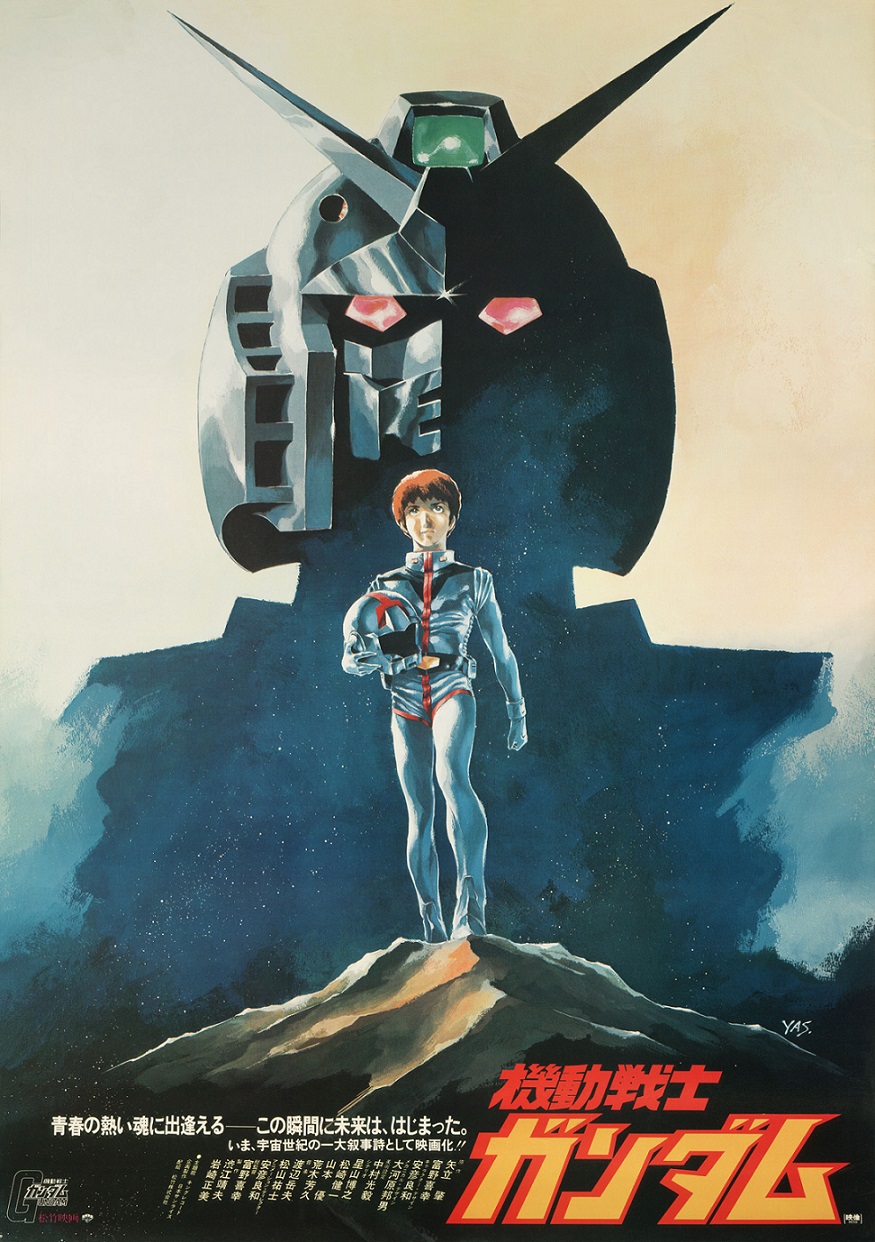
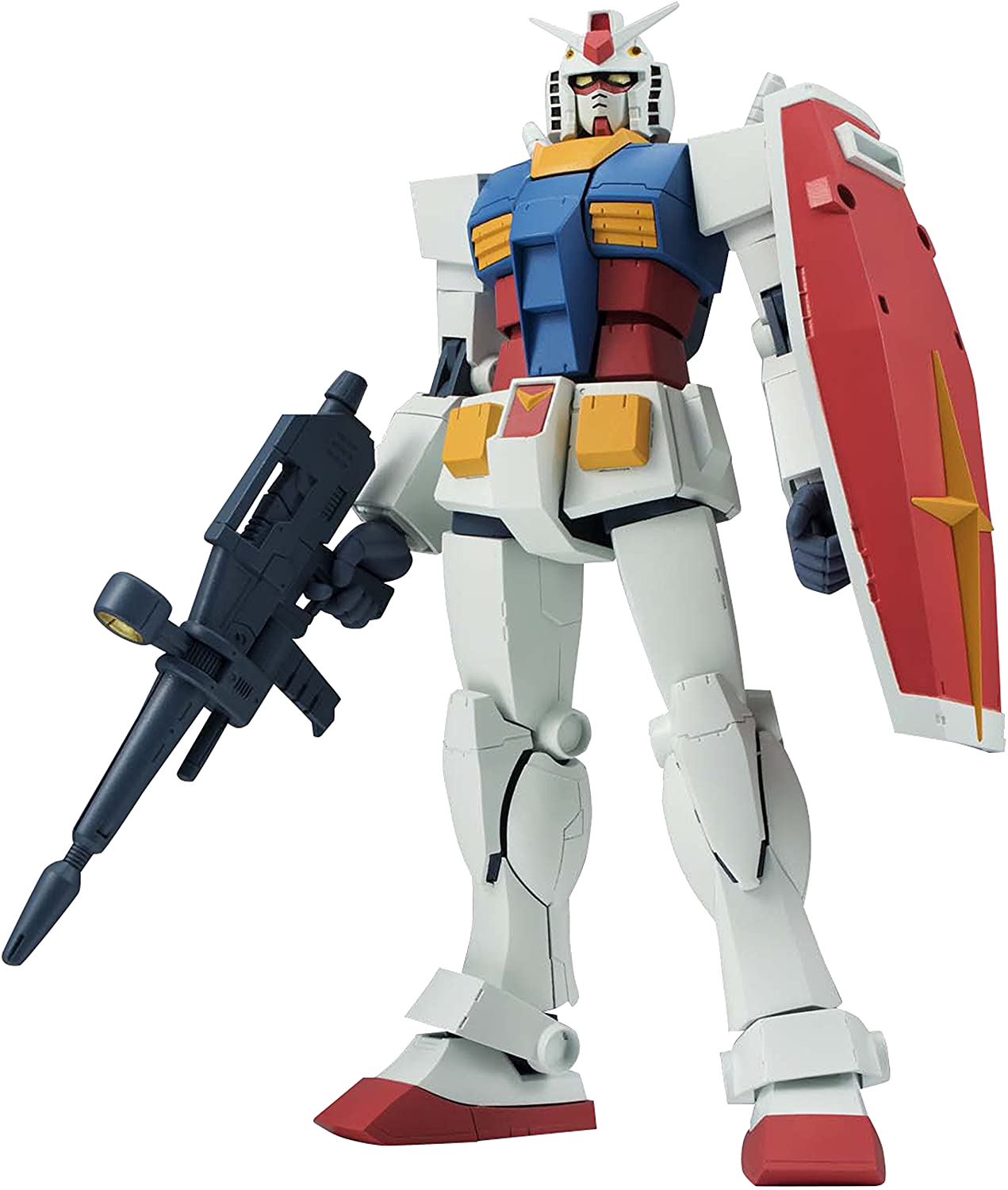
Gundam Poster

The genre-setting Mobile Suit Gundam is all about giant robots, but its recognizable tanks and jet planes are T0 through and through. They are the ‘generation previous to mech warfare.’

A universe like MechWarrior / BattleTech also has planes and tanks, which are classic T0 when compared to mechs.

In the grimdark of the Warhammer 40K setting, everything is taken to the extreme. That’s why mainstay Knight walkers would qualify as T0 when they are in fact mechs.

Tier 1

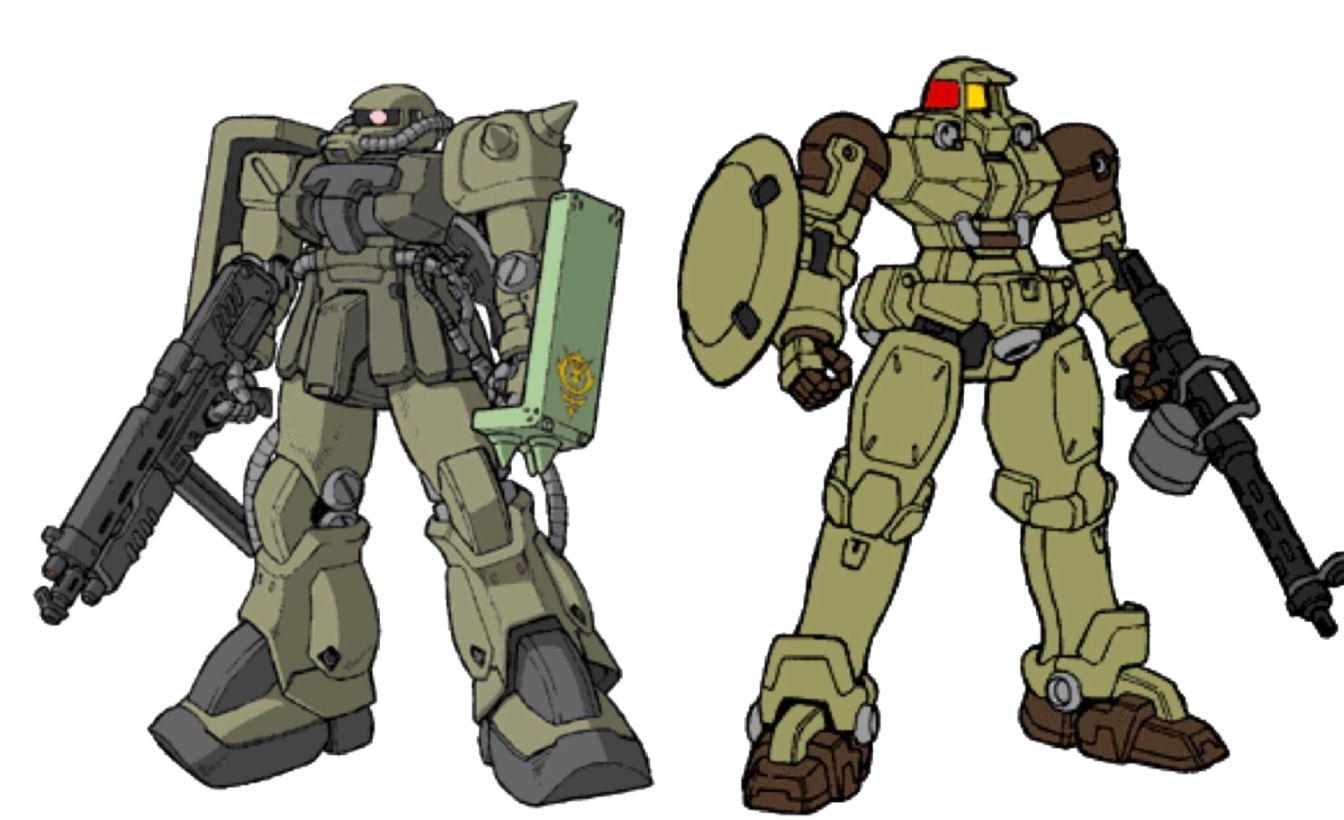
Gundam‘s many series would introduce their first generations of mecha suits here. From Leos to Zakus to Guntanks, these are the foundation that proved mechs were the next phase of military hardware.

Zaku & Leo

When it comes to a technologically-stagnant IP like MechWarrior, T1 is the lowest, ‘Light’ tonnage. Super-heavy tanks can fill a T1 role, but that’s about it.

The same respect to tonnage fits with the Warhammer 40K setting. The smallest of the mighty Titan classes, a Warhound-class Scout armed with two weapon mounts, is T1 along with super-heavy tanks (a single Titan-class weapon mount if any) and the largest of Knights (though these latter likely at a disadvantage).

When technology does not evolve, classifications of mechs relies on size and capability, as ships do.

Tier 2

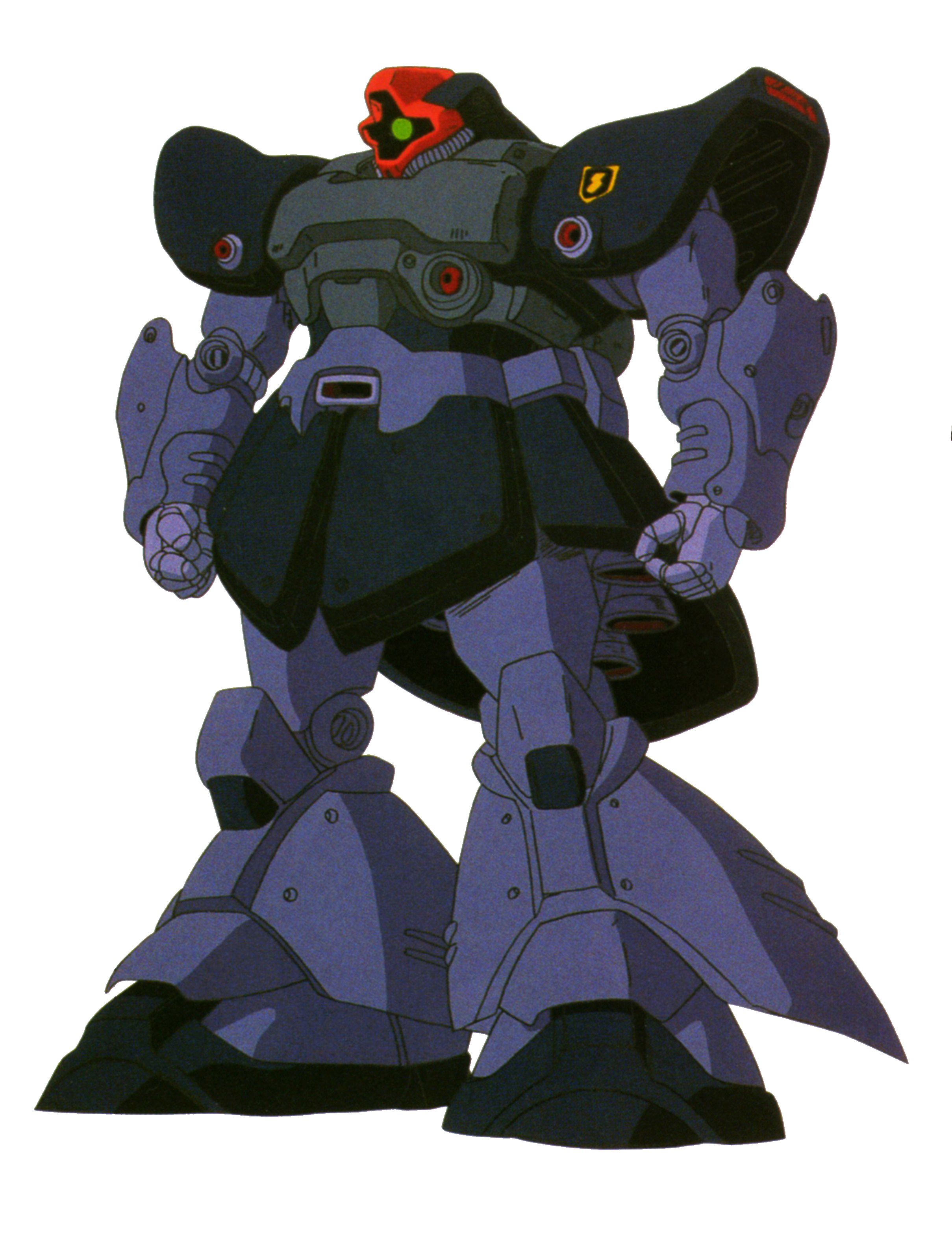
Rick Dom

Another generation of tech in the Gundam universe means GMs and Rick Doms and Dolls arrive. These can be brought down by their T0 predecessors, but it’ll be a fight!

Warhammer 40K brings to bear the middling Reaver Titan, some five-stories tall and wielding three weapons.

Tier 3

The titular Gundam of Gundam – a step above the mainline mechs used in armies with its own heroic special rules. Included would be mass-production Mobile Armors (a combination of speed, lethality, and defense) and mechs meant to counter a Gundam’s ability like the Virgo II.

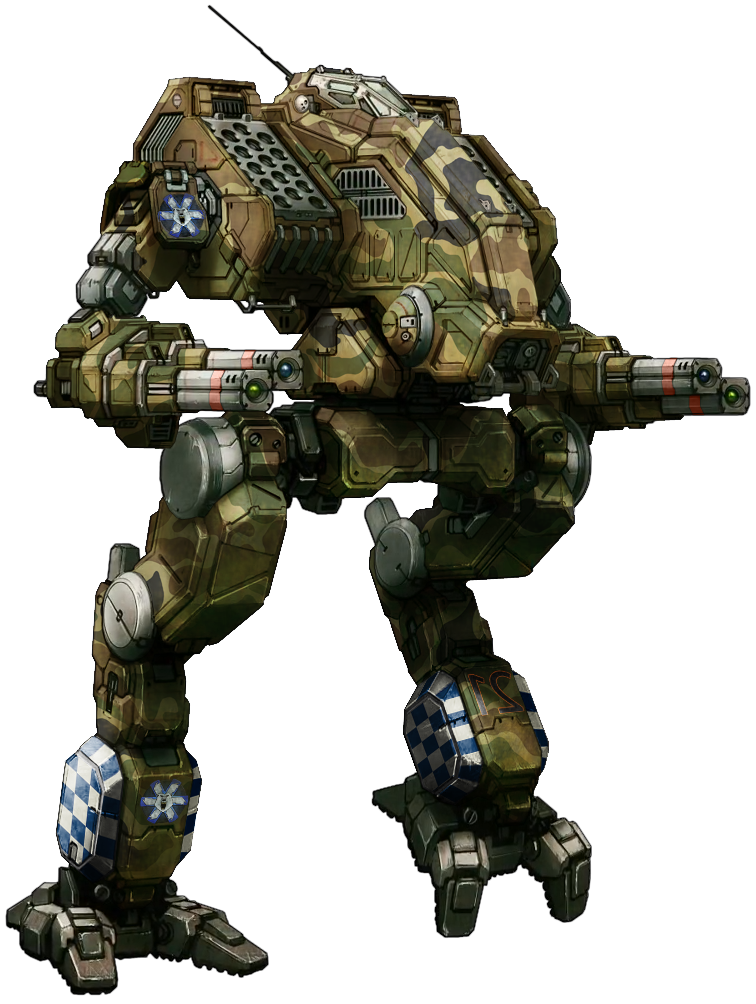
It makes sense BattleTech Heavy mechs like the Mad Dog appear here with gauss rifles and cannons.

WH40K escalates size and ability again with the Warlord Titan.

For a similar almost-fantasy example, the lesser-known Zoids franchise shows off huge bio-mechs like the Iron Kong.

Gundam
Mad Dog (aka Vulture)

Tier 4

A wrecking-tier of robots:

Gundam shows off advanced suits like Wing Zero – which destroys entire battle groups – to boss-level super-massive Mobile Armors the equivalent of multiple divisions (Big Zam, Apsaras III).

+100-ton Assault mechs in BattleTech plate the most armor, the heaviest weapons, and strike fear into any encounter. (The death’s-head Atlas being one such beast.)

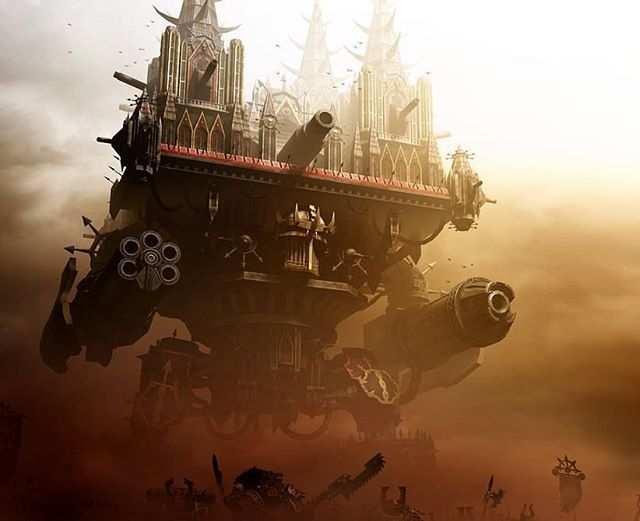
Imperators in 40K are walking fortress-cathedrals that carry a company of troops just to prevent enemies from scaling the heights of its legs.

Mech species in Zoids cap out with the gargantuan sky-borne Whale King, land-battleship Ultrasaurus, and the Godzilla-like Death Saurer.

Imperator Titan
Atlas

There we are – mechs for use in BITS.

These rules are easily adapted to organic monsters as well (Godzilla, Attack on Titan, etc.), and that’s the benefit of BITS: flavor the system to what’s being played, because it caters any play.

How would you improve the use of mecha in a role-playing game? What universal principles specific to mechs did I miss?

Whatever your playstyle is, have fun out there! Cheers.