I – a game maker – of course was drawn to a ruleset that drew so many others. Spoiler: It uses 2D6 (two six-sided dice) to resolve conflict (just like my own WIP BITS!) yet also leans on dice pools (a mainstay of many wargames). There is plainly a lot to learn from here…
However, I have kept attention on also for the brutal lore of this alternate reality. Taking note from the original grimdarkness of the Warhammer universe and combining it with the most dreadful modern imagination of dire metal, this product is not a game nor tale for immature audiences.
That said, count my fancy piqued by the possibilities this novel universe presents. “Church space program”? “Sultanate of the Iron wall”? “Black Grail”? “Anti-tank hammer”? These spark the imagination for factions and feuds within the bleakness of the trench wargame. As I work on roleplaying rules and other projects, I share a few faction ideas for continents yet to be rolled up into the strife of Trench Crusade‘s 1914:
The Human Dominion
Endless waves of humanity pour forth from under a blood-red rising sun. At their helm stand lords encased in towering suits of eight-times-forged steel and iron, their every step a proclamation of mankind’s defiance. Their crusade is singular: cast down the callous cosmic forces that reduce human potential to a game of dice. The vision is clear that the Earth is theirs to inherit – not by divine right, but by the supremacy of human might. Under the Dominion’s banner, Man shall reign master of all – unchallenged, unbound, and unrivaled.
Columbian Reserve
From mountains high to valleys low, no river is wide enough to halt the ceaseless flow of war across the ranges of the Columbian continent. Flames devour ancient forests, and battles scar the land as Heaven, mortals, and Hell wage eternal strife over the discovered world. Whether the aboriginal sacrifice of the Heretic King Cortés or the final defense of the Seven Colonies by English General Washington, evidence abounds that forces in the Columbian Reserve fair little better than their peers in the trench network across the Atlantic. Yet, amidst this unending chaos, whispers persist – rumors of a hidden pilgrimage moving in the shadows unbound by divine or infernal allegiance on their own mission: freedom at any cost.
Last Nations Confederacy
Refugees from every corner converge upon the Southern Fortress Continent which welcomes believer and uncommitted alike, so long as they contribute to the cause. The exhaustive labor of admission until death forges an ever-growing bastion against the malevolent forces that crash against the barrier coasts. These holdouts, united in work and defiance, seek escape. Wielding the twin powers of advanced science and ancient sorcery, their projects explore ways subterranean, ocean bottom, and deep space to get away from the wars. Yet, these confederates do not cower behind their hidden jungle bunkers – warriors strike out, fearless and fierce, against the genocidal ambitions of would-be conquerors who dare jeopardize the evacuation. Only through the research of secret pyramidal sacrifices and the relentless toil of their sweat does the Last Nations Confederacy cling to its fragile hope of salvation.
The Stygianity of Death Exiled
The old ways are remembered yet. In the shade there creeps the creed of gods long dead, multi-millennia machinations still unfolding. Their agents – the last of the fairies, phoenixes, sphinxes, genies, centaurs, gorgons, ravens, and more – lurk unseen among the devout of New Antioch and the vilest of Heretics alike. Bolstered by the restless tide of spirits entombed since before the first light graced the Earth, the motives of these cast-outs are shrouded as if Nature itself plotted in the dead gods’ favor.
Cult of R’lyeh
Elder terrors and their mutants bleed into this reality from places blasted and cursed. Beyond the understanding of mortals, angels, or demons, these grotesque and writhing fiends peer through rifts in the fabric of existence. Their dreaming whispers bring madness to the sane, bend believers into blasphemers, wash-up chthonic treasure to exchange for a wealth of terror. Though only shadows of their true forms can manifest, the Cult of R’lyeh gathers in dank, corrupted sanctuaries. Twisted rites of dark war are chanted in wet, fetid enclaves aboard living swamp-barges, the tepid coasts of Antarctica, and the submerged cities where slumbering corpses lie.
Golden Veda of Indus
Neither the murdered Alexander of Macedon nor the modern Sultanate could breach the sacred Indus River. Behind blood-crimson valleys and 108 frigid Himalayan castle palaces, the many denominations of Brahman have thrived in a Golden Age of science, art, and culture, where avatars of their gods walk among blooming groves and shining spires. And now the first god has failed to reincarnate, and the sleeping lotus stirs. Thus the Great Karmic Armies spill forth into the trench-riddled lands of shattered nations. Tools that blend mysticism and science, lore and technique like the world has not yet seen – energy-drenched bows, gilded sky chariots, pre-emptive strikes of divine insight – purge the many and various frontlines. Should this last crusade fail, the prophecies hold no doubt: the universe itself shall fall into the eternal ruin of oblivion.
Outer Heralds
They are not of this world. They descend from the Moon and Mars, perhaps realms far more distant. They are faceless, enigmatic. They are but a vanguard, harbingers of a greater force looming beyond comprehension nor number. They bare arms so advanced some suppose the monsters have their own numen: cyclopean tripods of liquid silver, gleaming craft that defy gravity, rays of light and heat that turn flesh to ash and boil stone as water, shimmering suits seen worn deep in gas clouds and the rings of Hell alike. They crusade for extermination complete upon Earth. They slaughter with such desperation, one may only guess at what unfathomable horror chases at the heels of these Outer Heralds.
–
Some other ideas as I write:
Air Forces: Bi- and tri-planes, blimps, balloons, floating fortresses.
Space: Rockets, flights to orbit, satellites, a counter-invasion of Mars, battles happening beyond the reaches of Earth’s influence.
Scale: solo roleplaying game elements (be the wretch in the trench), big and strategic battles, global conflict maps and evolution, hellscapes, a war in Heaven, urban warfare, pillars of fire and nuclear blasts.
Progression: Spanish Flu, Armageddon and Ragnarok and Rapture events, Great War part 2, space race, the Australian Continent, more of the Americas (Columbian Reserve and Last Nations Confederacy from the post above).
Crossovers: Powered armor from the future, DOOM‘s Doom Slayer, naval combat, a Rise of the Machines (a Matrix faction?), Warhammer AoS and 40K (but of course).
These just scratch the surface of the new creative itch I have inspired by the malevolent world of Trench Crusade. Almost certainly I will be back here to explore new ideas and tests of lore, games, and mechanics.
I wonder if you are moved yet to check out this alternate timeline – comment below what you find and think about it. Or, comment which of these factions need a bit of further expounding! For now, cheers to the crusades you get after in your own life ~
Warhammer 40,000 Only War is a grimdark soldiers-at-the-front game that is inundated with minutia that makes the title more a tactical simulation than a game-for-fun as-is.
Big game tomes tracking every little thing makes sense – back in 2012 during the game’s publication, D&D was the primary RPG example in town, Only War itself based off of the piles-o’-dice tabletop wargame WH40K. There is so much here, this blog post will have to be abridged (not a full conversion of the main features to BITS).
The publisher has since come a hugely long way with Age of Sigmar: Soulbound, yet there are still gems here applicable to the BITS system. Skimming over some areas of detail, I introduce to you the best BITS of Only War:
The Core Mechanic
Skipping the dice piles of the wargame or the recent Soulbound RPG, Only War requires rolls at or under a percentage, that percentage being a combination of ability, skill, context, personal modifications, target modifications, and other tidbits.
There is a boatload of math here, each modifier being a range from -60 to +60, in increments of either 5 or 10. Ouch.
BITS is here to save the day for us: Genericize the difficulty, add minimal additions to rolls, and roll 2d6 at most.
Difficulty
Tier
Roll
Example
Easy
1
5+
Rabble, conscripts, untrained guards, small beasts.
Moderate
2
7+
Professional guards, foot soldiers, trained.
Hard
3
9+
Specialists, veterans, brutes, large beasts.
Very Hard
4
11+
Captains, elites, killers, vicious beasts.
Legendary
6
13+
Demi-gods, lords, titular mortals.
Near Impossible
10
15+
The gods made flesh, god-like beings.
BITS Difficulty Reminder
Let us skip the rest of the mechanic since most all of it can be replaced by BITS for faster, easier play.
9. 9 stats, not counting Wounds (health), Fatigue (disadvantage on things when fatigued), Sanity, Corruption, and different Speeds and Sizes and Encumbrances.
Humans can recall only 7 things (+/- 2) in memory, so including 9 stats and more about the character being played plus the equipment of that character plus what is happening with comrades plus what is happening in game… No good.
BITS mitigates this with Body, Insight, and Thought. Here, we can take an average of the Only War stats that correspond (each stat averages to 31%: 2d10 + 20), and giving stat points for what percentage comes out:
% Range to BITS Value (Semi-Heroic is the best fit, Heroic second)
I won’t drawl on the trainings/skills a character has either – as is the typical, there are too many. So instead, base skills (the “Specialties” of BITS) on the role the character plays: Are they a pilot? A driver? The vanguard? A mechanical, biological, or software technician? A psychic (aka magic) user?
Let the character role decide what the character can and cannot do with advantage because it is safe to assume the characters are competent to some degree.
As for health, using Soulbound‘s B+I+T+S or a 2d6 or even d6 can lead to different experiences, whatever the game should “feel” like at your table:
Health
Kind of Play
B+I+T+S
Heroic, 1-to-16 range
2d6
Semi-heroic, 2-12 range, average 7
d6
Deadly, 1-6 range, average 3-4
Healthy Conversions
The Fun BITS
A brief here before the next sections: What follows are the parts of Only War that really stood out to my design-eye.
These mechanics either are fully formed and standalone, require minor tweaks, or are great inspirations for BITS. Keep in mind that the following may not be 1:1 representative of Only War, but at least has a basis from the work done there.
Notable: Supply Lines
Or as the game calls it, “logistics.” Characters can get any gear they want, but they must request it and they must roll to see if it arrives.
Gear is gear – every game has equipment. Yet no game yet come across has quite this wartime mechanic of supply lines! (Band of Blades may come close – it has been awhile since reading up on it.)
Logistics shines because depending on who the characters are, what their army group is, where the battle is taking place, and how the war is going overall changes what is likely to be available.
When it comes to bad logistics rolls, an army group isn’t left to sticks and rocks. A saving grace is that every regiment has its own stock of basic kit, a class of weapons and items they have in spades. Not fancy, but an army won’t be for want!
The implementation is as math-heavy as the rest of Only War. A route BITS can take may look like:
Every player may attempt 1 requisition between missions, adding their Insight stat to how they barter / promise / beg / threaten / steal for it.
If the players are in retreat or in a break-neck push ahead, requisition cannot happen.
The effectiveness of the item is the base challenge of the roll (tier 1 quality = 5+ roll, 2 = 7+, etc.).
The whole squad can get basic infantry gear; heavy or specialized infantry gear or vehicle parts must be rolled for one at a time while acquiring a single vehicle increases the challenge of the roll to the next level (e.g. a tier 1 scout vehicle becomes 7+, not 5+).
Advantage to the roll if winning the last battle by a landslide (utter destruction of the enemy), the next mission is “the big one,” or the item is part of the “standard” for the group. Disadvantage if the previous mission was a real beating for the characters, the next mission is a full wartime evacuation, or the item is especially “exotic” (i.e. alien, heavily modified, experimental, part of a different military branch [not the army], etc.).
Apply other boons or banes based on the conditions of the field, for example:
+1 to Roll
-1 to Roll
Fresh Shipment / Overstocked
Base Recently Raided
Friendly Industrial / Fortress World
Backwater / Naturalized / Enemy World
Session 0 (Before Entering War)
Base Depot / Facilities Destroyed
Longstanding Base (1+ Year)
Trivial Forward Operating Base / Camp
Winning the War
Losing the War
Deadly Next Mission
Minimal Enemy Force Expected
Logistics Modifier Examples
Why not include the requisition of support as well during the mission? Being able to call in a tank company, have a friendly regiment on the flank, rely on air support, or signal an artillery barrage all adds to play for sure!
And of course the Game Moderator (GM) can choose if a piece of kit is even available to be rolled for – a super-heavy battle tank may simply not be around on a cut-off backwater of a warzone!
Notable: Regiment Creation
Creating an army and the soldiers who play a part in it is =superb=.
Only War walks a player through the fighting style, homeworld, standard kit, commander disposition, and even lore of the battle group they wage war on behalf of. All this before a character is made!
The regiment establishes kit, special rules, and bonuses players may (or sometimes must) apply to their characters and operations. Everything from vehicles to resources to tactics become available, as per these examples from the game:
Regiment
General Features
Cadian Shock Troops
Poster-boy soldiers. Solid firearms and a squad APC. Dadv to disobey orders. Lasguns and launchers.
Catachan Jungle Fighters
Lone-wolf guerilla fighters. Extra health. Adv in ‘nature’, Dadv cooperating. Flamers and knives.
Death Korps of Krieg
Gas-mask-wearing attrition and siege group. Adv to push forward, Dadv to fall back. Artillery.
Elysian Drop Troops
Death-from-above. Anti-grav devices, maybe a dropship. Not that strategic (less Thought). Carbines and bombs.
Maccabian Janissaries
Zealots. Solid firearms and more advanced weaponry. Good Insight, Dadv to fall back. Cannons and plasma.
Mordian Iron Guard
Armored regiment. Get a tank and combat drugs. Dadv for actions taken while in the open. Small arms.
Tallarn Desert Raiders
Mounted hit-and-run. Scout walkers and extra HP. Extra movement when ambushing others. Launchers.
Vostroyan Firstborn
Elite backliners. Extra stat point, solid standard gear. Dadv on lower-born social tests. Sniping and auto guns.
Example Regiments
There is so much more…
I might make a blog post that is a direct get-started conversion where homeworlds, commanders, et. al are covered in depth – for now, group creation in Only War is now the basis for BITS!
Notable: Vehicles
BITS lacked a firm understanding of how to implement vehicles before Only War. Now, the inspiration:
Vehicles are a unit type above Infantry – Infantry have a disadvantage to harm them (though perhaps some bonus +1 or the vehicle tier for shooting the broadside of a barn, e.g. large vehicles?).
Further, vehicle BITS tiers (1, 2, 3, 4, 6, 10) add a ‘0’ to the end of the tier for the vehicle’s hull health, e.g. tier 1 becomes 10, 2 20, etc.
Same ‘0’ applies to vehicle-grade weapons. A tier-1 effectiveness vehicle weapon does 10 damage, and so on.
Combat vehicles are either without extra protection or are “armored,” impervious to non-explosive, non-anti-armor weapons.
Optionally, a scale can be introduced to equate with infantry protection where it reduces incoming harm:
Armor
Equates to
0
No extra protection, canvas, open
1
Light infantry, flak fabric, car door
2
Medium infantry, plates, car frame
3
Heavy infantry, carapace, car engine block
4
Super infantry, powered armor, combat vehicle
6
Heavy combat vehicle, mobile weapon platform
10
Ancient / Exotic / Experimental protection
Vehicle Armor Point Array
For every tier, a vehicle gets 2 features aside from whatever motive (wheeled, tracked, or walking) it uses. A tier 1 scout could have any of the following, up to 2: mounted infantry weapon, mounted vehicle-tier weapon (counts as 2 systems), a fireteam carrying capacity (4-6 infantry, heavy weapons and ‘larger’ personnel counting as 2 infantry), armored, hover engine, turbo engine, slaved cyborg operator, damage control, amphibious functions, large replacement parts, etc.
Notable: Force Fields
AKA “shields.”
Only War defines how BITS handles these kinds of ‘magic’ fields of protection!
First, they do not overlap. Only the strongest field applies at a time, though pop one, a second might be in place.
Next, effect tier must be equal to or greater than the field itself, otherwise all of the effect is negated completely (a tier-1 pistol and a tier-1 vehicle gun are treated the same). But fields remain ‘ablative,’ in that once damage arrives that is on par with the field, the field only goes down 1 point in effectiveness in exchange for stopping all damage. The new effectiveness – until recharged – can then be attacked by lesser-effect weapons.
Example: A tier 4 vehicle-mounted shield takes 2-damage small-arms fire. The damage doesn’t make it through and the shields hold at 4. (Attention is drawn to being shot, however!)
Then an airstrike arrives, doing 4-damage to the shield. The shield decreases in power to 3, stopping all of the airstrike’s effect. But a second airstrike arrives, again at 4, dropping the shield now to 2. A small-arms rifle takes a potshot for 2, now able to damage the shield down to 1.
As the vehicle’s turn ends, the shields recharge back up to 2. This stops pistols, but won’t stop rifle or heavier fire more than twice.
Should actions against the field critically succeed when the damage is at or above shield power, the field ‘pops,’ reducing to 0 to stop the attack (and if especially egregious, a GM might think the field has run out of power or requires maintenance!).
The above is a tentative scale of field shield power, though it could be split into Infantry-Vehicle-Ship-Planetary scales:
Tier
Example
1
Personal Field
2
Combat Field
3
Containment / Wall Field
4
Vehicle / Building Field
6
Spaceship Field
10
World Field
Example Field Strengths
Notable: Augments
Robot eyes, regrown limbs, spare organs? The idea that any character can be saved from extreme physical harm – at a cost – is stellar.
Replacement parts are noticeable, but as standard do nothing ‘extra.’ Requisition, time, and medical and technical talent can be spent to, say, breath in any atmosphere, run faster, lift heavier, punch harder, see farther, or just have laser eyes 🙂
Notable: Levels of Damage
In a strange way, Only War has both a bean-counting health system (typical of RPGs), and an abstracted level of wounds.
The level of damage affects a character’s healing rate and NPC comrades. Once more severe levels are healed, it is easier to heal the rest. My take:
Only War Harm Term
Approx. Harm
Notes
Critical
< Body stat left of life
7+ Luck test each day of complete rest to heal 1.
Heavy
> Body in harm, > Body left
Each day of complete rest to heal 1.
Light
Harm <= Body
Each day of no further harm heals 1.
Abstract Character Health Levels
This seems a little heavy handed – why not heal 1 based on the context of where and how healing is done like most other games? (D&D “rests” come to mind.) Regardless, state is something to keep in my own game-design back-pocket for a while yet.
In the meantime, a handful of health is optimal (certainly not more than 20), perhaps spacing states at half- and quarter-life marks, rounding up. (Again, analyze this another time 🤷♂️)
Let’s consider NPC comrades:
Notable: NPC Comrades
Every player character in the game is supposed to have a “comrade,” someone who follows them around, follows orders, and provides support. (Excluding some chosen roles during character creation.)
Having a battle-buddy is nifty, though comes with caveats. It bolsters the number of soldiers to make a squad, provides some mechanical and narrative flexibility, but also adds a greater burden on the GM to track yet other NPCs. I am a bit on the fence with these kinds of henchmen, so it needs further investigation.
NPCs are either unharmed, wounded, or dead – there is no middle ground! Nor excess tracking of health. A single hit of any caliber reduces the NPC’s state, though extreme harm (in excess of the NPC’s effect tier, or double the tier or more?) should count as at least 2 hits.
When healthy, they take orders, can do tasks on their own, and generally support the player character with a +1 ‘help’ to rolls.
State
What It Does
Unharmed
Great. Sticks around.
Wounded
Cannot run (‘Slow’ speed). Would assume they have Dadv or reduced effectiveness. Takes a week of rest to heal.
Dead
Not doing great. Mark the name down, when and how they died. Get a new comrade back at base.
Comrade States
BITS will explore adding a fourth state, “critical,” where NPCs could be carried back to base for saving, or left behind to hold back an onrushing tide!
Only War lacks a “lookout sir!” rule; a comrade can intercept incoming fire on behalf of their leader. Rather, only when doubles are rolled when targeting the player do these NPCs get hit. This is messy, so BITS adds “lookout sir!” when a hit would kill the player character and not otherwise hit the NPC (an explosion would hit both characters regardless).
Notable: Compatible With Other Games
Blows my mind that more games fail to include integration or conversion specifications with other titles. Maybe it is the problem of ownership and copyright, should a system such as D&D combine with Mörk Borg by name 🤷♂️
In any case, Only War fits itself nicely alongside other titles in the Warhammer 40,000 RPG line. The game is thorough with the mechanical tweaks and also cautious with the theming, reiterating what Only War is meant for versus the ‘feel’ other titles expect to provide.
–
2600 words, and barely scratching the surface of Warhammer 40,000 Only War!
Like fitting a foot into a too tight shoe, a great feel and look once there after putting in the work. That is what BITS is – a tight, sleek frame for the games that go in, running like a charm ~
Only War is no different. While BITS applied some of its principles to help Only War conform to a more concise feel, Only War gave as good as it got. Multiple points of inspiration came from Only War that BITS is already applying in game drafts soon to be shared!
What are you taking from BITS of Only War? The war tracking? Army building? Force fields? I want to know – share your insights and this post and we’ll meet again in a bit! Cheers ~
Short stories (8750-10k words) are much more profitable than full-length books (95k-115k) by a factor of 367% when it come to price-per-page.
The Data Collection
Data from the first and top-rated grimdark books from The Black Library and Amazon gives the average pages for short and full stories. Using the rule-of-thumb that there are 250 words per page, we can extrapolate word count. The “Range” below comes from a +/- ~10% of the average:
Group
Count ( Range )
Words ( Range )
Short Stories
37.5 ( 35-40 )
9375 ( 8750-10k )
Full Books
420 ( 380-460 )
105k ( 95k-115k )
Average Page and Word Count
Short stories where virtually sold for $4. Full books (not anthological or omnibus collections) were approximately $12.
Therefore, a short story is priced at about $.11 per page ($.106) while full books run $.03 per page ($.029), a difference of ~367%.
Without a doubt, without considering how short stories have a lower barrier of entry for the buyer and make a faster/less-risky production for the producer, writing grimdark short stories (and pricing accordingly) is the better business decision.
The Collection Method
Not as fancy as the RPG pricing post, I did most of this collection on the back of an envelope (no, really).
Already referenced above, I gathered from four groups: the first 10 short stories offered by The Black Library, 7 full stories on Amazon, 11 stories recommended from a first-read list (a source I follow and reference for grimdark content), and 2 books I myself favorite.
All stories were rated above 80%, some particular attention given to >90% titles.
The above full averages come to 427, but when compared with a median, ~420 is a confident middle position, giving the +/- ~10% range of 380 to 460 pages.
–
Quick and easy. Simply put, there is much more bang-for-buck by writing short stories vs. full-length novels (in the grimdark tone, at least!).
I hope this helps you with your writing – it has already helped me determine the price of grimdark books and where I ought best spend my energies 😁 Cheers!
Age of Sigmar: Soulbound is a cornucopia of cool game design concepts I have either been working on in BITS or am adding.
Heck, the idea of “Soul” or a spirit to go along with mind and body has provided “Insight” to BITS! (We will talk about this in a minute.)
So needless to say, this Warhammer game is very, very well put together. I am humbled by it while it is my honor to adapt the system to 2d6 (2 6-sided dice) BITS play!
Soulboundrolls a pile of d6 whenever some re-/action is dangerous or otherwise consequential. Each d6 needs a certain face value or above to count as a success, then a certain number of successes are required at or above a difficulty target to count as having been accomplished.
Roll X dice. Y or more of those need to be at or over Z to succeed in the action.
A normal difficulty is two successes, while the face values and number of dice to roll are determined by skills and abilities.
Since Soulbound heralds from the Warhammer wargame, it makes some sense to keep piles of dice around, the same piles of d6 the wargame uses. HOWEVER, this turns out to be one of the weakest parts of the system in my eyes.
Lots of deduction leads to lots of dice leads to lots of math and I and BITS really will have nothing to do with it.
* throws dice pools out the window *
* goes out, picks up dice so as not to litter *
BITS carries on with 2d6 with tiers of difficulty. The only additions come from a handful of stats and few if any other factors. Minimal rolls, minimal math, maximum speed and ease of understanding. To recap:
Difficulty
Tier
Roll
Example
Very Easy
1
5+
Rabble, conscripts, small beasts.
Easy
2
7+
Guards, foot soldiers, trained.
Moderate
3
9+
Professionals, veterans, brutes, large beasts.
Hard
4
11+
Captains, elites, killers, vicious beasts.
Very Hard
6
13+
Demi-gods, lords, titular mortals.
Godly, Near Impossible
10
15+
The gods, god-like beings.
BITS Rolling Guidelines
Advantage, disadvantage, and criticals get a deep dive over on “BITS of D&D” – go check it out after this. For now, a recap ‘vantage in BITS:
Advantage lets you optionally take the highest 2d6 die and use its value twice. Disadvantage takes and doubles the lowest which you must use.
Criticals apply even before ‘vantage when rolling double face values on the 2d6. If the unmodified face values sum is above the target number, it is a crit success, below, a crit failure. Either way, something extra happens, usually an immediate extra action, double the effect, a bypass of protection, or similar based on context.
The Stats
Body, Mind, and Soul (BMS) is all the stat tracking Soulbound brings and I couldn’t be happier.
Body details the combined strength and nimbleness of a character. Mind is of course the intellect, but also accuracy. Soul is a relationship with the divine and protection against corruption. Each ranges in value from +1 to +4 in modification to rolls.
For all intents and purposes, BITS has no changes here 🤷♂️ Body is Body, Insight is Soul, Thought is Mind. I would only expand the range of stat values (-4 to +4) and add social challenges to each stat (BITS does this with Body intimidation, Insight charm, and Thought reasoning).
Heck, I am envious at how well BMS works so well, yet BITS includes an abstraction of Skills, something Soulbound includes only in support of the pile-o’-dice mechanic it comes with. Let us touch on that:
Character Creation and Archetypes
Character creation is very straightforward – select a Race (aka species), select an Archetype (aka class), then select a gearset.
The races are classic WH: Age of Sigmar folk. Tree people, elf-likes, humans, dwarf-likes, angels, etc. What race is chosen determines what archetypes are available.
There are generic and race-specific archetypes. Whichever is chosen, a set of stats is assigned automatically (e.g. B 1, M 2, S 3). From there, a small bundle of gear is available for selection. A special ability may be applied for the archetype too.
BITS fits this to a tee – flat stat allocation, descriptions of the species and the character’s role in life, gear packs, and Skill abilities… No change. These are intuitive 1:1 conversions.
HP
I am so hyped for how Soulbound keeps characters functioning and alive. The solution?
Sum all stats (B+M+S) together. BRILLIANT. BITS is “borrowing” this (B+I+T+S).
Additionally, a character is not dead at 0 HP. Instead, they take on ever-egregious wounds, the number being half the total HP. (This works out to about 3-4 wounds per character.) Wounds have a part in BITS as scars and the eventual crippling of a character, but I forgo elaboration here.
This would be it, but this design choice struck me so hard, we ought look in on the math. See more at the bottom of this post in the “Bonus: HP Deep Dive” section.
Gear
Heads up: The following may include my own design commentary without me realizing it. Notes got mixed together, so consider the following as Soulbound optimized for BITS!
Nothing special for armaments: Weapon effect (e.g. +0 knives, +1 swords, +2 greatswords) in SB is added to the number of successes which translates to damage. BITS sees this as all value above the needed difficulty results in damage. Doable!
Degrees of Success (DoS) is effect. Need a 7+ and roll a 9? That is 2 effect + whatever the scale of tool is, such as +1 for a sword, equaling a total 3 effect.
Armor merely reduces the amount of damage sustained. Light 1 armor allows sneaking. Medium 2 has no banes but disallows or disadvantages sneaking. Heavy 3 is loud enough that anyone nearby will hear the character virtually no matter what. BITS could expect a Super-Heavy 4, that belittles movement and action (reduction, delays, disadvantage).
Shields give +1 to defensive rolls (+X for the shield isn’t bad), but BITS includes additional options:
Make shields ‘ablative’ (destroy 1-point of the shield to negate all of an attack).
Subtract from effect like armor does.
Give advantage to defensive rolls, but include the ‘ablative’ option too.
Regardless, expand the types of shields that can be carried:
Buckler 1, can be strapped to shoulders and forearms and still be effective.
Round or Kite 2, must use a hand or be put on the back to carry.
Tower 3, must use a hand to carry.
Wall 4, cannot move without wheels or another carrier.
Back to weapons: What is cool is the range which centers around “Zones“, i.e. general areas what have the same features in an approximate space (rooms, groves, a bridge, etc.).
Close (within reach)
Short (within the Zone)
Medium (1 Zone away)
Long (2 Zones away)
Extreme (3+ Zones away)
Anything with greater than Close range when used in Close has disadvantage (e.g. a bow would be disadvantaged if shooting someone up in the archer’s face).
Wealth
A nifty spot in Soulbound is the holy healing water. Special water is the only way to humanely recover life and is the mode of currency in SB.
This is cool design – do you heal or attempt to buy things that will prevent the harm in the first place? Do you protect your wealth in slow-you-down chests, or carry them on your person within reach but also where they might be smashed?
Games like Metro have done this with required-yet-scarce bullets, so I like seeing the mechanic here. BITS isn’t off-the-shelf ready to conflate magic potions with economy abstraction, but a simple count of the number of water bulbs (X bulbs for healing and exchange) or an abstraction to amount of water available (1 for a bulb or two, 2 being gallons, 3 a pool of water, 4 a cistern, etc.) is doable.
Acting
SB goes for multiple actions in a turn, pulled from a pool of Soul / 2, regaining 1 at the start of the character’s turn.
BITS is not a fan of point tracking this way, so 1 action per character or group per turn is the way to go. A sample of options:
Action
Notes
Attack
Anything within range.
Run
Use the character’s Speed to move around different Zones.
Charge
Run and Attack, but have -1 on defense until next turn.
Call Shot
Head (-2 to hit, stuns), arm (-1, disarms), leg (-1, makes prone).
Defend
Any Attack or movement in or into your Zone has to go through the character first. Advantage given if using a shield!
Dodge
+1 to any defense, with advantage.
Flee
Attempt to escape the conflict.
Hide
A Body (or Mind) roll. Hidden from minds lower than the number of successes (e.g. 3 successes hides from 2 Mind seakers).
Shove
A Body roll. Success moves the target from Close to Short range. Critical success knocks the target prone.
-1 Speed Actions:
Climb, Crawl, Swim, Squeeze, Sneak
Actions
Mentioning Speed, it comes in levels:
Slow – Must use an action to move inside the same Zone.
Normal – Free to move within the same Zone, 1 action to move to adjacent Zones. (Hand-to-hand combat uses this to get within range in the same Zone.)
Fast – Free move into 1 adjacent Zone, 1 action to move elsewhere.
Immediate – Added for BITS, this is a free move to any Zone within the play area.
Nothing moves slower than Slow unless the thing is somehow bound, grappled, or crippled.
Hiring
Probably the best hireling or mercenary list I have every come across. A list, with a few of my own for balance:
Craft
BMS
Notes
Cook
111
Has a week of hot-meal ingredients and gear.
Servant
111
Can carry and do simple chores or tasks.
Hunter
211
d6 meats a day in rural or feral environments. Knows trapping.
Veteran
211
Frontline fighter. Random weapon set.
Medic
121
Helps heal. May attempt field surgery on wounds.
Scout
121
Reports on an area at end-of-day.
Local
112
Knows the area, rumors, and is charming. May be an entertainer.
Scholar
112
Provides a bonus against corruption. May be a pilgrim.
Hirelings
Size
Warhammer is full of giant monsters, so size needs to play a part. Soulbound‘s rules are simply:
A character can climb on any character sized above theirs.
If in the same Zone as a higher-sized character, the smaller character(s) get stomped.
As for the kinds of sizes, BITS might scale based on if a size could eaten or swallowed by the next size up in 1 or 2 bites. Application:
Sub-Unit (a tiny thing, much smaller than a human)
Unit (a human, cart, can fit a company of them into a Zone)
Sub-Zone (warhorse, large vehicles, can only fit so many – a squad – in a Zone)
Zone (giants, airships, things that takes up an entire Zone)
Multizone (truly monstrous)
Closing (Un)Notables
The meta-currencies of DOOM (how bad the world is failing) and Soulfire (i.e. miracles) can provide a nice intervention and reflection of player action on the world, but BITS shies from these kinds of currencies.
We also haven’t touched on personal and group experience, nor mounts or terrain in how they play. Nothing wrong with these – merely need to wrap up here!
All in all, Soulbound is an excellent game full of profound ideas. While its heritage of coming from a wargame can slow it down, BITS is the system to bring the game back to a fast, streamlined pace!
If I missed anything in the last ~1800 words, please say so – BITS, Soulbound, and your own games will be better for it. Cheers ~ 🎲🎲
Bonus: HP Deep Dive
Of all the archetypes, the average sum is 7.6 HP (3-4 wounds). The stat values to get there are distributed approximately:
1 = 16%
2 = 36%
3 = 28%
4 = 20%
Tangent: Soulbound is a game about being a champion, a hero in action and ability, a blessed-by-the-divine entity of power. That is clear in the high-powered stats!
If rolling for stats, with a d6, the above 1-2-3-4 comes out about as 1 = 1, 2 and 3 = 2, 4 and 5 = 3, and 6 = 4. Because of the ‘heroic’ setting, using Soulbound‘s content to replicate other difficulty tiers is just a shift of the results (Gods mode added for flavor):
Stat Value
Wretched
Mundane
Heroic (SB)
Demi-God
Gods
1
1, 2, 3
1, 2
1
1
–
2
4, 5
3, 4
2, 3
2
1
3
6
5
4, 5
3, 4
2, 3
4
–
6
6
5, 6
4, 5, 6
Avg. HP
5
6.5
7.5
8.5
10
d6 Tiered Character Values
Love it when the match comes together! BITS of Soulbound, as with “BITS of <anything>,” works. Cheers to that and cheers to your SB games!
Two years ago I introduced BITS, a tabletop RPG system that is fast, emergently complex from base concepts, modular, and simple to pick up.
Liter rules than Dungeons & Dragons-like simulators, crunchier than story-foremost Powered By the Apocalypse types, yet not a traditional Old School Revival, the system has been polished by thousands of hours of study and play.
After a lot of poking and prodding, I think it is time we took a look back on two years of development.
Before Getting to the New Stuff
Let’s take a look at what BITS used to be to get a full appreciation of how far the system has come.
Body-Interaction-Thought System was the first draft. The core mechanic comes from two six-sided dice (2d6) plus a modifier to get at or above a tiered step list of threat ratings, while all scores or values aimed to be 0 to 4 🎲🎲
Originally BITS was based off of a simplification of D&D (this is before I learned of the streamlined Old School Revival movement). Body was meant to be the average strength and conditioning of a D&D character, Interaction dexterousness and interpersonal prowess, and Thought as wisdom and intelligence. Any special skills were merely implied by the class a character had, such that rogues would expect to be sneaky, paladins could call in holy favors, and wizards knew magic.
The system tries to tie together any and all subsystems into the 2d6 mechanic, or more specifically, having two dice and a rough guess of the quality of the actors and actions in a situation. Thereby, a subsystem from one BITS game or conversion can be near-seamlessly dropped into another or tweaked with the assurance that 2d6 exist somewhere in play.
Reflection
Going after D&D was an appropriate start. Not knowing about OSR helped create a design language all my own instead of dropping my work to adopt something ‘close enough.’
Yes, D&D was (and still is) a monster of a system. It is the godfather of all RPGs, “D&D” now being synonymous with “tabletop RPG.” To tackle a full conversion of all the subsystems of D&D (which are by no means consistent, complete, or without a lot of internal complexity) was naïve hubris 😅
As a personal project, BITS introduced me to innumerable games, systems, principles, methodologies, and techniques for putting together not only games, but books and writing, too.
Using the masterclass of game making that is the internet with a search bar, lots of playtests, sample game writing using the system, and the excellent help of many friends, BITS evolved.
A New Kind of RPG
Let me introduce BITS:
Body – Physical swiftness and brawn. Great for getting about to hit things, so the ‘fighter’ and ‘rogue’ stat.
Insight – General perception, whether of the environment, another person, or a far-off target, and dealing with it appropriately. The ‘bard’ and ‘archer’ stat.
Thought – Mind, intelligence, mental strength. The ‘magic’ stat.
Skills – Also can be called “Specialty.” This is what sets a character apart with special rules or traits that enable a greater depth of customization.
Each of the above get added to a roll of 2d6 to get over a threat level, that level describing how difficult it will be to act against and a large chunk of the stats for the threat:
Tier / Health / Harm / Quality / Value / Durability
Roll + BIT
Description
0
–
Too easy. Nothing. Junk. Absolutely helpless. Might be dangerous in groups, but only with a disadvantage. Lower 50% of a population if counted at all.
1
5+
Easy. Commonplace. Padded armor. Domestic animals, the unskilled, conscripts, thugs, minions. Best served in hordes. 20%
2
7+
Moderate. Specialized or with skill. Well prepared. Guards, hired muscle, footmen, boot camp troops. 15%
Very hard. Best of the best. Natural killers and masters. Grizzly bears, walking tanks, spec ops, knights. 5%
6
13+
Demi-gods. Kings, lords, grand masters, and titular characters. The people that lead wars or have ended them personally. 1% or less.
10
15+
Godly. May never appear!
Not all actions have to be about physical battle. Instead, there are three kinds of trial a character may face threats in:
Combative – physical violence between creatures.
Environmental – surviving dangerous conditions.
Social – convincing others to act.
Each of the above can exist within each other. I digress –
Many of the other questions that I wracked my brain on originally are saved by the modular nature of BITS. Truly a la carte, all options can be put or replaced until the desired game feel is achieved:
Weapons – Flat damage as the weapon’s threat tier? Or the degree of success? Need kinds of weapons, like piercing and pummeling types?
Armor – Ablative? Adds to defensive rolls? Reduces damage only? Cares about the kind of damage applied?
Gear – How much? Need to pick it specifically before an adventure or can call it out at the time it is needed (“quantum”/Schrodinger gear)?
Health – A flat value? The sum of all BITS? Rolled for? What about mental health or social composure?
Experience – Milestones? Personal goals? Player party goals? Gained by gold and treasure?
Economy – Wealth is counted piece by piece? By wealth tiers? Is selling and buying at the tier of the gear, or is it a tier less and more, respectively?
Turns – Rolled for? How often does it change? Does a BIT apply? Sequenced or simultaneous?
Partial Successes – Are double-twos automatic fails no matter what? Double-sixes successes? Especially bad or good outcomes? What about rolling exactly the threat number?
Magic – Do failures come randomly, target the caster, or fizzle out? Anyone can use it or is a specific skill / origin needed? Is there a limit on how many times to use?
et. al
BITS is a joy to work on. So flexible, I have details and drafts on multiple genres (e.g. sci fi, fantasy, modern day, giant robot, etc.), applications to different popular media (e.g. Star Wars, Star Trek, Avatar the Last Airbender, etc.), and one-page conversions for other game systems (e.g. Mork Borg, D&D, PBtA, Soulbound, Wrath and Glory, etc.).
I am darn well giddy to share with you these things this year!
A Take From the 4Ms
I noticed how in the fictional Warhammer 40,000 universe, everyone was relying on their augmented bulk, their psionic mind, or their control of machines to get what they want.
Thus bore Muscle-Mind-Machine, a draft of the draft of what became BITS!
I could not get 3M to work the way I wanted to as a universal system, so BITS became the next evolution.
But what about the Ms? While working on BITS and reading other game systems, the Ms evolved too into 4M:
Muscle – strength, toughness, dexterity.
Mind – intellect, insight, mental or magical power.
Mettle – force of will, morale, charisma, daresay “soul.”
Mastery – trainings, skills, abilities, special considerations.
This latest came inspired by Warhammer’s Soulbound, a recent WH RPG that leverages soul-power to bring out divine and demonic judgement. I take that to be a more generic “soul” so that it becomes flexible for different situations where personality matters.
We can add more Ms too: Mortality (health, HP, ability to keep resisting), Memory (background and connection network), Move (how quickly to maneuver), Means (the gear or a ‘growth’ or ‘augment’ that takes up a gear slot), etc.
But that is neither here nor there 🙂 BITS is my go-to, but it is nice to know 4M (or 8M!) is there in my game-making toolbox.
The Future
There are always questions in science. Art is only put down, never complete. Game design is both an art and science, thus there always is more work to do.
As mentioned, I am tackling one-page conversions and game’s set in familiar-though-adapted settings. Put them here on the blog, gather courage to upload them on storefronts, buy some cover art – you know, business things 🙂
Let me know if you would care to try out BITS yourself! Especially if I haven’t put the one-pager out from the blog backlog 😁 Until then, enjoy your games and cheers to what you make!
You’ve seen me talka lot about BITS, an original rule set for tabletop role-playing games (RPGs). It’s about time you got some more insight to it!
BITS, or Body-Interaction-Thought System, came about first when a colleague and knowledgeable friend mentioned how cumbersome the classic Dungeons and Dragons type of old-school RPG systems were.
I sat on this problem for awhile, pondering ways to automate and streamline the work of the world building, dice juggling, and stat monitoring. Nothing really “worked”…
Until I noticed that the universe of Warhammer 40K was made purely of the elements of Muscle, Machine, and Mind 🤯
Looking at other RPG systems, I saw the 3Ms everywhere. All game systems divide into physical ability and performance, manual dexterity and know-how, and mental strength and intelligence.
For reasons I care to let you read or listen about, the 3Ms became the 4Ms, “Maybe” joining the ranks and becoming a dump section for anything narrative in a game.
I tried 4Ms for a few more things, but I couldn’t get Maybe to always feel “correct”, but I sure as heck wasn’t going to give up Muscle, Machine, and Mind!
What resulted was BITS. Body relates better to physical performance, Interaction better for manual work and social charisma, and Mind handling magic and intelligence. And in these things, any attributes or stats in any game can be put 😎
Further, I discovered a common theme of ‘4’ showing up in games, where every number could be normalized on a 0 to 4 scale. Thus, any single BITS value is rated 0 to 4 on a linear growth curve (0 to 1 is short, 3 to 4 is long), meaning any fictional creature in a game has at maximum a total of 12 for their values, while any single value is at most 4. (Great for balancing and restricting the dreaded Power Creep!)
BITS uses 2 6-sided dice (2d6) for every roll to see if a fictional creature succeeds at what it wants to do. The expectation is to keep things simple – 2d6 are easy to add together, they are the most common dice type, and having everyone roll only 2 dice for everything is elegantly simple (checkout the probability curve that games such as the famous Powered by the Apocalypse system uses).
When rolling, the “additions” to the roll are kept in a very exclusive list:
Add a single BITS value (or none, in the case of pure Luck rolls), 0 to 4.
Add 1 for any other creature that spends valuable time helping your creature act.
“Maybe” hasn’t gone away completely, either. The current test-case conversion of D&D into BITS has “Luck”, a fallback for whenever a roll needs to happen that doesn’t seem to fit into the Body-Interaction-Thought set, or is an event that a player would have no chance to react to. It means no values are added to the roll.
But what does a person need to roll to succeed?
“Threat” is the WIP term for the success threshold. Every creature and environmental obstacle has a threat which corresponds with their total BITS value (if a creature) or difficulty (hazards). Any action against this creature or hazard must roll (with additions) at or over the threat. (Easy, ya?)
Scaling threat has been a major undertaking with BITS and may not be done yet, so it goes for now as follows:
Roll a 5 for easy actions.
7 for moderate.
9 for hard.
etc.
Players max out at 13 threat. Simple!
The rolls may be altered (rerolling for dis-/advantage) or may lead to automatic successes/failures (doubles over/under threat).
Regardless, how effective the action is deals with how much over threat a roll is. Using damage from a weapon as an example, weapons only have a low base damage X from 1 to 4. However, for every degree of success over threat, that’s extra damage to add! No extra rolling for damage, no variable dice for damage, and a counterbalance of using tools and picking fights!
If you take damage, you must have health! Or, as it is in BITS, “wounds”, which you add any damage to (reduced by an armor value). Once you reach your maximum number of wounds, well, 💀💀💀
I aim to have wounds traceable with 6-sided dice for easy counting, so maximum wounds have been necessarily low… I will need more playtesting later-/post-pandemic to understand the implications of that, but you get the drift – everything is to be easier, simpler, and more accessible 😉
When your creature acts is also streamlined. Everyone rolls, adding their highest BITS value. The highest final number goes first, but then if the result is even or odd, that changes the direction of the turn order (to the player’s left or right). If it’s the Game Moderator’s (GM) turn, they take a turn for every creature not controlled by a player.
The GM does more than moderate – they arbitrate, describe, listen, and help ensure the quality of the game. They’re also the player I aim to develop the most automation tools for 😁
Together, the GM and other players take on adventures meant to be self-contained missions that offer opportunities to pursue other adventures. The players gain XP for trying more difficult adventures, which increases their BITS values, which leads to getting more treasure in the adventure, which allows better equipment to be bought, which allows more difficult (and epic!) adventures to be undertaken, which gives more XP. #Cycles
And that’s a quick and dirty introduction to BITS! I have grand expectations for this theme-agnostic system, but am taking humble steps to make sure the foundations are solid before releasing the full set.
After reading all that, what are your thoughts? Any glaring holes in this design? How would you improve it?
Share your impressions and let me know if you’d like to be an alpha-reader. (Don’t worry – the system is split into short, topical guides.)
Take care of your own goals in September! Look forward to more design talk of BITS in the following weeks 😃 Cheers ~
Yes, there are more excellent games out there than any of us have a lifetime to play, so we get what we get.
For me, there are a few board / card games that have redefined how I view design problems where it comes to pleasing “Game Feel“. Having many hours behind me with these titles, I am who I am:
In the battles that take hours, dozens of dice are brought to bear. Me, a nerd, thought of only one thing:
What can we do to streamline the game?
Here’s what I found:
The Game Right Now
Stats
Warhammer 40K is a game of tiny model soldiers and monsters. A group of models is a “unit”, which is what acts on the battlefield.
A unit has these stats:
Name – easily distinguishes what you’re talking about.
Power – the level of the unit. Counts towards how large an army comprised of units may be.
Movement (M) – how far a unit may move on the board in a normal turn.
Weapon Skill (WS) – chance of hitting a target in melee combat. (Really, “Melee Skill”.)
Ballistic Skill (BS) – chance of hitting a target by shooting at it.
Strength (S) – how hard a unit hits in melee.
Toughness (T) – how difficult it is for an attack to do damage to the unit.
Wounds – health points per model; 0 is the death of the model.
Attacks (A) – how many melee attacks the model may make.
Leadership (Ld) – how likely a unit is going to keep fighting after taking losses. (Losing models in a unit can cause the rest of the models to ‘flee’, AKA die.)
Save (Sv) – what a player must roll to not have their models die when attacked.
Units also have special abilities and weapons. While weapons have Range, Armor Piercing (makes it harder for a target to Save), Strength (in melee, use this or the unit’s Strength, whichever is higher), Damage, and a special effects, these are self-evident in what they might do.
Turns
A single player turn is defined by phases:
Movement – if a unit can move, it may do so.
Psychic – special to only certain units in the game. Like shooting, but with your mind.
Shooting – ranged units fire.
Charge – units can move again. If they do, they get shot at.
Fight – all units close enough to enemy units use their melee weapons.
Morale – for any unit that lost models in the turn, they roll against their Leadership. Failure here can collapse the rest of the unit. (Heard you liked taking losses, so here are some losses for your losses.)
Shooting and Fight are the dice-heavy portions of the game and will be our focus here.
Let’s look at the similarities of the Shooting and Fight in how they make models die.
Both phases start by using Ballistic and Weapon Skill (respectively) multiplied by the number of Attacks that can be made in the form of numbers of dice. A success here is when set A of dice roll equal to or greater than the Skill, becoming subset B.
Next, an attacking player must check the Strength of their attacks against the Toughness of the target. What subset B needs to be or greater to changes when Strength is the same or different to the Toughness. Subset B will become subset C.
Finally, the player owning the target units will roll for their Save. The number of dice in subset C is how many dice must be rolled, their face value needing to be equal to or greater than the Save of the target. The number of dice that fall below this value are the number of models to apply the Damage of the attack to the model’s Wound (or “taking a Wound”).
TLDR; An attacker must see if they hit, then see if they harm a target. The target gets a chance to save themselves. If not, models take Wounds.
Clear so far?
My Turn
Looks like we have some formulas to crunch, starting with combining the attacking player’s “did I hit” and “did I harm” rolls.
The Attacker
We’ll ignore the differences between Shooting and Fight phases, instead focusing on only the hit/harm cycle.
For that, the hit roll is determined by the chance of Skill passing a value roll times the number of Attacks.
To Hit = chance Skill * Attack
Easy.
To harm, it gets tricky. We ought to compare the Strength stat of the attacker to the Toughness of the target.
To Harm = (Variable, given Strength compared to Toughness)
This marriage of stats means we can’t have one nice roll for the attacker as it changes every time they pick a different target.
Let’s get a divorce.
If we only consider the Strength of the attacker, the Strength ought to also be considered as a chance roll. Say, for a five Strength, it’s two (five or greater, six) divided by six (six-sided die D6), or 33%.
We’ll need to do something with chance Strength. How about combining it to Skill and Attack?
For that, we can put the passing chance of Skill and Strength together, forming a percentage. This percentage will be low because we’re multiplying percentages, so take 100% minus the low chance we got, thereby betting Let Attack be the number of dice to roll:
To Hit and Harm = 100% – (chance Skill * chance Strength), per #D6, # from Attack
We’re forgetting the Armor Piercing stat of some weapons. Originally, this would apply to the Save roll of the target. Since we’re trying to divorce the stats of two different units as much as possible, Armor Piercing should apply to the hit-and-harm combination roll:
Single Hit and Harm Roll = ((100% – (chance Skill * chance Strength)) * 6) + Armor Piercing
If a unit can roll dice greater than or equal to the value from the formula above, the attacker has successfully struck.
How does this work? Take an Intercessor Squad, armed with a Bolt Rifle, as example:
One model in the unit is going to fire at a target. Thus, it’s chance of success for a single die (ignoring that it could make multiple attacks) is:
Success >= (6/6 – (4/6 * 3/6) * 6) – 1
>= (1 – (.333)) * 6) – 1
>= (.667 * 6) – 1
>= 4 – 1 >= 3
This example shows we have a 67% chance to succeed on any roll. People like succeeding, so this high chance is perfect for an attacker’s immersion when they get to keep dice on the table. No problem there!
We see how what would normally be multiple rolls of dice distills into a single roll per attack for either ranged or melee combat. Time savings, huzzah!
The Target
We have to keep our target from dying. From the previous section, Toughness is on its lonesome. We also took care of the Save vs. Armor Piercing. Thus, pairing Toughness with Save, we get something like:
Get to Live >= (100% – (chance Toughness * chance Save)) * 6, per successful attacker die
Any failure here will cost Wounds from the Damage of the attack.
Using the Intercessor Squad above and for a single successful die, we get:
Get to Live >= (6/6 – (3/6 * 4/6)) * 6
= (1 – (.333)) * 6
>= .667 * 6 >= 4
If we don’t get a four on our dice, our own Intercessors will die. Sad day 😥
Still a good day, though, since we can provide a base stat to our unit on what it must roll to survive being attacked!
So we’re looking at a 3+ to attack and a 4+ to live. The numbers boil down to a 33% chance of Wounding a model (66.7% chance of a successful attack roll multiplied by a 50% chance to fail a saving roll).
But again, only two rolls are needed to determine an outcome from end to end, compared to three previously, and with a lot less mental math of comparing attackers to targets.
So Where Do We Go From Here?
I have a confession…
I didn’t playtest this system.
It’s a shame, I know. You know. Playtesting would be the next step. This could be done with Excel simulations, seeing what the typical outcome of this system is compared to the actual game.
There’s a concern already that we aren’t removing enough models, the chance of Wounding being a little low. That, and how can we leverage the Power of a unit? Can it be added to rolls or the difference between attacker and target be applied? I don’t know yet. Merely, it wouldn’t make a lot of sense for a tiny bug (yes, these are in the game) to survive being stomped on by a giant robot.
Doing research for this post, I also found fun numbers and percentages when using a D20 (20-sided dice). The result made calculating roll value requirements a lot easier when different weapons were applied to different units. An article here could be forthcoming with a proper investigation.
Finally, consolidating the stats of a few units is in order. That’d allow for a few examples of simpler, streamlined play.
That’s it! What have you done to improve games in your life? I hope this mod is an inspiration to look at things through a lens of “how can this be made into something new, maybe better?” Cheers for now!
I’ve a strong attraction to the nature of Game Workshop’sWarhammer 40K universe. They publish hundreds of stories and have the opportunity to make near infinitely more in the universe they’ve created. Heck, even the genre-term “grimdark” spawns from their work.
As I learn to write, here’s an example of editing a bit of fan fiction I wrote for WH 40K two years ago, Unblinking Skitarii. The first 1000 words or so should do it.
Here’s the draft finished July 4th, 2017:
Thumpthumpthumpthump
Thumpthumpthumpthump
Boots pounded deck plate as the Skitarii ran through the halls. The din from outside increased the closer they got to a rip in the alien ship’s hull. Sliding under the tear’s rip, they blurted to each other a timestamp to go on the offensive.
As the milliseconds met the mark, she stepped up to the ledge. As the carbine she’d commandeered rose with her sight, it was unleashing killing rounds before a proper target lock was acquired.
Aim was not a problem for the enemy outside. By sheer luminosity, the volley of return fire nearly blinded the Ranger’s ‘spex. She ducked as florescent green rounds tore chunks out of the opposite wall, sizzling through the air where she’d just been. Where the other Skitarii was still shooting.
Her companion’s helmet exploded to the sound of a tinny smashing of a wet egg. Slack, their rifle clamored to the floor, the body falling heavily.
They had this position zeroed in. She had to keep moving. She checked the communication queue – nothing incoming, and all of her outgoing requests were still pending. Still on her own – no change over the last hour.
Missiles still striking above her, the Ranger picked through the robes of the freshly steaming corpse. Ammo clips: just what was hoped for. Pocketing these, she took off in a crouch.
Thumpthumpthumpthump
Rounding the corner, her processes spiked for a fraction of a second. There, at the end of the corridor, a long, stark skeleton turned slowly to look with dead eye holes at the survivor.
[… 262wc]
I was including sound effects! And what’s a “‘spex”? Clearly, this very early draft was only going line-by-line from a sparse outline. Maybe putting the work through the Hemingway App, Word Count Tools, Word Counter, my own observations, and a writing group unfamiliar with Warhammer can help:
Boots pounded deck plate as a pair of Skitarii ran through the halls. The din from outside increased the closer they got to a rip in the alien ship’s hull. Sliding under the tear’s lip, these cyborgs blurted binary cant to each other: they would take the offensive.
As the milliseconds met their mark, IB-13 stepped up to the ledge. The carbine she’d commandeered rose with her sight. In a moment, it unleashed killing rounds before a target had locked. There would be casualties regardless.
As it was for her, the aim for the enemy was not a concern. By sheer volume, the barrage of return fire nearly blinded the Ranger’s visual receptors. She ducked faster than her original organics could have ever hoped to. Fluorescent green rounds tore chunks out of the opposite wall, sizzling through the air where she’d been. Her comrade IT-X0 was still shooting, taking an extra sixteenth of a second more than their firing solution had provided for.
Her companion’s helmet exploded with a sound of a wet egg. Slack, rifle fallen to the floor, the body fell with a heavy whoosh of cloak and armor.
While missiles struck above her, the Ranger picked through the robes of the fresh corpse. Her calculations for survival increased when ammo clips appeared. Pocketing these, she took off in a crouch.
She wove her way around thieving blue-skinned bodies. Data was the most holy text of the Adeptus Mechanicus technopriests of Mars, cybery the most sacred of tomes for the cyborg Skitarii warriors. These aliens had taken both and paid for it with thousands of lives. They, these “T’au”, had received divine judgement, but now IB-13 had to find a vantage in the crashed tomb. Possibly even a way out.
These silver monstrosities had this position surrounded. IB-13 had reconnoitered the enemy advance with surviving members of the squad. Like ants, they had spilled into the halls, through the deck plating, and translocated in glittery sheens amid the Skitarii’s formations. The Skitarii, living weapons of the Martian Empire, had dissolved into oil-slick smears.
IB-13 took a chance to check her internal network systems. The communication queue held no new messages. All of her outgoing requests were yet pending. No data, no direction, no oversight. On her own for over the last hour. Not even IT-X0 to share processing capacity. Not since the automatons appeared.
She needed to keep moving. Anything with the means of slaughtering her kin would have devices to track a lone warrior in the bowels of a dead ship. Unless the interference was indiscriminate…
The first indication of trouble had been when their dropship lost all communication with the flotilla in orbit. The airwave interference of the vox spread, knocking out dropship-to-dropship traffic. As the strike team made their way inside the downed alien craft, communications with their lander was lost to them as well. Infrared laser messaging, subvocal vibrations, and gestures were all they had left.
Despite a lack of transmission mediums, the cyborgs’ tactical progress couldn’t be hampered over such a meager concern. Regardless of the massive damage to the vessel’s infrastructure, the T’au’s layout remained navigable. It proved too easy when the first booby traps –
Static hissed over IB-13’s network band. It immediately settled into an encrypted invitation for silicon communion. Her rush to respond fouled the first attempt at cracking the lock – something this imprecise would have had the commanding Centurion temporarily deactivate her. A partial lobotomy wouldn’t be out of the question. No matter – her Centurion had evaporated under the snaking tendril of some eldritch energy weapon.
The second attempt bridged the connection. IB-13 felt a flood of information pour through her circuit-fused organics. Cool authority she’d taken for granted from decades of indoctrination calmed nerves in welcome sensation. Out of it all came the glorious figure of an ordained technopriest of Mars, emissary of the Omnissiah’s unknowable will. Though only a mental simulation of a being some unknown distance away, IB-13 had never been more ready and earnest for this connection of the factual, of the Omnissiah’s word in the galaxy.
“IB-13, report.”
The Skitarii began to dump banks of memory into the thought stream. With only a fractional amount beginning to exload, it was still too much for the tentative link. When the digital form of the technopriest cut out for a moment, the cyborg almost felt the first emotion in half a century: despair.
The Skitarii darted into a crushed hollow that was once a laboratory. Holding position, she focuses all resources to getting the signal back. Hydraulic limbs froze, the respirator switched to blood-oxygen reserves, and pumps cranked to a halt. To any on the outside she would have appeared as a statue of cogs and armor, all shadowed by her tattered crimson cape.
Near-death comatosis was far outweighed by the elation of the return of the network and the priest.
“IB-13, have you secured the Standard Template Construct?”
The STC had been their target. It and other hyper-computers of its type held the secrets of Humankind’s past. Technologies resided within that could allow crops to grow a hundred times their yield, build vaccines to cure ageless plagues, or unleash terrible weapons of havoc not witnessed for ten thousand years. And it was the Adeptus Mechanicus’s to peerlessly own.
A fleet of warships had stalked the STC and its cowardly burglars across systems. Worlds burned where the T’au’s allies had lain. Finally, the escaping vessel was brought down in this unperturbed planet’s gravity well. She and a hundred other augmented shocktroopers had infiltrated the vessel while another thousand scoured the wastelands outside. All the effort only to have the artifact destroyed by the powers of their current foes of unholy, silver contraption.
[… 956wc]
A bit better here. Can you spot other differences?
Warhammer books share a few things in common: They have lots of fights, the characters never dwell on the fights they’ve had or those that have died, and the prose is as purple as possible (while keeping the language fairly simple).
Let’s see how purple we can get this sample. Buckle-up, this is a long one:
Boots pounded the deck plates as a pair of Skitarii super-soldiers ran through the halls. With the aid of their cybernetic limbs, they rushed through empty corridors of alien design, the charred dust of the former alien owners billowing in their wake. The din from outside increased the closer they got to a rip that stretched for over eighty meters in the ship’s hull. Sliding under the tear’s lip, IB-13 and IT-XH blurted a set of binary queries and replies to each other. With a thousand transactions a second, they needed to agree in the affirmative or negative of the decision before them.
Their delay only came because IB-13, a Ranger meant for more long-range engagements, while IT-XH remained optimized for the more moderate reprisals of the Skitarii Vanguard. It didn’t help that the Vanguard’s natural radiation filled IB-13’s receivers with excess static. After a debate transmitted in seconds that might fill a novel, the numbers aligned: The offensive would be brought to their enemy outside.
IT-XH synced a timer between them. As the milliseconds met their mark, IB-13 stepped up to the ledge in mirror to her last companion. The carbine she’d commandeered from a battle-inoperable Skitarii rose with her augmented sight. In a moment she unleashed killing rounds before a target had been locked. To bend the rules of her ingrained engagement protocols in a normal fight would have required the override of a Skitarii Centurion, leader of an entire cohort of cyborgs. As there was only IB-13 and IT-XH, their own kill-analyses would have to suffice. Regardless, with a ninety-eight-point-seven-nine percent accuracy calculation, their foe would suffer.
As for her aim was of little concern, so too was it for the enemy. Arcs of energy blistered and boiled the ship’s torn hull around IB-13. By sheer volume, the barrage of return fire nearly blinded the Ranger’s visual receptors. She ducked faster than her original organics could have ever hoped to as the shots crept towards her. Fluorescent green rounds tore chunks out of the opposite wall, sizzling through the air where she’d been.
Her comrade IT-XH was still shooting, taking an extra sixteenth of a second more than their firing solution had provided for.
IT-XH’s helmet exploded with a sound of a wet egg. The explosion flung cranial fluid and shards of steel scattering around the hall. Something wet and gooey splattered on IB-13’s cloak. To her the projectile posed no threat of damage to her systems.
Slack, IT-XH’s rifle fell to the floor with a clatter covered by the sound of eldritch energies scything overhead. The body fell with a heavy whoosh of cloak and armor. If IB-13 had the ability to smell in the traditional human way, a sense lost sometime during her innumerable operations to become a Skitarii, the stench of burnt rubbers and tang of carbonized metal would have been logged as a telltale of their enemy’s presence.
While missiles struck above and around her, the Ranger picked through the smoldering robes of the fresh corpse. That she and IT-XH had logged thousands of hours in operation together, that now the Vanguard was so much a pile of meat and wires gave her no pause. Their mission was still not complete. It was the Will of the Omnissiah, the dual-faceted god of the Skitarii as it was with all branches of the Adeptus Mechanicus, that a report be made of their findings inside the crashed vessel. The battle data alone dictated that she must survive at all costs. She discovered ammo magazines in a titanium corded pocket. Her calculations for expected lifespan ticked-up another notch. Adding these to a digital inventory, she took off in a crouch.
Another hall held more than the last one. The Ranger wove her way around blue-skinned bodies splayed haphazardly around doors and consoles. Some clawed at locked doors. Others held their throats. It didn’t take IB-13’s post-human abilities of deduction to conclude that these “T’au” had suffocated. They likely died long before the vessel’s crash, though she couldn’t be precise. The Adeptus Mechanicus fleet had been in pursuit for an unacceptably long time.
Data was the most holy property of the Adeptus Mechanicus technopriests of Mars, cybery the most sacred of study for the cyborg Skitarii warriors. These aliens, these thieves, had taken both and paid for it with thousands of their lives. The T’au had received divine judgement, but now IB-13 had to find a vantage. Possibly even a way out.
It seemed a maze. The T’au warship was a behemoth run through by the guns of the Adeptus Mechanicus in their weeks-long pursuit. Corridors collapsed into others, doors remain locked while other holes cleared entire decks. The wreckage acted as a tomb now for human cyborgs and T’au crew alike. And it was only the fault of the blue-skins daring to pull off a swindle of such proportions.
Now the silver monstrosities outside had this position surrounded and infiltrated. IB-13 had reconnoitered the enemy advance with surviving members of the Skitarii retrieval squads. Like ants, the foe had spilled into the halls, through the deck plating, and translocated in glittery sheen amid the Skitarii’s formations. The Skitarii, living weapons of the Martian Empire, fighting with whirling blades of supersonic titanium and coursing lightning guns, had dissolved into oil-slick smears.
IB-13 took a chance to check her internal network systems. The communication queue held no new messages. All of her outgoing requests were yet pending responses. No data, no direction, no oversight. On her own for over the last hour. Not even IT-XH functioned to share processing capacity. Not since the automatons appeared.
A hatch led down and the Ranger took it. She needed to keep moving. Anything with the means of slaughtering her kin like so many herdstock would have devices to track a lone warrior in the bowels of a dead ship. Maybe the interference preventing her signals didn’t discriminate the ambushers too. IB-13 had to optimize for that possibility. It was the only one that predicted her being alive after more than a few minutes.
The first indication of trouble had been when their dropship lost all transmissions with the flotilla in orbit. The airwave interference of the vox spread, knocking out dropship-to-dropship traffic. As the strike team made their way inside the downed alien craft, communications with their lander was lost to them as well. Infrared laser messaging, subvocal vibrations, and gestures were all they had left while they sought out the T’au’s holds.
Despite a lack of transmission mediums, the cyborgs’ tactical progress couldn’t be hampered over such a meager concern. Regardless of the massive damage to the vessel’s infrastructure, the Skitarii scouted through the mess. By a navigable route the database of Adeptus Mechanicus was uncovered. It proved too easy.
Foul booby traps secreted from the Skitarii’s scanners triggered at the first contact with the database. Explosions ripped through both skinny Infiltrators and armored Vanguards. The Ranger groups fared little better. IB-13 held the rearguard, thus survived to witness the carnage that came immediately after the destruction of the data. At least the information was no longer in filthy xenos hands. Better forgotten than perverted outside the Omnissiah’s intentions.
IB-13 nearly tripped as static hissed over the Skitarii network band. It immediately settled into an encrypted invitation for silicon communion. Transferring all secondary processing to the receiver, her rush to respond fouled the first attempt at cracking the lock – something this imprecise would have had the commanding Centurion temporarily deactivate her. A partial lobotomy wouldn’t be out of the question, though at least that would bestow additional circuitry to the Ranger. No matter – her Centurion had evaporated under the snaking tendril of some unclassified alien energy weapon.
Her second attempt bridged the connection. IB-13 felt a flood of information pour through her wire-fused organics. Authority she’d taken for granted from decades of indoctrination calmed nerves in welcome, cooling sensation. Out of it all came the glorious figure of an ordained technopriest of Mars, emissary of the Omnissiah’s unknowable will. They were garbed in flowing robes of red and white, outlined in ever-churning data exloads. On their head was a cap, tall and high which obscured from view sensors and devices the Ranger could only speculate at. In the pitch dark of the hood whirled the spectacles that poured what they saw into the algorithms crafted by the Omnissiah itself. Though only a mental simulation of a being some unknown distance away, IB-13 had never been more ready and earnest for this connection of the factual, of the Omnissiah’s word-made-digital in the galaxy.
“IB-13, report.”
The Skitarii began to dump banks of memory into the thought stream. With only a fractional amount beginning to exload, it was still too much for the tentative link. When the digital form of the technopriest cut out for a moment, the cyborg almost felt the first emotion in half a century: despair.
The Skitarii darted into a crushed hollow that was once a laboratory. Inside lay cracked workbenches, punctured pressure tanks, and other detris. It didn’t matter. Only the connection mattered.
Holding position, she focuses all resources to getting the signal back. Hydraulic limbs froze, the respirator switched to blood-oxygen reserves, and pumps cranked to a halt. To any on the outside she would have appeared as a statue of cogs and armor, all shadowed by her tattered crimson cape.
Near-death comatosis was far outweighed by the elation of the return of the network and the priest. This time, the mental image downgraded from its previous glory to a pixelated silhouette of muted hues and indistinct shapes. It shimmered as it sent meaning to her.
“IB-13, have you secured the Standard Template Construct?”
The STC had been their target. It and other hyper-computers of its type held the secrets of Humankind’s past. Their manufacture came in a time of darkness when Humanity sent its envoys into the void of the galaxy without knowledge of the Omnissiah. A dark age. The Omnissiah nevertheless bestowed sacred knowledge even to those that were ignorant of what they held. Technologies resided within STC’s that could allow crops to grow a hundred times their yield, build vaccines to cure ageless plagues, erect cities kilometers high on worlds made ripe by STC terraforming, or the knowledge could unleash terrible weapons of havoc not witnessed for ten thousand years. And it was the Adeptus Mechanicus’s duty and privilege to peerlessly own.
IB-13 didn’t need to know how to operate an STC. Doing so would be a terrible heresy. Only the priesthood, and even then a small selection of the ordained, could enact the proper rights of access. IB-13 only needed to claim items like the STCs for the glory of Mars.
That was why this theft was of such a terrible nature. A fleet of warships had stalked the STC and its cowardly burglars across systems. Worlds burned where the T’au’s allies had lain. Finally, the escaping vessel was brought down in this unperturbed planet’s gravity well. IB-13 and a hundred other augmented shocktroopers had infiltrated the craft imprisoning the STC while another thousand scoured the wastelands outside. All the effort only to have the artifact destroyed…
[… 1865wc]
Wow. Double word count just by describing more things. However, this isn’t just filler for filler’s sake. I go into more detail about how the main character IB-13 feels (or doesn’t) and why. What fighting is already there I add more too. As it comes to the Black Library (publishers of Warhammer novels and operated by Games Workshop), adjectives, metaphors, and even similes aren’t to be feared.
An outline to first draft leaves much to be desired, though it’s some flesh on the outline’s bones. The next work is to fill in the body of the piece with characters and settings and maybe something of a plot. Clean it up through your own edits, online tools, and peer groups. Lastly, if writing for Games Workshop and the Black Library, purple that’d get Barney blushing must be added.
What’s missing? Without special expectation for Warhammer or fan fiction, how do you edit? Anywho, let me know if you’d like to see more on this Unblinking Skitarii story.


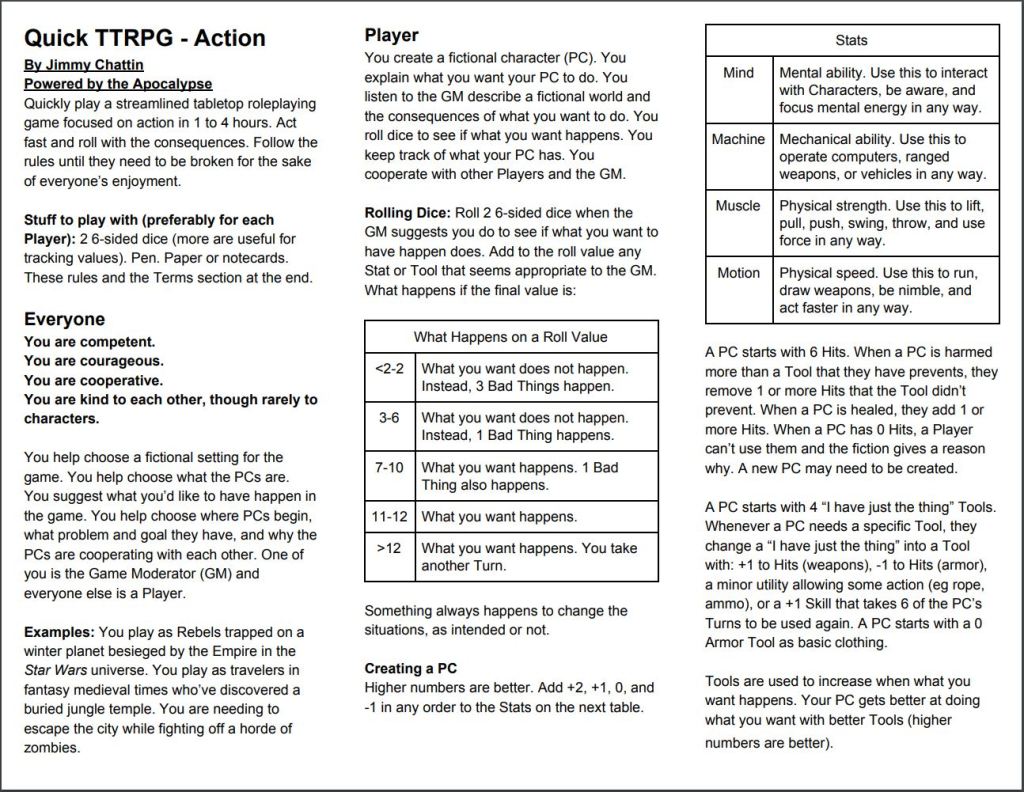

 – health points per model; 0 is the death of the model.
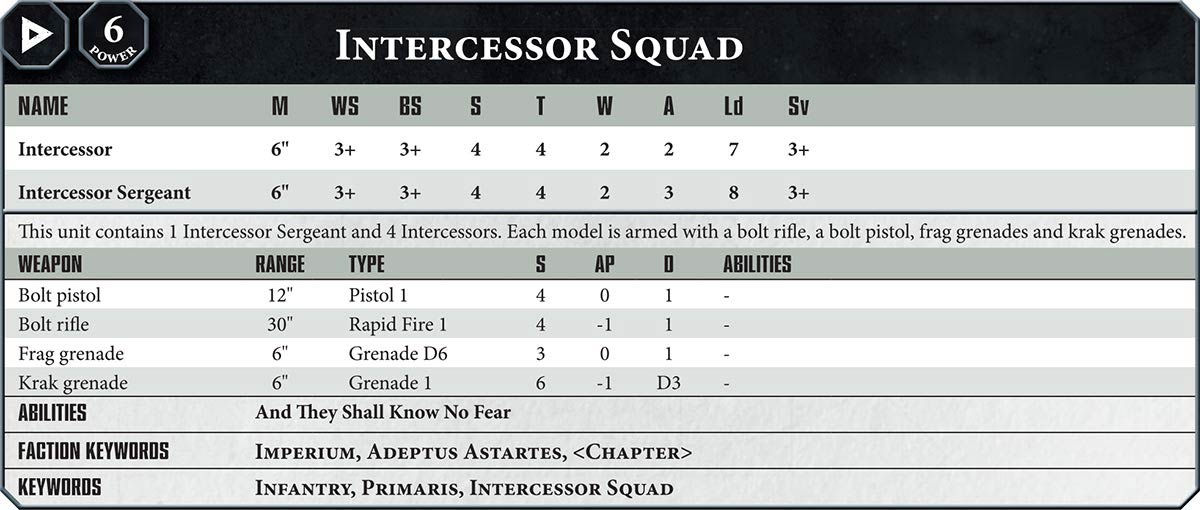
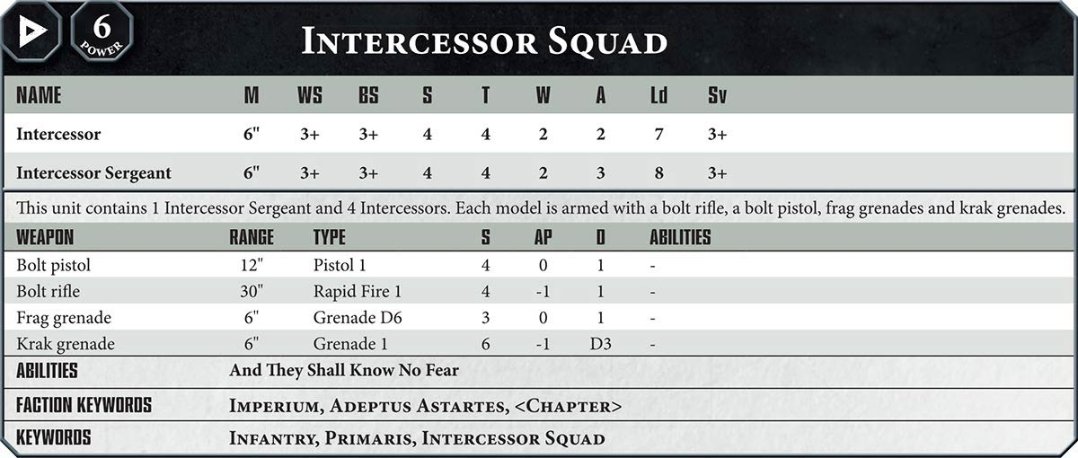
 Jimmy Chattin