BITS of CY_BORG

The sequel to one of this site’s most popular posts BITS of Mörk Borg, CY_BORG brings the grimdark futile fantasy kicking and screaming into a dystopian cyberpunk future.

Recommended that you read the Borg post above – it covers concepts like what “OSR” means and will be referenced a few times in regards to mechanics, stats, and other concepts CB shares.

I will interject this way when I have something to say design-wise, a la some redesign or special consideration.

Regarding Notes

Without further ado, a mechanical look and critique of CY_BORG, a “nano-infested doomsday RPG about cybernetic misfits and punks raging against a relentless corporate hell:”

  1. Stats, Mechanics, and Resetting the World
  2. Do It Again, This Time With Guns!
  3. Friendship Is Magic 🌈
  4. Pharma and Product
  5. Paying For It
  6. PS: Another Way to Start a Campaign
  7. PS: Never Too Late for a Wishlist
  8. PS: Small Is Fast, Nimble

Stats, Mechanics, and Resetting the World

Same song, second verse as it comes to stats (numbers to add to various challenging rolls):

  • Agility (moving, piloting, autofire [going all out])
  • Presence (precision, Nano-magic-powers, society)
  • Strength (pushing, pulling, throwing)
  • Toughness (surviving the environment)

Notice that MB‘s Agility now controls the use of CY_BORG‘s automatic weapons (and in general going all out). Further, a fifth stat arrives: Knowledge, science, deduction, and the use of software and apps.

I praised Mork Borg for only using 4 stats that I then worked to cram into BITS’s 3. Adding Knowledge in CB rubs me the wrong way, so instead, I would use stats like:

Body (hitting, moving)
Sense (shooting, piloting)
Mind (science, software)
Will (charisma, nano-/bio-/exotic-magic)

Survival being a natural toughness using the highest-valued BSMW in the survival roll. Same survival consideration with a BITS conversion:

Body – Average Toughness and Strength stats
Insight – Agility, Knowledge
Thought – Presence, Knowledge

Or the work-in-process BMW:

Body – Agility, Strength
Mind – Presence, Knowledge
Will – Presence, Toughness

Putting 5 Stats into 4

As for basic mechanics, this game operates the same way: Roll a D20 at or above a target number, adding the applicable stat to it. (BITS 2D6 conversions over in the MB post and elsewhere.)

The end of the world functions similarly too: depending on how fast folks wish the game to implode, roll a die; on 1, a disquieting headline hits the news that harkens a crash of the system. At the 7th headline, everyone everywhere sees the message that the system will reboot in 12 hours, wiping away all the player progress, restarting the misery that festers in CB.

If the end comes quickly enough, as a Game Moderator, I would suggest adding some kind of ‘cache’ or ‘store’ to survive the reboot. Too small or too dangerous for a living thing to survive in, the cache – once recovered or built – allows player characters to leave behind resources and information about the nature of the world of CY_BORG, encouraging continued play in the world (and perhaps rewarding future players by what was left behind!).

Persisting the World

Do It Again, This Time With Guns!

MB introduced black-powder as a supplement. While powerful, they were expensive, finicky, and ultimately secondary to the spiked chain flails of the game.

Firearms in CB fit the sci fi vibes, being used just like any other weapon. The exceptionality of firearms is that they all have the chance of running out of ammo (done after a critical failure or a fight, though big things like rocket launchers may only fire once a fight), some attack multiple foes at a time (going all out), and can come with special abilities.

CY_BORG switches the kind of die to check for reloading (D6 for autofire from any time during a fight, D8 for single-shots only), with a 1-3 resulting in a reload required. I would amend for a D6-based system as so:

Roll D6 if ever checking to see if a reload is required.
Roll to check if a reload is required when: 1) end of an encounter where the weapon was used; 2) critical failure when using the weapon with a backpack-fed or large-mag ammo reserve; 3) use of suppression fire (shoot at everything and anything that moves).
Reload is required after: 1) use of a single-shot device [rocket launcher; larger missiles only after an encounter]; 2) critical fail when using a standard weapon and ammo reserve.
When rolling to check for a reload, a reload happens on a 2 or less.
Consider what happened after the most recent of either the last reload or the start of the encounter in which the weapon was used: +2 for backpack-fed weapons; +1 for large-mag weapons; -1 for autofire; -2 for white-hot barrel overkill onslaughts.

Reloading

Read more about my thoughts on reloading and resource management.

Friendship Is Magic 🌈

Wrong.

Nanotech, bio-mods, and exotic-McGuffins are magic 🔥🤘💀🤘🔥

A little more reliable than pure scroll magic from MB, “nano” are still overpowered abilities to wreak havoc on the game, balanced in part by how terribly they can go wrong. Their use also corrupts a person, playing into the trope that magic users are pariahs.

Regular tech – software, apps, drones, etc. – is pretty streamlined. Simple use is no difficulty, yet the opportunity is there to stress the systems at risk of burning the programs out. A fine middle-ground between physical equipment and reality-bending magics!

Pharma and Product

This game has super-drugs. They do terrible things to characters and can bloom into things much worse.

But drugs are a small part of the housing, food, gear, armory, armor, ammo, robots, vehicles, and more the core CY_BORG rulebook has to offer.

If a player wants their character to have it, something is going to sell it.

Paying For It

A fun aspect to get characters moving: be in debt at the start of the game to a random antagonist that wants their money.

Nothing comes for free – even a life. When dying, there is a chance emergency responders will get to the character in time. Rebuilt (sometimes) smarter, better, faster, the debt will pile on in a blink, keeping characters thirsty for more work and bigger and bigger scores.

Mörk Borg is full of cool ideas. CY_BORG adds onto that in spades.

CB taught me a lot about certain game design topics that have been evident throughout the year. It continues to inspire as I play other roleplaying games and build better RPG experience systems.

With a trim here, a consolidation there, CB becomes a game fit for any table seeking to eek out a life in a techno-rich, quality-of-life-poor future. Pick up the rulebook for a bunch of details, killer visual aesthetic, or reference the base rules for free.

What are your impressions of the system? I am here to both commiserate and weigh-in on CY_BORG‘s approaches. Hit up the comments, follow every Friday below, and all cheers to your dreary dystopias ~

PS: Another Way to Start a Campaign

CY_BORG sets itself up with end-game powers and gadgets (ahem, “EndGame-Class Exosuit”).

That in mind, start the first session of a campaign using the famous Metroid video game method: Make ’em overpowered and then take it all away.

After character creation, give every player character double stats, free picks of any 4 items or powers, extra money, and put them in the final battle inside the 12-hour reboot window (or 6 hours, each real-world hour corresponding with an in-game hour). Give them some allies too. Pit the characters against the figurative big-bad Satan in Hell itself, yet even if they defeat the boss, the key to stopping the cycle of misery is broken or missing.

Reset the game, reroll character traits, and get after it!

Idea that strikes me: The allies can be abstract entities. Not actually present in the final battle, each yet has a personality, name, and specialty. Let the players kill a character of their choice in some ignominious sacrifice (with the chance they actually betray the party) that guarantees some effort for that player’s character in the fight. This may happen automatically before a player character is killed – the NPC intervenes just in time to take the bullet.

NPC Allies

PS: Never Too Late for a Wishlist

What I would like to see (or create) for the game that allow for all sorts of cyberpunk, dystopian foulness:

  • Super Tanks that are moving, fighting dungeons (e.g. Bolos)
  • Mechs of all shapes and sizes (e.g. Gundam, MechWarrior, Evangelion, Pacific Rim, etc.)
  • Incarnations of the twin-headed Basilisk monsters (the prophet creatures from Mörk Borg)
  • Cities besides the megapolis of Cy (e.g. Half Life‘s City 17, WH40K hives, Judge Dredd‘s Mega-City One, etc.)
  • Space everything: void combat, space stations, orbital economies, getting up and down to orbit, Luna rules, everything
  • Alien invasions and extraterrestrial encounters
  • Merge the MB dark fantasy and as-of-yet-unexplored astropunk along with space fantasy with the cyberpunk aesthetic
  • (In)Famous cyberpunks from: Blade Runner, Cyberpunk Netrunner, Neuromancer, Snowcrash, Akira, Deus Ex, Ghost in the Shell, The Matrix, Elysium, Tron, Robocop, Judge Dredd, Serial Experiments Lain, and so, so many more

PS: Small Is Fast, Nimble

For gear doing D4 or less in effect (i.e. Tier 1 and impromptu BITS weapons), allow a player to use Agility or other speed-based stat instead of Strength or body stat.

Sometimes the swiftest shiv outpaces the grandest maul.
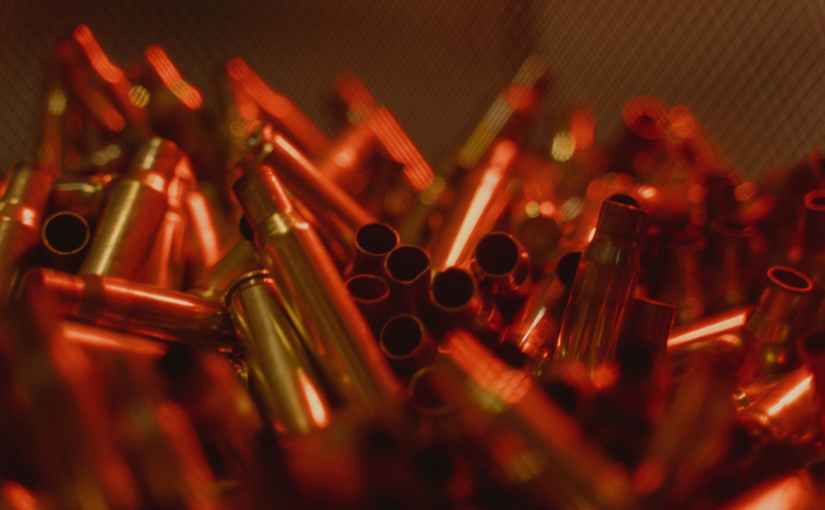
BITS of Bullets and RPG Ammo

We already talked at length about when and why and how to reload when things go wrong in RPGs.

This post takes a look at when the tools a fictional character uses runs out of gas / bullets / arrows / batteries / fuel / et. al. From single rounds to bottomless bins of bullets, the BITS system has it covered. Tiers are for reference only, but could be applied to a game’s economy for availability or cost:

TierUsesExample
0NAAny object used as it is or otherwise remains self sufficient. Crowbars, swords, and furniture are all examples of this. So too are magical lightsabers, perpetual fusion power packs, the Energizer Bunny, and, in effect, a sun.

Think: Tools that use no resource, such tools as melee weapons or near-magical objects.
11 and DoneUsing this uses it up.

A grenade, signal flare, match, mine, and medical needle are here. So are nuclear bombs.

Sometimes spending out the thing makes it prohibitive to re-equip during any reasonably short amount of time. Priming and loading a second cruise-missile onto a platform during a fight is farfetched no matter how many are in stock. Draining the power source of some cyber tech skeleton-key makes sense for a novel firewall-cracking device.

Reserved for both the simplest and the most overpowered of tools.
21-6 ShotsA salvo of shots. A single arrow in a bow, a flare in a flare gun, the twin-projectiles of a Halo SPNKr launcher or the twin-barrels of a sawed-off shotgun, and a cowboy’s six-shooter (and revolvers in general) match here.

Each shot is reloaded individually unless some special tool replaces the entire salvo. Where rounds for the shot come from can be something like a box-of-bullets, which can critically run out when reloading like the magazine in the next tier. (Gunslinger in The West uses this mechanic.)

Here powerful shots get tempered, more than the magazine-based tiers below. This is an excellent option for strong-in-context tools.
31 ReloadA magazine, battery, fuel cell, etc. Abstraction of multiple uses until critically failing when in use, thus running out of the resource and requiring a reload. (This is the “box of bullets” above.)

Assault rifles, high-powered flash lights, a pluck or handful of arrows, and Super Soaker tanks fall here. A single belt fed into a device also counts, such as that fed into the MG42 used by Jin Roh Wolf soldiers.
42-6 ReloadsCan be used multiple times and fail multiple times without stopping. Only once the last reload is ‘marked’ does the entire tool need refilling.

Extended magazines, Tommy Gun drums, gaping quivers, belt-fed M249 SAW boxes, and cable-powered laser guns.
6After ActionWhen the dust settles after a large encounter or the end of an adventure mission, it is time to take stock. Only then will / might the tool run out of steam.

Mounted turrets, vehicle fuel, and other supplies that seemed plentiful in the moment are found to have been spent (if used at all). Refueling, reloading, and rearming need to happen before these tools are ready to roll.
10IndefiniteSee tier 0 – things here go and go and go and …
Tiers of Use

Nothing New Under the Sun

Games are but levels of abstraction.

When it comes to kinds of expendable resource, abstraction needs to play a key role.

Video games do this excellently – at most, they tie ammo to a very small set of weapons (e.g. round X goes to weapon X), or abstract the kinds of available resource to the broad category of the tool.

‘Batteries’ or ‘power packs’ for flashlights and sci-fi gadgets alike, liquid ‘fuel’ for flamethrowers and cars, ‘shotgun shells’ for all gauges, ‘bullets’ for small arms, ‘artillery shells’ for tank main guns and recoilless rifles. Rockets, missiles, and torpedoes (I make this mega-missile category for the likes of cruise missiles). Grenades, charges, bombs.

Just as how ‘coin’ can be split into gold, silver, copper, and more, just as how ‘grain’ becomes wheat, maize, barley, and more, when it comes to deciding on resource types, do what feels right. Always seek to KISS, and things will go swell!

In This Economy?

A hierarchy of value exists in all things.

Resources apply the same way. While more thought needs to be put into this, a simple split would be:

  • Sufficient Shot* – This is cheaper-than-cheap resource. Rocks for a sling, potatoes for cannons, grass for alternative fuels, or bullets in a bullet factory having a fire sale.
  • Cheap Shot – Mundane fuel and resource that comes standard in both civilian and military use (context depending).
  • Money Shot – High-value, high-impact ammunition. Jet fuel, missiles, you get it.
  • Such Shot – Exotic. Best of the best. Fusion cores,blessed silver bullets, nuclear bombs, et. al.

* I was going to call this “S- Shot” and I choose to be less vulgar 🙂

Simple, right? That is what BITS works to be.

No need to overthink what tools gobble-up what they use to run, how to keep the fires going. Determine if a tool ever runs out of uses and if that is after every use, every critical failure of use, multiple uses / failures thereof, or never!

I hope you take benefit from this synopsis in your own game designs. This is yet another page into my own compendium of game design reference, so expect to see design themes from here echoed in future work.

Cheers to all you do in the meantime ~

The Best Oracle for Your RPG Is…

The Magic 8 Ball.

Familiar to most, the Magic 8 Ball is a classic oracle. It answers your questions with 20 different responses of varying levels of affirmation, negation, and equivocal ‘IDK.’

It is game and genre agnostic. The online tool is free, accessible anywhere, and one button click delivers new answers. There exists a physical ball it a tactile experience is sought for.

What Is an Oracle?

An oracle – in game-playing terms – is a system to generate answers to questions, develop situations, and provide both context and conflict to play. Oracles are great for people playing games solo or groups roleplaying without a Game Moderator (GM, aka DM).

There are online forms and long discussions and books for sale that are meant to stand in as oracles. Pages and pages. But while the question-and-answer system is superfluous to the Magic 8 Ball for anyone with experience asking pointed questions in a creative context, these other oracles have some nifty charts and tables. There are simple additions for that too:

Filling the Gap: What Happens

Getting the simple one out of the way first: determining what a fictional character finds is easily found out by rolling a D6 for the number of times, then on any table of items common to the setting.

A quick googling of “loot table” or “item list <your genre or favorite RPG>” gives more lists than can ever be used – pick one or switch them up every game session or such. Further, if using the oracle on a particular game or system, you might already have the items in the game rules (which are often given out for free!).

Some examples of simple loot lists include my As Above, So Below and Gunslinger in The West one-/two-page RPGs.

Loot tends to come after an encounter – either bought from stores or pilfered from combat. To find out if there is an encounter, roll a D6 – on a 1, encounter!

Roll once every time of day (morning, afternoon, evening, night), once per quarter of the map when traveling (i.e. there would be more encounters in a dense city vs. a global overland map), per round of combat, and / or after combat. When traveling fast, using a combustion engine, or being especially loud (e.g. gunfire in a quiet neighborhood, shouting in the woods), a roll of 1 or 2 ought be considered for encounters (or 3 and more if using explosives or jet turbines).

For when company comes calling, I encourage the 2D6 table of encounters, a different table created for each area or faction (used in areas populated by the faction), or a generalized list for any moment of any game. An example of those is well-covered in this wilderness guide and this magical fantasy fill-in article. (I will include my own used in the recent month of TTRPG play!)

A little extra flair is to add a reaction system to those encounters met (friendly, ‘meh,’ eager to do ill!)

Bonus: The Hazard System

Encounters are cool, yes, but what about other things happening in the world?

Questing Beast has put together a lovely D6 tool called the Hazard System. Go check out the link and in a cinch, roll to change the world anytime you would roll encounters:

6Benefit / Breather
(Something Lucky)
5Rest / Extra Time Taken / Trap / Impasse
(Extra Effort Required to Progress)
4Expiration / Time Passes
(Batteries Go Out, Clock Advance)
3Changes in Weather / Place
(Fog, Precipitation, Vegetation, Etc.)
2Clue / Foretelling
(Lead, Advantage, Hear ’em Comin’)
1More Bad Stuff Happens
(Encounters! Escalation!)
General Hazard System*
* I would rearrange as follows to better accommodate levels of danger affecting the result:
6 Benefit 5 Clue 4 Place 3 Expiration 2 Rest 1 Bad

A Magic 8 Ball as oracle! Readily available loot tables, a simple 2D6 encounter list, and a world-morphing Hazard System are all a person needs to navigate their adventures.

You can see how these tables-on-tables can explode – easy to understand why there are libraries of content trying to fill the niche of oracle in gameplay! Yet this at-max two-page spread of guidance is all that is required for full, engaging play. (In fact, that sounds like a future blog post!)

How do you make decisions in your tabletop games when a GM is not there to provide the context and conflict? What is missing from the toolset above?

I want to know your techniques! Hit me up in the comments, subscribe, and cheers through next week and the next post ~

BITS – The Force of Law

More for me than thee, I have concocted a go-to reference list of law-enforcement “units” for roleplaying games, specifically tiered to the BITS system.

While leaning more heavily into cyber-punk or grimdark futures like 1984, Fahrenheit 415, and Warhammer 40K – all woefully dystopian – there are modern equivalents and by replacing revolvers with crossbows pivots this tool becomes genre agnostic.

Follow along as I also tie each tier into the OODA Loop:

  1. Tier 1 – The “Gestasi” / “Stastapo” Regulars
  2. Tier 2 – The “Response” Adepts
  3. Tier 3 – The “Agent” Heavies
  4. Tier 4 – The “Justice” Elites
  5. Tier 6 – The “Letter” Champions

Tier 1 – The “Gestasi” / “Stastapo” Regulars

Observe, and report on what is happening.

Thought police, street spies, handlers of Spider-Hound robots (direct inspiration from Fahrenheit 415), general drone operators, deputized civilians, the mall security guard.

Not useful for much, but capable of causing trouble if not dealt with. More than likely to stab their target in the back or retreat if they know what is good for them! Good for supporting whatever “policy” needs enforcement. Bootlickers.

Tier 2 – The “Response” Adepts

Orient, contain and manage whatever “is” in the moment.

“Firemen” (I like to think armed with both flame throwers and water cannons, saws, and axes), inquisitors (who would have expected!), riot control, medics (for sedation and interrogation), well trained police, and general “influencers” of civilian action.

Here to deal with whatever is actively escalating in the streets. Meant to be first on site.

Tier 3 – The “Agent” Heavies

Decide, as this tier works with the information and situational awareness provided by the earlier tiers.

The “Mister” and “Miss” people in suits and sunglasses, on-the-ground tactical commanders, SWAT and public security military enforcement (such as the armored “wolves” from The Wolf Brigade).

The true enforcement of “policy.” Equipped and capable of fighting a war in the streets. Or striking so thoroughly that war was never an option.

Tier 4 – The “Justice” Elites

Act, and execute “policy” ruthlessly.

Justices (carbon copies of Judges from Judge Dredd), “peacekeeper” Robocops, zealous paladins, and any nearly super-powered onsite executors of the Law. Eat, breath, and live the ideals of policy.

Why have a court system when sentencing can be made at the scene? Why have prisons or cells if the punishment can be dished out by a singular =beast= of policy? A bona fide keeper of the peace by giving the pain.

Tier 6 – The “Letter” Champions

OODA, they do it all. Less outright enforcers of policy, but makers by their influence and action. They are the letter of the Law.

A list of singular individuals and their inspirations:

InspectorAn “Inspector Gadget;” full of surprises to get to the truth.
The Darkest KnightBatman; vigilante justice that stalks the streets.
“Sheep Herder” Rachel DeckBlade Runner; investigates digital and robotic crimes.
“Lucky” Harry EastA Clint Eastwood ‘punk.’ Relentless.
Bruce ClaneA Die Hard hero; a reluctant servant.
Ranger KorrisChuck Norris; martial-arts extra-urban enforcer.
Mr. DoeMatrix‘s Agent Smith; not surprised to see you.
Sheriff Jim GoeJames Gordon from Batman;
makes backroom deals for high ideals.
Who (And What) Else Is Missing?

Fit for any Big Brother dystopia, I like this list being a quick lookup that I (and now you!) can reference any time!

Think I will make more of these, stop reinventing the wheel when brainstorming game design problems. What do you think I should make a list of next?

Regardless, cheers to you and I staying out of the eye of the Law ~

Going All Out in RPGs

One of the hardest things to pin down in my own RPG design is this: How do you allow a character to go from affecting one target to many? Or to put that extra effort into going all out on something? And balance the whole thing so as not to go overboard?

After a little testing and a lot of study, I want to share this small library of system-agnostic game design mechanics for shooting, swiping, and generally increasing the breadth or depth of player action.

  1. KISS: System Agnosticism
  2. Player Choices
  3. Cy_Borg: Keep Rollin’ (Within Reason)
  4. Warhammer: A Smattering of Splattering
  5. A Spicy Homebrew
  6. All Out Enemies

KISS: System Agnosticism

To keep the library ‘clean,’ I will not emphasize the types of dice or player stats / abilities used in altering the outcomes of dice rolls. Adopt and adapt as necessary.

The only assumptions here are:

  1. Dice rolls for determining any random outcomes.
  2. There exists the possibility to have a extreme / critical failure or success on those rolls.
  3. (Suggested:) Critical failures result in some sort of over-extension. If using a projectile tool, this could mean running out of loaded ammunition (e.g. empty mag, quiver) or an explosion (e.g. plasma containment breach, failure to launch the rocket). In melee, the tool of choice gets stuck, or every other action against the over-extended character has advantage for a turn, or at worst, the tool breaks or is damaged down a tier of effectiveness.
  4. Players may choose when to end their spree – either by selecting a finite number of targets to begin with, or choosing not to continue when in the middle of the act.

That’s it! Let’s rock:

Player Choices

Point 4 above intends the players to be in control of the actions their characters take, reaping the consequences as they come.

To do this, players must choose as to whether or not focus down a single target or spread their care around.

In the first instance, choosing one target per action is the default for games – a “do this to that” situation.

The act of spreading the effect around is where this library will be the best leverage:

Cy_Borg: Keep Rollin’ (Within Reason)

Cy_Borg adds what its grimdark fantasy ancestor could not: Automatic weapons. How does this system handle going all out?

Act aggressively up to three times choosing a target (same or different) every time. However, stop acting anytime or when failing a roll.

The main difference here in going all out is a higher chance to need to reload after the fight and it uses a different stat than regular shooting actions. Just roll versus difficulty!

How I might spice up something similar:

  • Allow a character to keep acting forever until they run out of targets (they choose either to spread fire or concentrate before rolling) or they fail the roll.
  • Option: Each subsequent shot gets harder to roll or all shots are a tier-of-difficulty harder to hit.
  • Option: Any failure is a critical failure (i.e. out of ammo or otherwise cannot fire until action and/or resource is spent immediately vs. post fight).
  • Option: Combine the two options above!
  • Extend this ability to swiping in melee – be able to target all in surrounding proximity if in a group or ganged-up on the character.

Warhammer: A Smattering of Splattering

I am a sucker for Warhammer games, especially 40K. In Only War and Deathwatch, both D100 percentile systems, there are options:

  • All Out – Attack in melee with +20% effect. Cannot dodge or parry until next turn.
  • Full Auto – Attack at range with +20% effect. Extra hit every 10% aka degree-of-success. Crit fail is more likely (jams). Allocate extra hits to nearby targets or the original up to the weapon’s max “full auto” value of number of rounds spent (these are spent regardless of hits). Get a -10% effect instead if also moving.
    • Burst firing is less impactful, and a distinguish I will forego further comment on: +10% effect, spending “burst” number of rounds automatically and capping the number of possible hits, get an extra hit every two degrees-of-success, gain no bonus effect if moving.
  • Suppressing Fire – Pins (rather, chance to pin) all foes in a 45-degree arc over a distinct area. -20% chance to hit. Crit fail is more likely (jams). Allocate extra hits at every two degrees-of-success to a random recipient, capping at rounds spent. Spend “full auto” rounds automatically.

Auto-fire along with explosive-typed weapons are also the only way to put a dent into hordes of enemies.

Spice things up:

  • “All Out” is the term for diving into melee or unleashing auto-fire. Allow extra hits to allocate to the same or new enemies, but once moved off a target, cannot move back and must move to any new targets in the same direction.
  • “Suppression” pins all entities in or entering/exiting an area. There is disadvantage to hit if the target stays still, but no disadvantage if they move. Cannot critically fail. Roll to hit for all similar targets moving and staying put (e.g. all easy-but-moving vs all easy-but-in-cover vs all moderate, etc.). Use an entire magazine’s worth of ammo by the start of the character’s next turn (mitigate with large-capacity magazines).

Next is Wrath & Glory, a D6 dice-pool system (more dice = more chances of successes):

  • Salvo – Spend an entire magazine to add the size of weapon magazine to the dice pool.
  • All Out – Add two dice to melee, but suffer two when in defense until next turn.

Wrapping up with fantasy, Age of Sigmar: Soulbound (another D6 pool):

  • Spread – Specific to only certain ranged weapons. Hit everything of the same difficulty as the target (I spicily say lower difficulties too!) that is next to the target. Higher difficulties get a chance to dodge. Applies to things like shotguns, automatic weapons, and explosions.
  • Cleave – Specific to only certain melee weapons. On each die roll of 6, do 1 damage to all foes next to the intended target.

Side note: most games have rules against using ranged weapons in close-combat. Deathwatch forbids it unless using pistol-like weapons. I would spice it up by allowing ranged weapons, but have an uncontested ~50/50 chance to hit the target or any other random target in close range to the melee (including the acting character!).

A Spicy Homebrew

All of the above is of great study. Some key points:

  • Going “all out” applies similar mechanics to melee and ranged actions.
  • Any “all out” failure is a critical failure and ends the spree.
  • Going “all out” is one of the only ways an individual can take on a horde / mob / detachment.
  • Degrees of success add to the number of hits.
  • Hits can be focused on a target or spread among nearby targets.
  • Pressing the point: Suppression guarantees a spending of ammo and denies riskless access to an area for a turn. Being “Reckless” or “Savage” in melee gets the cut in, but leaves one open to be disadvantaged against all else until their next turn.
    • This is similar to the concept of “blood magic” where a point of health can be spent to increase a die roll by 1 or reroll (with the chance of a critical failure) as many times as wanted to force a thing to occur. If used too often to get out of spots really meant to be too tricky, optionally require costs to reflect the tier of what is being attempted (1 extra value on the rule costs 4 for a tier-4 spell).

The biggest exception I have with these systems is that most rely on multiple rolls and/or bean-counting of ammunition. We can do better with one roll and degrees of success and by-magazine capacity. An example:

  • Acting Normally – Pick one target. Roll to match or beat the difficulty of the target. A successful match is the effective hit of the tool, plus 1 effect for each degree-of-success above that difficulty.
    • A tier-3 sword strikes a target of difficulty 7. The roll (+ any modifiers) is a total of 10. The effect is 6 (3 for the sword on success + 1 for each number above 7 [10 minus7]).
  • Going All Out – Pick one or a set of targets of the same difficulty. Roll to match or beat the difficulty. A successful match and every degree of success is another hit to distribute.
    • A tier-3 sword swipes at a crowd of difficulty 7 targets. The roll (+ any modifiers) is a total of 10. The outcome is 4 targets are hit for 3 effect each (3 effect for the sword, 4 targets for success and degrees of success [10 minus 7]).
    • Reloading – A ranged weapon critically fails, the magazine running dry on the trigger pull. Out of the character’s inventory, they apply the same kind of mag to the weapon as an action. Prevents counting bullets and maintains a level of tactical prep: how many mags does a character bring along? Can they find or scavenge similar where they are?

All Out Enemies

Perhaps an RPG character has found a machine gun, grenade, or is a spinning cloud of whirling blades. When they go “all out”, they are treated much like a mob or when using suppression: They either hit everything in an arc or focus-fire extra effect worth 2D6 divided by 2 (round up) on a single target, everything being an automatic success except for when crit rolls above this antagonist’s difficulty jamming their gear.

Give the character something like bombs? Or missiles!? A tank’s main auto-cannon? Automatically hit those in a zone with an extra 2D6 effect. Crit fail for an off-target, scattered landing.

To spare the scope of large groups going all out, keep the mechanic relegated to heavy weapons teams, berserkers, boss characters, and other identifiable, high-value targets (e.g. tier-3 specialists and above or vehicles).

All this to say, even lowly grunts armed with the right tools can take out the most heavily equipped knight!

There are other mechanics out there for sure. Most of them involve rolling multiple dice over and over and over again, or putting arbitrary limits on what can be hit (e.g. Cy_Borg‘s max-3 limit).

Further, few systems seek to tie together melee and ranged actions, let alone having rules for either leaning into one target or many (something as simple to realize as, “does the character swing down, or side-to-side? Pull the trigger lightly or keep it pressed?”).

I hope the spicy additions if not the homebrew solves some of these conundrums for you as they have I. (Big thanks to my ol’ D&D group who asked what to roll when spinning like a top into a bunch of ratmen!)

This post has gone all in on going all out in RPGs. Share your favorite go-to mechanic and which of the above speaks most to you! Cheers to you going all out in play and living life ~

A Trinity of RPG Classes

An update from the conversation happening over on LinkedIn: I am including the brainstorming down below, but an important preamble: The distance a class can impose effect (e.g. self, within melee reach, at range) is inconsequential to the archetypes proposed here. We dive into what can take hits, make hits, and augment the context hits happen in.

Post years of study, there are only three: a trinity of RPG classes that fall into any game.

See here:

The Tank

The fighter class. Physicality, brawling, hitting, crowd management.

This class is the heavy assault battleship in games. Hit hard and gets hit hard. Strength and endurance are the key attributes.

The DPS

The fantasy ranger and modern assassin. The class is always much more intimate and delicate at getting to the right places and pressing just the right points. A key is focus: effect the right spot (e.g. sniping headshots) or the right individual (e.g. dump effects on a single target).

Gunslingers, drone operators (perhaps a Support overlap?), pilots, marksmen, and fast. Speed and precision are the key attributes.

The Support

As it says: Wizards, magicians, and those that do things through powers seemingly unknown. Whether through the arcane or advanced technology, these be a game’s healers, specialists, manipulators, and status controllers, a.k.a.:

Medics, sweet talkers, glass cannons (arguably a DPS overlap), hackers, and buffers. The smart and seemingly cunning or wise.

Take hits, make hits, affect hits.

That is all, folks! Every character, every role, every class in every RPG out there fits in these overarching categories.

Sure, there are combinations of the Tank, DPS, and Support (e.g. a sniper carrying a shotgun, heavy melee Darth Vader using Force magic), yet these are merely mixing the basic ingredients to everything a player might play as.

This trinity equally corresponds with the every-occasion Body/Strength, Mind/Speed, and Soul/Will set of game attributes seen in titles like Soulbound. In all, I view this clarifying of themes as an evolution of game design, but that is another post 🙂

Keep this in mind when designing your next game or selecting your next character to play! Cheers to it all!

Who Goes First? RPG Initiatives in Brief

Initiative – i.e. who goes first – in roleplaying games is a no-size-fits-all situation.

I have given it my shot to find a one-size solution. The result: Pick whatever feels convenient in the game and the context 🤷‍♂️

Through my research, I have come across many options to determine who goes first. This post is a brief reference – completely unexhaustive – for your own gaming inspiration, yet inspiration it may remain 🎲🎲 In no specific order:

  1. Roll (+Stat): Individual
  2. Roll (+Stat): Group
  3. Stat Only
  4. Lower Effects Go First
  5. Time to Do
  6. Action Points & Betting
  7. Popcorn
  8. Table Order
  9. All Declare, All Act
  10. When to Roll?
  11. When to Act?
  12. Surprise Gets a Free Turn

Roll (+Stat): Individual

The classic of D&D, each player rolls a die and (optionally) adds a stat for it. Better results go first!

Roll (+Stat): Group

Same as the individual, but it goes down to “us” (the players) vs. “them” (game moderator or non-player characters).

Stat Only

Whoever has the highest stats for initiative/speed/movement goes first.

Lower Effects Go First

We see this in games like the Dr. Who RPG – actions that do the least amount of effect go sooner in turn order. Example:

Talk > Move > Environment (e.g. flip a switch) > Help > Coerce Physically > Harm (w/ higher damage going later)

Time to Do

Particular to “move-and-do” combat-style games where moving is always a free action along with talking, the least time-required actions go sooner. Example:

Ranged Attacks (a flick of a finger)
Melee Attacks (a step, a move of an arm, a twist)
Heavy/Magic Actions (big and heaved devices, aiming, a few motions)
Other (complex actions with steps needing a few seconds)

Action Points & Betting

Characters have a limited resource – some “time” or “action” or “stamina” component to the game. These get spent on actions (bigger action effects cost more) or get auctioned, where higher bets go first, but risk being unable to act while others do.

The resource gets restocked automatically or the game may have mechanics that a special “recoup” or “rest” action brings them back.

Popcorn

A popular option, a simple die roll decides who goes first. Once done, that person picks the next person to go. The second person then picks and so on, until everyone has gone.

Elegant (one roll, no math), Popcorn leads to a gamble: do players only pick players, hoping to overwhelm their foes? If so and they fail, the enemy gets to go, then select themselves to go the next turn (since they would not have acted in the new turn), leading to a potential double whammy.

Table Order

The action order starts on the GM’s left (or determined by a roll) and proceeds clockwise.

Easy~

All Declare, All Act

Everyone declares what their character(s) will do. Then the consequences are rolled for. Together, all at once.

Personally, a bit messy, but the speed of resolution and the unexpected carnage of melee can be really cool 😄

When to Roll?

When do these initiatives take effect?

If relying on pure positioning, static stat, or the type of action being taken, rolls never need happen for initiative.

Roll once at game start is another option. This keeps order steady and certain throughout a session of play.

Once every encounter is D&D‘s bread-and-butter. Only done when an interaction starts where order matters.

Lastly: roll repeatedly after everyone and everything has taken an action, e.g. at the start of every turn. (This is cumbersome and a drag – avoid it.)

When to Act?

You would expect only one character acts at a time. What happens when there are ties in determining order? Or that characters are in the same “phase” of action?

Ties can be resolved with a roll, but quality game design seeks to minimize repeat tosses of the dice.

Instead, everything that is tied or otherwise going at the same time goes at the same time! Actions are declared, actions are rolled for, and consequences are applied simultaneously. E.g. two folks can punch each other out in a brawl, or opponents can shout down or interrupt the speeches of their counterparts!

Surprise Gets a Free Turn

See just above. In virtually all cases, if an action is not detected or comes from no-where, it gets to go without consideration of what or when other characters act.

A universal in RPG design!

As I feel it, these are the most impactful initiative systems an RPG can have. While there are oodles of systems out there, these are used in many places (thereby tested), are relatively simple, rely on dice at most, and are ultimately RPG agnostic – the mechanics can work in any game (though may not always convey the same game “feel” – e.g. Dr. Who aims to minimize physical violence!).

What initiatives do you use? Have I left out a stellar example of speed and effect of play? Tell me more! I owe you one. Cheers!

P.S. This is my first post after doing my time audit – short, concise, stays high level. I will check back on how this and following posts have worked out, though I am =always= open to your feedback!

Putting Hit Into Hit Points

A big time commitment to any roleplaying game is almost always the combat.

Roll to hit, roll how much was hit, repeat.

While simple in process, this becomes a slog when characters in games have buckets of hit points (HP, the equivalent of life). Each mighty cleave of a sword or bullseye from a rifle does but a chip of damage from the HP block. Again. And again. And again.

Ew.

Others and I agree – fewer hit points makes for better play. One might even try to put the “hit” back into “hit points” 👀

Premise of Hits

HP represents how many hacks a character can take or effectively avoid to prevent their own demise. Depending on the type of game, 0 HP either means a character cannot prevent others from working their will on them (no fight left) or could mean they are dead (this time, the sword block is too slow, the swing finding mortal purchase).

How many hits a thing can take then can vary. You might have seen the videos of people about to fight, but one clip of the chin puts a fighter down. Remember Julius Caesar? He took over 40 (!!!) stab and slash wounds before finally going down.

Caesar aside, most combatants can only get in a bout for so long, minutes at most. This has been found out by the RPG community: A good rule of thumb is that a sturdy human being without special training can withstand about 3-4 hits before a ‘this-settles-it’ hit lands home.

The Old-School (OSR) RPGs hold this as fact: Fewer HP is better play. Whether that is some max HP of 12 or 20 for a player’s character, it undermines the hundreds of HP even moderate-level play in a game like Dungeons & Dragons can introduce.

Excessive, eh? Some solutions to high HP:

Crafting Better Dungeon HP

Professor Dungeon Master over at Dungeon Craft on YouTube introduces a great rule of thumb for D&D -type monster blocks:

Every attack that lands does 1 hit’s-worth of harm. Sword or fist, all the same. Criticals, heavy weapons, and especially high rolls (e.g. naturally in the top 25%) count as an additional hit. Spells do hits equal to the level of difficulty they are +1 (levels exist from 0 to 9).

As for HP, take a monster’s health, round to the tens-digit, and divide by 10 (minimum 1 HP). Thereby, a monster with 84 average HP can take 8 hits.

Professor Dungeon Master (minorly paraphrased)

This is a great quick-and-dirty way to reach the same conclusions of regular D&D combat, but only faster.

Assuming a group of four adventurers though, 8 HP still requires at least two rounds of combat with every adventurer landing a standard hit (8 HP / 4 hits-per-round = 2 rounds).

Can this be better?

BITS of HP

My own homebrew wraps as much as it can into the standard 1-2-3-4-6-10 scale of effectiveness.

Tier 1 characters can only take 1 and give 1 hit (and are easier to hit – that is a separate discussion). Tier 2 gives and takes 2 hits. Tier 6, 6 of each.

Player character weapons and armor also exist on this scale: Tier 1 does 1 hit’s-worth of harm (e.g. knives), tier 4 does 4 hits-of-harm (e.g. halberds, especially heavy weapons). Characters themselves have the ability to sustain ~7 hits of harm on average.

But what if players still want to roll their damage?

Layering on the HP

(The following is a thought exercise – I have yet to test in actual gameplay.)

Keeping the difficulty tiers of BITS, what if HP scaled by double or by 4s?

e.g.

TierBy 4sBy Double
1 – Minion11
2 – Soldier42
3 – Specialist84
4 – Elite128
Example HP Scaling

This way the chaff of low-level minions can still be swept away, but more bossy characters can take a few blows before being made low.

When players strike, a success gives them 1 hit. When they roll damage, they get an extra hit for, say, every complete 5 or 10 points of damage rolled in the D&D fashion.

Players get to roll more of their dice, folks are rewarded for high rolls, and combat remains quick (but not so quick as to be a wash!).

Simple reduction of HP, HP by tiers, or HP by scaling? Or just keep D&D -style massive blobs of hit points, why does this article even exist? 😜

I am curious: Tell me what you use for HP in play and share what you think could go better in the fictional combat of roleplaying games.

Anyways, stay tuned for from-the-field reports as I experiment with different systems. Cheers to your characters coming out on top!

When Things Blow Up – Magic Edition

  1. The Rules
  2. When Things Blow Up:

Magic in fiction is mysterious, fantastic, and often fickle. When I make games, magic is both incredibly powerful and incredibly dangerous.

To aid me at the gaming table when things inevitably blow up, I have created these foibles to emphasize the “glass” of magic-slinging, ability-wielding “glass cannons:”

The Rules

When rolling to see if an ability or spell goes off as expected, a natural 1 (on a D20, doubles under target with 2D6) is a critical failure. The character’s ability to use these powers ceases until they take a short rest and fulfill the requirements of whatever foible they roll a D20 for.

A guideline for D20 D&D-like spell levels/slots to see if they fire:

Roll AboveSpell / Ability Level
10Cantrips, 0
151, 2, 3
204, 5, 6
257, 8
309+
D20 Guidelines to Magic

Roll at or less than the target? No magic – it sputters out.

Want to negate the critical failure so as not to lose powers and gain other ills? Immediately sacrifice a worn or wielded magic item – this foci destroys itself to protect you.

Think these difficulties are too, well, difficult? Get magic items that improve stats or automatically cast the power (scrolls, some wands), commit to rituals (i.e. take a lot of time) to gain advantage on the ability’s use, and get magic-minded friends to help (gaining +1 up to the spell’s level).*

* The idea of blood magic is a fine one to introduce to your tables: when below die target and the roll isn’t a critical failure, spent 1 hit point to improve the roll’s value by 1!

When Things Blow Up:

Putting it all here, but feel free to print the two-pager from Google Drive where any updates go first: https://docs.google.com/document/d/13hq0SjMo_zpYLEpxmFGXVG_bWrKd8arqEzo2t9sBUOQ/edit?usp=sharing

General

01. The powers turn upon their master. You are the target of the power, it doing only harm.

02. The works you wrought run wild. You and all within 15 ft of you (the room) are targets for harm.

03. This… is too much. Gain +1 exhaustion.

04. Agony wracks through your mind and body as something inside breaks. -1 to a random ability bonus.

05. Something has gone terribly wrong. Develop +1 corruption.

06. This burden has taken its toll. Disadvantage on all actions for D6 game minutes.

07. Your actions weigh heavily. Have no rest for D6 days.

08. It could be worse. Take the short rest before using your talents again.

09. Somehow you are unharmed? Against all odds, your mistakes have not cost you.

10. You blank. Immediately fall unconscious, needing another to wake you.

Wild (random / created / pure chaos)

11. You are known. Your foes will know where you are, always, along with your weaknesses for D6 days.

12. You are gone. You disappear for 24 hours.

13. You teleport. You switch physical space with your nearest foe.

14. You are another. You switch souls with your nearest foe, using their abilities and such while they use yours.

15. You fall. You immediately drop to 0 HP and must start saving throws next turn.

16. You are hobbled from being your best. You do not have surprise or advantage until after a long rest.

17. You are slowed. 10 ft moving speed, cannot fly, and last in initiative order until after a long rest.

18. You are luckless. Find that up to D6 * 100 gold or its equivalent in treasure is missing.

19. You are struck ill. Gain a curse that does not allow for you to add bonuses to your HP, such as level.

20. Chaos births onto your plane of existence. 30 ft away, a monster of impossibility blooms (D66 HP, 2D6 harm, Tier 6 25+ DOOM, 2D6 meters tall, exists D6 turns).

Sponsored (Uses Charisma) Warlocks, Clerics, Paladins

11. Silence is your only answer. (Secret:) Any intervention by the Giver is declined without notice for D6 days.

12. Meet your maker. Invoke a dialogue to know how you must improve your standing.

13. Confess and all is forgiven. Tell a different secret to each friend so that all may hear.

14. Your gratitude for these gifts is found wanting. Make a gold offering of 100 multiplied by your level and the spell level.

15. Your hubris is offending the Sponsor. Make a blood sacrifice, yours or anothers in the name of your Lord.

16. You must prove yourself. Deal D4 critical successes to those unoathed to your Bestower.

17. “I? I am a jealous one.” Only the blessings and methods of your Giver can benefit you for D6 days.

18. This is a blessing and a curse. Your nearest foe becomes endowed with the powers of your Host, increasing a tier of difficulty, restoring full health, and gaining advantage through their conflict now or upcoming.

19. Take penance for your sins. Magic and alchemical methods cannot benefit you for D6 days.

20. “WHAT HAVE YOU DONE!?” An avatar of your Bestower, and agent of vengeance, steps through a portal 30 ft away (Tier 6 25+ DESTROYER).

Learned (Uses Intelligence) Wizards, Artificers, scrolls

11. That’s not right… Roll more than 10 + your level after a day of dedicated study to be able to use your talents again.

12. Is that what you remember? All carried food and drink, alchemical, natural, and otherwise, spoils to mold and sludge.

13. Your work has been for not. Any magic you have bestowed, enchanted, attuned to, or otherwise evoked ends.

14. A backlash of the power freezes your very nerves. Take your level in damage.

15. Well, this is embarrassing. All mundane equipment carried teleports to where you last took a short rest.

16. The lesson sears into your mind. Take 1 psychic hit automatically for D6 turns, starting now.

17. What is known becomes unknown. You are cursed to not be able to use this spell again.

18. This failure has your whole attention. Efforts to harm you count as having surprise until after a short rest.

19. Failure compounds on failure. Roll twice more on these tables.

20. The uncontrollable aspect of magic makes itself known. Roll D10 on the Wild table. 

Inherited (Uses Wisdom) Druids, Monks, Sorcerers

11. Perhaps it is for the best. You must take a long rest to regain your abilities.

12. Pushed to the edge, your wares push back. You are unattuned with all your magic items.

13. The strain has been too much. Lose a random sense until after a short rest.

14. You are nothing but a monster, it seems. All who see you break morale and gain Fear of you, friend and foe alike.

15. The thought of your unnatural destruction is the only joy. All foes in the area will not break morale and yearn to take your life immediately.

16. It is the thought that counts. For D6 days, nothing willingly accepts your influence, making all tests of your powers a difficulty higher than they would be.

17. Self-doubt consumes you. Disadvantage to use your extraordinary abilities until after a long rest.

18. Your powers are deeply disturbing to those in your presence. Disadvantage on all social tests for D6 days.

19. Your presence has not gone unnoticed. Something, somewhere, comes for you.

20. Oh… oh no. You injure yourself fundamentally, preventing use of this ability again.

You made it! Will your magic users when you bring these foibles to the table for their fumbles?

Had a lot of fun putting this list together of when things blow up with magic. Will consider a list of martial and tool use fumble tables in the future.

What would you add to these magic lists? To a martial fumble list? What has not worked in your experience and should be avoided?

In advance, thank you for the help – I appreciate your insights! Cheers to avoiding those low rolls 🎲🎲

The Final Day Art Release

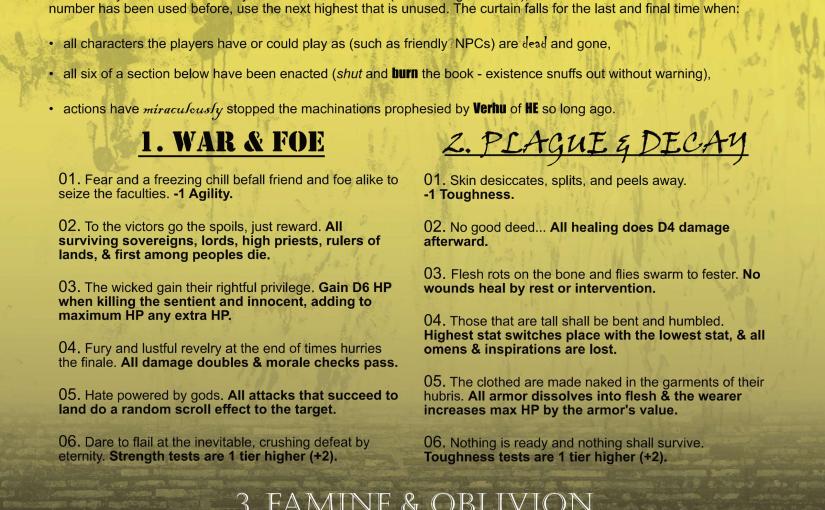
The Final Day‘s grimdark end of the world has a makeover!

Page 1 of “Ink Killer”
(For the sake of your printer, please refrain from printing 😅)

This roleplaying game generator has 36 unique cataclysms to ring-in your fantasy game’s apocalypse. While made under license for Mörk Borg, the descriptions are general enough to apply to any game needing a conclusion 🔥

The Final Day comes in ‘friendly’ and ‘ink bane’ versions. The addon is available now on sale over here.

Cheers to your (fictional) ruin! 💀