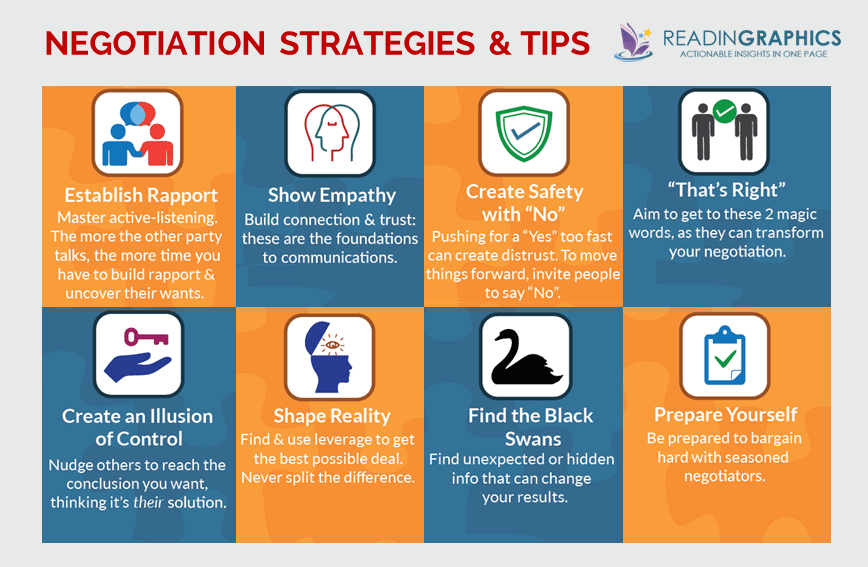
Convince Others of Your Worth

Recently, I have been chatting with some folks who are in positions to give me compensation for the value I historically would bring to them (per annum, millions of dollars, perhaps even lives).

AKA interviews 😂

While passing tests and getting along great as people, I keep needing to do what you too must see on a frequent basis: convince others of your worth.

I have the $$$ figures, I have the historic evidence, I have the rapport, yet I need a little help from experts.

Some experts on the arts of negotiation and selling oneself have been visited before in Devaluing Your Worth and What Is Your Work Worth?. Those insights are gathered here with new insights sprinkled in that I have negotiated tens-of-thousands of compensation for.

So read on – it will only be 15-20 minutes. This bit of prep could help land you enough to make all the difference. Here goes:

  1. Value Yourself
  2. More Than Just Cash
  3. Update Your Numbers
  4. Aim High to Make Fair
  5. The Reveal
  6. What Is Your Base?
  7. Wrap It Up
  8. Negotiate Like Your Life Depends on It
  9. Further Reading

Value Yourself

First off, you need to know what your value actually is – without that, you have nothing, the same as your value in another person’s eyes.

So convince yourself of your worth first: understand how many years of experience you have for a given role, the skills you bring, how and how fast you learn, and the quantities of cash and cash-equivalents (time savings) you have brought to other roles.

That done, figure out what is a fair compensation range for that role. This can be found through:

  • Bureau of Labor Statistics
    • What should be the be-all, end-all source of compensation data, BLS is a treasure trove of data. By role, by industry, by state, and by county, medians and averages and other data are everywhere. It can be a chore to navigate – the effort will be worth it!
  • Glassdoor
    • The most common work resource on the internet. Besides researching the company being talked with (reviews, history, and interview topics), Glassdoor houses a vast collection of salary and total-compensation for cities, roles, and roles at the company.
      • NOTE: Glassdoor will track your use and after the first page you view, it will require you to sign in to view more. While contributing to the Glassdoor community is a valuable way to give back, it can also be annoying.

        Instead, do all your Glassdoor searching in a private/incognito window. When the page blocks you, copy the URL, close the entire private/incognito browser, then reopen the browser, navigating to that copied URL. Voilà!
  • Levels.fyi
    • Largely tech-focused, this site’s deep breakdown of different companies, roles, and cities for both general and specific job titles (e.g. “software engineer” vs. “L4”) is invaluable.
  • Stack Overflow
    • More of a software resource than general, it provides a great, easy-to-read walkthrough of reported data, something you can learn from in reference to other data providers.

Other resources like Salary.com or industry-specific reports like the annual report from the Game Developers Conference (GDC) can be great for pulling additional data points.

From the above, collect the averages and medians of both salary and total compensation (dealing with those in the next section). If there are multiple results, take them all. Put everything into a Google or Excel Sheet – you will need it >_>

Example: Throughout this article, we will reference a fictional role that, after calculation, comes to $98,765 base salary, $123,456 total compensation.

These terms are investigated later, but now you have the details!

More Than Just Cash

Now you have a collection of average and median $$$ figures, a bunch of base salaries and total compensation packages. Here, we need to find what amount of compensation comes from things other than a paycheck.

Usually, total comp refers only to base salary, annual bonus, and stock grants/options. “Cash is King,” as is said, but for many, the additional bonus and stock can be the linchpins in the agreement.

Bonus and stock can be viewed as cash equivalents – not as good as cash, but within a margin of error, can bring major payouts later on a yearly or quarterly basis. Sometimes it can be cash-in-pocket right away – signing bonuses with lenient claw-back terms should be considered as a cash bonus in the offer.

With the numbers you have, look at the whole package of salary, bonus, and stock when the offers come in – any other benefit is gravy. This does not decrease the value of PTO (sick and vacation, approximate value of 2% of base pay per 5-days/1-week; assume “unlimited” is 15 days or 6% of base pay, i.e. 3 weeks before someone starts asking), work from home, or other benefits – it only means that we can judge like with like, salary-bonus-stock numbers compared with the offer of salary-bonus-stock.

But how much does salary and everything else make up total compensation?

Simple: You have salary and total comp numbers from the previous section. Divide salary by total comp in each pair, and get an average and median – this will give two numbers in percentile of how much salary should be making up the total offer package. Since cash is king, pick the higher percent (i.e. expect a higher salary right away vs. waiting a year for benefits to kick in).

Example: $98,765 is the base salary, while $123,456 is the total comp.
$98,765 / $123,456 = .8, or, 80% (round up if needed)
Therefore: Expect base salary to be 80% of total comp.

Total Comp * Percent = Base Salary

Keep this percent for later.

Update Your Numbers

Setting salary aside, bring out the total compensation numbers so we may calculate the total range of value your work is worth!

Adjust all the total comp numbers by the rate of inflation, rounding up to the nearest 5% (e.g. 8.9% = 10%). We do this because virtually all data will be a year (or more!) old.

Next, whenever using general resources that apply to the entire nation (e.g. “X in the USA” vs. “X at Y company, in Z city”), adjust those numbers by the cost of living in your city.

CoL can be found online. I am partial to Best Places to determining my city compared to the national level, e.g. Las Vegas is +11.6% as of August 2022. Best Places, Nerd Wallet, and Numbeo all have excellent city-to-city calculators too (if there is a difference between them when you research, take the number best for you).

(Use the city-to-city calculations later if considering work in another city, but only if the result is higher than what you already have!)

Example: $123,456 is the calculated total. Assuming inflation is 10% and the position would be onsite or remote in Las Vegas, the CoL is 12%, the new total comp is:

$123,456 * 1.1 * 1.12 = 152,097.792, or, $152,098

Aim High to Make Fair

Adjusted numbers in hand, get them down to just 4. Plug the numbers into this grid:

Average of the AveragesMedian of the Averages
Average of the MediansMedian of the Medians
Comp Number Breakdown

These numbers define what you ought expect as a total comp floor from any offer.

The lowest number in the grid is your secret floor. If desperate, you can accept offers just above this value, but for pity sake, accept nothing lower. Tell no-one this number. Cool?

Take a look at the highest number in the grid. That number is your quoted floor, the bottom offer – this is what you will tell folks when they ask “what is your range?” Round up to the nearest thousand. Do your utmost to stay away from this median.

Medians are mediocre. I trust you bring more than a mediocre value.

Time to aim high, getting us closer to the 75% percentile in wages. We do this because it helps inflation-proof your compensation, improves the performance rewards you ought be getting for a good job, it helps prevent a company from low-balling you, helps your peers in the field by demanding a higher wage, and saves your self respect.

What’s not to like?

Anyway, take your bottom number. Multiply it by 15%, 18% if feeling confident. Round that up to the nearest $5K. That is now the top of your range.

Example: Assume $152,098 is our lowest of the 4 values. The highest value is $156,789 (round to thousands).

$152,098 is the secret floor. Acceptable if the company is great, the work good, you would like to work right away, and you and your boss have a plan to review that number in a few months.

$157,000 is the bottom range. Told to prospects.

$157,000 * 1.15 = 180,550, or, $185,000 is your top range. You sell yourself near or above this number.

The Reveal

You have your top and bottom range, a secret floor, and salary percentage. While you never reveal your floor, contrary to this section title, you try, try, try not to reveal your range.

Why?

Keep the employer honest – they ought give you a range expectation for a role first, especially if they reached out to you first. Who knows – they may give you a higher total comp range than you calculated! (This gets touched on later.)

This section though is about when your casual efforts have failed and the employer stonewalls you on the value of your labor. So it is your turn – after giving the context that this is the reasonable range for your experience, the role, and other factors, reveal your range.

Example: “After researching the role and the value I am bringing to it on places like Glassdoor, the Bureau of Labor Statistics, and industry reports, a reasonable total compensation range would be $157 to $185, though with my proven career of success, I feel I would fall closer to the top of this range.”

If the person you are talking to balks, you walk. If the person says anything but no, you have the door open 🙂

Even if the employer mentions they likely could not hit the top of the range, they now know your bottom, and are more inclined to meet well above the bottom knowing your expectation of more!

What Is Your Base?

Many times, recruiters haven’t done the homework to figure out what their company is offering in total. When you give your total comp reveal, this may leave them confused. Here is where you save the day:

After the other person expresses they don’t know total comp or need a salary range, you can provide the base salary of your bottom and top numbers using the percentage calculated before.

Easy! So long as you remind them that these are flexible numbers depending on the extra benefits – total comp is always the goal, your personal value placing you squarely at the top of the range.

Example: The total comp range (in thousands) is $157 to $185. The calculated base salary is 80% of total.

Therefore, the base salary range is ~$126 ($157 * .8) to ~$148 ($185 * .8).

(Rounding up, as always.)

Wrap It Up

  1. Find numbers from resources: BLS, Glassdoor, Levels.fyi, etc.
  2. Calculate base pay percent from total comp: base / total
  3. Update numbers for inflation and CoL.
  4. Pick the highest numbers as your bottom total comp, saving the lowest numbers as a secret floor.
  5. Calculate top total comp: bottom comp * 1.15
  6. You now have your secret floor and bottom-to-top total comp range.
  7. Calculate a soft, flexible base salary range for those in need:
    1. Bottom: bottom comp * base pay percent
    2. Top: top comp * base pay percent
  8. You now have your flexible base pay; this is a guide since total comp is the goal.

Nifty, eh?

But what good is knowing your worth if they won’t realize that value?

That’s where negotiation comes in.

Negotiate Like Your Life Depends on It

Your life really will depend on your negotiation. From misplaced time to opportunity cost, you must negotiate – it is one of the most important things you must learn to do.

While I am only a student myself, here is the best I’ve gleamed:

  1. Get a range during the first screen / conversation. Get the other party to reveal a range first if possible; otherwise, give yours and specify how you land at the top of the well-researched range.
  2. Kick behind during the interviews – this is non-negotiable. Study, rest, eat well, destress, clear your calendar. Brush your teeth, wash, dress fine. Smile, mind your manners.
  3. When the offer comes, express your thanks that they considered to give you an offer, and all the time they have invested so far. However:
    1. Offer is above your goal: Great news! Do not show your elation. Instead, explain you have learned through the interview that the role is worth more than originally estimated. Maybe it is responsibility, requirements, or near-future challenges – see how far north it can go with salary, bonus, stock, and signing compensation. (Don’t negotiate too hard here – you have already ‘won,’ so congrats! Anything else is icing on the cake.)
    2. Offer is well below your goal: Oof. While you do not get flustered (take a breath!), verbally gasp or suck in air through your teeth. After thanks, let them know that this is well below the market asking price for a person of your skill and that the offer is very far off of expectations.
    3. Offer is around your goal: OK. It is close. Let the other party know this. Ask how the offer might meet expectations. Let them figure out how to meet your value – if they need help, suggest that you all look at non-salary benefits, such as bonus, stock, signing, and extra weeks of PTO to make up the difference.
  4. Be quiet. Silence. After making a statement, shut up. Let the other side fill the void. They may give you more information or negotiate against themselves.
  5. Walk the offer along. When the offer is below the top range, walk that top range down to the bottom. Choose a way to do this beforehand:
    1. Ackerman Model/Technique: T is the top of the range. B is the bottom. T-B is the difference D you work with. “B + D” is the “T” you initially aim for.
      1. Zeroth offer: T
      2. First offer: B + (D * .35)
      3. Second offer: B + (D * .15)
      4. Third offer: B + (D * .05)
      5. Fourth: B
      6. (Give thanks, but offer no more after this.)
    2. Aggressive Technique: Something I have used before. T is top range, B is bottom, D is the difference in between:
      1. Zeroth offer: T
      2. First offer: B + (D * .6)
      3. Second offer: B + (D * .3)
      4. Third offer: B + (D * .1)
      5. Fourth: B
      6. (Give thanks, but walk after this unless the job is needed and the secret floor is met.)
  6. Be prepared to walk away. Those that can leave the table have leverage; those who cannot are slave to whatever the other party wishes.

All of this is barely skimming the surface level of understanding, demonstrating, communicating, and convincing others of your worth. It is at least a start.

Further Reading

Knowledge is powerful:

Those are my tools! Now those are your tools too ~

Like ideas or drafts, the first offers may not be up to snuff. Stay patient, friends, as best you can. Your situation is undoubtedly different from mine – no matter what it is, use these tools to convince others of your worth. Stick to it, k?

Here is to your gains and your greatness! Share with me your success stories and own methods for achieving your value. Cheers for now ~


#PaidMe2023

Restarting the tradition that began as a hashtag in the summer of 2020, I am back to share with you my data once again!

All the below are estimates using free online resources. Your mileage may vary.

The Data

THP – Take Home Pay (assuming only income taxes without contributions apply)
Inf – Inflation (not used for the year of writing, ’23)
CoL – THP normalized to national Cost of Living

Senior Software Engineer, L3
Base Pay: $175,000
THP (after effective tax of 32.54%): $118,050
CoL: $71,545 (THP / location’s decimal-percentage CoL)
Aerospace Company
Westside Los Angeles Metro Area, CA

Excluding all stock, bonus, and other amenity info. Checkout Glassdoor (use an incognito browser) and levels.fyi for great value-add resources.

Takeaways

California income taxes suck. Guess that is why so many CA tech companies offer stock and options, those taxed at a different, i.e. lower, rate!

I haven’t experienced too harshly the cost of living change – housing nearly triples the national average, but Airbnb and fully-furnished month-to-month options are perhaps 100-150% vs 200% higher. Not to mention what would happen with a roommate(s)!

Regardless, take-home pushes me ever closer to financial independence FI while allowing luxuries in some lifestyle choices (e.g. no need for roomies).

That is it for this year! Checkout 2021’s data (skipped 2022 – the company gave no raises [I should be “appreciative” that the stock went up, which then proceeded to nosedive] before summer layoffs).

Wanna talk numbers? Would =adore= getting to hear! Curious about an offer or the non-base-pay bits left out of this post? Hit me up for a call!

It is dangerous to go out into the working world alone – I am hear for you. Until needed, I send you cheers in your pay and careers ~

No Easy Choices

Hey. Can you keep a secret?

Ready?

I have made what has been the toughest decision of my professional career. No easy choices, but the setup for an easy (-ier) life?

  1. The Setup
  2. But Wait! There’s More!
  3. What to Do?
  4. Why I Did What I Did
  5. So It Goes

The Setup

Set the scene: A job offer came in from a prestigious company.

  • Great interviews (really, some of the best)
  • Higher title than expected
  • Alright pay
  • Household name
  • Virtually no competition
  • Secure and exciting future
  • Cool work
  • Some of the smartest people to ever work with
  • Stellar perks
  • Fine equity
  • Placed uniquely in the world with a huge business moat/niche
  • Team believed in me

Sky’s the limit here.

But Wait! There’s More!

Air the laundry:

  • Equity comp could be better per industry reports
  • Hard work
  • Associated to some difficult conversations
  • In-office
  • Requires me to uproot what I have built in my town since 2016:
    • Friends
    • Family
    • Familiar routines and places
    • Growing new social groups, routines, and other relationships
  • Requires giving up on a 3-6 month world-travel plan in 2023 what was a WIP
  • State taxes
  • City traffic!

What to Do?

I negotiated, I researched, I quizzed oracles, I asked friends, I followed my mentors’ and my own advice… Everything swayed.

I could go to bed with a decision in my head, only to change it in the morning after journaling. Then, talking to a friend, change it by lunch. Come an article or two read through, the choice flips again – what to do!?

Why I Did What I Did

I said “no” to this decision twice. TWICE.

Then came the nightmares.

I dreamt of the work, of the opportunity, of making change. I am not one for distressed rest, yet still I lost sleep.

So I sat with someone whose brain processes things the same way mine does – first off, they called me out for indecision. I usually am swift because something is obviously right or highly weighted in a correct direction – such wishy-washy-ness is so… unbecoming 😭

Pouring the pebbles of info into this person’s ear, they came to a decision… Then changed it.

This second stance they affirmed. And for me, that was the answer I needed. Perhaps permission, perhaps a sanity check, perhaps an alleviation from the heavy thoughts… I made calls the next day, and signed the docs that week following the denial. Oof.

So It Goes

Regardless, here we are! The work has begun in a tornado. For three weeks now I have been going out every day, nearly every hour to say “goodbye” to friends, places, and attend parties in my honor.

I have fantastic friends. Humbled to the nth degree.

All that said, I am also one to mitigate. A big move carries risk – here are a few sandbags shoring up my position:

  • Airbnb – Why sign a lease when with 30-days notice I can leave? Why move and carry around furniture and material excess when I can type my blog from a kitchen table provided by another in a private apartment? (Pretty meta here…)
  • Below MeansLive as I have before. While I am not traveling to low-cost areas as I have before, income outweighs my expenses a hefty bit. Remaining frugal (not a poverty-practice, though I know I can – perhaps a post on this topic later), shoving excess gains into investments and savings, I will continue to grow more of a YOLO safety net should things hit fans 💩
  • Better Communication – Stay in touch with folks. Take less for granted. Tough so far with how much of my time is suddenly taken, but hey – I’m trying. Sounds like this will influence June’s goals…
  • No Need – I don’t need the job. So I am here because I want to give it my all for 6-12 months at least. I can endure any social construct for 6-ish months.
  • World as Oyster – Things go badly? I leave. I know I can car camp across the country, head back to Las Vegas, or wander the world as before. Passport in hand, pack on back, health and heart, I am capable.
  • Adventure – Learn new things, meet fascinating people, enjoy summer months in 2023 on beaches and in cafes and exploring one of the largest metros in the world? Be only a few hours from friends while establishing new social groups? This is already exciting – the rest must be a blast ❤

So ya! I have moved around. Taking on some tough work. Cannot talk more about it. If you know, you know 👀 No easy choices. Might make for some easier lives to come.

Wish me well in this. I value your support. In kind, what are you getting after? May I pass the help I received forward, lending you an ear?

Hit me up – I look forward to hearing from you. Cheers to you and I ~

All I Know About Business

All I knew about business was nil before the business study and review of 2022.

Now – after dozens of articles read and hours of education from books and virtual mentors – all I know about business comes down to a few key points. I share these with you to save your time and brainpower. Sound good?

Before going on: What doesn’t sound good is considering me or any of this as legal or financial advice. As this post mentions, go seek out the licensed and recognized professionals. Treat the below as the starting blocks on the tracks – up to you to run (and win) the race~

Before You Begin: Vision & Values

Note: Many folks would suggest getting ideas for business as the first thing before starting said business. That is junk. Ideas are cheaper than dirt and often less useful. Ideas and intentions are nothing – actions and executions are everything.

Before anything ought be done, the means of deciding direction for the business, the foundation of deciding how to decide, need to be reflected on. Getting this right filters ideas and efforts into what will “move the needle” and define what that needle even is.

Some less-tangible principles ought include:

  • Do not sell suffering.
  • Do not sell suffering! (So important, it lists twice!)
  • Competition is for chumps; fight unfair. (What are you willing to do or leverage?)

More solid tenants of putting together a business include:

  • Never choose the lowest offer nor the safest / more conservative route.
  • Find the missing services and underserved populations for open markets.
  • Listen to symptoms for they are valid. Curing causes is your service and product.

Use all of this to make a business plan that outlines the ‘thing’ to be sold.

The ways to make a business plan are plentiful, but I am a fan of the 5-page Servicemen’s Readjustment Act (“G.I. Bill”) that has served many millions who have served in the United States military forces over more than half a century. If your entire business model can’t be read in 15 minutes or less, rethink it.

Remove, Butcher, Reduce!

Simple concept here: FOCUS.

Doing too much – whether starting or maintaining a business – leads to disaster. A business or business owner doing too much does the work of dividing and conquering itself, work that ought to be left up to the competition.

Concentrating forces is an ageless tenant of armed conflict which applies directly to making and keeping gains in a hostile marketplace. This is valuable for both physical effort and psychological branding.

Think: The word “Coke” brings to mind soft drinks – its focus – though the business owns and operates much more. “Google” has become synonymous for online searching and got to that point well before Alphabet ever branched to other markets. Amazon was the best at selling books (then other media) online for years before branching outside literature to additional products and departments.

Niche down so the first and second place providers make up at least ~10% of the chosen market. Prove at least on paper the business is to be the #1 or #2 choice in the market.

Again with “competition is for chumps:” if you cannot be the best, best not bother!

Same applies to the owner – sometimes wearing a lot of hats is necessitated in an emergency. I might not go to a dentist for kidney surgery, but I would rely on their training in a pinch given a medical emergency!

So for anyone in the business, wearing too many hats is a division of attention and effort, the context switching a burden to the business. Therefore, owners (and businesses) must find what they are great at, do and only do that, and hire out or drop everything else.

Getting to the ‘Great At’

Glad to see my conclusions written on before apply here too.

What can the business be great at? Figure it with a few (or all) of these:

  • Use 80/20 (really, 90/10) lists of strengths.
  • Simplify – what makes all else unnecessary?
  • What gets the people in the business excited to work on indefinitely?
  • Name the thing that can be exponentially scalable and repeatable regardless of person (e.g. templates, automation, one-and-done products, standard operating procedures, etc.).

And perhaps the most important tidbit if the thing is truly great: not-to-do lists.

What is lame? Unexciting? What is the business and people in it actively bad at? If it does not jeopardize some mundane necessity of the business, delegate it to the outside or drop it entirely.

The bad and lame stuff is easy to avoid doing. What about the merely good? The trivially fun parts or areas that “should” be tackled? Warren Buffet has a famous exercise on making not-to-do lists:

Make a list of 25 goals / strengths / et. al, then circle the top / most important / greatest leverage 5 goals. Those 5 need a plan of action started on immediately. The other 20? DO NOT DO AT ANY COST. Avoid like the plague! At least until some of the primary things are accomplished and proven steady.

Right Butts, Right Seats

Finished Good to Great by Jim Collins before ’22’s end. Jim, others, and I agree: getting the right people into the business and onto the right tasks is required for successful business operation.

Hiring the right folks feeds into doing less: efficient people working on business-efficient tasks contributes to a virtuous circle of improvement.* Fewer people are required when only the business-best are kept in house while the sometimes-needed work is done elsewhere.

*Note: Every ‘thing’ done is done in support of the business’s operations (never just because of the business). Whether the thing is given for free to help build target audience trust, adds to a backlog of deployable things, eases the future making of things, or is sold immediately, it must contribute to progressing operations.

Though not exhaustive by any means, some folks here are those who ought be specialists doing only what they do best:

  • Technology / Programmers
  • Creatives / Artists / Writers
  • Financiers / Accountants / Sales
  • Attorneys / Policy Enforcers
  • Business Leaders / Public Faces

Depending on business needs, these specialists may only be needed occasionally so their seats should be hired out.

Out of all of the above, ‘Business Leaders,’ i.e. management, should be kept at the barest of minimums. Efficient people need less oversight: they find work, they do work, they deliver work, and they discipline themselves to keep being efficient every day. Traditional management is made redundant by having the right butts in the right seats.

Marketing Is King

Virtually no-one and no resource failed to mention the importance of marketing.

The short story is: Market. The long story: MARKET MARKET MARKET.

But how? An answer should be a different post since I loathe doing my own marketing (really, a massive weakness). Yet other folks offer their tidbits:

  • Out of sight, out of mind, and a business never wants to be out of mind.
  • Know the business target and their pains / aspirations; offer solutions frequently, some for free.
  • Have press kits (a repeatable, one-and-done process).
  • Network like a fiend; be everywhere.
  • Again, give at least 51% of value for free, but never fail to “ask for the order.”

Building a target audience means building loyalty. Giving resources (tools, a challenge to self-select) to the audience proves the business’s loyalty to them. If 1,000 true fans can be made excited for the business offer, the business will be just fine.

But always remember these two points: First impressions count, and, trust between two parties is like a string – once broken, it can be retied, but shall always have the knot in between them (parable paraphrase).

Cash Is King

Marketing still takes the bigger crown, yet it must pay tribute to cash.

Cash is payroll. Cash is product. Cash is service. Cash is survivability. Cash is the very lifeblood of the business. Cash is king.

If a business cannot survive, it is nothing. Thereby, a business must keep its cash and get more cash.

Keeping cash involves cutting costs. Between there only being only so much one can cut and needing to spend well enough to ensure the best people do not leave their seats, cutting costs is a poor business’s desperation that is too easily taken too far.

To get more cash, a few things help that we’ve covered before here (seeing that virtuous circle in action!):

  • Ask for everything (especially the order!).
  • Do not offer to pay before the price is set (heck, it might come free).
  • Spend another’s money – loans, pre-orders, subscriptions, and externalized-cost resources are primary tools in the cash belt.
  • Recurring revenue models trump single-purchase things every time – go get that subscription! Or, “give away razors to sell razor blades.”
  • Invest in good bookkeeping – paying less in taxes is not a goal, but can be a perk.

JUST DO IT

Make a plan. Act on it. Just do it. Today, immediately after reading this post. Go go go!

Pontificating about business is like an idea: Virtually worthless. A seed in the ground that bears neither shade nor fruit.

Really, ends make the means in business. And a business only gets to the end by starting now. Get the principles and plan together, complete the legal stuff of business creation, and get to it.

Running a business is a job. The owner an employee. This person is the bottom-rung employee. They will do the most great work, and the most trivial, unfun junk so that the right people can keep doing their business-add work.

The grind as the lowest totem on the pole will last, and it will last a while. General advice to new business owners: Do not give in until at least a year is past putting in those long days and weeks.

Review, Reflect, Inspect, Pivot

While launching this new thing of business, course correct along the way. Test prices and offers. Collect data point and metric possible on both the target audience and internal operations. Pause, review, and reflect on these findings.

Sometimes close inspection of the business and the market might require a pivot. This might be a new approach to the ‘thing’ of the business, or it might require a complete change of horse.

Examples: Big-box Walmart is putting an end to the dime store, the business’s core service? Best to ditch the dime stores in favor of the changing environment. Netflix is sending rented DVDs straight to the mailbox? Either Blockbuster needs to make a better offer for sending DVDs, change how or what it rents, or close shop.

Ultimately, a business must also consider what a fundamental end looks like – when to give up, when to sell, or when and if to grow after a year’s or decade’s diligence. General advice is to start now, but when to hang up the towel or venture forth from a well-established niche is up to the context and temperament of the business.

Last Bit of Business

In all this study, I came up with my own thoughts of things or picked up interesting notions along the way:

  • Envision success, failure, and an exit to anything, i.e. plan.
  • Remove those who would criticize a venture without a critique of how to make it work.
  • Obligations: Sleep is #1, work is #2, study and review #3, and leisure or other obligations #4 in the first year (#3 and #4 could be interchanged). If this cannot be afforded, re-evaluate if a business is the right choice for you at this time.
  • A business takes a long time to build, but no time to destroy.
  • For any business operator, forgive yourself for the lost opportunities spent on making the business come to fruition.

That is all I know about business, folks.

Like any field of study, we could go so, so much deeper into the topic of business. If interested, there are great folks out there who have much better expertise than I in these things.

Wrote this post as a reference to my future self that – should I take the opportunity to get into business again – can save a bit of time. Any other points you would add that seem to be universals?

In the meantime, I hope these work as principles for you in your professional, personal, and social ventures! Cheers to your successes ~

In Europe as a Digital Nomad

It was my privilege and honor to live and work in Europe as a digital nomad this past spring 2022. From the bustling expanse of London to the luxurious leisure of Montenegro, these experiences have molded me, teaching me so much.

I share with you some general takeaways – comment if you would like to see a more detailed breakdown of the locations that hosted me for months in 2022!

Be a Good Student

The first thing I needed to do for my travels was be a good student, if no a better student than I have been in years.

For you, learn from others who travel for weeks and months at a time. What where their challenges, what have they learned, how did they deal with situations fine and foul.

The grief and generosity of others online, in videos, and on forums is invaluable. Google search “digital nomadism” along with the features of where you want to go (and check out my #travel tag).

Headed to Europe? Which country or countries? What is the local currency? Tipping culture? Language and medical system? Et. al. There will be no end to the questions, but it is up to you to do the groundwork before your trip.

Don’t Ask, Don’t Tell

If you are working remotely, work remotely. There is virtually no reason to tell your workplace where you are working from, so long as there is a place to collect mail, an internet connection, and your time is managed.

Asked about where you might be – unless the boss or coworker is buying you a plane ticket for business – a simple “I am visiting folks” or “I am in a different time zone for now” is both true and vague enough that they ought leave it there. You are under no obligation to specify when it is no-one else’s business!

Time to Talk About Time

Speaking of time management, the easiest way to pull DADT is to adjust your working hours to the time zone of your workplace. If you are clocking in at the same time, any questions or talk of where you are are no matter.

As for adjusting to times abroad, unless they are on the same side of the planet as home, this can be a hard adjustment. What worked for me was:

  • Eat little in transit. That way, when you arrive, you can either have a big meal to start the new day or go straight to bed if it’s nighttime. That leads to:
  • Do as the locals do. Eat meals at the local time, start walking to destinations, take cold morning showers and hot evening ones, get groceries the first day, and get the right amount of light throughout the day.
  • Avoid light at night. This is quality life advice – you will be ready for sleep sooner the sooner you cut out evening artificial light. And, if you feel the need to nudge yourself to bed, taking 1-3 mg of melatonin is extra effective (light hampers melatonin use)!
  • Save your health. Take naps in transit (bring a hat or eye mask for light, earplugs for the plane noise), pop sprays or tablets of zinc every hour or so, wear a face mask, wash your d@mn hands. These measures help ensure you are going to enjoy the trip!

Pack So Much Less

Skip the roller bag – instead, go for a backpack, maybe two.

You think there isn’t enough room? Let’s talk about that:

You are going to be carrying everything you have for weeks and months. Most places in the world are likely to be cheaper than where you are now (looking at you, U$A), so purchasing any necessities will be a breeze. Dragging a bag makes it hard to move fast either through airports or across towns and tags you as an easy-mark tourist. And your human bias says to handle any possibility, when 20% of what you want to take will handle 80% or more of your trip.

To help you pack, a rule of thumb I came across was to pack your bags, then remove half of what you packed, taking the rest.

Another is a rule of 3 or 4, meaning only 3-4 shirts, undies, socks, jackets and pants, etc.

Ultimately, here is my packing list before I shipped off to London, all contained in 1 30-/35-liter computer backpack, a drawstring bag, or worn through airports:

  • 6x shirts (all buttoned sans 2 for workout), undies, socks
    • A useful number, since I have since lost wear to wear (holes and such). Still could have bought replacements!
  • 1x pair of jeans, shorts, swimwear (look like shorts)
  • 1x loafers, running shoes, flipflops
  • 1x sweater
  • 2x local power converter (and maybe a power strip, too!)
  • Toiletries (day and night moisturizers, non-greasy sunscreen, clippers and tweezer, disposable razor, travel lotion, toothbrush and paste, sampler cologne)
  • Electronics w/ chargers (work laptop, personal laptop, cell, watch, headphones, earbuds, Brio Beardscape trimmer)
    • I highly suggest learning to cut and trim your own hair – it is empowering!
  • Passport, vax card, scratch notebook, journal, wallet, local-currency cash (~400 was more than enough for more than a month).
  • Snack food (2-3 high-quality protein bars, electrolyte mixes)

Things I ended up buying over 3 months:

  • SIM cards for data and local calls in the country or area.
  • New jeans because the brought pair ripped.
  • Another journal, some pens.
  • 1:1 replacement toiletries.
  • Groceries and hair conditioner.
  • Supplement vitamins.

That’s it 🤷‍♂️

Apps to Save Your Bacon

A shortlist of apps to check out that made my stays a breeze (none of which I get kickbacks for):

  • Airbnb – turns out that even in the US many places will have cheaper stays than paying apartment rent (let alone hotels!). The price, safety, and flexibility of Airbnb is unparalleled.
  • Hoopla (or other media app) – through my local library, I get 20 free pieces of media to check out a month.
  • NordVPN (or other VPN) – safety is important. I have my VPN on literally at all times – it secures my digital presence so I didn’t have my financial or personal information stolen abroad.
  • Skype – I bought a phone number and a US-calling plan for less than my regular phone service. Using data, I could call any US number for free and receive free texts (send for 11c). Great when I needed to give a US number for others to call.
  • Traveling Mailbox – Get your mail sent to a US address. Dozens of cities to choose from, pretty affordable, and I haven’t hit the max mail received or opened for many months!
  • WhatsApp (and perhaps Telegram) – a standard for any international traveler. Be able to text, call, and send pics to folks on WhatsApp who have your phone number. It uses data instead of cell service, so you can stay in touch even when you don’t have your old phone number.
  • Wise – international banking and conversions for better rates than your bank. Also can use any ATM twice a month without incurring fees from Wise (though the ATM may have its own). A must-use for getting cash when your bank doesn’t operate where you are!

All this fails to mention your flight provider’s app, social apps to share the adventure, banking apps, payment apps like Venmo, and ride and delivery apps local to your new area. Get what you need before you need it!

Explore New Places and Palettes

Get out. First day, if possible. Get out and keep getting out.

Go to the places that don’t speak your language. Eat the foods you can’t 100% identify. Enjoy the famous locations, sights, dishes, and events your trip’s location is known for. Yet, schedule in days of rest every 3 or 4 days or so – you need to recover to fully enjoy things!

It is so easy to take an area for granted if you are there for a long time. “It’ll be there tomorrow” you might say – don’t believe it. Before you know it, it’ll be time to move on!

That said, meander. Take your time to experience things, especially the casual atmosphere of being a local. If you are going out, think of one or two things to do that day, and linger on those things. Again, the time will be over before you know it, so be present for it. If there is anything left over at trip’s end, all the more reason to come back 🙂

Bring a Friend

Sometimes you need an excuse to get out, sometimes you may feel safer having someone watch your back. While not required, I encourage you to try nomadism with a friend.

Yet, a partner your friend must be. This means they are on your wavelength – they are the same socioeconomic class, have outgoing energy, have your endurance, have similar interests, are OK spending time on their own and with you, and are companionable without a negative mindset.

Without any of the above (a nonexclusive list), cracks will form over time, making the travel a bit more bitter. Try not to resent each other, communicate, and get after it ~

Set a Date to Leave Without Return

Go. Do it now. Within the next 3 months, within your means, buy the ticket, even if it departs later on. Commit. Any plans you make are less valuable than hot air without some action towards it.

Have your departure ticket? Great! You can start making other plans (tourism, housing, etc.), but don’t buy a return ticket just yet.

Again, stay in your location for awhile, at least a month (you can get the biggest discounts this way). A lot happens in thirty days, though, so hold off on returning home.

Perhaps you will want to visit a neighboring country, visit friends in your nation of residence, have to show up to jury duty, get an injury or sickness, lose or gain a job, who knows. Try not to close out your adventure before it even begins ~

Now Go Forth!

You have all of mine that comes to mind. A one-stop-shop to begin the rest of your life.

Being a digital nomad has been transformative for me. Going to Europe for the first time (and for 3 months!) was amazing. Great for my health, great for my finances, great for my productivity, great for me.

Long-term working travel will be great for you too. All you need to do is take action to make it so.

More questions? Take action here to let me know! I am happy to share finances or on-the-ground insights – heck, might write more posts here regardless 🙂

When you get to Europe as a digital nomad or anywhere else, let me know! Your experience will embolden my next trip out. Cheers to us both!

Work for Pay, Not Free

The zeitgeist regarding labor is smarter now than it was just 10 years ago as it comes to work, pay, et al. As with all things, it could be better.

One of the ways thoughts on employment could be improved is to work for pay, not for free.

Here are points on how:

Experience

Experience is garbage. The person offering “experience” in exchange for cold, hard cash cannot go choke on that “experience.” Why? Because it holds no tangible value.

I.e. experience is “free.” Do not work for “free.”

Denied a Raise?

Say a coworker is earning more for the same (or even less!) output than you, or a new employee is offered higher compensation. You attempt to negotiate a raise but are denied.

What now?

Either:

  1. Quit (but only if you have another job lined up, are financially set to take a well-deserved break, or do not require the wage-slave benefits like health insurance)
  2. Get cut by cutting back the day-to-day effort (collecting that sweet, sweet unemployment insurance)

Do not wait! Act now for your own benefit. Check out some other options and help on cutting back:

Get a Pay Cut?

First, what counts as a pay cut? A few things:

  • Meeting or exceeding performance expectations, not getting a raise despite that.
  • Not getting at least a cost-of-living increase in wage (as of May 2022, that is North of 8.3% – anything less is wage theft by the employer).
  • Demands by work to work more.
  • Org or team changes that decrease the quality-of-life at work.

If any of the above or similar occur, it is time to cut back in proportion to how the employer has cut back on you. A few ways to do that:

  • You can always quit if able (see above).
  • You Earn Commission
    • Raise your rates, especially for this employer.
    • Retain control of your work (e.g. a photographer keeps the unwatermarked originals, an artist holds Photoshop files, programmers source code local to themselves).
    • Aim to drop the employer (if 80% of pain comes from 20% of clients, drop that 20% sooner than later).
  • You Are Hourly
    • Clock out on time.
    • Do 0 (zero!) extra.
    • Take your breaks on time and use your paid leave regardless of business needs.
    • Reread your job description; when told to do something outside of that agreement, decline to do it (unless the employer is ready to immediately renegotiate the agreement, with an immediate pay-bump for you 😉)
  • You Earn Salary
    • Over-estimate the time it will take to do things, making sure your work takes up that extra time. (I find an extra 30-40% is a useful tool if previous performance has not been recognized.)
    • Again, do nothing extra – it is not in your job description to organize events, work on other products or projects, or in your incentive to work on anything that hasn’t been agreed on with management for how you will be judged (i.e. Objective Key Results – OKRs – used to define pay performance).

What Else?

Work advocates like the hustle-hustle-hustle icon Gary V speak to “getting in” for time vs. any other compensation, even experience.

E.g. serve coffee and run packages for the CEO for free – that may work for a select handful with a decent safety net, but that willful enslavement is not something I can ethically get behind.

And if an employer ever offers or suggests working for free, they have done you a great favor: the employer has shown you they cannot be trusted to act fairly or honestly for you. You might still do business, but you will be fighting everything the employer says because everything they say will come at a cost to you.

So if you have other ways to recognize employer exploitation or how to maximize your earnings under subpar conditions, share them! Your work has value, so work for pay, not free.

The Real Values of Your Job

You get a wage, yet that is not all. What are the real values of your job? Or any job offer?

Base Pay

The hourly or salary numbers of the job.

This is a guarantee of value. Out of virtually all other values, this is the most fundamental because it is not a hypothetical. You will be paid this by law, otherwise the law is broken.

Additionally for hourly, though a person could expect HOURLY RATE x 40 HOURS, that may not be the case. Adjust accordingly, in that it may be 35 hours instead, or there is overtime pay on the regular – talk with your coworkers about these expectations.

Stock

AKA Options (more volatile for gains or losses) and RSUs (more guarantee, less risk). This is flexible value in an employer offers at a discount or pre-set rate.

For many in, say, the tech industry, this is the bread-and-butter of employment, the real value of their compensation. For pennies on the dollar, you can gain stock then sell it at a steep profit.

Be warned: Stock is fickle in that it can fall nearly as easily as it can rise (at least in recent years). What you may have banked as the cornerstone of your finances can become so much bitter ash.

Time Off

Sick days, vacation days, holidays. Each day is worth about .4% of Base Salary (1 8-hour day in 2000 annual working hours).

Not something to sniff at. These values can add a significant proportion to the overall value to a job, but be careful if anything is “unlimited” – these days have no value if not taken or are allowed to be taken (these instead have negative value as a lie from the employer).

Matches

Talking about the big one here – 401K matching. The employer will match dollar-for-dollar a 401K contribution.

Free money here. A very important value, though it is not offered everywhere and only works if you are able to. Keep an eye out on this!

Bonus

Annual performance, sales, commission – these can be substantial, or trivial. They can happen often, once a year, or not at all.

Whatever bonus gets offered (if any), take note and negotiate on this too!

Misc.

Largely subjective, include any other items you feel might be of value to you in your work. This bucket is mainly for values of a few hundred dollars, but could be worth a lot more.

Examples:

  • Commute Time (less is more! 0 is best)
  • Special Health Insurance Benefits (specifically of benefit to your upcoming year or lifestyle; you ought be getting basic health insurance regardless!)
  • Snacks
  • Gym Memberships
  • et al.

As with everything, a lot of these offerings only have value if you reap the value from them. If not using anything of benefit, it has no value to you and should not be included in the value of the job.

Experience?

You can’t even choke on experience, so it is of virtually no value here.

Can you gain training, networking, and exposure while on another’s dime? Sure, yet there still needs to be that “dime.”

Are some employers worth it? Perhaps. Big names, such as Google, Facebook, or Apple are all great names in virtually any field, while some banks or law firms would be great in their fields. Yet these employers are tiny compared to the vast swath of the broad market, where you are likely to be employed.

Experience is nice, but again, it cannot feed you.

Putting It All Together

Job Value = Base Pay + Stock* + Time Off + Matches + Bonus + Misc.**

*Stock is the number of shares given in a year multiplied by (market right now – rate given in the offering).
** Money is time – the more money you keep, the more time you will be giving your future self, so do not discount time savings as being worth a lot!

This will give you a dollar amount, the real value from the real values of your job.

You Are a Slave to Your Work

No argument: You are a slave to the work you need to do. Let you and I jump into why any other mode of thought is a delusion:

Getting Terms Straight

From the Cambridge Dictionary:

Slave – “a person who is legally owned by someone else and has to work for that person […] and has no personal freedom.”

Slavery – “the condition of being legally owned by someone else and forced to work for or obey them […] the system in which some people are owned by others.”

Free – “not having something that is unwanted or unpleasant.”

Work – “to do a job, especially the job you do to earn money […] to make a person or animal do a job.”

Job – “the regular work that a person does to earn money.” And, “a crime in which money or goods are stolen, or an action or activity that is dishonest or unpleasant.”

Money – “used to buy things, or the total amount of these that someone has.”

Reasoning

Making a leap in assuming you can connect the dots here, you need money to buy the things that make life survivable: Foods, clean water, clothing, shelter, medical treatment, etc.

All the above – at least in the United States – costs more than the means of production, and is actively denied a person without money. Without food, a person starves and suffers; without water, a person becomes sick and suffers; without clothing and shelter, a person is exposed and suffers; without medical treatment, a person suffers and dies.

(All this needs to be addressed further, so we go without mention of what makes life livable, e.g. means for recreation, time for rest.)

If prevention of suffering is one of if not the only fundamental Good in the world, then a person is obliged to have these things for themselves and those who depend on them. “Enslaved,” as the physical requirements of life are non-negotiable.

What Is Required, What Is Optional

Working in some way to cover the costs of merely existing is the obligation, the enslavement a living creature must carry out for the privilege of being alive.

This is a required enslavement, or experienced as a suffering (if the work be unpleasant) to prevent and reduce a greater suffering.

To care for others who are not able to provide for their existence – regardless of cause – is what a moral and just society is. Though not a total definition of a civilization ought be, without this care, “moral and just” must be left out of the society’s description.

Care for others is optional enslavement – we only have the morals we can afford.

Yet care for oneself, let alone others, is endangered when optional enslavement is required to earn the money to buy goods to sustain life.

What is that optional enslavement, not caring for others?

That enslavement is the excess beyond the cost of initiative, time, and material used to create the good, to exchange for the service. That is the money that funnels to one entity from many individuals. That is profit.

And profit is the name of the game in the United States – and by extension from the US’s economic and cultural global dominance, the world.

Treatment for This Condition

I am no financial planner, analyst, expert. This is not advice, because I do not know beyond a reasonable doubt the validity of the following. It seems to work out on the back of an envelope, though it is uncertain how it would apply to the facts of the world at large.

It is at least a start.

First, a definition of Profit – “money that a business [or person] earns above what it costs to produce and sell goods and services.”

Second, should there be profit? Yes – Communism tried to remove that incentive, and it led to a lot of suffering for entire populations. Profit can be the incentive to have taken the risk to do something that could fail. Yet, excess profit is excess optional enslavement to a job and thereby excess optional suffering for the unpleasantry of it.

Some thoughts:

  • Capped Percentage of Profit per Good or Service Rendered
    • No one action will be more than an X percentage of the cost to create and provide the good or service, X being greater than the profit that might be rendered through other investments – say, stock – within a standard deviation or three. This leaves room for living well while also having cushion to make prices competitive by lowering them from the profit margin.
  • Progressive Tax of Profit Based on Market
    • The bigger a single business gets, the less profitable by-percentage it gets, though the net amount continues to increase. It slows the formation of monopolies, allowing other companies to adjust and catch up, thereby encouraging competition. Further, production-cost-cutting is encouraged, as additional profit can be gained for a larger market share, benefiting the consumers while forcing innovation from the business and its competitors. Lastly, public funds are increased that can be reapplied where needed from the taxes, as is part of the responsibility of a society’s government (I forego chatting about such ideas here).

Compelled to Industry

Compel – “to force someone to do something.”

Industry – “the quality of regularly working hard […] in the production of goods for sale […] and makes a lot of money.”

You are compelled to industry, and therefor not free.

You are only as free by that which you can do without. Everyone is enslaved in some degree by the fact of being alive. Beyond those costs, and the costs of reasonable enjoyment in life, everything else is optional enslavement.

Yet the option is not yours.

By either or both through the means of your work or the profit for required goods and services, you are a slave to your work. This is the way of things, though it does not need to be so.

Rule #1: Play the Game

In your work, your society, your life, the first and #1 rule is this: Play the game.

What does that mean?

I mean, play the game. The “game” being the set of rules and expectations set before you. Cases in point:

In a job, the system is that the employee does X kind of work for about Y hours over a Z amount of time. The employer provides A, B, and C in exchange for and to facilitate that work. Skimp on any piece of this, or try to add more in on one side, and the job is no longer tenable for either the employer or the employed.

In diet, obey the rules of fewer calories, better calories, and physical use of the body. Anything else is at best a lie, at worst a waste of time. By the rules of the game of biochemistry, doing X gives X results, doing Y gives Y results, and cheating or failing to grasp what is happening at any point can be the difference between health and heart attack.

In language, not following writing, grammar, spelling, or pronunciation ‘rules of the game’ will quickly get you ostracized from it, i.e. no one will attempt or welcome exchanging with you because you have failed the winning condition: to concisely and efficiently convey useful information in communication.

Get on with it.

In short, you have a part to play in a great, grand game. Your responsibility is to know the rules and execute them the best way you deem fit.

Yet, which rules a person follows is variable. There are a base set of rules, these being fundamentals of the universe. Chemistry, physics, math. 2+2=4.

But there are other rules too. Genetics, weather, et al. of the ‘natural’ world – these add a layer. Culture, history, society – another layer. Family ties, daily life outside oneself – yet another.

Your biochemistry, your experiences, your obligations.

What you had for lunch yesterday, the clothes chosen today, the cushion of where you now sit.

Your hopes, your dreams, your fears and anxieties.

Layers, layers, layers. All your responsibility to know, work on mastering, and to execute in whatever the ‘game’ is.

What is the game?

Read again the above paragraphs: It is everything.

Perhaps it could be described as ‘society,’ but this does injustice to simplicity. Society does not dictate how a person learns about burning a hand on a hot oven.

Maybe we describe the game’s systems as physics, yet how much more must be known than only physics to understand why a rainbow is beautiful to a majority of folks, while others gain no pleasure from the aesthetics?

At first glance, nothing appears to be an easy answer. The “game,” as game-entertainment is systematic, may be best defined along terms of value. Perhaps, “the game is a multi-player-specified systematic approach to determining value, value being that which is wanted by any other player.”

Is that definition hardened against critique? Not yet, but just as ignorance of solar fusion does not stop plants from growing under the sun, a partial definition (e.g. plants grow in sunlight) is better than none (seeds unplanted in the dark).

Why do I need to “play the game” again?

If you do not play the game, you will be buried by it. You will become more of a tool for use by others than if sitting at the table to participate.

The game is active, as in it will actively punish nonparticipation.

On second thought, the game of *waves hands at everything* does not “punish” – that is a moralistic term, and morals are both subjective and only able to be afforded in relation to present context.

Instead, the game repurposes any and every part of, well, everything. If a player does not want to play, it will be a piece. If a piece becomes inconvenient, it is crushed into the pillar the game is played on – a pawn turned to dust and ash of buried history to support the present.

How could so cruel a thing ever be justified!?

“Cruel” is a poor term – the Hippocratic Oath handles aspects of cruelty much better than will be discussed here.

The Oath is a useful tool that has lasted thousands of years because it understands something about the game of everything. The game is not more fair or unfair – it just is, existing and churning and doing as it will.

Gravity will drop a cliffside rock, waves will wear rock to sand, sand will settle in an oyster, an oyster will make a pearl, a diver will adore the pearl’s luster, a thief will take the bauble by force, a hungry bird will eat what is left behind, and onward and onward and onward.

None of the above is “fair” or “cruel” or any such thing. These events, these things are, and that is enough for the game.

But to the question of justification: There are ‘outs’ other than being consigned to oblivion. Those either be 1) benefit from the game rules-as-written, taking advantage where possible at least personal cost, or 2) advocate to other players to change and how to change the rules.

Remember, “the game is a multi-player-specified systematic approach to determining value.” Players determine the values the game’s systems work towards. Whether the player-determination system is democratic, representative, monarchical, authoritarian, plutocratic, oligarchic, theocratic, or otherwise, that is the way the game is set at the moment.

There yet may be hope for the game to change, but only if a player advocates for it.

That is not enough reason to play the game.

Improving your situation so as to suffer less? That is not enough?

Then think of others: Change the rules to benefit as many as possible. Raise up the “pieces” you will come across to be “players” in their own lives again. Render your excess unto the less fortunate, or dedicate your play at life to the better positioning of another player of your choice, whatever the whim.

Or, just get out from underfoot. Care less about being a pawn. Seek to be less inconvenient for those attempting to make something grand of the game. It will be better for you and everyone else if done, for the game will seek to crush nonparticipants regardless – getting out of the way saves time and effort for everyone else.

Rule #1: Play the Game

Play it well. Find out and know the rules. Be the best player you can be.

Everything else is optional.

Advocate for yourself. Advocate for others.

Change the rules, yet only after understanding what can or ought be changed.

And if you can’t? Serve others following Rule #1 and get out of the way.

#PaidMe2021

Remember the #PaidMe threads in the summer 2020?

It is fine if you don’t – they seem to have died out as fast as they blazed on to the Twitter scene.

To say that a lot happened in 2020 would be to understate and understatement. Now the situation in the US is beginning to stabilize (go get your sticks, folks 💉💉) with an accompanying boom in hiring.

But if people are getting hired again, are they getting paid enough?

With wages required to “live comfortably” rising, it is as important as ever to openly discuss compensation and DO YOUR RESEARCH.

I follow off of my own #PaidMe post from last year here in the possibly vain hope you won’t devalue your own worth (but who knows – this post may be showing me caught with my pants down).

Just as Adam Ruins Everything, without further to do,

The Data 2021

THP – Take Home Pay (assuming only income taxes without contributions apply)
Inf – Inflation (not used for this year, ’21)
CoL – normalized to national Cost of Living (compare this)

#TechPaidMe #GameDevPaidMe
Senior Software Engineer
Base: $123,000
THP: $92,967
CoL: $90,259.22
MZ, owned by AppLovin
Las Vegas, NV

Let’s talk about this.

Takeaways

I believe these are high numbers (if interviews with Las Vegas-based businesses are to be believed). This does not include bonuses, stock options, WFH, or other benefits (rough estimate would increase base pay 130% for that value).

The term “Golden Handcuffs” comes to mind, but that’s another post.

What also comes to mind is that companies can afford to pay you much, much more than they currently are.

And why aren’t they?

I’ve written on negotiating your compensation before and have linked articles all throughout this post. The resources are out there to both evaluate what you ought to be earning and how to muster the courage to politely demand more.

Use ’em.

You ever want to discuss numbers? Let’s talk – 20 minutes is all we’ll need.

In the meantime, go earn your freedom! Don’t work too hard getting that bread. Drink water, take rest. Cheers ~