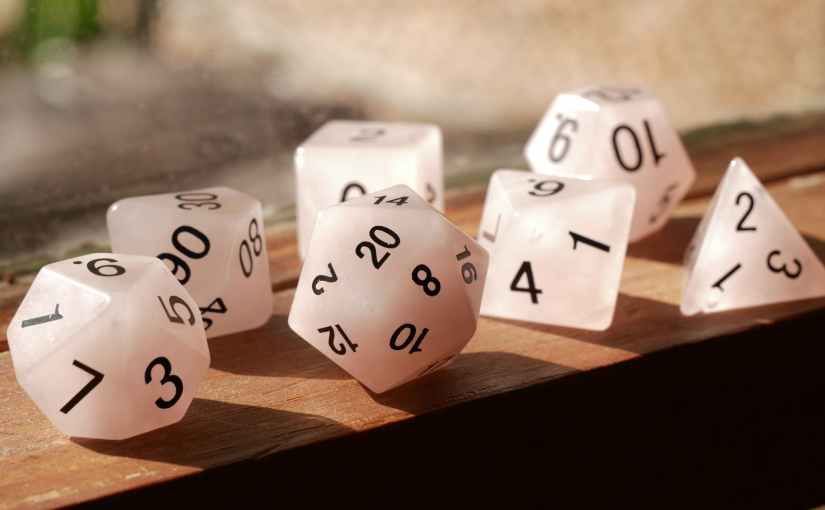
BITS of Bullets and RPG Ammo

We already talked at length about when and why and how to reload when things go wrong in RPGs.

This post takes a look at when the tools a fictional character uses runs out of gas / bullets / arrows / batteries / fuel / et. al. From single rounds to bottomless bins of bullets, the BITS system has it covered. Tiers are for reference only, but could be applied to a game’s economy for availability or cost:

TierUsesExample
0NAAny object used as it is or otherwise remains self sufficient. Crowbars, swords, and furniture are all examples of this. So too are magical lightsabers, perpetual fusion power packs, the Energizer Bunny, and, in effect, a sun.

Think: Tools that use no resource, such tools as melee weapons or near-magical objects.
11 and DoneUsing this uses it up.

A grenade, signal flare, match, mine, and medical needle are here. So are nuclear bombs.

Sometimes spending out the thing makes it prohibitive to re-equip during any reasonably short amount of time. Priming and loading a second cruise-missile onto a platform during a fight is farfetched no matter how many are in stock. Draining the power source of some cyber tech skeleton-key makes sense for a novel firewall-cracking device.

Reserved for both the simplest and the most overpowered of tools.
21-6 ShotsA salvo of shots. A single arrow in a bow, a flare in a flare gun, the twin-projectiles of a Halo SPNKr launcher or the twin-barrels of a sawed-off shotgun, and a cowboy’s six-shooter (and revolvers in general) match here.

Each shot is reloaded individually unless some special tool replaces the entire salvo. Where rounds for the shot come from can be something like a box-of-bullets, which can critically run out when reloading like the magazine in the next tier. (Gunslinger in The West uses this mechanic.)

Here powerful shots get tempered, more than the magazine-based tiers below. This is an excellent option for strong-in-context tools.
31 ReloadA magazine, battery, fuel cell, etc. Abstraction of multiple uses until critically failing when in use, thus running out of the resource and requiring a reload. (This is the “box of bullets” above.)

Assault rifles, high-powered flash lights, a pluck or handful of arrows, and Super Soaker tanks fall here. A single belt fed into a device also counts, such as that fed into the MG42 used by Jin Roh Wolf soldiers.
42-6 ReloadsCan be used multiple times and fail multiple times without stopping. Only once the last reload is ‘marked’ does the entire tool need refilling.

Extended magazines, Tommy Gun drums, gaping quivers, belt-fed M249 SAW boxes, and cable-powered laser guns.
6After ActionWhen the dust settles after a large encounter or the end of an adventure mission, it is time to take stock. Only then will / might the tool run out of steam.

Mounted turrets, vehicle fuel, and other supplies that seemed plentiful in the moment are found to have been spent (if used at all). Refueling, reloading, and rearming need to happen before these tools are ready to roll.
10IndefiniteSee tier 0 – things here go and go and go and …
Tiers of Use

Nothing New Under the Sun

Games are but levels of abstraction.

When it comes to kinds of expendable resource, abstraction needs to play a key role.

Video games do this excellently – at most, they tie ammo to a very small set of weapons (e.g. round X goes to weapon X), or abstract the kinds of available resource to the broad category of the tool.

‘Batteries’ or ‘power packs’ for flashlights and sci-fi gadgets alike, liquid ‘fuel’ for flamethrowers and cars, ‘shotgun shells’ for all gauges, ‘bullets’ for small arms, ‘artillery shells’ for tank main guns and recoilless rifles. Rockets, missiles, and torpedoes (I make this mega-missile category for the likes of cruise missiles). Grenades, charges, bombs.

Just as how ‘coin’ can be split into gold, silver, copper, and more, just as how ‘grain’ becomes wheat, maize, barley, and more, when it comes to deciding on resource types, do what feels right. Always seek to KISS, and things will go swell!

In This Economy?

A hierarchy of value exists in all things.

Resources apply the same way. While more thought needs to be put into this, a simple split would be:

  • Sufficient Shot* – This is cheaper-than-cheap resource. Rocks for a sling, potatoes for cannons, grass for alternative fuels, or bullets in a bullet factory having a fire sale.
  • Cheap Shot – Mundane fuel and resource that comes standard in both civilian and military use (context depending).
  • Money Shot – High-value, high-impact ammunition. Jet fuel, missiles, you get it.
  • Such Shot – Exotic. Best of the best. Fusion cores,blessed silver bullets, nuclear bombs, et. al.

* I was going to call this “S- Shot” and I choose to be less vulgar 🙂

Simple, right? That is what BITS works to be.

No need to overthink what tools gobble-up what they use to run, how to keep the fires going. Determine if a tool ever runs out of uses and if that is after every use, every critical failure of use, multiple uses / failures thereof, or never!

I hope you take benefit from this synopsis in your own game designs. This is yet another page into my own compendium of game design reference, so expect to see design themes from here echoed in future work.

Cheers to all you do in the meantime ~

Eight Dates Essential to You and Yours

The book Eight Dates by the Gottman’s (of the famous Gottman Institute) applies years of science from their world-renown work on relationships. In a few brief chapters, the book goes in depth with an actionable eight dates and more covering essential topics of how to relate to you and your relationships.

I add this quick read-of-a-book to the shelf alongside If You’re In My Office, It’s Already Too Late and How Not to Die Alone and the work of Esther Perel. While though it is a short read, the pages overflow with useful tidbits that, frankly, IDK how to include the bulk of here 🤷‍♂️

But by-heck I am going to try!

Below are a collection of notes that stood out to me. Each date has specific setup and homework to do beforehand, with questions to follow while in the midst of the date (excluding all the Qs and prep here – go to the book!). I will interject my own commentary, so keep eyes peeled and clear your calendar for Eight Dates:

Date 0: Warming Up and How to Communicate

Not really a date yet incredibly important: putting in the work to be ready to have hard conversations, and being mindful of the skills to go deep.

First, is there ingrained contempt that will kill the relationship? Do you speak positively or negatively of your time together? About the other’s characteristics? How do you downplay the negatives? If mired in contempt, it might be better to see a divorce lawyer than make these dates.

That said, how you can keep contempt at bay is to interject warmth, humor, and affection into even difficult conversations. Emphasize the good times! Compliment the other! Use “we” generously! By choosing better language, we become more energetic, enthusiastic, and mindful of the time spent together.

These language tactics combine with how to approach different topics: be devoted vs doubtful, be proud vs ashamed, center on shared values and goals, and, maintain intentions to form and keep traditions of emotional connection. That is what the dates are all about.

Getting the dates that follow onto the calendar, think about intentionality and consistency. A useful device would be beginning a tradition of a special date once a week (say, a minimum of 1 hour but preferably uncapped in the morning, afternoon, or night). Plan the dates, keep the dates – nothing else matters as you and yours are exclusively engaged with each other. While the topics will delve into uncomfortable, unfamiliar spheres, STAY DECENTLY SOBER THROUGHOUT.

As the conversations get rockin’, voice feelings as they arise and explain how and why those feels arose. This requires some hefty introspection and honesty with yourself.

To stoke the convos, ask open-ended Qs. The exploratory statements about emotions, situations, and answers will uncover the most between you and yours. “Tell me…” or just “I hear you – go on” encourages further engagement. Yet always keep in mind that no matter the ask of you or the answer from them, you will be tolerant, you will be empathetic, and you will be understanding.

Enough study. Time for the tests:

Date 1: Trust and Commitment

Where is the “us?”

It might begin by committing to confide not in others about the “us,” to trust that the two – you and yours – are able to explore and resolve the hurdles set in your mutual path.

Further, NEVER compare negatively a partner with real or imagined hypothetical people. You should already have done the review of “is this person worth my effort and attention.” If you can take pride in surviving this far in the relationship, you can commit to keeping the relationship binary as it comes to consultation. No former lovers, no current lusts, no jobs, no recreations, no kids – this is a relationship for you and yours only (more on this below).

(Side note: All the above came from reading the book until July 8th ’23; the following commences on October 1st.)

Date 2: Addressing Conflict

How will you and yours fight? And more importantly, how will you repair?

Eight Dates outlines 25 points of difference in lifestyle and character that typically become abrasive over time in relationships. These ought be accommodated, mediated, or brought up on this date.

To choose which of the 25 hard points to talk about pick 3 to 5 (I say 4 to 7 since that is a psychologically more significant) that seem most important to you (your companion on the date doing the same). Discuss these, using the tactics in the book to move closer together (literally and figuratively, such as holding hands) while perhaps being opposed in view.

The chapter offers four steps to repair from the conflicts brought up in this conflict or that have been chronic between you and those you care for.

Date 3: Sex and Intimacy

To begin with, understand that there is no normal to sex, intimacy, the intensity thereof, or the frequency. 32% of couples have sex 2-3 times a week, 48% a few times a month. You are likely doing just fine (and performance anxiety is a performance killer).

Rather, focus on the quality of the connection made when you can make it.

What sexy lovers do:

  • Say and mean “I Love you” daily;
  • Surprise your amour with romantic gifts;
  • Rain down genuine, objective compliments often;
  • Take romantic vacations;
  • Deliver back rubs;
  • PDA;
  • Kiss passionately for no reason (there being an 85% correlation of happy sex and passionate kissing);
  • Cuddle daily (only 6% of non-cuddlers have self-reported quality sex);
  • Dedicated weekly romantic dates (make it an event / special occasion);
  • Prioritize sex;
  • Talk about sex easily anywhere;
  • Have game (be open to variety within safety and reason);
  • Be responsive to bids for emotional connection.

When discussing sex, other than past trauma and outright harm, talk only of what you like in sex (just like in Date 0, talking only of the benefits of your partner). Often and early talks and reviews after the fact lead to better sex and intimacy.

In hetero cisgender norms (a limitation of the studies acknowledged by the book as the science is just not conducted yet), men require sex to have emotional connection, women require emotional connection to have sex. Chicken and the egg at its finest, so meet at the border of where you know your partner is expecting you to be, tagging along in their orbit for at least a bit.

It takes a lot of work to be emotionally vulnerable and physically exposed for intimacy. On top of that, expect only a universal (non-sex specific) 75% acceptance rate to intimate / sexual propositions. However you view this, shoot your shot and know that neither you nor yours will be 100% all the time.

Regardless of the acceptance rate, focus less on sex and more on kissing. Kissing is the glue for togetherness. Kiss a lot and kiss deeply. Kiss for awhile (6 seconds and more).

And between all the quality sex and passionate kissing, do not wait to communicate your appreciation for their work in the relationship, their looks, and their fundamental ‘feel.’ (Comes back to my maxim of “do not wait to share appreciation, apprehension, affection, or apologies.”)

No matter what comes up in this date, other than the acceptance and non-judgement you bring, there is one more stat that the best relationships shared. At best, if you and yours are aligned with little conflict, maintain a 1:20 negative-to-positive ratio about these domestic issues. Note that for high-conflict subjects, I have heard a 1:3-9 exclusive ratio is required to not make things seem dismal nor too easy / for granted.

Date 4: Work and Money

Money is the single best predictor of divorce. (Followed by sex, in-law family, chemical dependence aka addiction, and parenting.)

Some try to pigeonhole people as “saves” and “spenders” – this is a regressive sentiment. Instead, people are a mix and a mix in different contexts. To try to be as general as possible, a wider view of ‘value in the relationship’ needs to be considered.

For those that worship money (everyone does to varying degrees), “no one ever wishes to have spent more time in office.” Saving as a form of accomplishment only goes so far when the time working then impacts time that would go into the relationship or the selfcare that makes us equipped to show up 100% to our relationships.

Continuing on that idea, unpaid work is a conflict in the relationship, whether it is the day job, recreation various, or chores at home. Spending attention and effort – all costing time and energy – introduces a third party into the relationship between two. This violates the pledge of Date 1: faithfulness to the other > sex > chores > anything else.

Speaking of chores, split them as best you can equally (unless this is decided to be one partner’s value proposition to the relationship, where they are performant on domestic tasks so take on more of this role). Consistently, equal division of domesticity is ~17-18 hours a week per person. (I spend ~14 hours on myself.)

During Date 4, discuss priorities. Yours? Your partner’s? To the “us” (from a shared list of values)?

What does money mean to you and why? Save extra, or spend on experiences during a windfall? How do you both contribute value (paid and unpaid) to the relationship? How will y’all live below your means?

Date 5: Family

Family is a fluid and nebulous term. Discuss this in concretions, even if they are daydreams of what (and with whom) this looks like. Consider friends, pets, bio-relatives, children, and more.

Especially talk about children. No children vs. wanting some is a deal breaker; some vs. many is too.

Be mindful that the more money parents earn the more expensive it will be to raise a child from pregnancy to 17 (e.g. if for me in 2015 the result would be $407820 over that 18-ish year timespan.)

Further, ~67% of partnerships suffer a drastic decline in happiness until the first child leaves home; the decline compounds in harshness again for each child born after the first.

Despite these very real downsides, do this to save your relationship: DO NOT LET THE CHILD COME AT THE COST OF YOUR PARTNER; choose the partner above all.

Back to first principles: commit to your partner. There is nothing better for a child than to have strongly-bonded (and healthily bonded) parents.

Nothing of a family is easy. Mitigate the pains by doing a few simple-sounding things when adding others to the family picture:

  • The masculine partner respects and values the opinions of the feminine partner;
  • Stay mutually involved in the onboarding process (e.g. pregnancy);
  • Maintain low conflict, healthy conflict management, and the prior level of intimacy before the ‘other’ became involved.

Again, avoid all criticism, contempt, withdrawing, shutting up and shutting down, and defensiveness here. While all the dates can touch on sensitive topics, family can be one of the touchiest.

Sometimes a change of plans might be required (e.g. the want for children grows in a partner previously committed to no children; an unexpected pregnancy arrives; a parent requires some sort of at-home care) – people (and relationships) change constantly if in good working order. I would suggest the answer to handling a course change as this: stand by the prior commitments of the partnership until either the crisis or a cooling-off period is had. Anything else is impulsive, a broken word – harken to the first date, Trust is paramount – and such terms also apply to a partner who would not come back to the discussion, ie negotiating table.

Date 6: Fun and Adventure

Play, laugh, and make a game of life together to be happier.

As Samwise Gamgee put it, “share the load” as it comes to chores and fun.

Find and regularly do a shared activity. Just a suggestion: Scary things done together are bonding opportunities. Really, anything challenging spikes the feel-good chemicals!

If a partner is turning to drugs or food or porn or other solo activities (mind, these are OK if shared in pictures and story and anticipation with the other partner), this might be symptomatic of a lack of bonding hormones in the brain. Go play and do something risky and new together to help reset the balance. Keep handy that any addiction diminishing the relationship is a candidate for professional intervention.

In contracts to play, a lack of it is not work, but depression. If lacking play, schedule it in as a priority and incorporate it even into work and chore done together. Life is short and limited; your joy with another does not have to be.

Date 7: Growth and Spirituality

Out of every other date, religion is least likely to break the relationship. Shared interests are more important (i.e. talk about ’em), sexy times (enjoy ’em), and share chores (do ’em).

This does not diminish divinity’s role for you and yours. Sacred (however you term it) relationships are happier and last longer. Sacred sex is done more often, is reported to be better, and last longer with lingering positive effects.

To bless the time you and yours share, create rituals. Weekly dates, coming together, parting, being sick, and more are all candidates to hold in reverence. Talk these things through; if afraid or disquieted on how yourself or your partner perceives the world, tell the partner your concerns rather than ask them to stop their explanations or explorations of themselves or your message.

Date 8: Dreams

Think of an optimal future for yourself, the “us,” and how to support the other’s dream. Share these dreams. Explore the deepest dreams that first arose in childhood and the new ones inspired now in adulthood.

After sharing, take turns in pursuing dreams so as to better maintain the relationship by limiting the sacrifice present at any one time. This only works if you do not belittle each other’s dreams; yet, feel free to investigate and ask after these fancies. In the meantime, ignore impracticalities (but give care for anything outright harmful).

The book has a list of dreams to consider bringing up on this date. I especially like the exercise that helps rediscover dreams that may have been buried, lost, or dulled by the weathering of life’s incessant march and chaff.

Extra Bits in the Book

Those are the dates! But that’s not all – open-ended questions, the bonus compliment date, and more are appended to the back of the book. I especially like the “what is your existential loop, your would-do-forever Groundhog Day” Q.

See? I said there would be more content than you could shake a stick at. Guess you will have to read the book to grok it all!

2500 words and more than two hours in, this post was long in coming. Yet so short it is compared to the story of the life you and yours have shared and will continue to share, perhaps with a little edge gained by the Gottmans’ Eight Dates.

(I know I will be keeping John and Julie G’s work in my back pocket!)

If you have been together for even a little bit, what would you accredit to maintaining the connection? If you are looking for a connection, what seems to be the missing piece? I am here to listen – regardless, you know I now suggest following the eight dates that set out what is essential to the happiness and understanding of you and yours ❤ Cheers ~


The Best Oracle for Your RPG Is…

The Magic 8 Ball.

Familiar to most, the Magic 8 Ball is a classic oracle. It answers your questions with 20 different responses of varying levels of affirmation, negation, and equivocal ‘IDK.’

It is game and genre agnostic. The online tool is free, accessible anywhere, and one button click delivers new answers. There exists a physical ball it a tactile experience is sought for.

What Is an Oracle?

An oracle – in game-playing terms – is a system to generate answers to questions, develop situations, and provide both context and conflict to play. Oracles are great for people playing games solo or groups roleplaying without a Game Moderator (GM, aka DM).

There are online forms and long discussions and books for sale that are meant to stand in as oracles. Pages and pages. But while the question-and-answer system is superfluous to the Magic 8 Ball for anyone with experience asking pointed questions in a creative context, these other oracles have some nifty charts and tables. There are simple additions for that too:

Filling the Gap: What Happens

Getting the simple one out of the way first: determining what a fictional character finds is easily found out by rolling a D6 for the number of times, then on any table of items common to the setting.

A quick googling of “loot table” or “item list <your genre or favorite RPG>” gives more lists than can ever be used – pick one or switch them up every game session or such. Further, if using the oracle on a particular game or system, you might already have the items in the game rules (which are often given out for free!).

Some examples of simple loot lists include my As Above, So Below and Gunslinger in The West one-/two-page RPGs.

Loot tends to come after an encounter – either bought from stores or pilfered from combat. To find out if there is an encounter, roll a D6 – on a 1, encounter!

Roll once every time of day (morning, afternoon, evening, night), once per quarter of the map when traveling (i.e. there would be more encounters in a dense city vs. a global overland map), per round of combat, and / or after combat. When traveling fast, using a combustion engine, or being especially loud (e.g. gunfire in a quiet neighborhood, shouting in the woods), a roll of 1 or 2 ought be considered for encounters (or 3 and more if using explosives or jet turbines).

For when company comes calling, I encourage the 2D6 table of encounters, a different table created for each area or faction (used in areas populated by the faction), or a generalized list for any moment of any game. An example of those is well-covered in this wilderness guide and this magical fantasy fill-in article. (I will include my own used in the recent month of TTRPG play!)

A little extra flair is to add a reaction system to those encounters met (friendly, ‘meh,’ eager to do ill!)

Bonus: The Hazard System

Encounters are cool, yes, but what about other things happening in the world?

Questing Beast has put together a lovely D6 tool called the Hazard System. Go check out the link and in a cinch, roll to change the world anytime you would roll encounters:

6Benefit / Breather
(Something Lucky)
5Rest / Extra Time Taken / Trap / Impasse
(Extra Effort Required to Progress)
4Expiration / Time Passes
(Batteries Go Out, Clock Advance)
3Changes in Weather / Place
(Fog, Precipitation, Vegetation, Etc.)
2Clue / Foretelling
(Lead, Advantage, Hear ’em Comin’)
1More Bad Stuff Happens
(Encounters! Escalation!)
General Hazard System*
* I would rearrange as follows to better accommodate levels of danger affecting the result:
6 Benefit 5 Clue 4 Place 3 Expiration 2 Rest 1 Bad

A Magic 8 Ball as oracle! Readily available loot tables, a simple 2D6 encounter list, and a world-morphing Hazard System are all a person needs to navigate their adventures.

You can see how these tables-on-tables can explode – easy to understand why there are libraries of content trying to fill the niche of oracle in gameplay! Yet this at-max two-page spread of guidance is all that is required for full, engaging play. (In fact, that sounds like a future blog post!)

How do you make decisions in your tabletop games when a GM is not there to provide the context and conflict? What is missing from the toolset above?

I want to know your techniques! Hit me up in the comments, subscribe, and cheers through next week and the next post ~

September October Goal Review

50% last month led me to consume a little more culture in September. Something a little more manageable, right? 😅

September Goal Review

  1. Lay Out Less
    • Won! I spent less than 17% of the month with these 4-task days, but I realized something at the end of it: I need to reserve, say, the bottom of a workday (4 out of 10 tasks) to overflow and spontaneity. Will try this habit going into October, no goal required 🙂
  2. 10 Hours Video Game
    • Failed. 6. 6-stinkin’ hours. I could not manage 10 hours of dedicated play. Big sad here. I cannot get over the sensation that solo play felt like… empty calories? A feeling pointedly lacking in this next goal:
  3. Cold-Play BITS
    • Won! TLDR; a =huge= amount of learning and content was generated from * checks notes * 50 journal pages of the single mission played cold. It took at minimum 11.5 hours to play a single RPG adventure solo (writing the journal took a lot!), yet I had a fantastic time. Worth bookmarking future games to try this way – a few principles, a handful of tables, and a Magic 8 Ball. More on all of this in blogs to come!
  4. Read Tools of Titans
    • Failed. Only ~200 some pages of the ~700 page book. It is still a quality tome – it will remain on my coffee table for the future. I might sneak further reading in October’s goal that in part tracks sleep. Speaking of which:

October Goal Proposal

  1. Bio Tracking
    • In no specific order, but all of lasting importance:
      • Genetic Analysis
      • Full Blood Panel (at least one)
      • Glucose Monitoring
      • Ketone Monitoring / Manipulation (will involve diet)
      • Sleep Journaling
      • and more!
  2. Efficiency Audit
    • What are my biggest time sinks? Work and home? How can I get 10% more by limits and cuts? 80/20 study, gun-to-head must-do? What am I not good at, but do anyway?? Find these answers, execute solutions.
  3. Old Journals
    • Get started on the ol’ EOY letter. To do this, I have at least two journals from this year to review.
    • Bonus: Books and movies reviewed for the EOY. (This is a preliminary pass.)
    • Bonus: Music gathered and playlists started for the EOY.
  4. Everything Everywhere All At Once
    • Cool movie. In my life, this means spending time and attention with the people I will share life and joy: birthday weekend, a week in Texas, a silent disco, dancing, perhaps some camping, and of course, Halloween! Failure here means forgoing these things because of my own weakness.

50% again 🙃 And I regret nothing! All of it a learning experience – learning how much I enjoy the company of others, the gratitude for the work my past self has done, appreciation for the glut of opportunity in danger of drowning my busy body.

So take care of my body. Collect the facts. Celebrate in October with friends what a doctor has recorded as a “well developed” physique 💪 Here we go ~

Looking forward to celebrating with you in person or spirit as we enter the haunting month! Feeling swell and passing on these well-wishes your way. Cheers~

BITS – The Force of Law

More for me than thee, I have concocted a go-to reference list of law-enforcement “units” for roleplaying games, specifically tiered to the BITS system.

While leaning more heavily into cyber-punk or grimdark futures like 1984, Fahrenheit 415, and Warhammer 40K – all woefully dystopian – there are modern equivalents and by replacing revolvers with crossbows pivots this tool becomes genre agnostic.

Follow along as I also tie each tier into the OODA Loop:

  1. Tier 1 – The “Gestasi” / “Stastapo” Regulars
  2. Tier 2 – The “Response” Adepts
  3. Tier 3 – The “Agent” Heavies
  4. Tier 4 – The “Justice” Elites
  5. Tier 6 – The “Letter” Champions

Tier 1 – The “Gestasi” / “Stastapo” Regulars

Observe, and report on what is happening.

Thought police, street spies, handlers of Spider-Hound robots (direct inspiration from Fahrenheit 415), general drone operators, deputized civilians, the mall security guard.

Not useful for much, but capable of causing trouble if not dealt with. More than likely to stab their target in the back or retreat if they know what is good for them! Good for supporting whatever “policy” needs enforcement. Bootlickers.

Tier 2 – The “Response” Adepts

Orient, contain and manage whatever “is” in the moment.

“Firemen” (I like to think armed with both flame throwers and water cannons, saws, and axes), inquisitors (who would have expected!), riot control, medics (for sedation and interrogation), well trained police, and general “influencers” of civilian action.

Here to deal with whatever is actively escalating in the streets. Meant to be first on site.

Tier 3 – The “Agent” Heavies

Decide, as this tier works with the information and situational awareness provided by the earlier tiers.

The “Mister” and “Miss” people in suits and sunglasses, on-the-ground tactical commanders, SWAT and public security military enforcement (such as the armored “wolves” from The Wolf Brigade).

The true enforcement of “policy.” Equipped and capable of fighting a war in the streets. Or striking so thoroughly that war was never an option.

Tier 4 – The “Justice” Elites

Act, and execute “policy” ruthlessly.

Justices (carbon copies of Judges from Judge Dredd), “peacekeeper” Robocops, zealous paladins, and any nearly super-powered onsite executors of the Law. Eat, breath, and live the ideals of policy.

Why have a court system when sentencing can be made at the scene? Why have prisons or cells if the punishment can be dished out by a singular =beast= of policy? A bona fide keeper of the peace by giving the pain.

Tier 6 – The “Letter” Champions

OODA, they do it all. Less outright enforcers of policy, but makers by their influence and action. They are the letter of the Law.

A list of singular individuals and their inspirations:

InspectorAn “Inspector Gadget;” full of surprises to get to the truth.
The Darkest KnightBatman; vigilante justice that stalks the streets.
“Sheep Herder” Rachel DeckBlade Runner; investigates digital and robotic crimes.
“Lucky” Harry EastA Clint Eastwood ‘punk.’ Relentless.
Bruce ClaneA Die Hard hero; a reluctant servant.
Ranger KorrisChuck Norris; martial-arts extra-urban enforcer.
Mr. DoeMatrix‘s Agent Smith; not surprised to see you.
Sheriff Jim GoeJames Gordon from Batman;
makes backroom deals for high ideals.
Who (And What) Else Is Missing?

Fit for any Big Brother dystopia, I like this list being a quick lookup that I (and now you!) can reference any time!

Think I will make more of these, stop reinventing the wheel when brainstorming game design problems. What do you think I should make a list of next?

Regardless, cheers to you and I staying out of the eye of the Law ~

Going All Out in RPGs

One of the hardest things to pin down in my own RPG design is this: How do you allow a character to go from affecting one target to many? Or to put that extra effort into going all out on something? And balance the whole thing so as not to go overboard?

After a little testing and a lot of study, I want to share this small library of system-agnostic game design mechanics for shooting, swiping, and generally increasing the breadth or depth of player action.

  1. KISS: System Agnosticism
  2. Player Choices
  3. Cy_Borg: Keep Rollin’ (Within Reason)
  4. Warhammer: A Smattering of Splattering
  5. A Spicy Homebrew
  6. All Out Enemies

KISS: System Agnosticism

To keep the library ‘clean,’ I will not emphasize the types of dice or player stats / abilities used in altering the outcomes of dice rolls. Adopt and adapt as necessary.

The only assumptions here are:

  1. Dice rolls for determining any random outcomes.
  2. There exists the possibility to have a extreme / critical failure or success on those rolls.
  3. (Suggested:) Critical failures result in some sort of over-extension. If using a projectile tool, this could mean running out of loaded ammunition (e.g. empty mag, quiver) or an explosion (e.g. plasma containment breach, failure to launch the rocket). In melee, the tool of choice gets stuck, or every other action against the over-extended character has advantage for a turn, or at worst, the tool breaks or is damaged down a tier of effectiveness.
  4. Players may choose when to end their spree – either by selecting a finite number of targets to begin with, or choosing not to continue when in the middle of the act.

That’s it! Let’s rock:

Player Choices

Point 4 above intends the players to be in control of the actions their characters take, reaping the consequences as they come.

To do this, players must choose as to whether or not focus down a single target or spread their care around.

In the first instance, choosing one target per action is the default for games – a “do this to that” situation.

The act of spreading the effect around is where this library will be the best leverage:

Cy_Borg: Keep Rollin’ (Within Reason)

Cy_Borg adds what its grimdark fantasy ancestor could not: Automatic weapons. How does this system handle going all out?

Act aggressively up to three times choosing a target (same or different) every time. However, stop acting anytime or when failing a roll.

The main difference here in going all out is a higher chance to need to reload after the fight and it uses a different stat than regular shooting actions. Just roll versus difficulty!

How I might spice up something similar:

  • Allow a character to keep acting forever until they run out of targets (they choose either to spread fire or concentrate before rolling) or they fail the roll.
  • Option: Each subsequent shot gets harder to roll or all shots are a tier-of-difficulty harder to hit.
  • Option: Any failure is a critical failure (i.e. out of ammo or otherwise cannot fire until action and/or resource is spent immediately vs. post fight).
  • Option: Combine the two options above!
  • Extend this ability to swiping in melee – be able to target all in surrounding proximity if in a group or ganged-up on the character.

Warhammer: A Smattering of Splattering

I am a sucker for Warhammer games, especially 40K. In Only War and Deathwatch, both D100 percentile systems, there are options:

  • All Out – Attack in melee with +20% effect. Cannot dodge or parry until next turn.
  • Full Auto – Attack at range with +20% effect. Extra hit every 10% aka degree-of-success. Crit fail is more likely (jams). Allocate extra hits to nearby targets or the original up to the weapon’s max “full auto” value of number of rounds spent (these are spent regardless of hits). Get a -10% effect instead if also moving.
    • Burst firing is less impactful, and a distinguish I will forego further comment on: +10% effect, spending “burst” number of rounds automatically and capping the number of possible hits, get an extra hit every two degrees-of-success, gain no bonus effect if moving.
  • Suppressing Fire – Pins (rather, chance to pin) all foes in a 45-degree arc over a distinct area. -20% chance to hit. Crit fail is more likely (jams). Allocate extra hits at every two degrees-of-success to a random recipient, capping at rounds spent. Spend “full auto” rounds automatically.

Auto-fire along with explosive-typed weapons are also the only way to put a dent into hordes of enemies.

Spice things up:

  • “All Out” is the term for diving into melee or unleashing auto-fire. Allow extra hits to allocate to the same or new enemies, but once moved off a target, cannot move back and must move to any new targets in the same direction.
  • “Suppression” pins all entities in or entering/exiting an area. There is disadvantage to hit if the target stays still, but no disadvantage if they move. Cannot critically fail. Roll to hit for all similar targets moving and staying put (e.g. all easy-but-moving vs all easy-but-in-cover vs all moderate, etc.). Use an entire magazine’s worth of ammo by the start of the character’s next turn (mitigate with large-capacity magazines).

Next is Wrath & Glory, a D6 dice-pool system (more dice = more chances of successes):

  • Salvo – Spend an entire magazine to add the size of weapon magazine to the dice pool.
  • All Out – Add two dice to melee, but suffer two when in defense until next turn.

Wrapping up with fantasy, Age of Sigmar: Soulbound (another D6 pool):

  • Spread – Specific to only certain ranged weapons. Hit everything of the same difficulty as the target (I spicily say lower difficulties too!) that is next to the target. Higher difficulties get a chance to dodge. Applies to things like shotguns, automatic weapons, and explosions.
  • Cleave – Specific to only certain melee weapons. On each die roll of 6, do 1 damage to all foes next to the intended target.

Side note: most games have rules against using ranged weapons in close-combat. Deathwatch forbids it unless using pistol-like weapons. I would spice it up by allowing ranged weapons, but have an uncontested ~50/50 chance to hit the target or any other random target in close range to the melee (including the acting character!).

A Spicy Homebrew

All of the above is of great study. Some key points:

  • Going “all out” applies similar mechanics to melee and ranged actions.
  • Any “all out” failure is a critical failure and ends the spree.
  • Going “all out” is one of the only ways an individual can take on a horde / mob / detachment.
  • Degrees of success add to the number of hits.
  • Hits can be focused on a target or spread among nearby targets.
  • Pressing the point: Suppression guarantees a spending of ammo and denies riskless access to an area for a turn. Being “Reckless” or “Savage” in melee gets the cut in, but leaves one open to be disadvantaged against all else until their next turn.
    • This is similar to the concept of “blood magic” where a point of health can be spent to increase a die roll by 1 or reroll (with the chance of a critical failure) as many times as wanted to force a thing to occur. If used too often to get out of spots really meant to be too tricky, optionally require costs to reflect the tier of what is being attempted (1 extra value on the rule costs 4 for a tier-4 spell).

The biggest exception I have with these systems is that most rely on multiple rolls and/or bean-counting of ammunition. We can do better with one roll and degrees of success and by-magazine capacity. An example:

  • Acting Normally – Pick one target. Roll to match or beat the difficulty of the target. A successful match is the effective hit of the tool, plus 1 effect for each degree-of-success above that difficulty.
    • A tier-3 sword strikes a target of difficulty 7. The roll (+ any modifiers) is a total of 10. The effect is 6 (3 for the sword on success + 1 for each number above 7 [10 minus7]).
  • Going All Out – Pick one or a set of targets of the same difficulty. Roll to match or beat the difficulty. A successful match and every degree of success is another hit to distribute.
    • A tier-3 sword swipes at a crowd of difficulty 7 targets. The roll (+ any modifiers) is a total of 10. The outcome is 4 targets are hit for 3 effect each (3 effect for the sword, 4 targets for success and degrees of success [10 minus 7]).
    • Reloading – A ranged weapon critically fails, the magazine running dry on the trigger pull. Out of the character’s inventory, they apply the same kind of mag to the weapon as an action. Prevents counting bullets and maintains a level of tactical prep: how many mags does a character bring along? Can they find or scavenge similar where they are?

All Out Enemies

Perhaps an RPG character has found a machine gun, grenade, or is a spinning cloud of whirling blades. When they go “all out”, they are treated much like a mob or when using suppression: They either hit everything in an arc or focus-fire extra effect worth 2D6 divided by 2 (round up) on a single target, everything being an automatic success except for when crit rolls above this antagonist’s difficulty jamming their gear.

Give the character something like bombs? Or missiles!? A tank’s main auto-cannon? Automatically hit those in a zone with an extra 2D6 effect. Crit fail for an off-target, scattered landing.

To spare the scope of large groups going all out, keep the mechanic relegated to heavy weapons teams, berserkers, boss characters, and other identifiable, high-value targets (e.g. tier-3 specialists and above or vehicles).

All this to say, even lowly grunts armed with the right tools can take out the most heavily equipped knight!

There are other mechanics out there for sure. Most of them involve rolling multiple dice over and over and over again, or putting arbitrary limits on what can be hit (e.g. Cy_Borg‘s max-3 limit).

Further, few systems seek to tie together melee and ranged actions, let alone having rules for either leaning into one target or many (something as simple to realize as, “does the character swing down, or side-to-side? Pull the trigger lightly or keep it pressed?”).

I hope the spicy additions if not the homebrew solves some of these conundrums for you as they have I. (Big thanks to my ol’ D&D group who asked what to roll when spinning like a top into a bunch of ratmen!)

This post has gone all in on going all out in RPGs. Share your favorite go-to mechanic and which of the above speaks most to you! Cheers to you going all out in play and living life ~

Death of a Hero: RPG Redemption

Handling “the end” of a character in games is a fraught subject.

Players and designers may have spent everything from mere minutes to many hours to years with this fictional being. That is no small loss.

Some roleplaying games make death a far off thing: D&D creates (player) characters who are overpowered, nigh immortal, nearly all powerful, and have the opportunity – even after being bathed in dragon fire – of getting back up again if they roll successfully on but one of three “death saves,” no worse for wear. (No mention here of a plethora of healing and resurrection options.)

Other games keep it simple: Run out health, die. Really really die if health goes into the negatives! That’s it.

While personally partial to the latter option, I want to see a better middle ground for engaging play.

Wealthy, Healthy

Games like Dark Souls and Cy_Borg use resources to balance death: Lose all gathered souls or go into credit debt to have a body recovered.

This is a solid approach to character death. There is the choice to make death less than permanent, yet life after may be less worth the living. The bite of death is tempered, yet still respected as players are hit where it hurts: the character’s pocketbook.

To me, this seems more a tool to include in a game, a stapled-on feature to add narrative flavor rather than a fully-fledged mechanic. Still cool, yet does little for the character’s specific fiction.

Where the Middle Lies

From my studies, I see a merging of principles: Keep death deadly, limit recovery options, leave scars, and offer player choice in how their character’s last acts carry out.

To fulfill those principles, I suggest the following:

  • Limited set of options that occur when a character hits 0 in health: 3 is a grand number because it allows for a randomizer of a D3 (simulated with a common 6-die), keeps the selection concise if the player chooses, and offers unique choices without overlap.
  • Limit the use of these options: The list is available only once per character per session when they hit 0 or fewer health. If falling upon some pre-determined negative amount of health or flirt with death again, skip the options to instead splatter/obliterate the character. Sometimes choices are taken from us in extreme circumstances beyond control!

All that in mind, here is a tentative snippet of rule that – on death – a player in any but the cruelest or condescending games would be subject to:

What to Do at 0: Final Act

When damage or an action takes a character to 0 or fewer HP*, once per session for that character, choose 1 and only 1 option from the Final Act list below to take effect immediately.

You may choose to randomly select an option below using a D3 – if you choose this method, the option has twice the effect in quantity or quality, as sensible for the context.

1) Blaze of GloryWith nothing left to lose, do not go quietly into that dark night. Take 1 and only 1 normal action. That action is an automatic critical success.

2) Down, Not OutGritting teeth and holding guts, the harm is extreme, yet so far not fatal. Lose 1 point of any stat or tier to regain 1 HP. Lose as many points as needed to have a total HP of at least 1, accounting for any negative HP.

3) Deal With the DevilWho would claim the divinities do not play dice with lives? Roll a D3: 1) Die without recourse and any hope of resurrection; 2) Appear dead, yet have enough breath to give last words after the ongoing event to the first being that finds you, you die thereafter; 3) Rise from defeat, regain all HP and have Advantage on your next action taken.

* If the effect takes HP to the negative of the highest numbered stat or tier of the character or lower, the character dies gruesomely without recourse to a final act or likely resurrection. E.g. a highest stat +4 means -4 or less HP is completely fatal.

General, genre- and system-agnostic rules for any RPG. Simple, yet emergent with context and the randomness of rolls. Concise yet distinct. Flexible, expandable.

Principles I am proud to stand by in game design (ahem, BITS).

How have you made the best of your character’s demise? The end of the journey? It might be something to add to that above 🎲🎲 So comment and sign-up to get reminders of these posts every Friday. Cheers ~

August September Goal Review

Gird yourself – while July was swell, August pushed me in new ways:

August Goal Review

  1. “No” Week
    • Failed. Temptations came out of the woodwork. I said “yes” to a few nights of dancing, a going away party, and more when asked. I did feel good about saying “no” to some events after the “no” week, but not in a way I feel confident in claiming this goal.
  2. Appointments o’ Function
    • Failed. I did not set aside the time to make the calls, set the appointments, and show up for many of the maintenance tasks I wanted accomplished. #Shame
  3. Appointments o’ Fun
    • Won! Big wins here. Now I know how to surf, I have a new climbing gym and regular twice-a-week routine, line dancing and two-stepping are added to my suite of moves, I have made or joined new social groups, and have of course enjoyed the water these few weeks. Despite going without the martial arts class in August, I am having fun 🙂
  4. Sleep
    • Won! I missed three days unintentionally to the 10 PM in-bed time, while six seven days I actively chose to stay out for the activities and people I engaged with. I left a lot of parties early and stayed out for some, having it come to mind that a 9 PM “go home” reminder is a reminder to evaluate the vibe, rather than a rule to call it quits. Adopting this for a daily consideration!
  5. Bonus: 4 Days No Internet
    • Failed. Or at least I cannot take credit for. Absolute cutting off of internet was a problem the first day of this experiment. Heck, I write this blog post on another! Really, it made me think where was I spending my time aimlessly – this happened to be on a few social media apps. At least I uninstalled most of those 💯

September Goal Proposal

  1. Lay Out Less
    • A spinoff from the “no” of last month, 1-to-2 days a week (roll a D6, on a 1:) only allow myself to list 4 tasks to do vs the 10-20+ I normally jot down.
  2. 10 Hours Video Game
    • I cannot recall the last time I had to schedule in play time – months? Last year? Anyway, I want to play a game again. Heck, maybe some games! The only way I feel I can do that right now is set aside the time. 10 hours ought be incredibly doable over the month.
  3. Cold-Play BITS
    • Taking the starting ‘missions’ or ‘adventures’ from a tabletop roleplaying game (I am thinking something from the Warhammer universe or a Mork Borg solo jaunt using oracles and randomizers), I aim to play it to completion by using the BITS system, making sure to form or update rules as appropriate as I play. Keep the content lean, keep it just-in-time applicable to the play situations that come up.
    • Bonus: Play multiple scenarios to rehash BITS rules “just-in-time.” Shake up the genres too.
  4. Read Tools of Titans
    • Another Tim Ferriss book, Tools of Titans has been sitting on my desk for months, owned for years. Time to do something about that.

Back on track! I seem to have been challenged enough in August to accomplish much, just not everything (~50% 😱). An accomplishment of balance!

Writing all this out, it looks like September has ~36-40 hours of core activity planned – a month of consumption, leisure, and casual entertainment creation. Will keep with up with climbing, swimming, dancing, at least once-a-week dining, the blog here, a few concerts upcoming, and any socializing I shim into the calendar.

What is life without a little fun? A little living?

Off I go to do the things. What are you off to? Share your wins! Cheers to ’em ~

BITS – A Solution to Polearms

I thought I had polearms (spears, lances, pikes, etc.) understood a few years ago as it applied to my proprietary roleplaying game system BITS.

I was wrong.

  1. The Problem
  2. +1
  3. Polearms in Effect
  4. Alternate -1, 0, +1 System
  5. Bonus: Reaching & Brutal

The Problem

Polearms – existing from the titular “pole” – bestow an additional length of reach to the wielder. Whatever is attached to the end (be it heavy, sharp, pointy, whatever) provides its own benefit, but only in addition to the pole’s reach.

Thereby in example, a knife is nice, but a knife on a stick is better.

How does one compensate for that reach? Add additional range?

Negative – when it comes to distance, BITS uses distances of 1-5-10-50-etc. meters or self-room-field-etc. An extra 3-6 feet of pole (1-2 meters) breaks this dynamic (we don’t care about such small margins). Further, polearms are melee weapons – BITS takes the stance that if something is within the same room as a mobile actor (a space ~10×10 meters), any melee equipment of that actor can be brought to target.

So what is left?

+1

A core principle is simplicity (in BITS or in the universe). What is simpler than giving pole items a +1 to their effectiveness?

* flash of insight *

Anything that is a “pole” or “staffed” gets a +1 to whatever it would be otherwise.

Have a tier-1 knife? Stick that onto the end of a pole, you get a spear! Effectively a tier-2 item at a tier-1 cost in purchasing (e.g. spears being the most historically used melee weapon aside from the club) and wielding (a simple spear needs only be held in one hand and can be thrown easily).

Polearms in Effect

TierMelee Weapon ExamplesPolearm Equivalents (all get +1)
0Stick, RockStaff (a long, solid stick)
1Knife/Dagger, Hatchet, Club, HammerSpear (knife on a pole), Trident
2Sword, Battle Axe, Mace, War HammerLance, Pike, Glaive, Naginata
3Zweihander, Great Axe, MaulHalberd (axe, sword, and hook in one)
4(reserved for any +1 of tier-3)
6(magical or legendary items)
Example Polearm and Other Melee Tiers

I leave off tier-4 here as that is reserved for the excellent halberds and other especially “brutal” or “heavy” melee weapons. Tier-6 is the land of mythical, legendary, or otherwise supreme weapons such as Excalibur or a lightsaber with their own special properties.

Alternate -1, 0, +1 System

This polearm realization has forced me to further refine the tiering system BITS uses. So much so, it fits neatly in an alternate -1, 0, +1 effectiveness chart, e.g:

-1Dagger, Spear, etc.
0Sword, Glaive, etc.
+1Great Sword, Fauchard, etc.

Now, this cannot work as-is for improvised weapons (think rocks, sticks) – for that, an “improv” tag must be applied, giving disadvantage to the equipment’s use.

Further, we cannot rely on -1, 0, +1 for determining final effect – before, we could look at a tier-2 item and say it has a “2” for effect.

Instead, -1, 0, and +1 must be what applies to the 2D6 roll BITS uses to determine outcome. From there, either straight-up “success” happens (a hit is a hit is a hit; things can only take so many hits), or “degrees of success” matter (a hit is a hit, but get extra “hits” for every about over the 2D6 goal, such as goal being 7, but rolling a 9 gives a total of 3 “hits”).

Tangential musing: Which is better: The 0, 1, 2, 3, 4, 6, 10 system because it can apply to equipment and creatures, or the -1, 0, +1 alternate for being so simple? I will be exploring this diff in the near future!

Bonus: Reaching & Brutal

While brainstorming on the polearm problem, I came to other conclusions:

Reaching (WIP term) – This tag allows for a piece of equipment to go one extra distance in its range. Sarissa (super-long phalanx spear) moves from melee range into a close range (poke people at a distance). Short bows (50-100 meter range) extend to 100-500+ meters in the “reaching” long bow. Similar equipment lets an actor reach out and touch someone.

Brutal – Or “heavy,” “master-crafted,” or what-have-you. Grants a +1 to the effect of the equipment and looks the part. (Note: any “+1” to a piece of equipment may not increase the total effectiveness of the equipment past 4 to make these items distinct from “heroic” tier-6.)

Getting an itch to work on tabletop roleplaying games again. What will be next? Translating MÖRK BORG into a space sci-fi, creating a “downfall of civilization” prequel to the game, or adding the twin-godling Basilisks to Cy-Borg? Playing a premade campaign to test out BITS mechanics from scratch? Making one-pager, system-agnostic faction lists?

I leave those Qs for the September goal list.

For now, know TTRPGs are on my mind! Be well yourself – go forth and enjoy your work and play. Send you more musings next week. Cheers ~

All I Want for Christmas

All I want for Christmas is to get a few things accomplished.

While this here is more for me to keep track of everything I am adding to my plate, I think there is interest for you in what might be upcoming these last four months of the year. In rough order of excitement, “blessed are the list-makers:”

  • Concerts! Especially electronic and metal shows. Live country bands every weekend, silent disco every first Sunday, Beast in Black this September, Dragonforce in November… I am getting out!
  • Speaking of country, learning to line dance! This kind of dancing is much less principle-based and more memorize-the-patterns.
  • Play a tabletop roleplaying game again, but with the BITS / 4M / BMWS / Hand-Head-Heart-Habits system to address missing rules or clarifications, e.g.:
    • Warhammer 40K misc.
    • D&D
    • Cy_Borg
    • Mork Borg
  • Mods for the TTRPG Cy_Borg:
    • Cyty 17, a Half-Life 2 Combine city, faction, NPC, weapon, and mission outline.
    • Cy_Super, Super-Cy, Cy++, whatever I end up calling it, an introduction of truly next-gen super-punks. Introducing (anti-)heroic templates like Master Chief from Halo, WH40K Space Marines, Samus Aran from Metroid, Iron Man, DOOM Guy, Alien‘s Ripley, and the ever-useful “wizard with a gun.” Add power armor, personal mecha, plot armor, lightsabers, chainsaws, chainswords, and more.
    • Introduce the Mork Borg Basilisk god-things into Cy_ in many forms: land-ships, air-ships, floating sea fortresses, sunken weapons, space stations, orbiting craft, hidden super-computers, buried smart-cities, mythical creatures long dead, actual twin-headed god Basilisks of prophecy
  • General TTRPG mods:
    • Faction sheets, one-pagers that bring any fictional faction into any system, any game.
    • Land Ships (giant vehicles, like those from Bolo, Deserts of Kharak, Gundam, and Star Wars), both as single entities and as game dungeons unto themselves.
  • Take another “death walk” to really focus down important things and people in my life.
  • Bottom Half(ish) Below:
  • Explore my neighborhood, trying out new restaurants at least once a week, getting onto the beach and into the water every morning I may.
  • Break into V5 for my bouldering gains 🙌
  • Go hiking somewhere in / around my new digs.
  • Play Mork Borg solo, playing by “rules as written.” I think Solitary Defilement will be my best entry here.
  • Read all of Tim Ferriss’s Tools of Titans (been sitting on my desk for months, owned for years…).
  • Review a backlog of old journals, summarizing and collecting ideas for more projects.
  • A “Market of Mecha:” A manual of system-agnostic (or BITS-based) mechs where buildings are like boulders, bridges but fences to mount. Including examples from Gundam, Battletech, Pacific Rim, Warhammer 40K, Mighty Morphin’ Power Rangers, and Neon Genesis Evangelion. (Which others should I include?)
  • To go along with mechs, “Monster Mayhem,” the kaiju equivalent: Godzilla, the Angels of Evangelion, a kraken, World Serpent Jörmungandr, a Mass Effect Reaper, a straight-up city-destroying UFO, and Cthulhu.
  • More Cy_Borg mods:
    • An alien invasion of the city Cy, combining elements of Independence Day, War of the Worlds, and little-grey men. (Could combine with the XCOM mod below.)
    • Stranded factions from Star Trek: what happens when a technologically superior but diplomatic and non-cooperative (i.e. the Prime Directive of noninterference) group gets dropped into the end of the world?
    • Hunger Games in the a district of Cy.
  • Some Mork Borg mods:
    • Bring the DOOM Guy as a playable ultra-character in the MB world.
    • Bring Guts from Berserk as both a playable and NPC ultra-character, randomizing different items like the Berserk armor, The Egg of the Perfect World, superior companion followers, a band of soldiers, and more.
    • Create a “downfall” prequel to Mork Borg. Start as a fantasy super society of gods and heroes, slipping more and more into wretchedness as the prophecy of the Twin-headed Basilisks comes to manifest.
  • Make a Cy_Borg-like “end of the solar system.” Lightly base it on the Warhammer 40K universe, setup players to command strategically (space ships, planets, armies) and tactically (singular super soldiers) to search for some kind of salvation before the “Last System” bastion is overrun by deadly and multiplying enemies, internal and external.
  • Convert the videogame XCOM into an alien-busting TTRPG with base-building and ever-present escalation.

Left out a few private goals – those are fewer and easier to track. Will I get to even half of what is here? Unlikely.

Regardless, time to get after it before the holidays demand a refocus and glimpse into next year. Cheers, y’all ~