11 Books of Change in 2020

I have had the privilege to read some great titles this year. They have, simply put, changed the way I understand life.

Any of these books is well worth your time. If just one changes your life half as much as it has mine, this post is worth it 😁

Armor

Taking off from Heinlein’s Starship Troopers, this novel by John Steakley builds off of that tone with the memory recordings of a battered and blasted suit of advanced combat armor. Exploring the vulgarities of war for war’s sake, the glorification of violence, and the battle scars that never disappear, Steakley set an example for me on how to write better war stories.

Art Matters

Neil Gaiman is prolific. Maybe it’s because he takes his own advice on why creation and expression is so darn important to the human condition.

Can’t Hurt Me

A man of many titles and accomplishments, David Goggins serves as an example for me in what it means to push through, how not to quit. It’s not enough to want something – a person must first conquer their worst enemy: themselves.

Energy for Future Presidents

Richard Muller gives concise information on physics, chemistry, economics, diplomacy, and sociology that not just provides information on where the world stands in regards to its fuel, but also how to evaluate new forms of energy that arise. I have a better understanding of the future of energy and you will too reading this book.

Masters of War: History’s Greatest Strategic Thinkers

The Great Courses does it again, delivering top-notch educational course material in audiobook form. I grew into greater appreciation of some of humanity’s shapers. Further, this course outlines some strategic methodologies that can be applied to everyday obstacles and decisions.

Men Are from Mars, Women Are from Venus

John Grey has given me language to express what I’ve felt and have observed in others. MAFMWAFV uses archaic terms by today’s more nuanced world, yet through its teachings I can point out the reasons behind how relationships have ended, what others have done, and why anyone reacts the way they do. The book isn’t everything there is to relationships and gendered self-expression, but it’s a lot!

The New Human Rights Movement

Like a punch in the gut, Peter Joseph hits hard with the ails of society. Unlike how some philosophers and dictators will say a thing is a problem and throw out solutions, Joseph defines terms, assumes a common goal (i.e. eliminate unnecessary suffering; minimize/optimize what’s left), details problems in opposition to that goal, and outlines seemingly obvious solutions.

I’m a big fan of this book, though give due caution: It’s depressing to see how much trouble society has wedged itself into. I have great hopes in a mass correction of ills, yet it will only occur on a macro scale. (Market dynamics trump individual performance always.)

A Plea for the Animals

Matthieu Ricard has made me a full vegetarian now. Hope that’s enough said about their work 🤷‍♂️

Revelation Space

Here I refer to the series whose first book is of the same name. Alastair Reynolds shoots for the moon in this sci-fi epic saga that spans tens-of-thousands of years, and he goes farther. Revelation Space has changed how I think about spaceship shapes and travel, as well as how short stories pump great energy into the rest of the fictional universe.

The Truth

Very controversial Neil Strauss, author of the more famous book The Game, explores here the consequences of a hedonistic life. At times verging on the soft-core, The Truth concludes that the tools to become confident, meet people, and become intimate must ultimately serve to find the relationship that is worth burying those tools for.

The Truth Is a Cave in the Black Mountains

Neil Gaiman again here! This short story is… magical. Dark. Suspenseful. And of a kind of primal justice for which the characters (and we, readers) must journey towards. Not much of life lesson, but heck-of-a-fine read ~

These are the new works that most impacted me this year. A note that this does not include repeat reads, such as the graphic novel series Monstress or the advice found in Tribe of Mentors. Regardless, I am a better person for them all.

How many of these have you read? Which books would you suggest I pick up in 2021? Keep me posted and keep on improving! Cheers~

2021: Looking Forward

As I compose my end-of-year review, I can’t help but to imagine with great anticipation what will happen in 2021!

Vegas

After spending most of 2020 away from Sin City, I’m headed back and look forward to this warm place of adventure and activity! The plan is to hike for now, and even that socially distanced, though how long may that last?

Vaccine

Social distancing will last as long as there are those unvaccinated against COVID-19. It’s our duty to do so. Luckily, there are recent breakthroughs and the inoculation distribution and protection of the populace may begin as soon as January 20th…

Presidency

The 20th! When the new administration is sworn in! It bears repeating again that the current administration as this is written has at best abandoned any responsibility towards the American people. Might feel strange to get back to a society-uplifting president!

Writing

Hopefully won’t feel too strange getting back to my writing (and publishing!). I’m working on a “Truths” collection right now, though I ache to pen sci fi and horror again 👻

Voice Acting

I’m urging myself to have a paid voice acting gig in 2021. I have the material, the equipment, the study. Time to put all that to work to prove it 😎 That, and I like the sound of my own dramatic voices 😂

Gaming

Play. More. Games. Ever since university I’ve played few games (analog and virtual) and felt good about doing it even fewer times. Part of my self care in 2021 is to add a salve to that workaholic anxiety by making it a task to take care of myself ~

FI

Of course, there’s financial independence, my highest goal at this time in my life. However, I will be much more =chill= about it than I have been. 2021 is the time to live a little and take life less for granted. (Crossing fingers for a stock market breakthrough, either up or down!)

And those are a few things I look forward to. I dare not hope for travel just yet, though increased sociability after the vaccine and while I begin working on software tools for games again. Regardless, I promise myself and I promise you that I’ll “cut loose” a little more (COVID safe) 😊

What are you looking forward to in 2021? Hopes and dreams and expectations of the world and yourself? I anticipate you too are taking less for granted! Cheers to your end of year ~

The 6-Point Story Structure of Halo

Greetings again!

Before we continue with BITS, I’ve been touching on the outlines of October’s goals, one of which is inspired by Microsoft’s Halo franchise. Taking notes on the games, I began to see an intense correlation between each in what they want the player (you and I) to do.

Out of that study, I’ve honed a few points that seem to be quintessential for any main-installment Halo game featuring the Master Chief (our hero!).

Master Chief Collection from Halocdn.com

The Points

Halo games have points that, if adhered to, seem to make them better received than other games. (I’ll show this off in the next section.) Metacritic scores are used for reference to how well a game is accepted by the audience.

  1. Greet the Hero
    1. Formerly called “Hero Raised.”
    1. The first scene in the game is of the main character(s) being raised up. Be it Master Chief standing up from his coffin-like pod or the soon-to-be Arbiter being lifted to the rack, the first scenes put the hero in the limelight so we know who is who 🌟
  2. Fight Off (and Crash)
    1. The first encounter is about surviving an enemy attack and crashing ⚔
  3. Fight Back (with Friends)
    1. To wrap up the first half of the story, it is about turning the defense of point #2 into an attack with allies against the enemy 😎
  4. Stop the Very Bad (a Trap)
    1. The midpoint of the story kicks off when the hero is charged with stopping something very bad from happening (the hero is likely directly involved with its cause 😱). However, the “Very Bad” or the means of stopping it is a trap, leading to:
  5. Stop the Very Worst (all or nothing)
    1. The storied climax must threaten the end of a species or many species (e.g. all thinking life in the galaxy, a recurring theme). The hero succeeds here or everything is done for 💀
  6. Explosions and Goodbye
    1. Something has to explode in the closing scenes 💥 And someone must say goodbye (usually it’s the AI Cortana).

The Points of Each Game

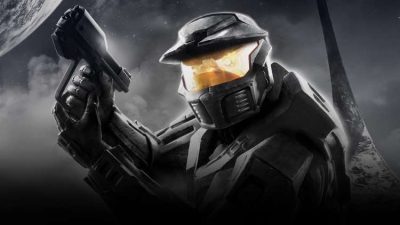
Master Chief CE from Cloudfront.net

Halo: Combat Evolved

With a Metacritic score of 97, the first in the franchise by developer Bungie sets the pace for all stories to come.

  1. Greet – Master Chief is called out of his cryo-pod to save everyone when all other efforts have failed, humanity in retreat.
  2. Fight Off – MC (along with AI observer Cortana) beats back alien boarders to the spaceship Pillar of Autumn, but both the Chief and Autumn crash-land on the titular Halo ring.
  3. Fight Back – Gathering survivors of the crash, MC explores, raids, and brings the fight to the enemy.
  4. The Bad – The galactic plague known as the Flood escape, but the Chief can use Halo to stop it (not with human friends, but with new, techy ‘allies’). Problem neglected to be told to MC: Stopping the Flood means killing all sentient life in the galaxy.
  5. The Worst – MC has to stop the Halo ring from firing alone with Cortana while armies alien and robotic flee in the face of the rampant Flood.
  6. Explosions – Chief uses explosions to cause the Autumn to explode into a mini-sun, ripping the Halo ring apart. There is a suggestion MC can say goodbye to all of his enemies, yet he thinks he’s only greeted their arrival. (A final scene shows the robot caretaker of the ring flying away, a robot that literally says “hello” to all it meets.)
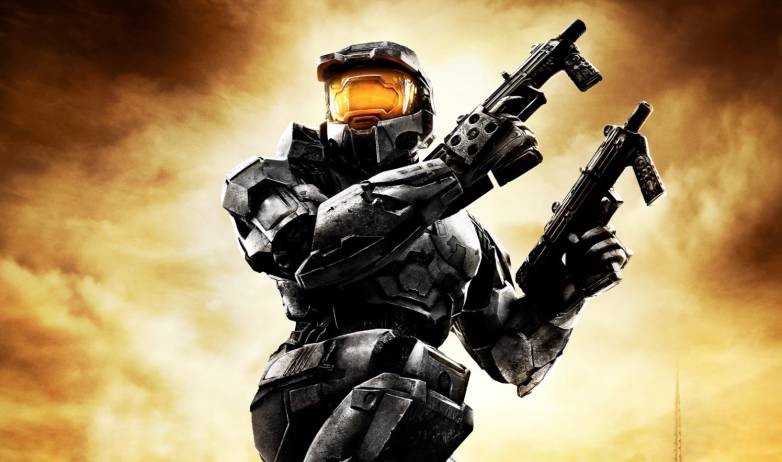
Master Chief Halo 2 from BGR.com

Halo 2

This sequel (95 score) plays on the point themes a second time, especially with the introduction of the Arbiter co-lead.

  1. Greet – The Master Chief is given a very publicized medal high on a space station above Earth, humanity’s home. The Arbiter is given a very publicized  torture high on a tower above High Charity, the alien enemy’s home.
  2. Fight Off – The MC fights off boarders aboard the space station, eventually crashing into not one, but two spaceships as he gives “the Covenant back their bomb”.  The Arbiter seems to be bringing the fight to some alien traitors on a space station, but instead he needs to fight off the Flood as his allies die or depart before the Arbiter crashes the  space station into a gas giant.
  3. Fight Back – Chief (and a small army) brings the fight to the enemy in a besieged human city and chases them when they depart onto a new Halo ring (cue exploration, raiding, and upsetting all the plans of the enemy). The Arbiter gathers allies as he fights through ancient robots and Flood that keep him from his goal: getting the key to activate the Halo ring.
  4. The Bad – Captured by the Flood, MC aims to stop the enemy leader from firing the Halo ring. It’s a trap, of course, as the chaos the Chief is causing allows the Flood to break out on High Charity.
  5. The Worst – Also captured by the Flood, the Arbiter moves to stop an enemy subordinate from firing the Halo ring which, again, will end life.
  6. Explosions – MC arrives in the middle of all out war above Earth while the Arbiter stops the Halo firing just in time with the effect of it being a wet firecracker (a play on the explosion point). MC says hello to the human defenders as the Arbiter greets new human, alien, and robotic allies. (The final scene shows the Flood greeting Chief’s left-behind AI companion aboard High Charity.)
Master Chief from pcgamesn.com

Halo 3

A whopping 94 score means Halo 3 is a taste of the same for the franchise.

  1. Greet – The Chief crashes into a jungle from orbit (this isn’t the “crash” yet) and seemingly from the dead is raised up out of his crater.
  2. Fight Off – Chased through the jungle, the Chief has no rest as the base he shelters in is besieged. This section ends when he literally crashes down a mountain-tall elevator.
  3. Fight Back – With base survivors and soldiers he picks up along the way, the Chief gathers an army as he battles his way to fire humanity’s biggest cannons at the enemy leader’s biggest ship. Wounded but undeterred, the enemy flees and MC gives chase over the Ark, a remote control for all Halo rings. (There’s an iffy bit here where the Flood arrive and must be fought off, but it’s not long and sets up a later point.)
  4. The Bad – The enemy is about to activate the Halo rings and only the Master Chief (and the united army behind him) can stop it. This is just what the Flood want…
  5. The Worst – Thus, the Flood arrive on the Ark, an area free of the Halo influence… Except for a single Halo, the replacement for the ring destroyed in Halo: Combat Evolved. (Another section of having to get the Halo’s firing key from the AI Cortana captured aboard a Flood-infested High Charity is a bit murky as a ‘belly of the beast’ section.)
  6. Explosions – The Halo explodes as it prepares to fire! The Flood is stopped, allies make it home, and MC is stranded. The AI companion of the Chief says goodbye to him as he freezes in stasis indefinitely. Humanity and the Arbiter say goodbye as they think him dead. (After the credits, we see a dark planet light up as the Chief floats towards it, a “hello” if I’ve ever seen one!)
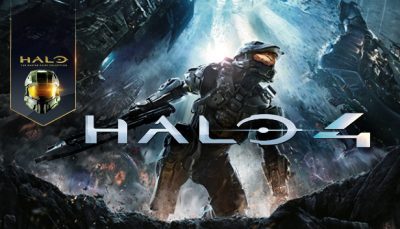
Master Chief H4 from Steam

Halo 4

The first title from 343 Industries, it runs into a bit of trouble falling below 90 in its 87 score for a game featuring Master Chief. It’s my concern that it is the switch of “The Bad” and the “Fight Back” in their places along with a number of other trend-breaking changes (multiple failures to stop the enemy in a row, humans not on MC’s side, a faceless protagonist, etc.).

  1. Greet – Chief comes out of the freeze because he’s needed again.
  2. Fight Off – Aliens board the MC spaceship and in a classic Master Chief move, he shoots them with a missile to the face. The ship proceeds to crash onto a planet hidden under a metal shell.
  3. The Bad – Rescue has arrived, but they’ll get trapped (or destroyed!) if they approach the planet. MC races to let them know it’s a trap, but in turn, is tricked into releasing a genocidal prisoner of the Halo builders.
  4. Fight Back – Gathering weapons and new super soldiers, MC fights back against aliens and robots. Nothing much new here except for rescuing the people meant to rescue the Chief.
  5. The Worst – The prisoner escapes and captures a genocide weapon (it makes people into tortured warbots). The MC fails, people die, but the Chief is now power level over 9000, so chases the prisoner before he can kill Earth.
  6. Explosions – A grenade and a nuke go off. The AI companion saves the MC, but seemingly sacrifices herself to do it, so must say goodbye. (As the credits roll, we are introduced to the new human soldiers and weapons they’ll take up to secure their place in the galaxy. Plus, we see part of the Chief’s face for the first time!)

See these 6-points applied by rewriting Halo 4.

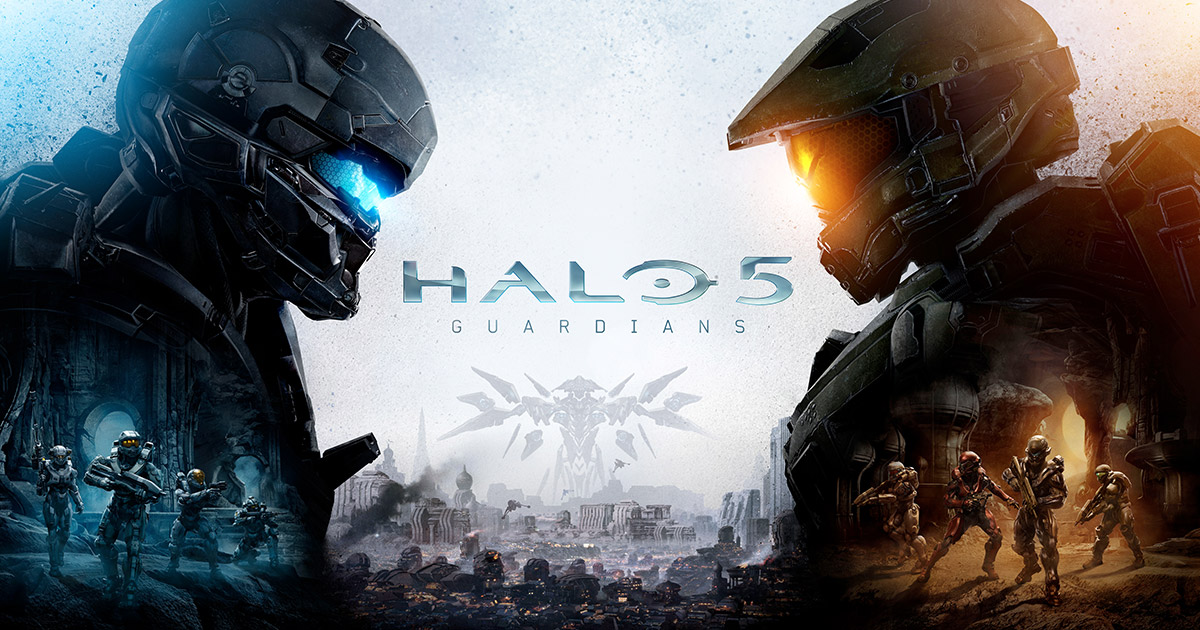
Locke and Master Chief from halocdn.com

Halo 5: Guardians

We drop even lower with an 84 score in what I can only conclude is not a Master Chief Halo game. The MC makes an appearance but is clearly the co-star to Locke, the first character we play as. (To also mention all the trend breaks is a post unto itself.)

  1. Greet – Both Locke and Chief fly down onto hapless enemies and are just doing their job versus acting as the last means to prevent doomsday.
  2. Fight Off – Locke brings the fight to some aliens here, but at least MC fights off alien boarders to a space station? There is no crashing.
  3. Fight Back – Locke chases Chief and leads civilian resistance against awoken killer robots. The Master Chief goes exploring on a new planet, abducted by a giant robot.
  4. The Bad – Locke wants to stop both Chief getting his resurrected AI companion back and giant robots waking up and destroying human colonies. Chief fights back against a protector robot keeping MC from the AI.
  5. The Worst – Turns out the giant robots are under the control of the AI. Guess she’s going to take over the galaxy, removing free will to bring eternal peace. MC is captured by her so it’s up to Locke to stop her and free the Chief. (Spoiler: he only does the later.)
  6. Explosions – For the first time in Halo history, the main character fails at stopping the worst thing. Without an epic explosion, only a single human ship and the super soldiers flee from the AI’s virtually complete victory.

See these 6-points applied by rewriting Halo 5.

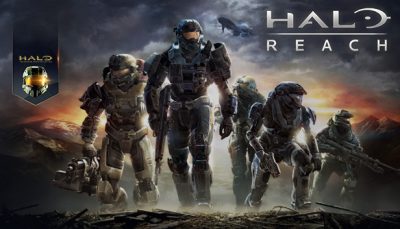
Halo Reach Team from Steam

Halo: Reach

A solid and final Halo game from Bungie (91 score). It doesn’t have the Master Chief, but that’s OK as it also strays a bit from the point-formula.

  1. Greet – Noble Six (the hero) rises over mountains and forests on a helicopter as the newest member of a super soldier team.
  2. Fight Off – In a slow start (this section takes awhile), Six has to survive an alien ambush and defend a base, ending with an orbital strike on a hovering alien ship, it crashing down.
  3. Fight Back – With an army, Six attacks enemy entrenchments. They destroy just about everything. This is a bit of a trap, as The Bad arrives, blasting away part of the human fleet.
  4. The Bad – A super ship of the aliens arrives. Six takes the fight up to the enemy in space and detonates a bomb to kill off an alien super ship. It’s a trap because a teammate dies to set the explosion just as dozens of similar super ships arrive – a seemingly noble but useless sacrifice. Six comes crashing back to the planet.
  5. The Worst – Full-scale invasion of the planet. The battle is lost. A key resource to ending the war with the aliens must be delivered and evacuated off-planet.
  6. Explosions – Defending the vessel now holding the resource, Six shoots into the weapon-hole of a super ship, causing it to go nova and clears a path for the vessel to flee (goodbye). (In a final scene, a cracked helmet of death grows flowers and new life, a salutation to the rebirth of the world from sacrifice.)
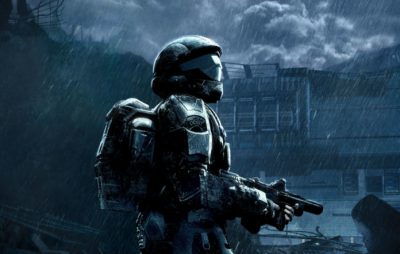
Rookie from NME.com

Halo 3: ODST

Not a game about super soldiers and not a linear game per say, I’m only including Halo: ODST as reference despite the 83 score. (I’ll do my best to align the chronological narrative to the points found in other Halo games.)

  1. Greet – Hero “Rookie” is literally raised from sleep before being dropped from orbit into a besieged city. Here comes the crash from Fight Off as an explosion sends Rookie through a couple of buildings.
  2. Fight Off – Rookie battles invaders through the streets as Rookie’s squad mates do  the same.
  3. Fight Back – Squad mates team up with local forces to mess up the alien advance. Rookie gains an ally in the city’s AI.
  4. The Bad – The enemy is making moves to compromise the city AI and the AI has important data to combat the aliens.
  5. The Worst – The AI has transferred to an alien bio computer. While the computer is friendly, it is squishy, so Rookie and the team must fight their way out of the city as foes advance on all sides.
  6. Explosions – As Rookie flies away in a stolen dropship, alien warships devastate the city in nuclear fire (goodbye and good riddance). (In a final shot, the bio computer is greeted by an interrogator who asks to be told everything it knows.)

Halo Wars, Halo Wars 2, and Other Games

For the sake of brevity since we’re already >2000 words in, I’m skipping the games that aren’t first-person shooters or stories about the Master Chief (it may already be guessed that these games are less well received).

The Point of a Game

Does the 6-Point structure of Halo conform not just in each game, but for each game as a franchise? Take a look:

  1. Greet (H:CE) Master Chief, the hero, is introduced and raised as a legend for stopping alien armies, a life-consuming plague, and the death of all life by the Halo ring.
  2. Fight Off (H2) Master Chief fights the enemies who’ve invaded his world (Earth) and even his mind (the Flood capture him and communicate telepathically). The crashes here are those of the Halo system (it fails so resorts to remote control we see in point #3) and ideologies as the alien command and belief structure breaks down. (OK, fine, a bit of a stretch.)
  3. Fight Back (H3) – Leading united armies in a scale unseen in previous points, Master Chief brings the fight to aliens, robots, and a plague without a cure. Over-powered super soldier stardom at its finest.
  4. The Bad (H4) – Master Chief releases a killer on the galaxy who has a grudge against humanity, whose trap of rescue lured MC in and leads to an AI companion’s seeming death. (The question lingers if this point, “The Bad”, refers to the lowest Metacritic score so far.)
  5. The Worst (H5) – The killer released by Master Chief in point #4 starts a rising up of murder robots across the galaxy in the control of the “dead” AI. Master Chief is supposed to stop this, but fails and instead is saved by a character we haven’t seen until this point. (Of note, this has the lowest Metacritic score of any Master Chief game.)
  6. Explosions (H6, unreleased) So what may we suppose of the sixth game? Supposedly Halo Infinite is supposed to be the next main entry, but I decline that notion in favor of a true Halo 6 being released. In any case, we should expect lots of explosions. (LOTS.) A greeting and meeting of enemies and allies, a final farewell to the Master Chief and the Halo franchise. We may only wait to see if the next game finishes the fight, and if how it is done is better received than its immediate predecessors.

See these 6-points applied by writing Halo 6 before any release.

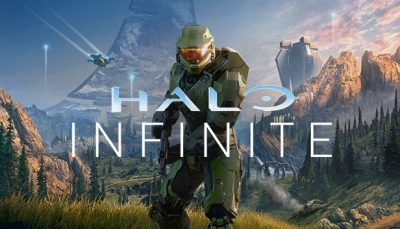
Master Chief in Halo Infinite from Steam

And that’s the 6-point story structure of Halo! We see that if a game conforms closely to the formula of the first installment, it will be well regarded. If not, the game will be overshadowed by its peers.

Do you agree that this is the story structure of successful Halo games? Why do you disagree? How did this change how you perceive Halo? Drop a comment – I want to know if I’ve missed something!

Thanks in advance and for getting this far. Cheers!

Cast 15 – Feb Mar 2020 Goals

Download for the road. (7m 43s)

A combination post! Last month’s goals get addressed, while we set off to conquer March.

Spoilers ahead:

February Goals Reviewed:

  1. Housing
    1. Won. Work towards owning property done every. Single. Day. Get some!
  2. Writing
    1. Won. I came in at the minimum, but a pass is a pass. Housing did take a lot, and I hope to apply that work ethic to my writing as well.
  3. Overtime
    1. Won. Not as much as expected (due dates got pushed), but still an extra 2-5 hours committed every week (largely eaten by meetings 😭).
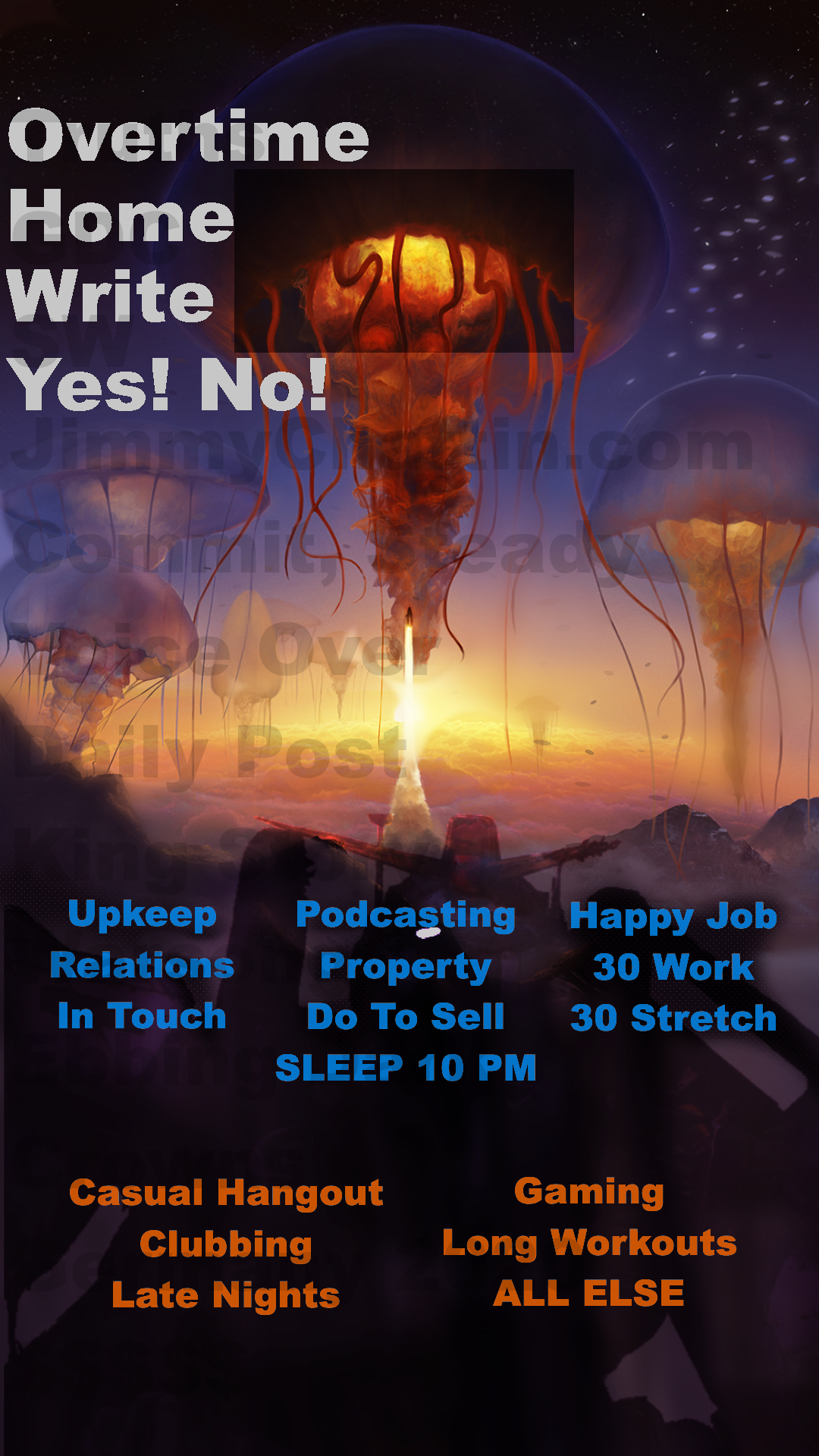
  4. Yes and No
    1. Won! I tell you how beneficial these lists have been for me in the podcast. Give it a listen to know how much I recommend such things! 😃

On to what counts…

March Goals Proposal:

  1. Housing Round 2
    1. The primary goal. I have done a lot of the leg work required to get started, but now it’s time to close. There’s a lot of risk, so patience is key.
  2. Writing
    1. COME ON, JIMMY. WRITE LIKE YOU MEAN IT. EVEN MERELY 10% OF WHAT YOU SPEND ON HOUSING.
    2. ARGH 😡
    3. Just…
      1. Just write something.
        1. Put it out there.
          1. Come on, man…
  3. Overtime
    1. Should be the last month of crunch, but we’ll wait to see. For now, 2-5 hours extra will suffice.
  4. Yes and No
    1. Can I keep it up for a second month? I really hope so. Will need to re-evaluate early if certain goals eclipse 😉

2003
Phone lock screen images from Yigit Koroglu and Mobile Suit Gundam: The 08th MS Team.

And as a reminder, GDC is not happening this March (it’s for the better).

That be that! Let me know what your thoughts on the podcast style are and your own goals in March. Looking forward to hearing about your endeavors! Cheers!

Quarterly Goals – September 2019

The last quarter had some drifting in my focus towards game design and software development and away from writing. It was so impactful, I was thinking of taking a quarter off to see what I naturally drew myself to doing. That train of thought was thrown out posthaste – there’s so much exciting stuff to do, why skip out on what should be some easy accomplishments for myself?

We’re going to split this next quarter into three buckets with three criteria each. Check ’em out:

My Goals Due September 2019

  1. All About Writing
    1. I will produce 1 outline a month. Likely more will be generated, though extra time will be given so I don’t get off track like I did on the in-hiatus Shallow Seas novel. Let’s count an outline as at least 5 pages.
    2. I will rewrite a fanfic so it’s not a fanfic, but something I can really own. People are inspired all the time by others. My They’re Aboard is one such case, though with a bit of tweaking and world-building, it ought to stand well on its own.
    3. I will keep up this blog. That’s going to be things such as a larger post exploring the need for gratuitous weaponry in science fiction and shorter updates on works in process.
  2. Game Time
    1. I will investigate the problems faced by Game / Dungeon Masters (DMs). This all spawned from when I heard someone lament that no one in a Role Playing Game (RPG) wanted to have the responsibility of DMing. I hope to provide some solutions to that, like:
    2. A RPG card-based system to ease campaign setup and running. I’m using Magic the Gathering cards at the moment. They’re surprisingly useful, though more work is needed for items, traps, locations, time of day, distances, weather, etc. I’ve high hopes for this one.

      Person Holding Brown Card
      Man holding card about rules from Pexels.com
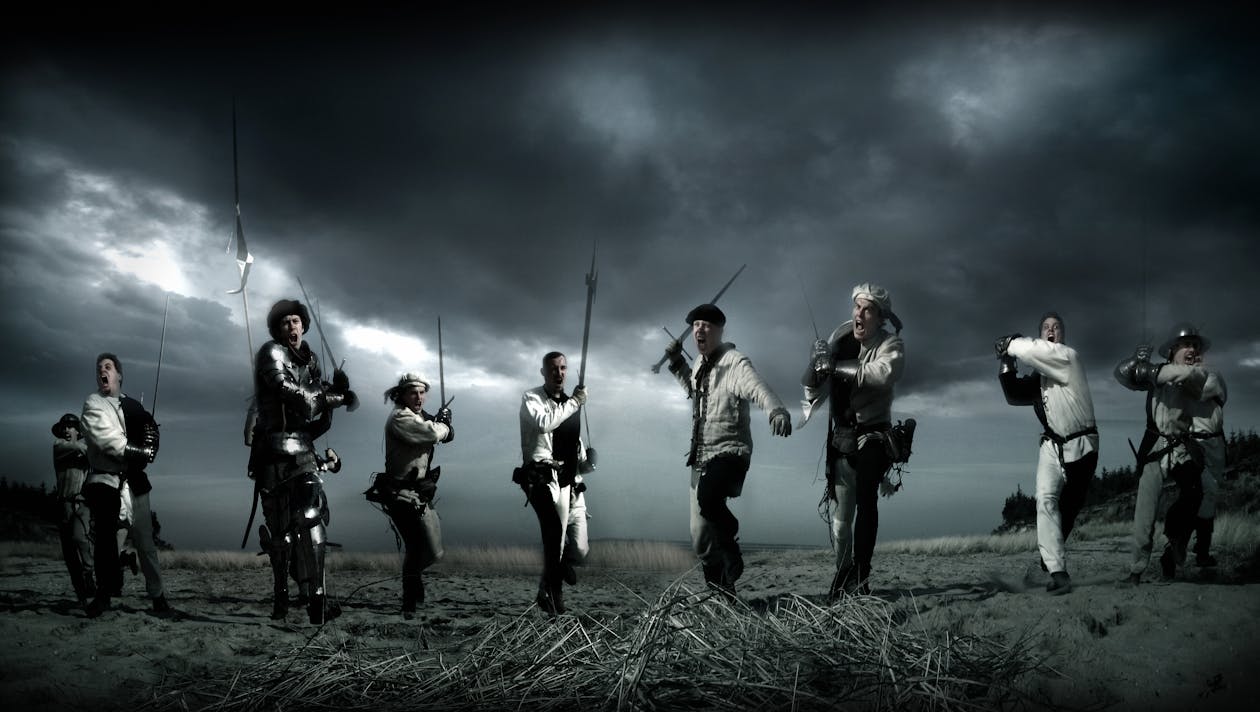
    3. I will get a tabletop RPG into a prototype state. Between players acting as tank commanders w/ crew, players being the leaders of space fleets and worlds, or a study of this game The Orc and the Pie, someone somewhere should be able to play something (sometime).

      Man's Holding Swords Clip Art
      Role players from Pexels.com
  3. Evolving My Work
    1. I will study coding on LeetCode. It was suggested to hit-up 50 questions each of the easy, medium, and hard categories. I trust this person’s advice, so I gotta get on it!
    2. I will read two work-related books (with notes!) every month. Despite the list possibly changing, I can look forward to:
      1. The Effective Executive
      2. Tribe of Mentors
      3. Changing on the Job
      4. The 21 Indispensable Qualities of a Leader
      5. The Design of Everyday Things
      6. Linchpin: Are you Indispensable?

        Book title from Amazon.com
    3. I’ve another, but it’s private. JimmyChattin.com may take a hit in contributions if this comes to pass.

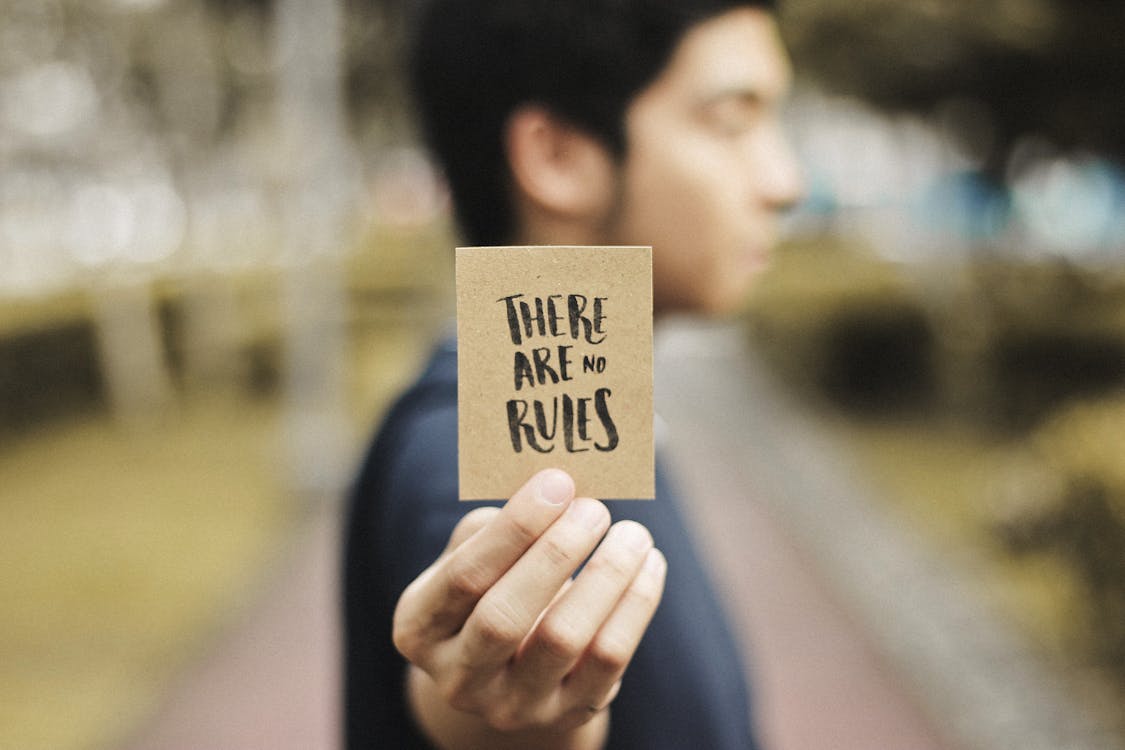
That’s it for now. Depending on what comes, I’ll flip the table on all of this. As Captain Barbossa would put it, these are “more what you’d call guidelines than actual rules”. In the meantime, here’s to a successful quarter!

19SQ3.jpg
Phone lockscreen source image from Pablo Olivera

BONUS

Checking the Toggl (my favorite time tracker) analytics for the last 17 months as it comes to time spent on goals, the numbers are very humbling. (Spoiler: I don’t spend enough time pursuing my goals.)

Last year, I spent an average of 33.6 hours per month on goals (2019 at least is 37.5 hours per month!). In the 17 months I’m referencing, we are at about 35.55 hours a month, or 105 per quarter.

It has taken me about 17 hours to come up with an outline (any draft would be a conservative 500 words per hour). That’s 51 hours out of our 105. 54 left to go.

The blog has, on average, taken 2.5 hours per post. If I keep with 2 posts per week for 12 weeks, that’s 60 hours… Let’s aim more for half that at 30!

Down to 24 hours.

Edits for stories tend to be about 22 hours split between 2 unequal stories. Assuming the They’re Aboard rewrite has more than my typical editing required, let’s assume 22 to be a generous cushion for the changes.

The games will be… problematic. It’s been awhile since I’ve fully designed tabletop games (checkout my mods!). We can say that 8 hours is the most I’ve spent on designs this year in a month, so let’s assume 8 per month, 3 months, for 24 hours total.

Everything else gets wrapped up in my normal studies (LeetCode) or reading.

Ouch. We have -22 hours left over at the end of the quarter if we’re diligent, not counting the quarterly review and next quarter planning. These might be called “stretch goals” 🙂 Whatever the case, time’s ticking!

Round Black Analog Table Alarm Clock
Clock and coffee from Pexels.com

Thinking About Trivial Conflict

After seeing Avengers: Endgame and a pivotal episode of Game of Thrones last week, I come away awestruck by the scope of the conflicts.

One deals with half of all beings in the universe (the universe) dying; the other, a seemingly unkillable king of the dead wages war against the living in a hellish blizzard.

It makes superheroes punching each other (Avengers) or bickering about who owns which castle (GoT) just seem… So trivial.

Let’s also take a look at a few other hugely-grossing conflicts:

Yet, our personal stories are still about nations at war, gangsters and the law, the fly in our soup.

We know the vastness that lays before us in the future. With this prescience that extends from the outcome of our own lives to the outcome of our world and species, what are we doing with what is objectively trivial conflict?

It’s called into question my fascination with big space battles and urban tank fights. These are seemingly trivial.

What is there to do?

I don’t know how to handle a shift in focus on the macro-level, but maybe I can adapt to my own predispositions. It can’t be helped who I am, but I can help what I do in my story creation.

From now on I’ll endeavor to set the stakes before I set the conflict. No more senseless violence – if conflict must be acted on, it must be after all nonviolent approaches have been investigated. Never should conflict be glorified. May a person or force in writing do something barbaric, there will be severe, long-lasting, terrible consequences for all involved. A motive will be considered petty if it’s anything less than meaningful to the entirety of a person’s life. And if I can, at the end, despite any suffering caused or endured, there’ll be evidence that it was worth it, that the universe is one step closer to saving itself from entropy.

I can do something about setting the cultural gaze a little higher, a little farther. If I may, I’d beg you to do the same.

Sleeping God

Six months to Halloween. Let’s get creepy:

Our trumpets blow unceasingly to keep the Eternal at bay.

It has been a million millennia. More. The records are wasted now, burned long ago to fuel the forges for our Instruments. Always our Instruments.

Yet I will take this luxury here, secretly, to write with valuable resources my thoughts. Even mindfulness is a crime for the energetic glucose it consumes. I would choose to burn it for my own peace rather than in the embers of our legacy.

The constellations have been going dark. We’ve mined the worlds, conscripted their populations, drained our suns. A darkness unlike anything before creeps in at the edges of the universe. It is not just a physical shroud over creation, but also a shadow to the pits of our minds. So long as the sound from the Instruments trumpet through the void, all is as it must be.

At least the light is strong in our young, artificially birthed sun, but that is it. When machines harvest the last energy of this last star, all existence will be cast into the black. We continue to play. Nothing else is left to us, the few huddled now in the final system whose bellows bring forth song from the Instruments.

Philosophers of myth wrote on the outcome of these end times, the apocalypse revealed sometime when the universe was naive, ignorant to the nothingness that awaits all at the end of the Divine Dream. If only we’d never known why the Instruments were needed, or at least had lacked the cleverness to construct such things, our foreparents might have died long ago, sparing us now our toil.

No-one can really know what will become of us. As the last horns blow no more, the god that forsook us will toss all that has been to oblivion.

Many have taken the Way Out. Their bodies lie forgotten in dead spirals that once were galaxies. We’ve brought uncounted burial sites close to cater to this existential ritual, though their corpses aren’t enough for the forges, for the Instruments to sound. Only so much ash anymore.

The dead may have been right, to choose their own end, rather than be cast to the fires in their trillions to play the Instruments. Always we must service the Instruments. Even death will be denied us, the living. Either we are alive and labor, or we become part of the fire and the Instruments. Thus is all our need for fuel.

Now, we persist. Our awareness damns us. Still, the Choir races here in this place of ending don’t stop. An old, obsolete word from ages past, “hope”, wouldn’t fit a description of our efforts. For as long as we can, we will play. There is nowhere to go. There is nothing to do otherwise. Only few like I who have read the stories as their pages were shoveled into the fires understand there has ever been anything else.

Solutions have been calculated, dreamed, prophesied, and all ultimately failed. “Hope” has eluded the most titanic means available of the brightest minds over eons of unknowable work. There is no person nor thing deigned to survive the flames. Not the remnants of our best, not even their histories. Not the least this author.

We keep the god-thing asleep in its Divine Dream. The Instruments either play and we continue, or they are silent, and we cease. Until quiet finally wakes the Eternal, we will all be used to keep up the charade of this dreamscape. Forever and ever it shall be.

My writing time ends. How many seconds has it cost the universe in fuel? Time lost for us to wonder moments more at it all? These questions must go unanswered. This note and I travel to the forges.

Here’s the prompt that sparked this little piece:

“The universe is just God dreaming. When he wakes the universe vanishes. Every species in the universe has united to forestall the inevitable.”

u/Punsterglover

Record Your Good Days

These kinds of days are rare, few and far between.

Today (Sunday, April 28th, 2019) has been a Good Day.

However, what makes it “good”? That can vary from person to person.

For me, it’s a sense more than contentment. Might it be happiness?

(Well, if so, that’s a let down to think a majority of days aren’t “happy”. But must we be bursting at the gills with unconstrained joy 24/7? Probably best not to be that jovial. Sounds tiring.)

Regardless of the sensation, I like it. I’m sure you’ve felt the same at some points in life. Maybe even this week!

So how do we get this good feeling to come calling again?

To do that, what makes up these “good days” ought to be looked at factually but in broad strokes. Let’s take my day today as an example:

  • 5:30 AM wake-up; protein powder and coconut-oil + baking-chocolate drink.
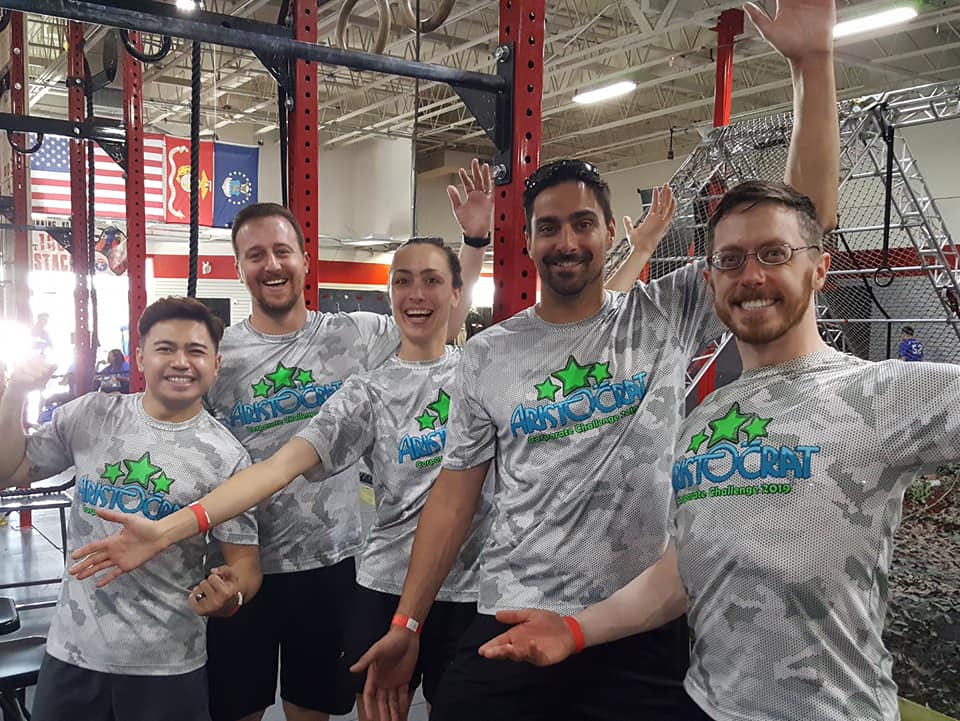
  • 7 AM arrival at event site; provide support + hang out with strangers and teammates for event.
  • Take pre-competition cocktail (beetroot and maca powder, whole wheat spaghetti w/ peanut butter and oil, vitamins)
  • 8:30 AM first-in-line competitors at event.
  • I excel / don’t fail at event; team doesn’t fail at event.
  • Casually hang out / watch other teams / work out.
  • Learn we (the team) have won event; get medals.
  • Casually post online.
  • Shower + eat pancakes.
  • 40 minutes editing a story.
  • 20 minutes laundry.
  • 15 minutes watching comedy (laughing).
  • 20 minutes meditation.
  • 1 hour of edits.
  • 15 minutes light exercise.
  • Another hour of edits.
  • Make mac’n’cheese + frozen peas + egg. (It’s binge day on the 6-on, 1-off schedule!)
  • 20 minutes of writing in the journal (summarize dice game idea and decide between writing this post and playing video games).
  • Writing this post! (17 minutes in by this bullet.)

CorporateNinja2019
First-Place Ninjas of Las Vegas, B Division, 2019

My feelings are that I’ve done some cool stuff with cool people today while also saving time for myself for rest and accomplishment. That story is in good shape, I have a blog post incoming, and there is still time I might watch a cool movie or play a nifty video game!

Some generalities of today: Excellent weather (high of ~90 F, low wind), meeting people for a time, early-morning physical accomplishments, later-day personal project accomplishments, naps, and a touch of carb-rich foods.

What about other days?

Not all days have felt this good. Relatively few, in fact. The last time I recorded a really good day was April 13th. I’ve only thought to record a few similar times – these days still show some themes:

  • Great weather.
  • Physical accomplishment in the early morning w/ a team.
  • Casually watching people in a park do physical activity.
  • Socialize w/ strangers while also escaping to be on my own.
  • Casual physical activity.
  • Some generally-bad-for-you food w/ others.
  • Watch a good movie (Watchmen).
  • Laugh.

These are days to cherish. They don’t have the same specifics between them, nor do they need to. To get joy consistently / reliably is a work in progress.

A great outcome of taking note of these days and feelings is that I now have things to aim for, things to plan into my future. Certainly, this feeds into my analytical nature, these eyes for detail and pattern recognition.

If I plan on being happy, that comes with effort. It only could occur because 1) I’m aware and not afraid of my own feelings, 2) I wrote down and recognize what worked before, and 3) I forgave myself of backing off of various responsibilities (ie hanging out, video games, chores [this floor won’t vacuum itself…]).

Now I’m equipped for better days ahead. What to look for, what to say “yes” to, what to protect. If a record of the “good days” was absent, where would I be?

Without knowing the themes of your good feelings, where are you?