BITS of D&D

You – through game references or celebrities or the show Stranger Things – of course have heard of Dungeons & Dragons, the tabletop roleplaying game synonymous now with, well, “RPG.”

Yet, this system is complex. Really complex. I often refer to D&D as a great example of simulation play – track every detail possible to simulate as precise of a result as possible.

Regardless of how accurate the simulation, doing all that is… A bit much for a casual game played for enjoyment, especially given the time-strapped lives people lead.

Thus, I have developed the BITS system. Directly inspired by D&D, BITS is fast, modular, genre-less, and emergently complex. Being a descendant of the classic, I found it fitting to convert a BITS of D&D for that streamlined play πŸ”₯

The Core Mechanic

A rolled 20-sided die (d20) plus a modifier or special reroll is D&D‘s resolution mechanic for all dangerous, failure-has-consequence situations. Each situation has its own difficulty, which D&D helpfully suggests as every 5 on the d20 that a roll needs to meet or beat to succeed.

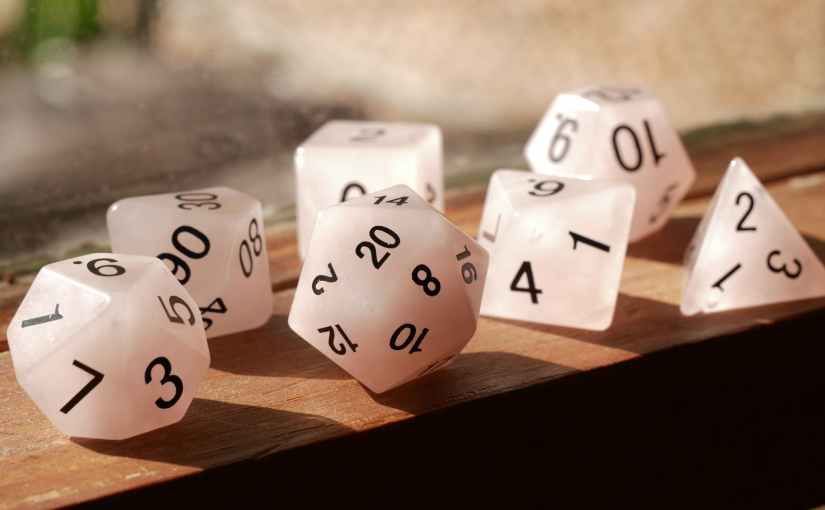
BITS is 2d6, or, roll 2 6-sided dice added together at or above a target with modifiers. I will save you the math comparison between 2d6 and d20 – just know that any D&D roll has a compliment in BITS:

DifficultyD&D d20 RollBITS 2d6 Roll
Very Easy55
Easy107
Moderate159
Hard2011
Very Hard2513
Godly, Near Impossible3015
Roll Conversions

A quick, casual game needs only Easy, Medium, and Hard results, but discussing that is a tangent –

Further, D&D expects all players and the Game Moderator / Dungeon Master to roll dice. BITS needs only other players to roll on the regular.

Special rules for rolls center around the concept of “Advantage” and “Disadvantage.” Skipping how a roll gets this special rule applied, D&D says to roll 2d20 and take the highest or lowest result, respectively. BITS can do the same, but to reduce rolls, BITS prefers to take the highest or lowest die of the first roll and duplicate it, e.g. a 2-5 becomes a 5-5 when there is Advantage.

Advantage and disadvantage get calculated after critical successes or failures in both D&D and BITS. In D&D a crit success happens when an unmodified / natural roll of 20 happens, a crit fail on a natural 1 roll.

BITS scales criticals with the difficulty – the more difficult the obstacle, the greater chance there is for critical failure, less for success crits, and vice versa. Crits are any natural same-faced roll – 1-1, 2-2, 3-3, 4-4, 5-5, 6-6. Crit successes are pairs above the number expected to be over, crit failures rolling below the number.

An example of BITS criticals would be to roll a 3-3 failure when a 7+ is needed, or that same 3-3 being a success when the only requirement is 5+.

D&D fails to handle criticals gracefully or apply solutions for every occasion. Critical successes for a BITS player means the player’s character can act again, immediately, regardless if they were the one taking or preventing action.

When acting in BITS, critical failure means a player character cannot do the same thing again without some work – whether that is needing to switch to a new quiver of arrows, freeing a stuck sword, or getting out of the puddle of acid from the vial they dropped. When preventing or defending against action, critical failures mean the consequences happen in the extreme, e.g. armor is bypassed or effect doubled.

1) Roll at or above the target number.
2) Check for automatic, critical success or failure.
3) Use Advantage or Disadvantage if present.
4) Add modifiers.

The Stats

D&D has Strength, Dexterity, Constitution, Wisdom, Intellect, and Charisma as the primary “ability scores,” aka stats, with a raw value and a bonus value (the bonus is added to appropriate rolls).

Why use all 6 when not all are equivalently useful? When fewer will do?

To bring D&D stats to BITS, do the following to convert D&D ability bonuses into BITS’s Body, Insight, and Thought:

  • Body – Average Strength and Constitution bonuses.
  • Insight – Average Dexterity and Charisma bonuses.
  • Thought – Average Wisdom and Intellect bonuses.

No fuss, no muss – what you see is the roll modifier you get in BITS.

Character Creation

With a set of rolls, stats get assigned at character creation. D&D has rules for how many dice to roll, extra modifiers, dice that get ignored, point distributions, and a myriad other ways to write numbers on paper. Many times an entire play session (1-4 hours) needs to be dedicated to making a D&D character!

In practice, BITS is 5 minutes and less for bringing creations to the game πŸ‘€ But perhaps a made D&D character or other content is going to be moved over to BITS – there are a handful of tables of that!

To roll for stats for BITS, do the following to get the same kinds of bonuses D&D produces:

2d6 RollStat Bonus
2-4
3-3
4-2
5-1
6 to 8+0
9+1
10+2
11+3
12+4
Stat Rolling

D&D allows the ability to remove a low roll when it come to stats, so to do the same in BITS is to reroll the lowest d6 and keep the higher result.

Next, D&D allows for a “point-buy” system, where stats are assigned from a pool for each character. While not fully explored in BITS, 10 points seem to balance nicely with D&D expectations, allowing a player to spend points on increasingly expensive stats along with wealth (briefly discussed later in this post):

Point CostStat, Skill Number, or Wealth Class
11
32
63
104
BITS Point Costs

And if going negative on stats, those buy points back to spend elsewhere!

HP

HP (Hit Points) represent how long a character can prevent seriously bad, sometimes permanent outcomes for itself.

When it comes to HP, D&D is a bit complicated – first a species and class profession needs to be picked, each with a hit die that is rolled, adding the Constitution bonus rolled for previously. This HP grows and grows in a manner that can make higher-level characters able to literally jump off a mountain and survive, making later-game balance an oxymoron.

BITS develops HP in a more straight-forward manner: roll 2d6. That’s it. Average of 7 HP for all players. Roll 2d6 every level-up – higher number than before? Increase HP by 1.

Being modular, BITS HP can also be the absolute (negatives become positives) sum of all Body-Insight-Thought bonuses plus the number of Skills acquired, with a minimum of 1 HP. Example: A B+1 I-3 T+0, 2-Skill character has 1+3+0+2=6 HP.

(Inspiration for B+I+T+S taken from Soulbound, a game with its own post coming later.)

The Classes

Class is a huge part of D&D. It defines what a character can and cannot do, what they own and can own, and how they get better at things.

Stick with me when I say BITS throws a lot of that out.

Instead, the idea of class in BITS revolves around the Skills “S” in BITS. Each skill, profession, calling, what-have-you is an area of expertise the character has developed through training and understanding.

An example would be a Thief or Rogue class in D&D – you can be this one thing, or with extra rules, this class and one other with detriment. In BITS, a person is not exclusively a thief – being good at thieving is but part of their identity.

A skill describes what a character is good at. Should they do anything that in good-faith could be understood to be a part of that skill, that character has advantage in the action.

Back to the thief: A BITS thief would arguably have advantage in burglary, pickpocketing, slinking about, and general footpadedness.

D&D classes come with special abilities too, so at the discretion of the Game Moderator and a player, the character can get one too. E.g. a thief can slip out of being hit or caught once a day, no roll required; or, a thief can pawn their lowest-value item at one more wealth-class than its worth once a transaction.

Magic

D&D class defines what kinds of magic – if any – a character has access to. BITS can roll with that.

However, magic in D&D is typically extremely powerful with little or no consequences. BITS adds in a bit of ‘spice’ to balance magics in the system as a whole.

For BITS, rolls for magic need to roll higher than the magic being cast vs. the difficulty of the target. Magic is expected to be instantaneous at point of origin if successful, so there is no dodging against a blast of fire or wave of cold.

The kicker comes when magic critically fails. On such, the magic does the harmful or opposite intention to the caster. Fireballs target and ignite the mage, healing the sick harms the healer, a monster summoned smites not foes but friends.

The Gear and Wealth

The following about effectiveness really applies to weapons, but armor and other items can follow the same guidelines.

Weapons in D&D have hit dice for how much damage they do, a measure of their effectiveness towards an opponent. Some weapons have special rules or abilities too, adding to their prestige.

To get a D&D weapon into BITS, take the hit die average, divide it by 2, and round, + or – 1, e.g.:

Weapon StatMathBITS Value
Sling d4Round 2.5 / 21
Sword d6Round 3.5 / 22
Glaive d10Round 5.5 / 23
Greatsword 2d6Round 7 / 24
Example Weapons Conversion

Each BITS value for a weapon or object is also its wealth tier (with each special ability adding to the tier), i.e. how much wealth is needed to buy the thing. This is further explored in BITS – The Equipment.

Pregen Examples

Above has been making a character. D&D offers various beginning sets of stats and equipment that skip the creation process (pregen characters).

BITS can, in brief, make that happen:

Fighter, B+2 I+0 T+0 HP 7, Battle Axe 3 or Hammer 2 and Shield 1
Mage, B+0 I+1 T+2 HP 3, Sword 2 or Longbow 2
Rogue, B+0 I+2 T+0 HP 3, Sword 2 or Dagger 1
Cleric, B+2 I+0 T+1 HP 6, Mace 2 or Spear 1
Example Pregenerated Characters

The above get some wealth and armor too, but lets keep this post lite.

Everything Outstanding

I am making the choice to skip wealth, ranges, the exactness of how armor behaves, non-player character creation, and other topics because they are either already covered in other blog posts or are modular enough both others and I have provided a robust collection of options to choose from for play.

Dungeons & Dragons is a very complex and a very popular game. There is no arguing that it does a lot of things right. While the game fits a niche for many, BITS fills a niche closer to my own expectations of fun and play, and statistically, yours too!

What did I leave out that should be included? Let me answer your questions or shore-up some of my own answers to make BITS of D&D even more robust.

Cheers to your games! 🎲🎲
Play “As Above, So Below,” Out Now

In June, I blitzed the development of Gunslinger in The West (play the demo, an easy-to-read 2 printed pages!). Now is July’s turn to have its own game made.

A long-time passion project, As Above, So Below explored what it meant to make a game for me. It grew fast and big and needed some cooling-off time – now is the opportunity to brush the dust away, coming in at a cool 1 printed- and 2 printed-page collection for your enjoyment:

Prelude

The worlds are old. Very old. Too old. Created in the rift between mysterious heavens above and deadly hells below, you adventure in the ruins and wilds of all that’s left.

Whether ridding the last bastion of corruption by careless caretakers, purging dragons and worse from the dark places, uniting the Beings of the world against supernatural punishment, or making it back alive to the tavern with your plunder, you have the same chances as any angel or devil to leave your mark.

By word and sword and spell you are judged. So rely on your adventuring fellows and roll your dice in sacrifice to luck – you will need it.

Features

Be a competent, cooperative, and courageous adventurer with your friends. Fulfill your needs, get in trouble, and have fun along the way.

  • 2D6 minimal math (-4 to +4) rolling at-or-over 🎲🎲
  • Androgynous character creation, progression, and scars πŸ’―
  • Minimal stat tracking in 4 qualities: Body, Insight, Thought, Specialty πŸ”₯
  • Game Moderator (GM) guide πŸ‰
  • Spell and magic creator (sample spells too!) πŸ§™β€β™‚οΈ
  • Problem and place creators 🏰
  • Goods economy, loot, help for hire, and many other tables and guides! βš”

Play Now

(Links below go to Google Drive and the latest game documents.)

Best option: 2 pages, front-and-back. Magic, tables, guides, even a field of battle showing ranges. Too much? Then check out:

1 page, printed both sides. Gives the highlights of the system and some tables. Foldable.

The Future

  1. Update the full, couple-dozen-page As Above, So Below publication with what was discovered in the 1- and 2-page design process.
  2. Hire-out art.
  3. Format for printing in ink-friendly and art-friendly version.
  4. Supplement and expansion plans.

That’s all that comes to mind πŸ€·β€β™‚οΈ (“That’s all,” he says, as if a month or more of work is so meager!)

Again, the 1-page, 2-page challenge really honed the vision I had for the game, a work-in-process for two years. While both Gunslinger in The West and As Above, So Below had fuller versions explored before the challenge, they are clearly better for it.

I think any potential game benefits from a ‘bare bones’ to ‘skin-on-bones’ treatment – it clarifies what should be in a ‘meat-on-bones’ publication, hones rules, and streamlines play as a standalone or for testing further additions.

Simple.

And simple is what BITS and its derivatives are meant to be πŸ˜‰

Give these prototypes a whirl – after my playtests, I would adore hearing about your experiences!

Cheers to all the fun times you have coming up~

BITS: A Look Back on Two Years

Two years ago I introduced BITS, a tabletop RPG system that is fast, emergently complex from base concepts, modular, and simple to pick up.

Liter rules than Dungeons & Dragons-like simulators, crunchier than story-foremost Powered By the Apocalypse types, yet not a traditional Old School Revival, the system has been polished by thousands of hours of study and play.

After a lot of poking and prodding, I think it is time we took a look back on two years of development.

Before Getting to the New Stuff

Let’s take a look at what BITS used to be to get a full appreciation of how far the system has come.

Body-Interaction-Thought System was the first draft. The core mechanic comes from two six-sided dice (2d6) plus a modifier to get at or above a tiered step list of threat ratings, while all scores or values aimed to be 0 to 4 🎲🎲

Originally BITS was based off of a simplification of D&D (this is before I learned of the streamlined Old School Revival movement). Body was meant to be the average strength and conditioning of a D&D character, Interaction dexterousness and interpersonal prowess, and Thought as wisdom and intelligence. Any special skills were merely implied by the class a character had, such that rogues would expect to be sneaky, paladins could call in holy favors, and wizards knew magic.

The system tries to tie together any and all subsystems into the 2d6 mechanic, or more specifically, having two dice and a rough guess of the quality of the actors and actions in a situation. Thereby, a subsystem from one BITS game or conversion can be near-seamlessly dropped into another or tweaked with the assurance that 2d6 exist somewhere in play.

Reflection

Going after D&D was an appropriate start. Not knowing about OSR helped create a design language all my own instead of dropping my work to adopt something ‘close enough.’

Yes, D&D was (and still is) a monster of a system. It is the godfather of all RPGs, “D&D” now being synonymous with “tabletop RPG.” To tackle a full conversion of all the subsystems of D&D (which are by no means consistent, complete, or without a lot of internal complexity) was naΓ―ve hubris πŸ˜…

As a personal project, BITS introduced me to innumerable games, systems, principles, methodologies, and techniques for putting together not only games, but books and writing, too.

Using the masterclass of game making that is the internet with a search bar, lots of playtests, sample game writing using the system, and the excellent help of many friends, BITS evolved.

A New Kind of RPG

Let me introduce BITS:

  • Body – Physical swiftness and brawn. Great for getting about to hit things, so the ‘fighter’ and ‘rogue’ stat.
  • Insight – General perception, whether of the environment, another person, or a far-off target, and dealing with it appropriately. The ‘bard’ and ‘archer’ stat.
  • Thought – Mind, intelligence, mental strength. The ‘magic’ stat.
  • Skills – Also can be called “Specialty.” This is what sets a character apart with special rules or traits that enable a greater depth of customization.

Each of the above get added to a roll of 2d6 to get over a threat level, that level describing how difficult it will be to act against and a large chunk of the stats for the threat:

Tier / Health / Harm / Quality / Value / Durability
Roll + BIT

Description
0Too easy. Nothing. Junk. Absolutely helpless. Might be dangerous in groups, but only with a disadvantage. Lower 50% of a population if counted at all.
15+Easy. Commonplace. Padded armor. Domestic animals, the unskilled, conscripts, thugs, minions. Best served in hordes. 20%
27+Moderate. Specialized or with skill. Well prepared. Guards, hired muscle, footmen, boot camp troops. 15%
39+Hard. Veterans. Been there, done that. Leaders, mercenaries, elites, heavily armed. 10%
411+Very hard. Best of the best. Natural killers and masters. Grizzly bears, walking tanks, spec ops, knights. 5%
613+Demi-gods. Kings, lords, grand masters, and titular characters. The people that lead wars or have ended them personally. 1% or less.
1015+Godly. May never appear!

Not all actions have to be about physical battle. Instead, there are three kinds of trial a character may face threats in:

  • Combative – physical violence between creatures.
  • Environmental – surviving dangerous conditions.
  • Social – convincing others to act.

Each of the above can exist within each other. I digress –

Many of the other questions that I wracked my brain on originally are saved by the modular nature of BITS. Truly a la carte, all options can be put or replaced until the desired game feel is achieved:

  • Weapons – Flat damage as the weapon’s threat tier? Or the degree of success? Need kinds of weapons, like piercing and pummeling types?
  • Armor – Ablative? Adds to defensive rolls? Reduces damage only? Cares about the kind of damage applied?
  • Gear – How much? Need to pick it specifically before an adventure or can call it out at the time it is needed (“quantum”/Schrodinger gear)?
  • Health – A flat value? The sum of all BITS? Rolled for? What about mental health or social composure?
  • Experience – Milestones? Personal goals? Player party goals? Gained by gold and treasure?
  • Economy – Wealth is counted piece by piece? By wealth tiers? Is selling and buying at the tier of the gear, or is it a tier less and more, respectively?
  • Turns – Rolled for? How often does it change? Does a BIT apply? Sequenced or simultaneous?
  • Partial Successes – Are double-twos automatic fails no matter what? Double-sixes successes? Especially bad or good outcomes? What about rolling exactly the threat number?
  • Magic – Do failures come randomly, target the caster, or fizzle out? Anyone can use it or is a specific skill / origin needed? Is there a limit on how many times to use?
  • et. al

BITS is a joy to work on. So flexible, I have details and drafts on multiple genres (e.g. sci fi, fantasy, modern day, giant robot, etc.), applications to different popular media (e.g. Star Wars, Star Trek, Avatar the Last Airbender, etc.), and one-page conversions for other game systems (e.g. Mork Borg, D&D, PBtA, Soulbound, Wrath and Glory, etc.).

I am darn well giddy to share with you these things this year!

A Take From the 4Ms

I noticed how in the fictional Warhammer 40,000 universe, everyone was relying on their augmented bulk, their psionic mind, or their control of machines to get what they want.

Thus bore Muscle-Mind-Machine, a draft of the draft of what became BITS!

I could not get 3M to work the way I wanted to as a universal system, so BITS became the next evolution.

But what about the Ms? While working on BITS and reading other game systems, the Ms evolved too into 4M:

  • Muscle – strength, toughness, dexterity.
  • Mind – intellect, insight, mental or magical power.
  • Mettle – force of will, morale, charisma, daresay “soul.”
  • Mastery – trainings, skills, abilities, special considerations.

This latest came inspired by Warhammer’s Soulbound, a recent WH RPG that leverages soul-power to bring out divine and demonic judgement. I take that to be a more generic “soul” so that it becomes flexible for different situations where personality matters.

We can add more Ms too: Mortality (health, HP, ability to keep resisting), Memory (background and connection network), Move (how quickly to maneuver), Means (the gear or a ‘growth’ or ‘augment’ that takes up a gear slot), etc.

But that is neither here nor there πŸ™‚ BITS is my go-to, but it is nice to know 4M (or 8M!) is there in my game-making toolbox.

The Future

There are always questions in science. Art is only put down, never complete. Game design is both an art and science, thus there always is more work to do.

As mentioned, I am tackling one-page conversions and game’s set in familiar-though-adapted settings. Put them here on the blog, gather courage to upload them on storefronts, buy some cover art – you know, business things πŸ™‚

Let me know if you would care to try out BITS yourself! Especially if I haven’t put the one-pager out from the blog backlog 😁 Until then, enjoy your games and cheers to what you make!

The Layout of Your Game Rules

Picking up a rule book is the first formal introduction a player has to a game.

Sure, there is the cover art and gossip from friends, video plays on YouTube, but if the rules can’t be read or understood, it will not take long for the game to be put down if ever picked up at all!

Taking from Reddit, D&D, Tiny Dungeon, Black Hack, and Stars Without Number, I have distilled the layout your game rules need to follow to have the best success in readability and understandability.

TLDR; In General

You want to keep game rules as simple as possible.

Who is the player? What are they doing? How? Why, or, what are the goals with reward?

That is the back-cover pitch. With a few keywords (e.g. from roleplaying games: d20, OSR, Grimdark, etc.), that pitch defines a lot of the game’s ‘feel’ and filters for the intended audience.

A Freebie

Many games now come out with a free version for folks to pick-up-and-play quickly. Though this can skimp on things like internal page art or optional rules, the core rules and an introduction to the system must exist.

Introduction to the Setting – The first section. Answers most of the ‘TLDR’ above.

Mechanics – What (and when) is conflict and how is it resolved. This is where numbers on dice or comparing card faces needs to be explained at length. The ‘when’ outlines player turns and the order of gameplay.

Game Moderator – If the game has a referee, this should be a 1-page outline of what they can do to make decisions and introduce compelling conflict. Also recommended to include a rules 1-pager for quick player reference!

Pre-generated Content – Characters, factions, anything a single player would control.

At max, a10-page free manual to the game.

The Full Final Cut

This is it, the game rules as intended. Page art, examples of play, optional rules, reference tables, and tips-n-tricks for every game participant.

Here is a rundown as it would apply to roleplaying games, but can easily be altered for board games (where RPGs originated from!):

Forward – The cover, a table-of-contents, any dedications, and finally, an introduction to the game: What it is, who you are, how you do the things you do, and why.

Mechanic Systems – Details on how things get resolved in the game. When do players act, what can those actions be, and how to resolve outcomes. Randomizers of dice/cards/et al. for violence/socializing/magic need to be explained concisely along with how the player can – if at all – influence those outcomes.

Players – The characters or factions at play. What attributes do they have to affect randomizers? Any special actions or rules for the player? What are their resources, such as minerals, points, and health? Adding rules to create a character or faction from scratch should be here in the full rules.

Game Moderator – The referee needs everything they can get in the case of rules. However, when there is a referee, every rule is a guideline, not law – otherwise, what is the point of having a human not be a player? Principles, advice, and where to reference other resources exist here.

Bestiary, Tools, Rewards, Tables – The fiddly bits of play. Examples of what players and situations can include go a long way to setting the tone of the game while inspiring players for the stories they are enabled to tell. This is also the place the GM can save making a few decisions by randomly choosing from a preset.

Example Scenario – If not included separately, a starting dungeon, mission, or game needs to be included. This helps get players into play ASAP and answer a lot of common questions.

The full rulebook layout

Again, make sure to flesh out a full rulebook with art, optional/alternate rules, example situations, charts, lore, factions, maps, creation processes, equipment, rewards, and extra GM resources.

As a fiddly bit here, a full rulebook can be alternately distilled into Introduction > Terms > Objective > Turns > End-game > Mechanic Details > Victory > FAQs.

It comes down to taste and the needs of the game in question (e.g. perhaps there is no victory condition or terms are defined when introduced).

An Example

Lasers & Feelings is 1-page, yet complete with the who-what-where-when-why-how required of quality game rules.

  • Who
    • “The crew of the interstellar scout ship Raptor.” After the introduction, a section on creating characters that details what they have and a definition of the attributes that have a mechanical impact in conflict resolution.
  • Why
    • Players are given options to choose their character’s goals: Advance in rank, explore, blast stuff, solve mysteries, prove something, or have nothing to prove! A random table of adventures details a conflict to resolve too, making the “why” of this game multidimensional.
  • Where
    • Raptor, including a section on creating this ship! Further, a random table to determine where an adventure is taking place.
  • How
    • Use 1-3 6-sided dice (d6) to compare to the character attributes. Situational modifiers and success levels get short yet complete snippets.
  • When
    • “When you do something risky.” Vague-though-flexible definition on implementing the “how.”
  • What
    • Implied above, the adventure table details what is going on.
  • GM
    • A final two paragraphs outline for the ref how to navigate various situations they or the game may encounter. Quality GM advice!

A bad example would be The Orc and the Pie (despite how much I enjoy the premise, having used it not once, but twice). The rules have a who, what, why, and where, but no how – there is a present conflict, but resolution to that conflict relies on players having prior experience with game randomization mechanics.

Laying It Out

Follow this guide and reference any other highly-rated game’s rulebook to perfect the layout of your game rules.

Putting a game’s rules into a format others can enjoy is not difficult so long as a bit of prep comes with it πŸ™‚ Cheers to your game making!

Add These 10 GM / DM Rules

Are you a game moderator or dungeon master? Already in a tabletop roleplaying game as a player?

Regardless, add these 10 GM / DM rules to your play immediately for a way better time at table!

My One-Pager of 10

The bread-and-butter of my own GM work. Worth a read before every game.

  1. Rule of Ask – You ask players what they do in the game. You let players take action and make decisions for Beings players control. If you need clarification, ask. Encourage players to ask you to clarify. “What are you doing?”
  2. Rule of Boundaries – You keep and respect boundaries set by you and other players. You ensure other players respect boundaries. New content or fictional decisions may make players uncomfortable and the game not fun. Abstain from content that makes the game not fun.
  3. Rule of Consistency – You are consistent with rule arbitration and player moderation. You use the rules the same way between all players and aim to keep conflict and negativity between only the fictional Beings in the fictional game story. You are fair.
  4. Rule of Cool – You summarize less cool game content to proceed to cooler game content. This may include travel or the passage of time spent on the same action. Awe is a greater experience than living through drivel, no matter how probable.
  5. Rule of Fun – You have fun and encourage the players to have fun. No fun comes at the expense of another player’s fun, which includes your fun. These rules help you and the players have fun.
  6. Rule of Know – You know the game rules, the players, and what may come next. If you do not know, either ask or prepare to improvise.
  7. Rule of Now – You respect a player Being’s current action if the action is possible and keeps the game fun. You do not suggest actions without solicitation or force the players to take action, known as “railroading.” Past actions may guide a player’s Being, but they are not a restriction to actions here and now.
  8. Rule of Reveal – You reveal information completely but slowly. Keep secrets about the future of the game content and story. When you reveal information, it is given clearly, completely, and with vivid description. Abstain from vagueness.
  9. Rule of Trust – You keep the players’ trust. You keep trust when you play the game with these rules and to the best of your imaginative ability.
  10. Rule of Yes – You say β€œyes” to surprises in the game from player actions, tests (i.e. rolling dice), and player ideas for fun action. These actions do not use tests. Otherwise, you give a test when the outcome of an action is uncertain, has consequences for failure, is possible, and keeps the game fun.

Other Tips and Advice

From around the internet and from my own KISS process, you cannot go wrong adding these tips to your games.

  • Guidelines – There are no formal rules, only approximate guidelines and tools to have fast fun with friends. Guides are trusted counselors, not dictators. Be consistent, be fair, and be a fan of the players. Make it work, have fun (you are playing a g-dang game!).
  • Easy Medium Hard – You can improvise any roll so long as you approximate what difficulty a roll of the dice would be – that means you only need to remember three numbers to roll for.
  • Add EXPLOSIONS! – When the game needs more excitement or the players need incentive to act, add trials and escalate with fire and debris. Escalate!
  • Imply loss – Hint to but do not tell players that a conflict may be unwinnable, especially if they are likely to die.
  • Keep notes – Player actions, names, quirks of characters, and places visited are all useful content to remember.
  • Keep threats – If you make them, fulfill them.
  • Roll for involvement – If a player loses attention away from the game, have them roll dice. Any reason to roll works. The roll does not need to matter to the fiction.
  • Scarcity – Keep both benefits and hindrances in the game scarce. This includes equipment for purchase, more challenging opponents, traps, and rewards. The rarer a thing is, the more memorable and valuable it is.
  • Senses – Include as many of the five senses when you describe actions, characters, and environments.
  • Session 0 – This is a big suggestion. Plan ahead for the game with a meeting of players to get to know each other, set boundaries, facility escape clauses (like an “X” card for inappropriate situations), create game expectations, and create the characters to play as. Declare any rule changes you will use as a GM and discuss ideas for game content. Prompt players for what they are excited to try and what they have found boring in games.

    Use this time to ask the players what their characters are proud of, ashamed of, how each player’s character knows at least one other players, and why all players are adventuring together.
  • Steal – Cool content from your favorite media, real world history, and player creativity can be reused. No need to reinvent the wheel!
  • Talk it out – Regularly discuss player perception, reception, and feelings of the game while adventuring.
  • Think what is next – And only what is next. Rarely think farther ahead.
  • Vulgarity – You ought to know it when you see it as will the other players. Get consent beforehand for the inclusion of sensitive topics, but regardless PAY ATTENTION to the responses of the players. Unexclusive list of consent topics that may otherwise become vulgar: children, drug use, enslavement, genocide, gore, sex, and torture.

Add these GM / DM rules to your games and you will have all my secrets of having a fun, enjoyable time for everyone at table πŸ™‚ Cheers to your gaming!

Play β€œGunslinger in The West” Now

June 28th 2022: Huzzah! A preview of the full game is available too! See here:

For June’s goal, I am counting Gunslinger in The West as out now! Have a one-pager and a two-pager condensing a larger 15-page document I’m keeping on the backburner for some more formal testing (graphic design would be nice to have too).

Without further ado, Gunslinger in The West:

Prelude

The West is a land of the lawless and everyone else. You gave up all to come here as a Gunslinger on your horse with your gun to protect – or to take – what little is left.

Perhaps you found some fortune on the way, perhaps you made some friends, all fleetin’.

Regardless of how the sun set, you are here now. There is no Law or government man to tell you what, so how will it be? Save the innocent from the rough? Rough ’em yourself? Explore the wild, undiscovered places? Seek your own justice or justify your own acts?

Your skills got you here, but they will only help keep what is yours yours, steel and soul. So roll your two dice, rely on what makes you particular, pray to luck. You will need it.

Features

Be a deadly Gunslinger in The West with your posse of partners. Fulfill why you are there or get into your own kind of trouble.

  • 2d6 minimal math (-2 to +2) rolling at-or-over 🎲🎲
  • Character creation, progression, and scars
  • Minimal stat tracking via “Particular” skills
  • Game Marshal (GM) guide
  • Riding, hands for hire, and service costs sections
  • Problem and place creators
  • Period-appropriate tables of items and androgynous names

Play Now

(Links below go to Google Drive and the latest game document.)

A single page (both sides) giving the highlights of the game.

(Check this one out!) Two-pages that fill out the system with generating tables, guides, Gunslinger creation and progression, and more!

TBD – Full game system written with extra characterization, examples, and Belle’s Town, and introductory showdown. (Art also TBD.)

The Future and Past

The TODO list is pretty clear cut:

  1. Get the full game updated with the changes from one- and two-pager templates!
    1. See the above preview!
  2. Explore art opportunities.

But what got the game here?

In all truth, Gunslinger in The West is a test project to see what a BITS game with only specialties (the S and no BIT of BITS), called “particulars” in this game. To genuine surprise, this take on the system works quite well!

Further, exploring what it is like to play a ‘hero’ character was eye-opening for development. I will be applying this later to a Halo / DOOM inspired RPG – keep eyes out for it! πŸ‘€

Ride on, Gunslinger! Cheers to your time in The West ~

Can RPG Gear Level-up Too?

Chatting about roleplaying games (RPGs), it struck me: Why are there not rules for leveling-up gear like player characters (PCs) do?

Time to discuss:

PC Leveling

Leveling is when someone or something has accomplished a great deed or series of actions.

What causes a PC to level is everything from grabbing more gold, having adventures, slaying a dragon, or just surviving to fight another day.

When a PC gains a level, some boon or bane happens to them. In most games, the PCs get better with more health, increased performance, and special rules they can use in-game. The rare few games allow a PC to get worse – since these are a super-minority, let us ignore ‘getting worse’ in this analysis.

Gear

Gear, equipment, weapons, armor, trinkets, and more – “gear” for now. These are the tools that assist or enable a PC to do things.

In both real myth, fictional fantasy, and sci-fi, gear is everywhere. Most of it involves no-name, indistinguishable junk – a sword exists for someone to have a sword, nothing more, a helmet could be a hat for how much value it has.

That gear doesn’t matter.

Or maybe it does? Famous pieces of gear had to start somewhere after all.

Some examples of famous gear that get more legendary as time goes on:

    • Medieval armor could be handed down for generations, gaining notable battle scars and a reputation, as much as the family’s suit inΒ Mulan.
    • The oceanic-people’s term “mana” denoted the power of possessions owned and passed down by great leaders.
    • Excalibur from the real life legend of King Arthur, a sword with magical properties and a key to ruling all of Britain.
    • When Bilbo gains the One Ring inΒ The Hobbit, the simple thing shows off its powers again and again until the Ring seats its place as a hugely powerful piece of gear.
    • Gundam introduces the titular Gundam mobile suit. It is dumb and clumsy at first, nearly destroyed by ‘grunt’ enemies. Through use, new systems are installed, abilities get unlocked, and the suit itself becomes ‘smarter,’ able to engage legions of enemies.
    • Anakin Skywalker’s lightsaber fromΒ Star Wars was a fury – slaying armies and being the blade to end the infamous Clone Wars. Its fame builds, being lost and destroyed and reforged over decades.
    • Halo‘s Master Chief armor, the Crysis nanosuit,Β Bolo‘s namesake tanks, Warhammer 40K‘s … everything, cast iron cookware, and the real world compounding its infrastructure and technology.

Plenty of gear has gotten better with use. Why, then, do virtually all tabletop roleplaying games miss out on this opportunity to grow bonds and allow players to influence the fictional lore?

Gear Leveling

You get where I am coming from now. TTRPGs ought include a benefit for players to keep around the gear their PCs use.

Not only will leveling gear increase player investment, it will also serve as an avenue for story, roleplay, and unique leverage should the PC’s gear ever be the focus of aggression.

What such a system could look like might be this, what I am including in the BITS system (by no means exhaustive of possibilities):

When a piece of gear is worn or wielded during or is otherwise actively used in completion of a game milestone (slaying the dragon, intercepting a bullet meant for another, broken by the enemy and reforged afterward, etc.), that gear may level up.

When leveling up, gear gains an ability either related to what it was involved in or used for, or is chosen randomly from a table.

Gear may also gain a name the first time it levels up, e.g. Sting. Gear may also gain a title the second time it levels up, e.g. The Orc Finder.

Gear may only have a total of 6 abilities. If there are already 6 abilities for given gear, the gear may not level up. Abilities may be removed if the gear is destroyed, severely damaged, re-created, or otherwise changed fundamentally in form or function.

Why cap at 6 abilities? That is to keep all the special things gear can do to a manageable minimum. (Humans can only maintain about 7-ish items in memory.) But I am not married to the idea – with further playtesting, perhaps 4 or 3 is a better cap.

The above comes with the idea that magic/ancient/prototype/exotic items will already come with some abilities, a story to tell about their creation and history. Whether the player keeps pre-made famous gear or births a story of their own, that is roleplay, something up to the player πŸ™‚

Any better ways to add legendary power to gear?

Always open for suggestions! Tell me in the comments or send me a DM.

Now off to make a randomizing table of famous abilities gear has had in fiction and history – cheers!

BITS – Gear Maker

If making a roleplaying game, there must be guidelines available to fill the game with gear.

BITS as an RPG system keeps it real with simple, universal rules for equipment. Every paradigm results in the single ‘value’ of equipment that BITS uses for everything from effectiveness to monetary amount to requirements for use in game.

Because BITS also makes for different kinds of games, it also comes with different methods for putting together a design consistent and (fairly) balanced.

Let’s cover what those are:

Kind

What kind of thing is it?

The simplest question with the simplest answer. This category of gear creation is as simple as comparing what is wanted with what is available or similar on charts.

For readability, let me label separate charts for separate things (though every piece of gear could go onto every other list – the tiers remain the same):

TierMedieval / Fantasy Weapon Kind
0Fists, Feet, Darts
1Knives, Cudgels, Hatchets, Whips, Sticks, Rocks, Slings, Mini Crossbows
2Swords, Clubs, Maces, Axes, Spears, Short Bows
3Broadswords, Battle Axes, Flails, Warhammers, Pikes, Lances, Crossbows
4Claymores, Zweihanders, Great Mauls, Halberds, Long Bows
6Especially Magical Weapons, Ballistae
10Siege Machines
Tier 3 melee weapons have disadvantage if used with 1 hand; T4 can’t be used without 2 hands.
Ranged strung weapons from T2 on can’t be used without 2 hands.
T10 is meant more as once-off, immobile set-pieces or divine favors than regular-use gear.
TierMedieval / Fantasy Armor Kind
0Clothing
1Leather, Furs, Round or Square Shield
2Studded Leather, Mail, Kite or Legionnaire Shield
3Partial Plate, Wall Shield
4Full Plate, Wheeled Shield
6Especially Magical Armor or Shields
10Stone Wall, Metal Gate
T1 shields can be attached to the back, the shoulder, or the forearm for carrying.
T2 shields need a hand to hold.
T3 shields and higher require 2 hands or other means of projection.
TierModern / Sci Fi Weapon Kind
0Tasers
1Pistols
2SMGs
3Assault Rifles, Chained Swords
4LMGs, High Powered Rifles, Shotguns, SAWs, Molecular Blades
6Rockets, Grenades, Miniguns, Sawn Shotguns, Energy Swords
10Missiles, Artillery Shells, Vulcan Cannons
Only includes gunpowder and later weapons.
T2 ranged weapons have disadvantage if used with 1 hand.
All ranged weapons T3 on require 2 hands to use.
All Modern / Sci Fi weapons cannot be blocked by worn Medieval / Fantasy armor.
TierModern / Sci Fi Armor Kind
0Clothes
1Kevlar, Riot Suits
2Ceramic Plates, Bulletproof Glass
3Shelled Carapace, Ballistic Shield
4Bomb Suits, Powered Armor, Light Force Field
6Mech Armor, Ship Hull, Tank Hull, Force Field
10Spaceship Hull, Structural Force Field
Some armor may regenerate, stop or push back attack, or cause attackers harm.
No Modern / Sci Fi Armor can block magic.

Make

What is the make-up of this thing?

This method requires more work but can enable a game designer to create unique-yet balanced equipment.

The formula goes like this:

Tier = SUM(all elements of thing)

An example would be a Large, Automatic, Grenade Thrower. Large is +2, Automatic is +1, and Grenade ammo is +1, making this weapon a Tier 4 weapon.

Same can be done with a Normal Pike. Halberds are Large (+2) but this one is Normal (+0), so the weapon is T2. (This contradicts the previous section, but that is game design – fiddle with the value +/- 1 to get something that “feels right.”)

All elements are either +0, +1, or +2 in value. A small list of those elements as might concern combat equipment:

Thing+0+1+2
Melee SizeSmall, Off-HandMedium, 1-HandLarge, 2-Hands
Gun SizeSmall, Off-HandMedium, 2-HandsLarge, 2-Hands
MeleeNormalChainedPowered
RangedBullet, LaserExplosivePlasma
AreaFlameGrenade, RocketBomb, Missile
MagazineUnchangedDrum, ExtendedLink Fed
QualityMundaneBlessed, MasterAncient, Exotic
ShieldNormalPlatedPowered

A T1 Laser Pistol, a T2 Chained Sword, a T3 Powered Maul, a T4 Large, Powered Shield, a T10 (!??) Ancient, Large, Link-Fed, Twin Missile Launcher πŸš€

Mind, some elements are exclusive (i.e. a thing cannot have two different sizes). Otherwise, the math is simple and easy to follow.

So simple, in fact, an RPG that allows customizing a character can give players an allowance, a number of ‘points’ to buy and make gear of their own.

These elements discussed don’t cover everything, nor does every element fit nicely into a +0, +1, +2 system. Be a designer – adapt! Wiggle the numbers or add rules instead.

Some suggestions of elements that add rules instead of numbers:

  • A second weapon (grenade launcher on a rifle, flame thrower built into a shield, a shield or bayonet fitted to a laser gun).
  • Scopes that increase range.
  • ‘Smart’ seeking ammunition.
  • Compact design to make something be a size smaller without losing the bonus (e.g. Moderate +1 size made into a Small +1 carbine).
  • Extreme fire rate that does two attacks at once.
  • Extreme fire power that does extra over an area or by ignoring armor.

Follow?

Only these two categories for gear crafting in BITS. That’s it πŸ€·β€β™‚οΈ

I have tried other methods of making weapons, armor, and stuff in general and nothing fits as nicely as considering what Kind or Make of a thing there is. Both have applicability depending on how they ‘feel’ with other mechanics and player expectations for customizability.

Oh, again, of course these groupings can be fudged +/- 1 depending on game needs. Heck, in a “modern” game of mine without knights and magic, melee weapons are either T1 or T2 depending on size, all strung weapons are T3, and missiles fit into T6 instead of T10.

Gotta do what you gotta do πŸ˜‰

Which do you think is the best way to craft equipment? Where have you seen similar or (gasp!) better systems?

Tell me in the comments, send me a dm. Cheers ~

BITS – Downtime Activity

What is there to do when roleplaying game adventurers aren’t slaying dragons and delving dungeons? That in-between time, going from beat to beat?

That downtime activity can lead to great boons for a player’s character, their group, or the fictional world at large. Or, it can let a wounded treasure-seeker lick their wounds to fight another day.

Downtime activity is important. Here is how the TTRPG BITS system implements it:

Core Mechanic

As with everything in BITS, it all comes back to the core mechanic

Roll 2 6-sided dice (2d6) to meet or beat a target number, the challenge representing the effort and sheer luck put into the task 🎲🎲

Downtime does the same with any activity taken, the challenge increase or decreasing inversely with how much time is taken, aid used, and what tools are available.

Time as a Resource

How much time is given to an activity? The answer will drastically affect the probable outcomes.

Given an hour, a downtime activity is likely to fail, needing 11+ to succeed. Only with serious aid and concentration can a positive outcome be better guaranteed.

A day? 9+. There might have been enough time, but the chances of something being missed are not slight.

7+ for a week. >50% of success here. There has been dedicated time to a worthy project. That, and this should be the default downtime in the normal course of a game – a week to prepare for the next adventure.

5+ for a month. Even building a siege engine could be done by one with this time. Should be easy.

A year or more? Patience is rewarded by automatically passing this test, though that assumes some peace and quiet as well.

The higher a target number, the higher too are the chances for breaking or having a dire consequence for the task. When the same value is on both dice but the sum of the dice are less than the target, that critically fails the activity (how is sensitive to the context).

Same for rolling a double pair above the target. A critical success in BITS allows a character to take any of their otherwise allowed actions immediately, giving them a chance at success or failure in the same amount of time.

But what can a character do with their downtime?

Activities

Some ideas for downtime, only one selected for the span of downtime, say, a week:

    • Crafting – Buy resources, improve gear, repair equipment, or make some material possession. A wizard makes their potions, a knight buffs their armor, a Jedi improves their lightsaber, and Sam buys bread for the Fellowship πŸ§™β€β™‚οΈ
      • Critical failure ideas: what was bought was faulty, the attempt breaks or degrades the quality of the original item, a personal injury happened.
    • Networking – Socialize, carouse, or spy, a character learns more about others. Relationships can be made or destroyed here 😎
      • Failure ideas: a friend is insulted, a stranger seeks a debt on you, the enemy changes plans because of the spying.
    • Resting – Simply put, regain health. Physical, mental, constitutional; no matter the source, dedicated rest may set bones, treat illness, and settle humors 😴
      • Failure ideas: the condition gets worse, a new illness is contracted.
    • Training – Study, meditation, or physical exertion to gain some experience or improve ability. As the designer, I suggest this be the activity for characters to level-up abilities or gain skills (since abilities cap-out at a value of 4, I suggest capping the benefits of training at 2 for an ability; the road to being the best is by being out and about and doing things!) πŸ’ͺ
      • Failure ideas: a personal injury happens from training so hard, the skill decreases from improper technique, social standing falls as some flub is public and ridiculed.

Now, I do not include traveling here. Traveling I consider to be a separate action all together. Downtime is meant to be what you do staying in one place, though should that place be on a starship or boat piloted by others in the crew vs. on feet or needing one’s direct influence, I see where downtime can be spent on other things πŸ™‚

Above should cover most everything, but if a player wants their character to do more, that is for the player and the GM to negotiate πŸ€·β€β™‚οΈ

But let us not forget followers and those under a character’s command! Those NPCs could undertake downtime activities too with the same respects given to consequences.

Final Notes

Even though probability says that doing the same activity day-after-day (i.e. the shortest time possible over and over), these short instances increase the likelihood of critical failures. Those failures could be worse than not trying at all, so taking time to get it right (with the bonus of possibly being able to take on additional activities!) is well advised.

Buying / Going to market may not need to be a ‘roll for it’ activity, but it should include at least a 50/50 (or 7+) roll to see if 1) the items were bought at a fair price (failure), and 2) the items are not fake/rotten/stolen (critical failure).

Time is weird. BITS likes the number 4, so perhaps difficulties could be based on using 1-of-4 parts in a day, 4 days in a week, 4 weeks in a season, 4 seasons in a year… IDK. Time is a construct. Don’t @ me πŸ˜‚

And on that speculative note, here exists now downtime activities for all games that adopt BITS as the core system. Fantasy or sci-fi, grimdark or heroic, BITS works with it all 😁

What do you do in your downtime? Render, revel, rest, revamp?

Whatever you and your characters choose to do, cheers to it!

BITS – Initiative

Can’t design tabletop roleplaying games without talking about who can do what when πŸ™‚ BITS needs to address the concept of “initiative” as all other game systems do.

What is “initiative?” Every TTRPG (tabletop roleplaying game) has a means to decide whether players or the non-player characters get to act first, and which of those actors goes first among the first, last among the last.

Deciding who goes when can be quite fiddly, but BITS aims to be anything but.

Order of Operations in BITS

Rolling Group Initiative

BITS relies on a community favorite in the TTRPG community: group initiative.

How that works is that one player (a different player than the last one) rolls a single six-sided die (d6). This roll is for all other players at the table –

Except for the game moderator (GM). The GM rolls a d6 for all the non-player characters.

When compared, whoever has the higher roll has their group (player characters, non-player characters) go first in any order they decide. Ties mean everyone gets to act all at once, the resolutions / consequences not taking effect until everyone has had a go.

All this happens every turn until the conflict needing initiative is resolved.

Declaring Actions

But what is to prevent players or the GM from meta-gaming / cheating? Choosing to optimize their character actions depending on the rolls and such?

To fix meta-gaming, both the GM and the other players declare what each member character of their respective sides is planning on doing and against who or what (if applicable).

For example, if two characters want to smack the same third character, great! But if the first character successfully smacks the third into submission, the second character gets to smack so much thin air.

Even should an action go to waste if successful, characters must still roll for it. Who knows – perhaps their action would have been a critical success and they get an immediate action to use! Or they critically fail, something bad happening for making the attempt, regardless of what came before.

Surprise!

Any character(s) that have the drop on others get a free action before those “others.” Once done, the d6s roll like normal.

Nitpicking Action Orders

If groups are too much for some folks, break down the single take-turns phase into sub-phases.

Since initiative is typically for combat resolution, let me assume violence is the objective of these sub-phases. Since this is BITS, let there only be four sub-phases:

    1. Range – actions meant to affect something away from the actor and happens relatively instantly.
    2. Melee – actions meant to be within arm’s reach of another. Requires some kind of movement and/or wind-up to do.
    3. Magic – an action requiring a bit of concentration to execute effectively. Can be interrupted if the previous phases succeed against the actor, but that is optional.
    4. Other – all other actions. Moving, getting something out, opening or closing, reviving a friend, saying what needs saying, etc.

These above are in order of execution. With “us vs. them” turn order, no matter which side goes first, each phase is executed for both sides before moving on.

Example: with first group A and second group B, turns would be 1A, 1B, 2A, 2B, etc.

Other Kinds of Initiative

Why group and sub-phase initiative matters is because other kinds of initiative can be… less than optimal.

Not to say some are really cool! See real initiative below for Blades in the Dark.

Dungeons & Dragons

Every character rolls a die and adds one of their six attributes. The order changes every time. So much change so often, there are addons to the game to keep track of up to a dozen or more characters in order πŸ™ƒ

Index Card RPG

Roll a die for group initiative. Players always take their turns to the left of the GM in a round-robin style. The roll determines if the GM goes first or the player to the left goes. Thereby, internal group order is determined by seating at the game’s beginning.

Mork Borg

Roll a die for group initiative. Lower values, non-player characters go first. Higher values, player characters. Order inside the groups is freeform.

Call of Cthulhu

Characters have a dexterity stat. Nothing is rolled, only those with higher dexterity go before lower dex. Predictable, quick, but would be prone to repetition if not for how quickly combat makes characters dead πŸ’€

Powered By the Apocalypse Games (e.g. Blades in the Dark)

No mechanical initiative, but the players with real-world initiative have their characters go first. Think fast for real, act fast narratively. Not participating allows other characters (e.g. the GM) to act indefinitely. True, real, freeform initiative.

And that is initiative in BITS! It is fairly open for interpretation, but can get into the nitty-gritty weeds if a group of players really wants to go there. Systems can simplify or expand as needed – one of the benefits of BITS 😁

In your games, how do you handle initiative? I am looking for your ideas!

May you go first now that you have read this article – cheers!