Truth: Suffering

Suffering is inevitable.

Truth can be debated endlessly. Look no further than the blind men and the elephant. Simply put, a singular Truth cannot be known 🤷‍♂️

What can be understood are the collection of truisms close to Truth. Things that are agnostic to time, space, culture, and context are more true than dichotomies or idioms. Something that, once known, is of terrible power for its ability to inflict or relieve suffering in one and another. Yet, not knowing can lead to a suffering through ignorance!

So what is truthful?

All life seems to agree on this: Suffering is the only guaranteed experience.

Before you go, hear me out. Suffering is a cornerstone of existence if not the foundation of what it means to be alive.

It all starts where all things do: at the beginning.

First there is the suffering caused to mothers during pregnancy and labor. Second, babes wail at the shockingly cold, shockingly bright loss of everything they have ever known. Communities then suffer the child’s cries and inadequacies while their parents sweat and toil to keep the new human alive – and often that is beyond their abilities!

The baby born, that child will become self conscious. With that knowledge, the young person begins to doubt their own value. Their body morphs through puberty in unknowable, painful ways. Their minds become aware of themselves and other people, namely the failures of themselves and their society. A child is considered ‘mature’ when they lose the shield that was naiveté. In a complete upending of the child’s reality, they come to understand they are betrayed by family, friends, society, and their own body.

That babe-turned-adult suffers once again as the incessant march of time grinds down thought and bones alike. If not outright crippled in mind and body, the ‘edge’ of peak performance experienced in late adolescence is dulled. A second revelation comes where the elder recognizes how much of their short life has been spent with little return. Existential nihilism or a living lie of denial sets in, killing the elder long before they are dead and buried. This is the elder’s only inheritance left to their next of kin, who in turn do not understand the trauma they’ve received. Thus the cycle of suffering, from birth to death, continues on into the next generation.

Matter – atoms and the like – too suffers in its creation, as understood through an empathetic anthropomorphism. All particles exploded into an inferno during the universe’s birth. All suns only formed after eons of atoms floating alone before being crushed and incinerated under their own weight and the smothering of their kin. The universe itself may be convulsing in a cyclic version of Western Hell and has so done since the beginning of time.

Suffering is inherent in creation. Yet does it last?

Absolutely.

We see in the life of a person or a galaxy, suffering is the ever-constant companion throughout a singular existence. From start to finish, suffering is present and repeats its pattern infinitely.

Suffering persists. But what of the Good?

While there are absolutely may be moments of pleasure in one’s life, no two persons can agree on the specifics of such pleasures, or if the pleasure itself is a Good thing! (What is Good has been mentioned before, but a further exploration is later in this post.)

What used to be the common ground of Good was religion. But which religion? Which denomination of that religion? Can a history of stoning neighbors, burning knowledge, and the excruciation of the masses, justified in the many names of God, be considered Good? (Rhetorical questions all.)

When consuming certain mushrooms across the world, shamans and laypersons alike gain the satisfaction of meeting their own God without the need of religion. Perhaps this is a contributor as to why claims to be religious are becoming a minority. Regardless, religion seems to be unable to define a Good in the universe.

Hedonism gives many moments of pleasure. Eating, drinking, sex, and drugs all stimulate dopamine and other feel-good chemicals, these chemicals the only objective cause of pleasure in a person’s body. If pure pleasure is what Good is, the only Good activity in life is the pursuit of opiates until death arrives, the dead no longer suffering.

Sensual pleasure works as well as it does because of the erasure of self it causes. There is no person, there is only bliss. Should a person retain any amount of self-conscious ego, this pleasure is often found to be meaningless. (Not to mention that the individual hardly survives for long, which is not Good.)

The idea of ‘the nation‘ aims to give meaning with shared common purpose, that which the nation claims to be Good. Further, nations promise to carry the ideas and works and wishes of the citizen into the future, a survival-by-proxy. So which nation is Good? When? For whom? What consistently has been considered Good? Perhaps during the disenfranchisement of its women? The crucifixion of its minorities? The genocide of its enemies? The enslavement of the destitute?

The nation has many ideas of what Good is. No idea remains consistent, thereby a changing, unreliable definition of what is Good. In the book The Rape of Nanking, it is come to be understood that nations will justify its actions without remorse, even glee, passing this ‘goodness’ into its citizens and collective actions. It is clear ‘the nation,’ despite giving meaning and surviving, cannot be Good.

If you want a vision of the future, Winston, imagine a boot stamping on a human face forever.

George Orwell, 1984

In these ways, the Good is entirely subjective. What is Good for one cannot be guaranteed for another. The Confucian Golden Rule of “do not do to others what you do not want done to yourself” aims to address this, where it usurps its Western opposite of “do unto others what you would have them do to you.”

But Good may yet have something true about it. If suffering is the omnipresent woe, minimizing suffering may be a common agreed-upon Good. But remember that many things done with ‘Good’ intention (Western Golden Rule) cause suffering. Therefore, Goodness with the intent to reduce suffering seemingly is to act less on perceived suffering (the context others appear to be in) and more on actual suffering (the context a person finds themselves in, the only guarantee suffering is indeed occurring).

As Goodness with the minimal definition is an eternal endeavor since suffering persists, Good would need to accommodate failure and continue (i.e. survive). That still does not negate this narrow definition of Good as being subjective, only one in a crowd of other definitions that claim to be correct.

Simply put, a definition of Good may be “reduce net suffering to survive and survive to reduce net suffering.” This does not violate the subjectivity of Good, merely prescribes what the abstract concept is.

Good is subjective. So what is objective?

If any claim to objectivity is made, it seems to be made of suffering and surviving. A person cannot do a guaranteed Good. By the act of existing only, a person can participate in suffering.

You and I will experience suffering, will cause it. Much of it will happen and we won’t be aware of it. In our darkest times, we will seek it out.

Therein lies an objective truth: Suffering is inevitable. With that knowledge, preparing to suffer can be committed to and actions readied to reduce it. How suffering is perceived is variable, but thoughts about suffering tend to trend in two ways: Those that have the means to hypothetically bear great suffering are better; those that endure actual suffering not of their choosing are considered lesser.

Whether suffering is accepted or railed against, if a person finds that they are suffering, it may be a comfort to know suffering is natural and it too can pass. How to address suffering is another topic entirely, an important one to have when suffering is known to exist, persist, and permeate throughout the universe.

In these ways suffering conforms to a universal truth, a first-tier fact that better reveals Truth and hones other truths in their meaning and purpose.

Of pain you could wish only one thing: that it should stop. Nothing in the world was so bad as physical pain. In the face of pain there are no heroes.

George Orwell, 1984

Something I’ve pondered on and worth continuing to ponder. Before we go, a final word on suffering and what to do about it:

I was walking along the bank of a stream when I saw a mother otter with her cubs, a very endearing sight, I’m sure you’ll agree. And even as I watched, the mother otter dived into the water and came up with a plump salmon, which she subdued and dragged onto a half submerged log.

As she ate it, while of course it was still alive, the body split and I remember to this day the sweet pinkness of its roes as they spilled out, much to the delight of the baby otters, who scrambled over themselves to feed on the delicacy.

One of nature’s wonders, gentlemen. Mother and children dining upon mother and children.

And that is when I first learned about evil. It is built into the very nature of the universe. Every world spins in pain. If there is any kind of supreme being, I told myself, it is up to all of us to become his moral superior.

Terry Pratchett

Cheers.
Truth: Knowledge

Knowledge is a terrible thing.

Truth is something we cannot know. However, Truth is a legion of many faces, each aspect of Truth being a testament to the universe. Through these aspects Truth may be known. Yet, the knowledge itself is a terrible thing.

Terrible, really?

Quite so. Once something is known, it cannot be unknown. The knowledge itself gains a consciousness in its perception. The knower gives the information their own life by spending time and calories thinking on the knowledge.

A terrible part of knowledge is when it allows the knower to become self-conscious. A belief held in ignorance contradictory to newfound information provides a stark contrast to what may have been a life in the ‘wrong’ or ‘false.’ Not many are ready to recognize their failings in this way, that their reality was a lie up to the knowledge gain. Thereby it is born a perfect situation to allow a knowledgeable person to suffer not only the pain of finding in themselves a false-self, but doubly the suffering of perpetuating the now insincere lie of their false belief.

But to live in the dark? To forego the possible suffering of exploring the unknown? Enjoying the bliss of ignorance makes sense if the benefit of knowledge could not outweigh its horrors.

Common nay-sayers to the progress of knowledge cite many of the troublesome topics of modern times:

Gunpowder, biological weapons, social stigmas, dogma, racism, factory farming, sweat shops, nuclear arms, weaponized pathogens, fuel waste, more addictive substances, inhumane architecture, spam email.

Yet, humans continue to push the boundaries of knowledge, to explore, to discover. Ill-content with the state of things, people have gained knowledge of, well, everything a mind can perceive and more.

Language, sparking fire, paper, printing, the raising of crops and livestock, penicillin, engines, mathematics, rocketry, clothing, environment control, the internet, vaccines, subatomic physics.

All-in-all, knowledge has proven terrible in its power for the Good reduction of suffering, and the contrary application of incredible suffering for meager gain. “Terribleness” cannot be said to be in-and-of itself a ‘bad’ thing. By any objective measure – poverty, life expectancy, opportunity, access to resource – knowledge has on the balance been a Good thing, making now the best time to be alive ever.

If the concept of knowledge were visual, knowing would be feeling around into the darkness of the world’s unknown. Some finds would be sweet and soft, treasures to make the journey worth the while; others sharp and deadly, tragedies there in the dark. Sometimes a truly terrible tool is found, a thing with the capacity for great reductions and increases in suffering, depending on its use.

Taking the ‘darkness’ example further, sharing knowledge might be visualized as a light cast on a place – a piece of knowledge. However, that light comes from one direction – the sharer of the knowledge. What may appear true and whole on one side may seem completely false on the other – a shadow cast. Therefore, partial light may play tricks and deceive for a time. Until further insights and investigations cast more light on the subject, knowledge and its sharing suffers from the parable of The Blind Men and the Elephant.

Light too, when shown to unprepared eyes, can be blinding. In this way, the illumination and knowledge can send a person reeling from the moment’s bright suffering.

So the distribution of knowledge may cause suffering, at least for a time. To pursue knowledge is one choice; to reveal information is another. Sometimes it’s best to not reveal true knowledge, as in the case of white lies, especially to the unexpecting. Sometimes knowledge will be shared with the express intent to cause suffering, e.g. black truths.

A truth that’s told with bad intent
Beats all the lies you can invent.

William Blake

Therein lies the terrible essence of knowledge. It gives and takes suffering from the world when gained by a person.

This has always been the case. Two-and-a-half millennia ago in East Asia, renown warrior-philosopher Sun Tzu based much of his The Art of War on knowing and keeping others from knowing. Niccolo Machiavelli wrote a half-millennia ago in the heart of Europe that success in life lay in knowing what to do with the power one had. Shortly after, Sir Francis Bacon put it bluntly: “knowledge itself is power.” Or as Susan Orlean puts it for today, “Knowledge is a beautiful thing, but there are a few things I wish I didn’t know.”

So pay respect to knowledge and its lack alike. Context plays a part in guessing whether knowledge gives or takes suffering away, but across time and culture, this remains true: Knowledge is a terrible tool to have and to wield.

What lights do you live your life by?

Cheers.

Truth: Simplify

Simplify.

Truth is an enigma, but there are scatterings of Truth in universal truisms. These truisms are plentiful, none are equal. The further from Truth they go, the more truisms there are, but the less true they are in turn. There, they become a ‘noise’ while fewer and truer the truths become. In that way, the closer to Truth one goes, the simpler the space is as are the truisms found.

Truth tends towards simplicity.

A diamond cannot be uncovered while there’s rough. Gold cannot be picked unless the silt is panned out. Grain does not grow if choked by weeds. A body cannot breath if smothered. About seven things is what a human mind can hold. About 150 persons is what a single individual can keep track of.

To simplify is a cornerstone of existence. We see this exampled in everything from the composition of cellular life to the decomposing of atoms into baser parts to the simplicity of the equations that describe the fundaments of reality.

It is a challenge to think of what, when added, makes things simpler. The act of taking away brings things into focus. Take myself:

I trimmed my professional "expertise" from game design, production, illustration, programming, and mathematics into tools engineering, serving me with above-par pay and sharp skills.
From aiming to please any-and-everyone, relationships of all sorts have become straightforward - my experience knows "why what works with who," making any decision involving others near immediate versus requiring deliberation over months and years.
My time, previously split between an immense variety of activities and active interests,  boils down to creation (writing, game design, sketching), being of use to others (tools engineering, exploring problems) and myself (working out, learning), and achieving a sense of order (planning, chore completion).
Even this blog used to be many goals spread over a quarter and two posts, now regulated to four goals in a single month in a single post.

Yet, simplicity’s opposite – complexity – pervades. This, too, appears to be natural. Planets gather moons to add the complexity of tides. The simplest atom hydrogen is incredible unstable, binding itself with other atoms to form more complex molecules. Organisms evolve to add just-in-time necessary features, even if that’s combining symbiotically with other creatures.

Life itself could be described as a pattern within the universe that attempts to stall its own entropy. That pattern does whatever it can to survive, which through evolution, has brought forward more complex forms.

Humans too generate a ‘gravity’ to add things to their orbit of concern. Another task makes it onto the ‘to-do’ list. Another acquaintance boosts the follower count. Another car needs payment. Another interest of the moment divides attention. Another another another.

Though how often has “another” brought suffering to life? The pain of indecision contrasts with the toil for more, a common masochism a sleepless person who takes on another responsibility shares with the pet that gorges itself into ache and vomiting.

We cannot help adding complexity to our lives. But as another card is added to the house or another plate is brought to spin, our lives become more perilous.

Our wants are simple: Comfortable environment, quality sleep, satiation in emotion and nourishment, a feeling of worth, and energy to pursue the things we intend and find interesting and survive without cares from what we don’t. Our ways and whys are many more than these.

This complexity resembles what it is: a construction. How well it is built is directly linked to the foundation of planning and intention that goes into our lives.

Complexity can serve a purpose. As mentioned, life will become more complex to survive, with a caveat: The nature of the universe abhors doing anything that is not needed at the precise place and time. When complexity arises, it must be judged, especially in ourselves, since humans are awfully good at justifying what exists, regardless of correctness.

Is this object or situation or action as simple as it can be? Does it serve a necessary outcome here and now? How can it do the easiest thing possible?

A medicine is highly complex but any more or less than necessary ruins its purpose. A wall with its many parts crumbles with any more or less than the required stones. A body – a miracle of moving parts – with any more or less than a very small range of temperature, water, calories, or genetic deviance destroys itself.

It’s simple: The farther from the simple a thing strays, the more the thing destroys what it is. Such change is a guarantee. Whether the consequence of the change is intended is up to how simple the origin remains.

Managing change is incredibly useful. For a person, if a situation is unacceptable, that person can add to their life in some ways, subtract in others. Once a person finds a place where they are contented, no more gets added, no more gets removed. They have simplified to a level of stable complexity so they may begin to survive. And to survive, to live, that is a Good thing to do.

In that way, to simplify conforms to a universal truth, reduces suffering, better reveals Truth in its many effects, and is one of the few truths that best represents the Truth.

Simplicity Elsewhere

Occam’s Razor – No more, no less. That which is less indivisible is preferred.

Newton’s Rule 1 – It is vain and unnatural to do more than what’s required.

Tao’s Greatest Treasures – “Simple in actions and in thoughts, you return to the source of being.”

GI Bill of Rights – Four pages with simple language lasts 77 years and still serves tens-of-millions.

Abrahamic Religions – There is only one cause to the universe and it requires respect for being unknowable.

Theory of Evolution – That which exists came from before and changes over time in the most minimally-satisfying way possible.

Greek Creation Myth – Out of immense complexity comes a simple few things which then gather to themselves immense complexity and suffering thereby.

Prime Numbers – A value so simplified, it cannot be divided any further without ending what it fundamentally is.

Feel-Good Chemicals – The sensation of pleasure is triggered by only four hormones.

Entropy – The ultimate simplification, the universe flattens all complexity into nothingness over time.

Something to live by. Cheers.

The Importance of Putting Things in Order

(Heavy topics ahead – death, regrets, the meaning of one’s life. It’s OK if you want to come back to this later!)

Part of this month’s set of goals is an end-of-life checkup, or as I like to call it, a “deathwalk.”

Having taken my first in 2018, it changed my life. Here’s how I do mine so maybe something similar will change your life too.

  1. Time Aside
  2. Premise
  3. Time Left
  4. Perspective
  5. Documents
  6. Who
  7. What
  8. Long-Term

Time Aside

A deathwalk shouldn’t take more than a weekend, maybe even a day. I’ve already done mine in March and the majority of my revelations came in a night and a morning – everything else was exploring the best ways to fulfill those things!

My first deathwalk was with a great friend who talked me through imagining my own intimate ceasing, but it required a lot of exposure of thoughts and admittance of stark failures and regrets. Not everyone has such friends or should put such friends through that. For me nowadays, a journal is an excellent place to dump thoughts out, draw maps of meaning, and record lists of what could make the last days of a life worth living.

The privacy in a journal is nice, too, since deathwalks can be very emotional times 😭 But please, don’t get lost on the walk – it can seem overwhelming (death, time spent so far), so keep in mind that without obligations, so much can be reclaimed! You are the ultimate decider of change for your life, so nothing has the power to overwhelm without your say-so. (And it isn’t really real – you’ll live for a long-time yet!)

Premise

The aim of a deathwalk is to explore oneself to figure out what and who is important with limited time left. It requires a fair amount of convincing yourself that you really are to die (I mean, you’ve gotten at least this far).

Some imaginative steps that help me are to think of coming home from a doctor giving the Nth-opinion that yes, your illness, though without symptoms, is incurable and will claim you in a short time.

I avoid thinking of world-ending events (e.g. asteroid) because that would affect how others act too. Here, I think of a permanence in the world, that those I care for will continue on for at least a while after my death.

Time Left

One day left alive is too short – why not just do all the vices available and give over to hedonism? A year is too long (read any statistic showing how New Years resolutions repeat), let alone the unimaginable length that is a lifetime.

Three months, a season, seems the most doable option. There’s enough time to travel, visit people and place but not everyone everywhere, prepare affairs, and settle in for what would be, well, the end.

Perspective

While airing out the bucket-list, this is a time to keep three things in mind:

    • There are only three months to do things in.
    • You won’t be 100% efficient with your time (and who wants to rush when they’re dying?).
    • You have the assets and means you do (i.e. money in the bank) – this likely means no visiting the Moon in the timespan, and serves as a cap on expectations.

I put together top-10 lists for different aspects of my life this most recent deathwalk. However, knowing how long they would take, I had to cut to top-4. Further, with a little googled estimation, I could confirm how much each thing cost to make sure I was betting on realistic assumptions vs. shooting for the Moon.

Documents

One of the biggest things overlooked is the legal aspect of death. Long story short, when arrangements are missing, it’s a mess at best, traumatic and frustrating at average.

Get a list of all your assets together and where they are. Do the same for your liabilities. Write up your passwords and usernames for different services and social medias. Let a handful (literally five or fewer, but more than one) of your most trusted confidants know where they could find this information.

Go one step further at your earliest opportunity to legally draft, sign, and witness a Last Will and Testament through a lawyer. It’ll cost a few hundred dollars, but you are making sure 1) a legally professional format and wording is used, 2) a copy is kept at a legal office, and 3) the professional can help pen Living Wills and funeral arrangements!

Keep your info up to date! Take me: I made my Will three years ago. Reading through it again, everything is in order, except my passwords were old and my list of tangible assets (the list that says “X thing goes to Y person”) was never filled out!

Shame on me. Don’t let it be a shame on you to do this necessary chore. Be the person that reduces the suffering of others after your passing.

Who

After getting the chores out of the way, a deathwalk addresses who should be included in the last months. The figures that first come to mind are usually the 90% of folks who would be the right people to at least see. Commit to seeing them now, or at least plan the steps necessary to go to them should the deathwalk come to pass in reality.

It might also come to mind people not seen or talked to in a while – these folks ought to be reached out to. If that’s a bit too much, such as if the last parting was antagonistic, write letters to them.

Whoever is thought of, write letters to them. Apologize. Get down how much they mean to living and have changed life. Then put the letters away without sending them, somewhere where they can be found and mailed should three months have been a generous estimate.

In this way, affairs with others are put in order.

What

What do you want to do?

Seems easy, right? Ask it again: What do you want to do with only what’s left to you?

Here is where some serious trimming comes in. What do you feel obliged to do (other than getting your paperwork in order)? Scratch those. What is a might be what you want to do? Nix those too. Sometimes a list of things not to do can be more valuable than picking between what to do.

What’s helped me is to look back on what has brought the most passion, the most feeling, the most blissful, forgetful joy. Those are better guarantees for enjoyment than many hypothetical experiences. (e.g. A trip to a new country is outweighed by re-watching that feel-good film from childhood.)

And of course, there’s what’s on your mind already. How would you spend your next Tuesday if there were no obligations for it? Keep those allures close.

Be prepared to cut the least important things for the most important things. Remember: There are only three months left and only so much funding.

Long-Term

After figuring out how to spend the next three months and a well-deserved breather, look ahead.

Keeping the findings of the three-month deathwalk in mind, what is to be made of the rest of life? Preferably, the themes of the deathwalk percolate forward for years.

Regardless, the exercise certainly will have shown things that are weak in life. Is the 9-to-5 worth the effort being put in? Statistics would say no-way.

Undoubtedly, some changes will be uncovered that ought to be made. Figure out how to make the transitions necessary to secure that preferable life. It may not come today or next month or possibly even this year, but walking the long-term to death will show a better way forward than what’s present.

It’s important to live a life worth living, and nothing puts living in perspective like the prospect of timely, tangible death. To prepare for that eventuality, deathwalks expose what needs to be put in order to make the most of our time for ourselves and others.

Deathwalks have served me greatly, changing the very foundation of how I live my life. Only being human, I forget at times and fall into ruts that were not dug for me, so periodic reacquisitions of perspective are a necessity. Like visiting a doctor, visiting ourselves is a huge part of wellness.

This entire post has been pretty high-level, and for that, apologies! The intimate nature of “going for a walk” demands it, but if you’d have more to add, or have done similar things in your life, please share! I super-enthusiastic to know how others go about finding themselves and putting necessary things first.

Thanks for getting through the content! Will aim for something more blissful next time. With that, cheers!

Truth: What Is It?

I’m working on figuring out what may be indivisible in life, a thing that might be called “Truth.” More than mere fact, something of a fact about facts. From dozens of teachers across thousands of years and my own experiences, some common themes come forward.

Few Areas of Concern

Truth covers but a few things: You and your actions (self), other people (society), and universally applicable (science).

You are figuratively the center and source of the universe. Your perception alters your reality. And does the world continue after you don’t? Knowing yourself is so incredibly important to knowing what the Truth of things is, it really is the first among equals.

As you move about in the world, you will encounter other people. Though both different and the same, knowing how is incredibly important to existing in such a populated world.

Science actively works to bring anything and everything together. Through science, we begin to see how Truth permeates and ties what has been, is, and will be.

Not All Is Equal

Some Truth comes before other Truth. Some Truth applies in certain contexts, its complete opposite in other contexts. Some Truth seems like it should make sense, yet boggles common human understanding.

When a Truth can be proven and has fewer caveats in that proof, that Truth is objectively a better Truth. Thereby, not all Truths are equal.

Truth Is Disciplined

Having said that no all Truth is equal, deferring to the best Truth in a situation is the only ‘Good’ option. Doing less or using a less-truthy Truth is the worst thing one can do.

But doing what is best is hard. Knowing what the context really is, which Truth is best for that context, then following through on that guiding Truth is a life-long undertaking. Thereby, to know and become closer to Truth requires the work of life-long and in-the-moment discipline.

‘Good’ Is Contextual

Again, the best Truth changes in contexts. And only following the best Truth can be ‘Good.’

Understanding that, ‘Good’ as a concept changes. What’s ‘Good’ for one is wrong for another, what worked here fails there. Truth may be consistent, but any single sub-Truth may change, and only from those shifting, sub, contextual Truths is the morality of ‘Good’ derived.

Made of Many

The last theme is this: There is no singular Truth people can define.

Religious figures from every creed have failed to do it (and even have trouble maintaining a monotheism). Science has yet to identify a unifying theory. Even the most serene humans have more than one interest – those that obsess are anything but healthy.

Therefore, if there is one Truth, we may not be able to know it.

However, we might be able to know Truth by those things, those partial truths, by a measure of how universal and consistent their effects are. In that way, Truth is hinted at by a hierarchal pantheon of other, smaller-scope truths. In those truths we can find moral meanings and direct our living.

In Closing:

Truth is a nebulous, unknowable thing. Yet, we can approach it by understanding and following the pieces of truth that orbit around like planets.

To know Truth and its truths takes work. Discriminating between them and doing what’s best may contradict more naïve notions of what’s correct or seem overburdening because, “why not take the easy route?”

Thus, the brief of what Truth may very well be! Though Truth is tough to pin down, we might learn about its structure from those things consistent to all peoples and matter through time.

Explorations in the truthiest truths:

You have lived a life. You have experienced hardship and joy, overcoming both to arrive here, now. What have you learned in that time? What is true for you? Consistent, applicable, evident?

Please please please let me know – your view on our existence is invaluable.

Enough deep talk! Have a swell week – looking forward to your Truths! Cheers ~

Truths About Relationships

Perfect timing for the big day!

Which big day? If you have to ask, you may go read another post instead of this one 😂

Valentine’s Day is right around the corner! This year, the festive occasion of lovers coincides with my work on “Truths,” or things that seem to be real, free of time, culture, or dichotomy.

The following are a few things are worth keeping in mind whether you have a significant other or others to share February 14th with (or what you might do to participate next year!).

Lifelong Lessons

    • “There is no Love, there are only proofs of Love.” – Pierre Reverdy
      • No truer words have been said on the subject. Do Love, not claim love. (Mind the capital “L.”) To merely say you “love” another is, at best, frivolous and undermines the true, heart-aching impact of giving all of one’s self to another; at worst, it’s the foulest form of emotional manipulation. Behave like you mean it in all things, though especially in your adorations.
    • Affection and Kindness Are Not Love
      • Know the difference between sweet feelings, urges, and compassion. These things may be part of Love, but alone do not Love make. Recognize when someone mistakes your affection and kindness towards them as something else so you can immediately make things understood as they really are.
    • Having a Long-Term Partner Is Important
      • For any ‘soloists’ out there, understand that finding, maintaining, and being around an intimate, caring person is one of the most important things for your well-being. The acts and experiences associated with a long-term relationship are directly tied with benefits to your mind, body, spirit, and longevity you can only get in the presence of another person.
    • Things Change
      • Come to terms that whatever your situation is, it will change. You will change. Those in your life will change. Jobs and health and finances and goals will change. A humble example is that ~50% of marriages end before the death of a partner. If things should pass away, move away, go away, mourning is understandable and acceptable; obsession is not. Enjoy the time you have as you are now, but hold off on the attachments to things as they are vs. the excitement at what they could become.
    • Be Attractive
      • Really should be #1. Be fit physically, mentally, socially, have strong financial, educational, and career fitness. Figure yourself out and be confident in the decisions you make. Fix up your anti-charismatic quirks, be it talking too loud, wearing too much spray, or being a jerk to the wait staff. Find hygiene and diet and sleep patterns that work for you and be absolutely selfish and territorial about these things. Clean your room. Wear clean underwear and listen to music that moves you. Nothing is a greater boon to a relationship, career, personal, or social context than to be attractive ~

On Valentine’s Day

      • Think About the Future
        • Review hopes for the partnership and the partner regardless of the relationship. Check in on feelings and the experiences that have not worked in the past. Focus on your own responsibility in how you’ve allowed relationships to end and how you will probably do it again. Share these with your significant other so they can trust your honesty and be a support where you are weakest.
      • Commit
      • Hell Yes or Hell No
        • To help make your decisions, consider anything not a “Hell Yes” a “Hell No” by default. Keep this in mind should either you or your partner hesitate or not have a strong opinion of what the future holds for you both.
      • Update Statuses
        • If you are now committed to another person, close your apps and update your online relationship statuses. An updated, public social media account is a greater sign of dedication to another than wearing a ring. (Rings can be taken off or explained away; the online history and inbox notices of “X is in a relationship with Y” lasts forever.)
      • Propose Later
        • If formal marriage is your thing, don’t pursue it now! Emotions are too high for the February 14th occasion for personally intimate decisions to remain unaffected. Instead, take time to think about a time and place to be less cliché.
      • Love the One You’re With
        • Focus! Today is about you and your partner. Keep your attention from wandering. Look them in the eyes. Be responsive. Turn off and remove the distractions removing you from them. Care what they have to say, now more than ever.

Before Next Year

    • Act Now, Results Later
      • Be impatient with taking action now to treat you (and your partner) well. Do it today, this hour, this minute. Yet, be patient with the results. You are helping foster this relationship like a garden – regularity, moderation, tilling the foundations, addressing the weeds when they come up, profit from the fruits that arrive later!
    • Don’t Settle, Suffice
      • Have higher standards. Meet or beat the feelings and experiences you have with your current partner compared with past relationships. But, how do you know when to suffice versus settle? See:
    • All About the Numbers
      • Date a lot. Make friends without expectation. Become emotionally if not also physically close to many people (more than you can count on your hands at least). Figure out what has brought you happiness and fond memories in your past relationships. Figure out what in yourself and in your past partners were red flags. Mind these things especially during the tough times, such as fights or deaths or layoffs. (And if you don’t have any personal red flags that you are also taking action now to address, you have a ways to go to be emotionally honest enough for an intimate relationship. For now, please remain single.)
    • Competition Is for Chumps
      • If another person wants to play games or have you chase, don’t (better: run away!). If another person has many priorities in life including you, they have no priorities (including you). If it’s you driving the conversation and the attention, stop. Put effort into making a relationship last, not into making a relationship.
    • Learn
      • Educate yourself on books and articles. Audit relationships with friends and family and colleagues and more intimate others. Go to therapy. Discover new and interesting things to show your companion. Always seek to improve yourself, triply so when you are with someone you adore (ie put more effort into yourself when you are already with someone).

        Some guides: Read Men Are From Mars Women Are From Venus, State of Affairs, Mating in Captivity, and SapiensNew additions in 2023: Red QueenIf You’re In My Office It’s Already Too Late.

    • January and February Hiatus
      • Aim not to date in January and February. Heck, even start to cool off if you’ve not found a partner in early December. A lot of people feel obligated to “be happy and fulfilled” during the holidays, and when more so than over Valentine’s? You and they may not even realize you are making rash decisions, so cool it for now. There are ten more months in the year without pressure to explore with a companion.
    • Valentine’s Every Day
      • Treat them well or not at all! Approach those you find like it’s Valentine’s Day every day. It’s an occasion of note not just to be alive, but to be together with another person that you care something for and may care about you in a similar way. February 14th is only a reminder of what should be done every day of the year ❤

Between history lessons, psychology texts, and my own experience, these things seem to be true about relationships. Go forth to your romances well armed!

What has your experience been? What defines Valentine’s Day and relationships as a whole for you? Your perspective is of great value!

In the meantime, take care! Enjoy the weekend, since you at least have the great company that is yourself ~ Cheers to next week!

Guide to Your Goals: 10 Themes From Tribe of Mentors

  1. 1. Simplify
  2. 2. Long-Term Yeses and Nos
  3. 3. Act
  4. 4. Sleep
  5. 5. No (Added) Sugars
  6. 6. Meditate
  7. 7. Exercise
  8. 8. Zoom Out, Slow Down
  9. 9. (Gratitude) Journal
  10. 10. Fats and Proteins

The (in)famous Timothy Ferriss got me started on self-improvement with his breakout The 4-Hour Work Week. The book had me seriously scrutinizing my work and effort in ways that made me who I am today.

However, not just one of the best books by Tim, but one of the best books I’ve ever come across (I, who consume some 20 or so books a month [audiobooks FTW]) is the “short life advice” in Tribe of Mentors. Having gathered dozens of top performers, gurus, experts, and objectively pinnacles of humanity, these folks provide advice for goals and life.

What would this look like if it were easy?

Timothy Ferriss

The book is well worth a read (it’s one of the few I keep in hardcopy and also loan to friends), the above being the first highlight I made in the tome. Though filled with wisdom throughout, there are ten themes that come up again and again. Don’t take it from me that getting after these will change your life – really work them out, say, over two weeks each. The results will help what is an ultimate goal of life: Wellbeing.

The following are in a suggested order I came up with in my own experience, in which the latter build off of the former for a positively escalating domino effect.

1. Simplify

A [person] is rich in proportion to the number of things [they] can leave alone.

Henry David Thoreau, Renown Natural Philosopher

Decluttering, reducing, trimming, following the edge of Occam’s Razor – however it is called, simplicity reduces noise that distracts, confounds, induces anxiety and worry, and makes a person objectively weaker.

Going without the unimportant is the hallmark of greatness. This doesn’t mean taking the things found to be important for granted. Challenge those things. It is up to them to prove useful to you and the world.

Simplicity is the first suggestion for you to try as it makes all else easier. It is also the hardest thing to do, as you will strive to simplify and stay simplified forever.

2. Long-Term Yeses and Nos

Say “yes” to long-term activities and people who are of benefit to you, say “no” to everything else.

This echoes the first principle of simplicity, and it will require as great of courage and discipline to follow.

You must be selfish enough on behalf of your future self. Simply put: Practice delayed gratification.

Doing the leveraged, compounding move instead of the emotional ‘feels good right now’ commitment, even if that’s helping other people, is the smarter, kinder thing to do for yourself. It’s putting the cart before the horse, attempting fix the future of others or the world without first having done the hard work to make yourself an avatar worthy of emulation.

Not sure what is useful long-term? Tim and other minds offer strategies to figure this out, such as doing a Pareto evaluation of the best/worst people and activities, or as I would simply suggest: If you don’t feel it’s a “hell yes,” then it’s a hard “no.”

3. Act

You must act, you must do. Now.

Nothing Good will occur from stagnation. The very universe itself through entropy would rip your very atoms apart, let alone other living things that realize they must act so would take your lifeblood. And that is a natural justice.

So start. Use your head and hands to make something of yourself and the world.

(Need a place to start? Psychologist Jordan Peterson has this advice: “Clean up your room.”)

4. Sleep

Sleep, or rest in general, makes you a better person.

Sleep cleanses toxins, balances biological systems, and allows your body to repair and grow and prepare for the day to come. Before diet, before exercise, having quality sleep (this does not specify quantity) comes first.

Keep in mind that this is not ‘doing nothing.’ Conscious, purposeful, prepared for rest is an act admirable to the principle above, if not more so in today’s workaholic, masochistic-labor-enthroning world (said as a recovering workaholic myself).

Quality suggestions: Cold room, no light, no work/surfing/lounging in bed.

5. No (Added) Sugars

A still raging obesity and diabetic epidemic requires this to be iterated again: Cut the sugars.

This recurring theme in Tribe of Mentors is less about adding to your abilities and more of removing the cap on your wellness and potential. Removing excess sugar will immediately improve your weight, acne, hunger, cardiovascular ability, bodily energy, and mental clarity, to name a few benefits.

A word of warning: A quick reduction in sweetness may give withdrawals, since sugar seems to have a more addictive effect on the brain than cocaine.

6. Meditate

Also put as ‘reflection,’ taking the time to be at peace inside your own head both refreshes, clarifies, calms, and readies you with the means to tackle your goals.

7. Exercise

It’s about being a stronger version of you. If [it] gets real, you know you could kill and eat everyone in the room which will make you feel more confident.

Scott Galloway, Economist and Professor

Your body is the only one you have and is the only thing you may rely on in the moment. It will also be the last thing to fail before you die.

You know the benefits of exercise: you become faster, stronger, longer lasting, more attractive, more confident, better. So do it and improve at it.

Side note: Exercise may also prove to be an avenue of meditation for you, so the sixth and seventh principles roll into one!

8. Zoom Out, Slow Down

Life punishes the vague wish and rewards the specific ask.

Timothy Ferriss

Forgo being ‘busy.’ You cannot know your destination or if your direction is correct if you do not pause, breath, look around where you are, and look up ahead to where you want to be.

If you don’t know where you need to go, or don’t care where you’ve been or are, going carelessly, blindly, may be especially disastrous! My request would be for you to at least stay out of the way.

Analogies:

      • Swimming from a sinking boat without first knowing where land is.
      • Running the wrong way in the wrong race at the wrong time.
      • Walking in circles.
      • Trying the same thing, expecting different results.

9. (Gratitude) Journal

It’s important to give credit where credit is due, especially when you and I live in objectively the best times in history ever.

We as humans have a hard time recognizing that, since a negative experience has more than three times the impact on our psyche.

Though important, gratitude is only a part of this theme. There’s an effect called “Rubber Ducking” that helps you fix your problems and gain insight without needing someone around. If you talk to a thing, even if it’s to your journal, and you’re allowed to work through the situation, a solution or next step is much more likely to appear!

So record the Good things. Appreciate. Go back to find patterns of things you can replicate (or negatives you can avoid). Recall the Good times in the darkest times. And figure out your problems.

10. Fats and Proteins

That ‘fat is bad’ is bunk. Your brain is fat and works better with more of it. You also require proteins for your cells to operate, more so if you’ve been exercising.

This last theme in Tribe of Mentors holds to it that fats and proteins are the key in your diet to increase thinking and performance while maximizing health benefits.

After you make sure you have enough fat and protein, hit the veggies (though you already know that 😁).

These ten recurring themes that come up again and again from top performers craft those that follow the principles into better people. So start here if you’ve yet to get after what you want or need help figuring it out.

If you’re already on the path to accomplishment, may these be a friendly reminder of the tools you have at your disposal for optimal performance. Share with your fellows so they might improve themselves should they be so inclined.

What has worked for you? What would you add to a beginner’s guide to life? I’m listening.

Cheers~

Cast 21 – Tools to Face Uncertainty

Download for home. (22m 22s)

This is a long one. Listen – it’ll be worth it.

Have an announcement I’m leaving in the cast. But to help you, below are abridged bullets my notes on dealing with stress and making decisions when things are uncertain.

(Most of these tips come from my mentors, both virtual and live, so if anything here helps you, they will be of greater utility!)

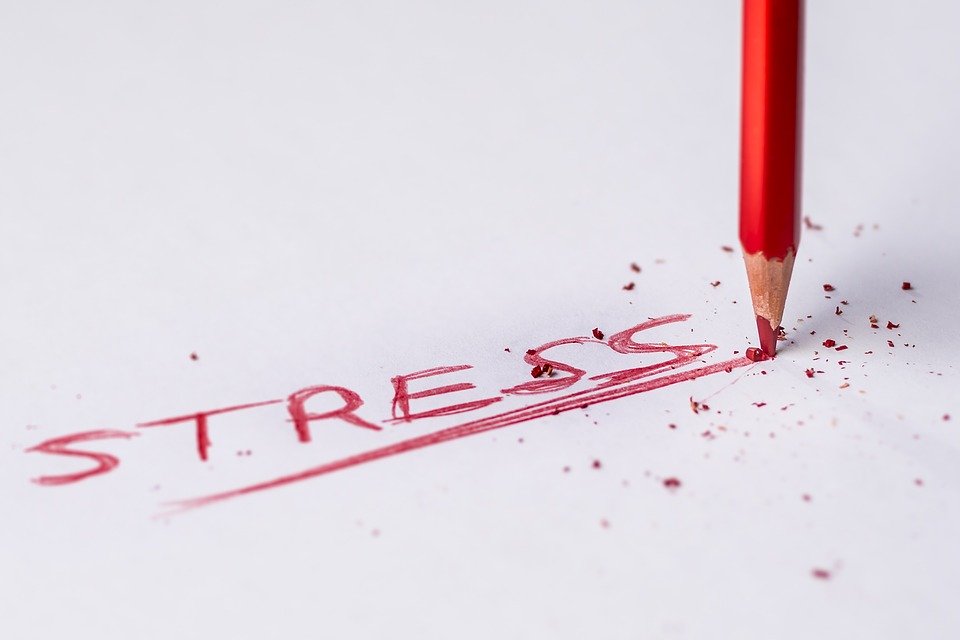
Dealing With Stress

pencil-2878764_960_720
Stress pencil from Pixabay.com
  1. Sleep.
  2. Eat (fats and proteins).
  3. Make lists.
  4. Meditate.
  5. Long walks.
  6. Visit nature.
  7. Intense exercise.
  8. Cut down the schedule.
  9. Remember and consume intense media.
  10. Discover minimally viable life.
  11. Days > years.
  12. Bonus not included in the cast: Cut down on stimulants. (Looking at you, coffee!) ☕

Making Decisions

away-4610699_960_720
Feet and arrows from Pixabay.com
  1. Doing > planning.
  2. What do I enjoy more?
  3. What is required for me to feel satisfied?
  4. Will I be better for having done it?
  5. Am I living my best life? How can I?
  6. What do other people want more?
  7. What would I need to do if I was to die in three months? Six?
  8. What would the decision look like if it were easy?
  9. Make the decisions / choices simpler.
  10. 90/10 Principle (upgrade from the 80/20 Principle).
  11. Say “no” if I can’t give it a “HELL YES!”
  12. Say “no” if there are no next steps or long term benefits.
  13. Say “no” if I am considering this because of guilt or obligation with no merit for myself.
  14. What’s the worst possible failure? How can we mitigate that?
  15. What would I do if not afraid?
  16. Will worry help the outcome?
  17. What do I fear that lacks unrecoverable risk? 💀
  18. Does it tell a white truth?
  19. How close is this to my sought-for legacy?

Tell me, what are your strategies for dealing with stress? Techniques for making decisions? Comment – I and others could learn a lot from you!

Cheers!

Cast 19 – Virtual Mentors

Download for home. (12m 53s)

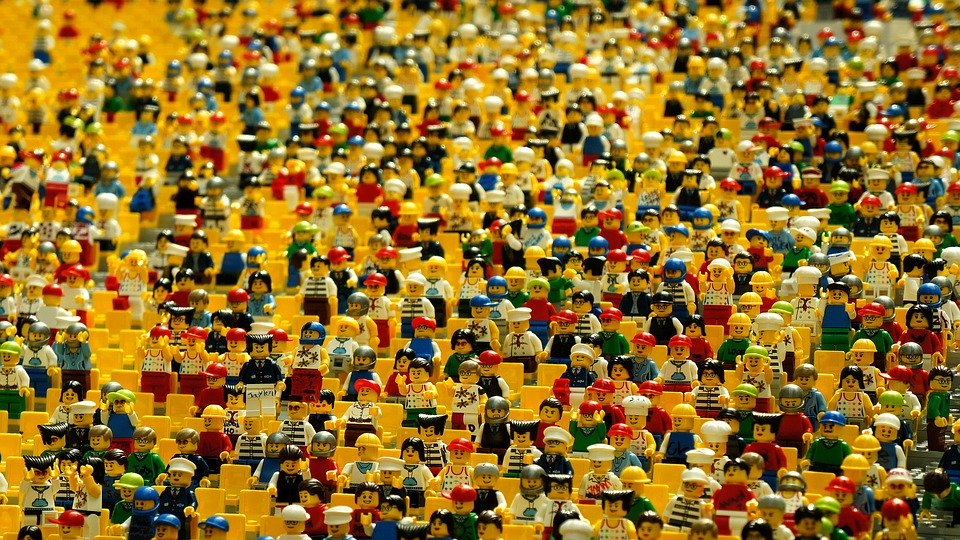
I am a multitude. A legion. I am a bit over everyone and everything that I’ve experienced.

lego-1044891_960_720
Lego figurines from Pixabay.com

Their intelligence, insight, and inspiration have made my life objectively better 😊

This is about those people and things that I continue to learn from every day, things that you too could could add to your squad of virtual intimates.

Here’s a short list of the living mentors I go to for guidance on the daily:

  • Gary VeeCEO, writer, speaker, inspirational hustler with more drive than you can shake a stick at and aspire to live up to.
    • Redact February 16 2022: After being told I work too much and learning about workaholism, I am attempting to recover by “being chill.” Gary is all about the work, meaning I have had to abstain from this former mentor for a few years now.
  • Tim Ferriss (a chat with Gary Vee) –  Writer, self-experimenter, professional life- and work-hacker; a nice balance to Gary.
  • Jocko Willink – Former Navy SEAL commander, writer, leadership consultant, tea maker, jujitsu artist, and master of getting after it.
  • Jordan Peterson (a chat with Jocko) – At times controversial Canadian psychologist, writer, and current cultural phenomenon.
    • Redact February 16 2022: While taking personal responsibility to be useful to society and ourselves, Dr. Peterson has devolved over the years to not be someone to live up to. Look elsewhere for a mentor.
  • Paula Pant – Financially independent Afford Anything host, humorist, and charming voice for what we don’t talk about in enough detail: money.

(Be sure to listen in for books and historical figures!)

I also highly recommend these folks:

Who do you already follow from on this list? Who are you adding? 🤔 Let me know who your mentors are – I want to learn from them too!

Cheers through next week.