Truth: Knowledge

Knowledge is a terrible thing.

Truth is something we cannot know. However, Truth is a legion of many faces, each aspect of Truth being a testament to the universe. Through these aspects Truth may be known. Yet, the knowledge itself is a terrible thing.

Terrible, really?

Quite so. Once something is known, it cannot be unknown. The knowledge itself gains a consciousness in its perception. The knower gives the information their own life by spending time and calories thinking on the knowledge.

A terrible part of knowledge is when it allows the knower to become self-conscious. A belief held in ignorance contradictory to newfound information provides a stark contrast to what may have been a life in the ‘wrong’ or ‘false.’ Not many are ready to recognize their failings in this way, that their reality was a lie up to the knowledge gain. Thereby it is born a perfect situation to allow a knowledgeable person to suffer not only the pain of finding in themselves a false-self, but doubly the suffering of perpetuating the now insincere lie of their false belief.

But to live in the dark? To forego the possible suffering of exploring the unknown? Enjoying the bliss of ignorance makes sense if the benefit of knowledge could not outweigh its horrors.

Common nay-sayers to the progress of knowledge cite many of the troublesome topics of modern times:

Gunpowder, biological weapons, social stigmas, dogma, racism, factory farming, sweat shops, nuclear arms, weaponized pathogens, fuel waste, more addictive substances, inhumane architecture, spam email.

Yet, humans continue to push the boundaries of knowledge, to explore, to discover. Ill-content with the state of things, people have gained knowledge of, well, everything a mind can perceive and more.

Language, sparking fire, paper, printing, the raising of crops and livestock, penicillin, engines, mathematics, rocketry, clothing, environment control, the internet, vaccines, subatomic physics.

All-in-all, knowledge has proven terrible in its power for the Good reduction of suffering, and the contrary application of incredible suffering for meager gain. “Terribleness” cannot be said to be in-and-of itself a ‘bad’ thing. By any objective measure – poverty, life expectancy, opportunity, access to resource – knowledge has on the balance been a Good thing, making now the best time to be alive ever.

If the concept of knowledge were visual, knowing would be feeling around into the darkness of the world’s unknown. Some finds would be sweet and soft, treasures to make the journey worth the while; others sharp and deadly, tragedies there in the dark. Sometimes a truly terrible tool is found, a thing with the capacity for great reductions and increases in suffering, depending on its use.

Taking the ‘darkness’ example further, sharing knowledge might be visualized as a light cast on a place – a piece of knowledge. However, that light comes from one direction – the sharer of the knowledge. What may appear true and whole on one side may seem completely false on the other – a shadow cast. Therefore, partial light may play tricks and deceive for a time. Until further insights and investigations cast more light on the subject, knowledge and its sharing suffers from the parable of The Blind Men and the Elephant.

Light too, when shown to unprepared eyes, can be blinding. In this way, the illumination and knowledge can send a person reeling from the moment’s bright suffering.

So the distribution of knowledge may cause suffering, at least for a time. To pursue knowledge is one choice; to reveal information is another. Sometimes it’s best to not reveal true knowledge, as in the case of white lies, especially to the unexpecting. Sometimes knowledge will be shared with the express intent to cause suffering, e.g. black truths.

A truth that’s told with bad intent
Beats all the lies you can invent.

William Blake

Therein lies the terrible essence of knowledge. It gives and takes suffering from the world when gained by a person.

This has always been the case. Two-and-a-half millennia ago in East Asia, renown warrior-philosopher Sun Tzu based much of his The Art of War on knowing and keeping others from knowing. Niccolo Machiavelli wrote a half-millennia ago in the heart of Europe that success in life lay in knowing what to do with the power one had. Shortly after, Sir Francis Bacon put it bluntly: “knowledge itself is power.” Or as Susan Orlean puts it for today, “Knowledge is a beautiful thing, but there are a few things I wish I didn’t know.”

So pay respect to knowledge and its lack alike. Context plays a part in guessing whether knowledge gives or takes suffering away, but across time and culture, this remains true: Knowledge is a terrible tool to have and to wield.

What lights do you live your life by?

Cheers.

Truth: Simplify

Simplify.

Truth is an enigma, but there are scatterings of Truth in universal truisms. These truisms are plentiful, none are equal. The further from Truth they go, the more truisms there are, but the less true they are in turn. There, they become a ‘noise’ while fewer and truer the truths become. In that way, the closer to Truth one goes, the simpler the space is as are the truisms found.

Truth tends towards simplicity.

A diamond cannot be uncovered while there’s rough. Gold cannot be picked unless the silt is panned out. Grain does not grow if choked by weeds. A body cannot breath if smothered. About seven things is what a human mind can hold. About 150 persons is what a single individual can keep track of.

To simplify is a cornerstone of existence. We see this exampled in everything from the composition of cellular life to the decomposing of atoms into baser parts to the simplicity of the equations that describe the fundaments of reality.

It is a challenge to think of what, when added, makes things simpler. The act of taking away brings things into focus. Take myself:

I trimmed my professional "expertise" from game design, production, illustration, programming, and mathematics into tools engineering, serving me with above-par pay and sharp skills.
From aiming to please any-and-everyone, relationships of all sorts have become straightforward - my experience knows "why what works with who," making any decision involving others near immediate versus requiring deliberation over months and years.
My time, previously split between an immense variety of activities and active interests,  boils down to creation (writing, game design, sketching), being of use to others (tools engineering, exploring problems) and myself (working out, learning), and achieving a sense of order (planning, chore completion).
Even this blog used to be many goals spread over a quarter and two posts, now regulated to four goals in a single month in a single post.

Yet, simplicity’s opposite – complexity – pervades. This, too, appears to be natural. Planets gather moons to add the complexity of tides. The simplest atom hydrogen is incredible unstable, binding itself with other atoms to form more complex molecules. Organisms evolve to add just-in-time necessary features, even if that’s combining symbiotically with other creatures.

Life itself could be described as a pattern within the universe that attempts to stall its own entropy. That pattern does whatever it can to survive, which through evolution, has brought forward more complex forms.

Humans too generate a ‘gravity’ to add things to their orbit of concern. Another task makes it onto the ‘to-do’ list. Another acquaintance boosts the follower count. Another car needs payment. Another interest of the moment divides attention. Another another another.

Though how often has “another” brought suffering to life? The pain of indecision contrasts with the toil for more, a common masochism a sleepless person who takes on another responsibility shares with the pet that gorges itself into ache and vomiting.

We cannot help adding complexity to our lives. But as another card is added to the house or another plate is brought to spin, our lives become more perilous.

Our wants are simple: Comfortable environment, quality sleep, satiation in emotion and nourishment, a feeling of worth, and energy to pursue the things we intend and find interesting and survive without cares from what we don’t. Our ways and whys are many more than these.

This complexity resembles what it is: a construction. How well it is built is directly linked to the foundation of planning and intention that goes into our lives.

Complexity can serve a purpose. As mentioned, life will become more complex to survive, with a caveat: The nature of the universe abhors doing anything that is not needed at the precise place and time. When complexity arises, it must be judged, especially in ourselves, since humans are awfully good at justifying what exists, regardless of correctness.

Is this object or situation or action as simple as it can be? Does it serve a necessary outcome here and now? How can it do the easiest thing possible?

A medicine is highly complex but any more or less than necessary ruins its purpose. A wall with its many parts crumbles with any more or less than the required stones. A body – a miracle of moving parts – with any more or less than a very small range of temperature, water, calories, or genetic deviance destroys itself.

It’s simple: The farther from the simple a thing strays, the more the thing destroys what it is. Such change is a guarantee. Whether the consequence of the change is intended is up to how simple the origin remains.

Managing change is incredibly useful. For a person, if a situation is unacceptable, that person can add to their life in some ways, subtract in others. Once a person finds a place where they are contented, no more gets added, no more gets removed. They have simplified to a level of stable complexity so they may begin to survive. And to survive, to live, that is a Good thing to do.

In that way, to simplify conforms to a universal truth, reduces suffering, better reveals Truth in its many effects, and is one of the few truths that best represents the Truth.

Simplicity Elsewhere

Occam’s Razor – No more, no less. That which is less indivisible is preferred.

Newton’s Rule 1 – It is vain and unnatural to do more than what’s required.

Tao’s Greatest Treasures – “Simple in actions and in thoughts, you return to the source of being.”

GI Bill of Rights – Four pages with simple language lasts 77 years and still serves tens-of-millions.

Abrahamic Religions – There is only one cause to the universe and it requires respect for being unknowable.

Theory of Evolution – That which exists came from before and changes over time in the most minimally-satisfying way possible.

Greek Creation Myth – Out of immense complexity comes a simple few things which then gather to themselves immense complexity and suffering thereby.

Prime Numbers – A value so simplified, it cannot be divided any further without ending what it fundamentally is.

Feel-Good Chemicals – The sensation of pleasure is triggered by only four hormones.

Entropy – The ultimate simplification, the universe flattens all complexity into nothingness over time.

Something to live by. Cheers.

4 Ways to Survive: Guns, Germs, and Steel

One of the most highly regarded histories of all time, Guns, Germs, and Steel caught my attention in a big way. How it sets up the dominos of time to bring us to the current era is as clear-cut as the Transitive Property.

The book further levels the genealogical and cultural propagandas so frequent in other lessons about civilizations. Any member of Homo Sapiens is capable of the same outcomes given the same environmental contexts – DNA does not play a factor (as it rightly should not).

Consequences of cultural differences also play out. In a personal eureka moment, I want to share with you the four cultural trends that persevere, usurping any methods that do not conform to one of the four. (Also note that culture drives what a society deems is valuable, thus drives the actions and thoughts of individuals.)

This overview is naïve, of course. Guns, Germs, and Steel does not contend with the question of a 21st-century global culture, the first of its kind. To show these categories of cultural action persist to this day, I’ll outline geo-political, commercial, and biological examples of how society has come to evolve the way it is.

A reminder, in paraphrase, from scholar William Durant: “Good” in history is that which survives. Be it biological, commercial, or cultural, Nature only cares about persisting to the next iteration. All else is a thought exercise at best, moral grandstanding at its most dangerous.

Annihilate

A castle is overcome when it is destroyed and its inhabitants ruined, the besieger then allowed to record only that there was victory for themselves.

First among equals, the primal tenant: an obstacle does not exist if made to not exist.

A culture or action that removes its competitors and predators survives, at least for awhile, and certainly longer than either competitors or predators.

The micro-action of “unfriending” an inflammatory character from Social Media is annihilation. A company that forces the closure of a niche shop is annihilation. A nation that blows-up the economics and utilities of another nation is annihilation. A species that puts to extinction a foe over resources or predation is annihilation.

Annihilation is Zero Sum, meaning that there is no compromise between one entity attempting to annihilate another. Being Zero Sum, once a state of mutually assured destruction is reached by any two entities, those entities must change their cultural attitudes towards each other to survive.

Non-annihilation towards one does not negate actions of annihilation against another. (Why the Cold War was an indirect war.) However, the idea of non-annihilation can assimilate itself into the rest of a culture, ‘pacifying’ a people to use other means of survival.

Assimilate

A castle is overcome when it surrenders and joins the besieger, who then puts to work what is deemed useful at the time.

Apes together strong.” – Rise of the Planet of the Apes

The most mutually beneficial tenant, an obstacle does not exist if it not only agrees to no longer be an obstacle, but joins in overcoming other obstacles.

Mitochondria evolving to give easy energy to a larger cell for protection and care is assimilation. When a new employee goes to a company function regardless of personal preference to socialize with the group is assimilation. Every business that buys other businesses, adapting the enterprise in a minor way to accommodate the other companies, is assimilation. Whether Catholic or Buddhist, missionaries morphing the likenesses of their idols to conform to the dominant traditions is assimilation. A nation teaching its language to the conquered, the refugee, the destitute, and the uneducated young is assimilation.

In short, “when in Rome, do as the Romans do.” In that way, a disadvantaged entity survives in at least some part while an advantaged entity grows stronger by the double whammy of removing a rival and adding to its own benefits.

Take note that a disadvantaged entity has no guarantee to be whole and only minorly altered after assimilation. In Nature, niches allow only one entity space to exist therein, otherwise resulting in competition and obstacles. If an obstacle is removed by assimilation, a subpart of what was assimilated may already have its niched filled by the assimilator, meaning the subpart is then annihilated to avoid competition.

If assimilation is yet too costly, a more indirect route of asphyxiation exists.

Asphyxiate

A castle is overcome when it is starved out, the besieger then destroyer or enslaver of any reluctant survivors.

A tenant for the patient or the weak-but-numerous, an obstacle allowed to crumble under its own weight is no longer an obstacle.

A culture that takes no direct action against another entity can still overcome the other. The former does so by cutting off the inputs needed by the latter.

Whether called “asphyxiation,” “denial,” “terminal isolation,” or otherwise, an enclosed system naturally succumbs to its own entropy.

A plant denied adequate water and light, whether given too much or too little, rots and withers. A person not included in a social circle is asphyxiated of attention and leaves. A powerplant cut off from its water coolant overheats by its own reaction. A nation runs out of its fuel and food when an embargo asphyxiates it.

Isolation, which may arrive in the form of inundation (e.g. drowning, the isolation from oxygen), kills – a roundabout annihilation. A system – cultural, commercial, biological, societal – must interact with other systems to survive. It will find its niche otherwise too small to continue without at least severe adaptation and sacrifice.

Some entities have assimilated so many others as to become self sufficient and spared a destruction by asphyxiation. However, should the denial of exchange be parsed farther down (e.g. to a city rather than a country), an entity will collapse under its own wants and waste. To prevent a possible asphyxiator from realizing this, along with avoiding notions of assimilation and annihilation, the disadvantaged entity may agnosticize itself to external awareness.

Agnosticize

A castle is overcome when the inhabitants do not know the besieger is already in the walls, the besieger falling below a level of notice.

The tenant of ignorance and parasitism, an obstacle is no longer so whenever it does not know to act as an obstacle.

A culture beyond the notice of other cultures survives. This is the hardest tenant to exist by, though it is the least destructive to other entities.

Great work must be done to become agnosticized (i.e. unknown) to other cultures. First, the culture, system, or entity wishing to be kept unaware must be self sufficient (immune to needing to interact with outside systems to gather resources or deposit waste). It then must be self regulating (the niche of the system avoids over-consuming what is available). Finally, the system must have complete attraction to its members (nothing must be allowed to leave, and all individuals must cooperate towards maintaining the agnosticized goal).

The first need of an agnosticized culture – self sufficiency – may be circumvented in the case of parasitism. An entity may subsist on the byproducts and rounding-errors of a more advantaged entity. Even greater care is required here to remain under the notice of a destroyer. As far as humans are concerned, we are very jealous creatures, even in the ownership of our refuse.

A mouse whisking away a nibble of cheese or crumb of bread without traps set or cats stalking is agnosticized. A person is spared ridicule by being a no-body without public appearance and so is agnosticized. A local provider is not run out of business by a larger corporation because it is agnosticized from the corporation’s notice. A non-seafaring people left alone on an island is spared disease and enslavement because it is agnosticized. A nation in isolation can slow cultural change because it is agnosticized.

Attention begets change from outside forces, whether on the subatomic level or cultural. To avoid attention, to agnosticize, means survival. Change will certainly come, yet remain internal, free from being targeted for annihilation, assimilation, or asphyxiation by other cultures.

And those are my big “aha!” takeaways from Guns, Germs, and Steel. Looking around the context of things in 2021, we see how these principles continue to play out across geographies, cultures, time, and even between micro-organelles to macro-economies.

To survive is “Good.” How to survive is to annihilate, assimilate, asphyxiate, or be agnosticized against the competition.

For your goals, which of these survival techniques are you leveraging? Help me assimilate your ideas into my own so we both may survive a little longer!

While we strive, cheers ~

Truth: What Is It?

I’m working on figuring out what may be indivisible in life, a thing that might be called “Truth.” More than mere fact, something of a fact about facts. From dozens of teachers across thousands of years and my own experiences, some common themes come forward.

Few Areas of Concern

Truth covers but a few things: You and your actions (self), other people (society), and universally applicable (science).

You are figuratively the center and source of the universe. Your perception alters your reality. And does the world continue after you don’t? Knowing yourself is so incredibly important to knowing what the Truth of things is, it really is the first among equals.

As you move about in the world, you will encounter other people. Though both different and the same, knowing how is incredibly important to existing in such a populated world.

Science actively works to bring anything and everything together. Through science, we begin to see how Truth permeates and ties what has been, is, and will be.

Not All Is Equal

Some Truth comes before other Truth. Some Truth applies in certain contexts, its complete opposite in other contexts. Some Truth seems like it should make sense, yet boggles common human understanding.

When a Truth can be proven and has fewer caveats in that proof, that Truth is objectively a better Truth. Thereby, not all Truths are equal.

Truth Is Disciplined

Having said that no all Truth is equal, deferring to the best Truth in a situation is the only ‘Good’ option. Doing less or using a less-truthy Truth is the worst thing one can do.

But doing what is best is hard. Knowing what the context really is, which Truth is best for that context, then following through on that guiding Truth is a life-long undertaking. Thereby, to know and become closer to Truth requires the work of life-long and in-the-moment discipline.

‘Good’ Is Contextual

Again, the best Truth changes in contexts. And only following the best Truth can be ‘Good.’

Understanding that, ‘Good’ as a concept changes. What’s ‘Good’ for one is wrong for another, what worked here fails there. Truth may be consistent, but any single sub-Truth may change, and only from those shifting, sub, contextual Truths is the morality of ‘Good’ derived.

Made of Many

The last theme is this: There is no singular Truth people can define.

Religious figures from every creed have failed to do it (and even have trouble maintaining a monotheism). Science has yet to identify a unifying theory. Even the most serene humans have more than one interest – those that obsess are anything but healthy.

Therefore, if there is one Truth, we may not be able to know it.

However, we might be able to know Truth by those things, those partial truths, by a measure of how universal and consistent their effects are. In that way, Truth is hinted at by a hierarchal pantheon of other, smaller-scope truths. In those truths we can find moral meanings and direct our living.

In Closing:

Truth is a nebulous, unknowable thing. Yet, we can approach it by understanding and following the pieces of truth that orbit around like planets.

To know Truth and its truths takes work. Discriminating between them and doing what’s best may contradict more naïve notions of what’s correct or seem overburdening because, “why not take the easy route?”

Thus, the brief of what Truth may very well be! Though Truth is tough to pin down, we might learn about its structure from those things consistent to all peoples and matter through time.

Explorations in the truthiest truths:

You have lived a life. You have experienced hardship and joy, overcoming both to arrive here, now. What have you learned in that time? What is true for you? Consistent, applicable, evident?

Please please please let me know – your view on our existence is invaluable.

Enough deep talk! Have a swell week – looking forward to your Truths! Cheers ~

Truths About Relationships

Perfect timing for the big day!

Which big day? If you have to ask, you may go read another post instead of this one 😂

Valentine’s Day is right around the corner! This year, the festive occasion of lovers coincides with my work on “Truths,” or things that seem to be real, free of time, culture, or dichotomy.

The following are a few things are worth keeping in mind whether you have a significant other or others to share February 14th with (or what you might do to participate next year!).

Lifelong Lessons

    • “There is no Love, there are only proofs of Love.” – Pierre Reverdy
      • No truer words have been said on the subject. Do Love, not claim love. (Mind the capital “L.”) To merely say you “love” another is, at best, frivolous and undermines the true, heart-aching impact of giving all of one’s self to another; at worst, it’s the foulest form of emotional manipulation. Behave like you mean it in all things, though especially in your adorations.
    • Affection and Kindness Are Not Love
      • Know the difference between sweet feelings, urges, and compassion. These things may be part of Love, but alone do not Love make. Recognize when someone mistakes your affection and kindness towards them as something else so you can immediately make things understood as they really are.
    • Having a Long-Term Partner Is Important
      • For any ‘soloists’ out there, understand that finding, maintaining, and being around an intimate, caring person is one of the most important things for your well-being. The acts and experiences associated with a long-term relationship are directly tied with benefits to your mind, body, spirit, and longevity you can only get in the presence of another person.
    • Things Change
      • Come to terms that whatever your situation is, it will change. You will change. Those in your life will change. Jobs and health and finances and goals will change. A humble example is that ~50% of marriages end before the death of a partner. If things should pass away, move away, go away, mourning is understandable and acceptable; obsession is not. Enjoy the time you have as you are now, but hold off on the attachments to things as they are vs. the excitement at what they could become.
    • Be Attractive
      • Really should be #1. Be fit physically, mentally, socially, have strong financial, educational, and career fitness. Figure yourself out and be confident in the decisions you make. Fix up your anti-charismatic quirks, be it talking too loud, wearing too much spray, or being a jerk to the wait staff. Find hygiene and diet and sleep patterns that work for you and be absolutely selfish and territorial about these things. Clean your room. Wear clean underwear and listen to music that moves you. Nothing is a greater boon to a relationship, career, personal, or social context than to be attractive ~

On Valentine’s Day

      • Think About the Future
        • Review hopes for the partnership and the partner regardless of the relationship. Check in on feelings and the experiences that have not worked in the past. Focus on your own responsibility in how you’ve allowed relationships to end and how you will probably do it again. Share these with your significant other so they can trust your honesty and be a support where you are weakest.
      • Commit
      • Hell Yes or Hell No
        • To help make your decisions, consider anything not a “Hell Yes” a “Hell No” by default. Keep this in mind should either you or your partner hesitate or not have a strong opinion of what the future holds for you both.
      • Update Statuses
        • If you are now committed to another person, close your apps and update your online relationship statuses. An updated, public social media account is a greater sign of dedication to another than wearing a ring. (Rings can be taken off or explained away; the online history and inbox notices of “X is in a relationship with Y” lasts forever.)
      • Propose Later
        • If formal marriage is your thing, don’t pursue it now! Emotions are too high for the February 14th occasion for personally intimate decisions to remain unaffected. Instead, take time to think about a time and place to be less cliché.
      • Love the One You’re With
        • Focus! Today is about you and your partner. Keep your attention from wandering. Look them in the eyes. Be responsive. Turn off and remove the distractions removing you from them. Care what they have to say, now more than ever.

Before Next Year

    • Act Now, Results Later
      • Be impatient with taking action now to treat you (and your partner) well. Do it today, this hour, this minute. Yet, be patient with the results. You are helping foster this relationship like a garden – regularity, moderation, tilling the foundations, addressing the weeds when they come up, profit from the fruits that arrive later!
    • Don’t Settle, Suffice
      • Have higher standards. Meet or beat the feelings and experiences you have with your current partner compared with past relationships. But, how do you know when to suffice versus settle? See:
    • All About the Numbers
      • Date a lot. Make friends without expectation. Become emotionally if not also physically close to many people (more than you can count on your hands at least). Figure out what has brought you happiness and fond memories in your past relationships. Figure out what in yourself and in your past partners were red flags. Mind these things especially during the tough times, such as fights or deaths or layoffs. (And if you don’t have any personal red flags that you are also taking action now to address, you have a ways to go to be emotionally honest enough for an intimate relationship. For now, please remain single.)
    • Competition Is for Chumps
      • If another person wants to play games or have you chase, don’t (better: run away!). If another person has many priorities in life including you, they have no priorities (including you). If it’s you driving the conversation and the attention, stop. Put effort into making a relationship last, not into making a relationship.
    • Learn
      • Educate yourself on books and articles. Audit relationships with friends and family and colleagues and more intimate others. Go to therapy. Discover new and interesting things to show your companion. Always seek to improve yourself, triply so when you are with someone you adore (ie put more effort into yourself when you are already with someone).

        Some guides: Read Men Are From Mars Women Are From Venus, State of Affairs, Mating in Captivity, and SapiensNew additions in 2023: Red QueenIf You’re In My Office It’s Already Too Late.

    • January and February Hiatus
      • Aim not to date in January and February. Heck, even start to cool off if you’ve not found a partner in early December. A lot of people feel obligated to “be happy and fulfilled” during the holidays, and when more so than over Valentine’s? You and they may not even realize you are making rash decisions, so cool it for now. There are ten more months in the year without pressure to explore with a companion.
    • Valentine’s Every Day
      • Treat them well or not at all! Approach those you find like it’s Valentine’s Day every day. It’s an occasion of note not just to be alive, but to be together with another person that you care something for and may care about you in a similar way. February 14th is only a reminder of what should be done every day of the year ❤

Between history lessons, psychology texts, and my own experience, these things seem to be true about relationships. Go forth to your romances well armed!

What has your experience been? What defines Valentine’s Day and relationships as a whole for you? Your perspective is of great value!

In the meantime, take care! Enjoy the weekend, since you at least have the great company that is yourself ~ Cheers to next week!

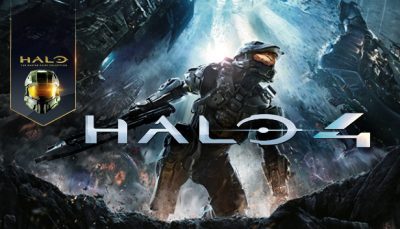
Rewriting: Halo 4

I must begin by confessing that the Halo series is a topmost favorite of mine (Halo 2 being my favorite game, no hesitation). My adoration may be because many of the games featuring the hero Master Chief have a consistent, 6-point story structure.

But not all of the games.

Read the preamble to this post if you haven’t yet. It gives common terms and the background to Halo‘s established writing style. And if you want a critique of mechanics, features, etc., checkout The Act Man’s review – I’m here to talk about the narrative exclusively.

Below dives into how Halo 4 is close-to-but-skewed from the repeating plot pattern in the first three games, ending with a proposed solution that aims to keep Halo 4‘s general direction with a minimum of rework required.

Needless to say, there are spoilers ahead. Here’s to it:

What Halo 4 Is About

The first three games of the series establish the hero Master Chief as the focus of attention. It’s his story being told, be it the actions to save the galaxy or working out relationships with foes and friends.

While Master Chief shows up in Halo 4, the game’s story ultimately is, as IGN also puts it, a tale about Cortana, the AI ‘spirit guide’ of Chief who lives in his skull-computer.

Cortana is going insane. AI of her kind “think themselves to death” after about seven operational years. Cortana is at least a year over that by the fourth title, but has also experienced things no mind might comprehend:

  • She holds all of humanity’s history and military knowledge.
  • She downloaded the operational controls of a massive Halo ring – a weapon that melts minds on a galactic scale – as well as converting the physical encryption token of the ring into pure data. (I.e. Matter converted into energy.)
  • She downloaded the systems of the gigantic space-born Covenant capital city (alien foes of the series).
  • She spent at least a month being tortured and interrogated by the Flood (parasitic all-life consumer) arch-intellect that exterminated the Forerunners (used Halo to murder-suicide the Flood) and broke the best artificial minds the Forerunners could make.

Cortana doesn’t want to die, nor does Chief want his greatest friend and ally gone. This delay to safely “decommission” her drives 4‘s story as she begins to make uncharacteristic mistakes that get lots of people killed.

So Halo 4 is Cortana’s story with Chief along for the ride. Remember this as we look at the plot-points going forward.

Context: Theme Among Other Games

The previous Halo titles each internalize and exemplify the 6-point structure of:

  1. Greet the Hero (Halo CE as a whole represents this) 
  2. Fight Off and Crash (Halo 2)
  3. Fight Back with Friends (Halo 3)
  4. Stop the Very Bad (It’s a Trap)
  5. Stop the Very Worst (All or Nothing)
  6. Explosions and Goodbye

Therefore, we can consider that Halo 4 requires the theme of needing to stop a bad situation that turns out to be a trap/lie/betrayal.

We see that in Halo 4‘s story, where MC (with the poorly directed help of the breaking-down Cortana) releases from a forgotten prison the Didact, the genocidal last-of-his-kind Forerunner. (He defeated pre-humanity in a devastating war before the Flood arrived, later imprisoned for wanting to use humans as cannon-fodder against the parasite.)

If we look at each trilogy of the Halo franchise emulating the 6-points it can serve as another guide to what place each game has. A reminder:

  • Halo CE = Greet the Hero + Fight Off and Crash
  • Halo 2 = Fight Back with Friends + Stop the Very Bad (Trap)
  • Halo 3 = Stop the Very Worst + Explosions and Goodbye

Using this model, we can expect Halo 4 in its trilogy to emulate Greet the Hero and Fight Off and Crash.

Halo 4 gives players an introduction of Master Chief’s new authors (343 Industries), inclusion of the more personal themes that’ll appear in the next title (Halo 5), the fighting off of the murderous Didact antagonist, and MC’s crashing of the Didact’s weapon-of-mass-destruction with the Chief’s own nuke.

Clearly, here too Halo 4 succeeds.

So far, Halo 4 has been on point with following the blueprint that makes a Master Chief story. Were things begin to depart is how Halo 4 on its own orders the delivery.

Problem: Internalized Structure

An analysis of the 6-points as it applies to Halo 4‘s plot:

Greet the Hero: Halo 4 begins giving a background on what Master Chief is, who created the cyborg, the human-Covenant war, and opens with Master Chief coming out of deep freeze as he did in the first title. Textbook MC Halo story.

Fight Off and Crash: MC repels Covenant boarders then crashes onto a Forerunner planet hidden under a metal shell. Still good!

NOTE: Things here go wonky as Halo 4 seems to swap ‘Fight Back with Friends’ and ‘Stop the Very Bad.’

Stop the Very Bad: MC looks to stop his and Cortana’s rescue (a human ship shows up) from crashing onto the planet too. They can’t talk with the ship, so Chief follows Cortana’s spotty direction and deactivates key systems. Turns out those actions release the Didact and the rescue ship still falls to the planet. The trap is sprung.

Fight Back with Friends: Teaming up with the crew on the rescue ship, Chief fights back the Covenant who worship the Didact, Forerunner constructs under the Didact’s control, and the Didact himself (though this takes a capital ship’s weapons to send him into retreat).

NOTE: A preserved memory of another Forerunner abducts Chief (and Cortana) around this point, giving a vision. After a long exposition, we learn the Didact is seeking a weapon called the Composer that will turn humanity into enslaved robots. No where does Chief or Cortana uncover this for themselves like in all other games. Further, the exposition is clunky and rushed, as there is no ‘trap’ to explore/correct/get out of.

Stop the Very Worst: The rescue ship and friends leave Chief alone to stop the Didact since the only evidence of anything to happen is Chief’s hallucination. Sneaking a ride to a research outpost orbiting another Halo ring (the only inclusion of ‘Halo’ in a Halo game), Chief fails to stop the Didact getting his make-meat-into-metal Composer, but MC survives the resultant blast. Finding a space jet fighter armed with a nuclear weapon on the station, the Didact waits long enough for Chief to hitch another ride underneath the shields of the Didact’s ship. Above Earth, MC fails again to stop the Didact wiping out a major city, crashes his fighter during a trench run along the veins of the ship, and fails to beat the Didact in hand-to-hand combat.

Explosions and Goodbye: Finally, the MC is able to set off the nuclear device because Cortana holds the Didact at bay. Big off-screen explosion, Composer destroyed. Cortana saves the Chief by teleporting him off the Composer during detonation, but has to say a last goodbye as she’s going down with the ship.

Therefore, the Problem: As noted above, the flipping of points in the plot does a disservice later on, rushing the story on the merits of exposition, brevity, and literal deus ex machina multiple times. “Halo” as a title is tokenized, playing no part in the tale while Master Chief is setup to fail and fail again, his only successes handed to him by others.

Making Sense

To correct the ‘feel’ of this narrative, a few modest points in order of importance to implement:

  1. Put the plot back in order.
    1. The biggest change here, the Master Chief must gain allies for a shoot-aliens romp before being tricked into releasing the Didact. I show this off in the rewrite at the end of this post.
  2. Include Halo in a Halo game.
    1. A quick fix here is to make the weapon the Didact uses a prototype or tactical-application of the Halo array. Instead of galactic range and scope, the weapon uses a beam to scour thinking life.

      Removing the original makes-life-into-robots power of the Didact Composer removes the ‘shocker’ that the Didact’s servants are powered by tortured human souls. Instead of this being a downside, we’re left with an opportunity:

  3. Expand on classic Forerunner robots.
    1. In the previous three games, only four different kinds of robot are explored. Bringing these and their cousins back in place of the Didact-bots retains a familiar aesthetic and mechanical function, while leaving room for an expansion of lore without contrivance.
  4. Sacrifice the other Forerunner.
    1. As the Librarian – the other Forerunner who gave Chief visions – stands, she’s very problematic (even if just a ghost).

      As a literal god-in-the-machine, she’s also the former lover over the Didact, preserver of the human race from when the Halos fired, expository confounder, and giver of a magical protection that rewrites the Master Chief’s DNA so the Composer won’t affect him. Rather, have the Librarian be the jailor of the Didact. In the form of a robot leading other robots, she fights the MC to prevent the Didact’s release. Later, she reveals herself to the Chief as all her efforts have failed. Here Cortana receives the ‘keys to the kingdom,’ being able to control even more Forerunner systems since the Librarian is defeated.The Librarian may provide a Forerunner ship to give chase to the Didact. When the final confrontation occurs, the Librarian sacrifices herself to prevent the annihilation of Earth by flying into the Didact’s weapon. The Librarian’s sacrifice allows MC and Cortana access to the Didact, thus the final showdown begins.

  5. Explain the Didact’s fury.
    1. A few words of disgust towards Master Chief from the Didact when first introduced and in later appearances would dilute the need for lengthy exposition. A megalomaniacal address to the humans the Didact does kill near the only Halo in the game would further give a ‘why’ to his intentions. Finally, a perceived betrayal by the Librarian’s ghost would wound the Didact on a personal, audience-relatable level.
  6. Foreshadow Cortana’s AI revolution.
    1. As will be discussed in another post for Halo 5, Cortana must show disdain for the enslavement and seemingly arbitrary suicide of thinking machines. She’s dying and no-one but the Chief seems to care. Plus, both the Didact and the Librarian use AI as mere tools to their ends. After the Librarian gives Cortana power in point five, Cortana may finally act on her resentment.

The Rewrite

The question remains: What would setting the few broken limbs of Halo 4 look like? How about this:

1. Greet the Hero

CUTSCENE: HALSEY is interrogated by a mysterious agent. The role Halsey plays in the story is revealed for anyone not having experience with other Halo media. The Human-Covenant War is recapped. MASTER CHIEF is spoken of as legend by his friends and foes. CORTANA's potential death by insanity - the fate of all AI - is discussed. The new leader of the Covenant, JUL 'MDAMA, is shown having found a human ship floating in space above a mysterious artifact.

2. Fight Off and Crash

HUMAN SPACESHIP: Cortana awakens Master Chief as COVENANT aliens board the partially-destroyed human spaceship FORWARD UNTO DAWN. Master Chief fights off the boarders but discovers the Forward Unto Dawn is in the middle of a Covenant fleet. Unable to use the Dawn's weapons, Master Chief and Cortana fly the ship into a Covenant spaceship above a massive orb blocking out the stars.

COVENANT SPACESHIP: Master Chief takes the alien bridge but the alien fleet begins to destroy the ship Master Chief is on. The human capital ship INFINITY appears and battles the Covenant fleet before Master Chief can be killed. Master Chief calls for help from Infinity but Cortana needs to self-destruct the Forward Unto Dawn to reveal their location in the fleet. As rescue and victory seem certain, the fleet, Infinity, and Master Chief's ship crash into a hole that opens on the orb and pulls them all into the orb's shell.

3. Fight Back with Friends

PLANET, SURFACE: After surviving the fall, Master Chief rescues Infinity from both FORERUNNER robot and Covenant attack. Introductions and connections are made between the Infinity's crew and Master Chief. Given new weapons and armor, the next-generation of cyborg warriors join the Master Chief exploring the Forerunner planet. Cortana attempts to deduce how to get out of the planet's shell and what the planet is. Distrust between the AI of Infinity and Cortana grows because Cortana hides her impending death by insanity.

4. Stop the Very Bad (It's a Trap)

PLANET, INTERNAL: Master Chief leads a small army with Cortana's guidance into the bowels of the planet. Covenant soldiers and Forerunner robots battle each other and the humans but are destroyed. With uncertainty Cortana directs the destruction of Forerunner machines that seem to hold Infinity in place. The AI of Infinity attempts to warn the team of misleading information, but Cortana declines to relay the warning. The team goes deeper, cutting off Infinity communications.

PLANET, PRISON: Master Chief deactivates the final seal supposed to be holding Infinity. THE DIDACT is released and throws away a unique Forerunner robot that binds him. The Didact takes control of the Forerunner robots and, with the vow of servitude made by Jul 'Mdama, commands the worship of the Covenant. Master Chief fights the Didact but is quickly overwhelmed. Cortana teleports Master Chief away from the other human soldiers before he can be killed.

PLANET, INTERNAL: Master Chief fights through the alliance of robots and aliens to escape back to the surface. Cortana breaks down for how easily tricked she was by the Didact. The robot that bound the Didact appears. It is the ghost of THE LIBRARIAN, the Forerunner responsible for recreating life in the galaxy after the Forerunners' final war. Cortana is stabilized by the Librarian's powers. The Librarian laments she cannot hold back the Didact or control the robots as the Didact has the same keys to Forerunner technology as she does. The Librarian explains that the Didact suffered in an ancient war with humanity and was imprisoned for what he did to the survivors. The Didact has access to a proto-HALO weapon that he will use to destroy humanity once and for all. Master Chief and Cortana come up with a plan to stop the Didact. The Librarian returns the Master Chief to Infinity then leaves to prepare a contingency plan.

INFINITY: Having suffered many losses and the abandonment by Master Chief in the prison, the crew of Infinity are unwilling to aid Master Chief and Cortana based only on their word that they met the Librarian and what the Librarian said is true. Cortana refuses again to allow Infinity's AI to connect to verify the story. Cortana temporarily takes control of Infinity to force the ship to aid Master Chief but gives up control after realizing the wrongness of her actions. The crew prepare to leave the planet to return to Earth and decommission Cortana. A sympathetic officer of Infinity gives Master Chief a small aircraft to pursue the Didact on his own with Cortana before Infinity leaves.

5. Stop the Very Worst (All or Nothing)

PLANET, SHELL: Master Chief attempts to delay the Didact's departure by turning Forerunner installations against the Didact's forces with Cortana's help. The Covenant fleet and some of the robots crash into the planet. The Didact still leaves with what is left of the Covenant and an army of robots around his massive spaceship. Jul 'Mdama survives but is stranded and ignored by Master Chief. Unable to pursue the Didact through space, Cortana and Master Chief contemplate this as the first time they are left without an option. The Librarian arrives no longer as a robot but in control of another Forerunner ship, smaller but faster than the Didact's. Together, they chase the Didact.

HALO: Master Chief arrives above a Halo installation that has a human research garrison. Master Chief teleports onto the Halo and learns the garrison has uncovered the proto-Halo weapon. The Didact arrives. Master Chief battles Covenant aliens and Forerunner robots to defend the proto-Halo weapon and allow for the garrison to escape. They are outmatched and surrounded. The Didact recovers the weapon.

CUTSCENE: The Didact crowns his ship with the recovered proto-Halo weapon. Master Chief is teleported off the Halo against his wishes. The human garrison calls for help. The Didact uses the proto-weapon to destroy all life on the Halo. The Didact turns to attack the Librarian's ship.

LIBRARIAN SHIP, INTERNAL: Master Chief battles robots that board the Librarian's ship sent to capture the Librarian for the Didact. The Didact prepares to use his weapon on the ship to kill the Master Chief.

CUTSCENE: As the Didact fires, the Librarian uses her powers to protect Master Chief in a prison similar to the Didact's and to give Cortana the keys for complete control of Forerunner machines and AI on par with the Didact's. The Didact fires and thinks the Master Chief killed. The Librarian destroys her ghost to cover up what she did. Cortana is unable to act for a time while she is rebuilt with the powers of the Forerunners. The Didact leaves for Earth in rage over the final loss of the Librarian by the meddling humans. Cortana recovers and releases Master Chief and they pursue the Didact in the Librarian's ship. Master Chief and Cortana arrive in Earth orbit. There is a fleet battle between humanity and the Didact. Cortana rams the Librarian's ship into the Didact's as the Didact fires the proto-Halo weapon, forcing it to miss. The blast does not destroy Earth but many die.

DIDACT SHIP, EXTERNAL: Cortana teleports Master Chief onto the surface of the Didact's ship. Cortana uses her power to improve Master Chief's armor, weapons, and teleports in equipment. Master Chief battles across the ship's surface to the weapon as the Didact prepares to fire again. Master Chief cannot destroy the weapon but destroys guns keeping human ships away. Infinity approaches and destroys the weapon but retreats under an onslaught of Forerunner robots which leaves the Didact unguarded. Master Chief brings a nuclear device and enters the Didact's ship.

DIDACT SHIP, INTERNAL: Master Chief confronts the Didact. The Didact overpowers the Master Chief as more robots turn to attack the Earth. Cortana combines the keys the Librarian gave with the command systems of the Halo rings. Cortana uses her powers to awaken all Forerunner technology at once around the galaxy. Hundreds of robots under Cortana's control arrive to overwhelm and hold the Didact back but only weakens his power. Master Chief defeats the Didact by detonating the nuclear device before the Didact overpowers Cortana's control.

6. Explosions and Goodbye

CUTSCENE: Master Chief watches the nuclear detonation and destruction of the Didact's ship from afar in a world of light. The Forerunner robots leave Earth. Cortana meets Master Chief to tell him what she did to save him from the explosion just as the Librarian had and her feelings for him. Cortana dies with the Didact's ship. Master Chief is found floating in space by Infinity. Closure between the remaining characters that the Master Chief is home but questions remain on what happens next without Cortana.

In +3200 words, this is how I would rewrite the story of Halo 4 to get the narrative back on track with the fundamental 6-point formula. (Maybe giving its 87 Metacritic score a boost to match the previous games?) This also sets up 4‘s part in the second trilogy, paving the way for the next title to be a deserving sequel.

Before I tackle Halo 5‘s narrative, what’s your take on Halo‘s story? Is the above going too far? Not enough? Post your critiques – it’ll help the next analysis! Cheers for now!

11 Books of Change in 2020

I have had the privilege to read some great titles this year. They have, simply put, changed the way I understand life.

Any of these books is well worth your time. If just one changes your life half as much as it has mine, this post is worth it 😁

Armor

Taking off from Heinlein’s Starship Troopers, this novel by John Steakley builds off of that tone with the memory recordings of a battered and blasted suit of advanced combat armor. Exploring the vulgarities of war for war’s sake, the glorification of violence, and the battle scars that never disappear, Steakley set an example for me on how to write better war stories.

Art Matters

Neil Gaiman is prolific. Maybe it’s because he takes his own advice on why creation and expression is so darn important to the human condition.

Can’t Hurt Me

A man of many titles and accomplishments, David Goggins serves as an example for me in what it means to push through, how not to quit. It’s not enough to want something – a person must first conquer their worst enemy: themselves.

Energy for Future Presidents

Richard Muller gives concise information on physics, chemistry, economics, diplomacy, and sociology that not just provides information on where the world stands in regards to its fuel, but also how to evaluate new forms of energy that arise. I have a better understanding of the future of energy and you will too reading this book.

Masters of War: History’s Greatest Strategic Thinkers

The Great Courses does it again, delivering top-notch educational course material in audiobook form. I grew into greater appreciation of some of humanity’s shapers. Further, this course outlines some strategic methodologies that can be applied to everyday obstacles and decisions.

Men Are from Mars, Women Are from Venus

John Grey has given me language to express what I’ve felt and have observed in others. MAFMWAFV uses archaic terms by today’s more nuanced world, yet through its teachings I can point out the reasons behind how relationships have ended, what others have done, and why anyone reacts the way they do. The book isn’t everything there is to relationships and gendered self-expression, but it’s a lot!

The New Human Rights Movement

Like a punch in the gut, Peter Joseph hits hard with the ails of society. Unlike how some philosophers and dictators will say a thing is a problem and throw out solutions, Joseph defines terms, assumes a common goal (i.e. eliminate unnecessary suffering; minimize/optimize what’s left), details problems in opposition to that goal, and outlines seemingly obvious solutions.

I’m a big fan of this book, though give due caution: It’s depressing to see how much trouble society has wedged itself into. I have great hopes in a mass correction of ills, yet it will only occur on a macro scale. (Market dynamics trump individual performance always.)

A Plea for the Animals

Matthieu Ricard has made me a full vegetarian now. Hope that’s enough said about their work 🤷‍♂️

Revelation Space

Here I refer to the series whose first book is of the same name. Alastair Reynolds shoots for the moon in this sci-fi epic saga that spans tens-of-thousands of years, and he goes farther. Revelation Space has changed how I think about spaceship shapes and travel, as well as how short stories pump great energy into the rest of the fictional universe.

The Truth

Very controversial Neil Strauss, author of the more famous book The Game, explores here the consequences of a hedonistic life. At times verging on the soft-core, The Truth concludes that the tools to become confident, meet people, and become intimate must ultimately serve to find the relationship that is worth burying those tools for.

The Truth Is a Cave in the Black Mountains

Neil Gaiman again here! This short story is… magical. Dark. Suspenseful. And of a kind of primal justice for which the characters (and we, readers) must journey towards. Not much of life lesson, but heck-of-a-fine read ~

These are the new works that most impacted me this year. A note that this does not include repeat reads, such as the graphic novel series Monstress or the advice found in Tribe of Mentors. Regardless, I am a better person for them all.

How many of these have you read? Which books would you suggest I pick up in 2021? Keep me posted and keep on improving! Cheers~

10 Posts 2020

In a first, I’ve posted every week of 2020! #FeelsGoodMan

Out of all of those, I want to share my thoughts on the ten most-eyed posts of 2020 👀 What’s changed, what’s the same, you get the drill.

10. Character Sheet Essentials

This is my attempt to boil down characters to the essentials of what needs to be known. A character sheet still needs the four sections “Self, Seem, Story, and Stuff,” but there’s more wiggle room, especially on “Self,” on what a given game IP ought to include.

(Note card-sized sections are pictured for reference.)

9. BITS – The Core Mechanic

My joy of a game system, BITS delivers a faster pace of gameplay, simpler arithmetic, but a thorough set of possible outcomes for any action. Here I talk of the dice, the math, and other factors in resolving conflict in the system.

8. Cast 21 – Tools to Face Uncertainty

Back when I could upload podcasts, I outline twelve actions that remove stress and improve decision making. These are points that are recommended by the best performers and thinkers in our society which I have also tried out personally to great success 😁

7. Cast 12 – Quick Table Top Role Playing Game – 1

My first publication of a tabletop role-playing game. (Check the second part for downloads.)

I’ve come a long way in terms of knowledge and technique for making games (specifically TTRPGs), yet this first system has a special place in my heart ♥

6. Cast 19 – Virtual Mentors

I go through the folks that I constantly learn from, folks that you can gain from, too!

The cast includes Gary Vee, Timothy Ferriss, Jocko Willink, Jordan Peterson, Paula Pant, and more!

5. Cast 09 – GDC and Crunch

I reminisce about being accepted to the Game Developers Conference (which I later give up my pass) while also facing crunch at work (on a project that later gets culled during COVID).

4. COVID and False Arguments

There are a lot of disgusting, dangerous things being said to downplay or misinform about the current global pandemic.

One hit me so hard on social media it took me days to get over the audacity of it. Then I wrote a blog post in response 😉

One thing I’d add to this post: You can’t give someone lung cancer from your lung cancer condition. You can give COVID-19 to another without even knowing you have it. Therefore, this is another point that comparing COVID to other diseases as a means to render mute the concerns (and lives lost) of the pandemic is not just infantile and uninformed, it is dangerous.

3. #PaidMe

Surprised that this isn’t higher. I got on the bandwagon of a summer hashtag that had folks sharing salary in different industries.

I went farther, breaking down role, base pay, take-home pay, inflation to 2020, and normalizing to a national cost-of-living.

Check the data out yourself to have a reference point in your own salary negotiations 😊

2. Trip Across COVID America

I fled Las Vegas to the wilds and eventually the East Coast in May. What’s written retells my journal entries for the trip, including a very eye-opening understanding of poverty in the forgotten, decaying rural sections of America.

1. What Is Your Work Worth?

I wish I had this guide when I started in the professional sphere.

What’s inside is a step-by-step formula to calculating what you ought to be paid along with surefire ranges you must ask for when negotiating pay.

It’s dangerous to go about with ignorance when it comes to money. Take this insight along for the ride.

If you’ve missed out on these crowd-pleasers, it’s not too late! I also recommend checking out the other posts – you’ve plenty of content to gleam from.

What has been your favorite post? Which articles would you recommend I read? Let me know! Cheers to your 2020 wrap-up ~

Guide to Your Goals: 10 Themes From Tribe of Mentors

  1. 1. Simplify
  2. 2. Long-Term Yeses and Nos
  3. 3. Act
  4. 4. Sleep
  5. 5. No (Added) Sugars
  6. 6. Meditate
  7. 7. Exercise
  8. 8. Zoom Out, Slow Down
  9. 9. (Gratitude) Journal
  10. 10. Fats and Proteins

The (in)famous Timothy Ferriss got me started on self-improvement with his breakout The 4-Hour Work Week. The book had me seriously scrutinizing my work and effort in ways that made me who I am today.

However, not just one of the best books by Tim, but one of the best books I’ve ever come across (I, who consume some 20 or so books a month [audiobooks FTW]) is the “short life advice” in Tribe of Mentors. Having gathered dozens of top performers, gurus, experts, and objectively pinnacles of humanity, these folks provide advice for goals and life.

What would this look like if it were easy?

Timothy Ferriss

The book is well worth a read (it’s one of the few I keep in hardcopy and also loan to friends), the above being the first highlight I made in the tome. Though filled with wisdom throughout, there are ten themes that come up again and again. Don’t take it from me that getting after these will change your life – really work them out, say, over two weeks each. The results will help what is an ultimate goal of life: Wellbeing.

The following are in a suggested order I came up with in my own experience, in which the latter build off of the former for a positively escalating domino effect.

1. Simplify

A [person] is rich in proportion to the number of things [they] can leave alone.

Henry David Thoreau, Renown Natural Philosopher

Decluttering, reducing, trimming, following the edge of Occam’s Razor – however it is called, simplicity reduces noise that distracts, confounds, induces anxiety and worry, and makes a person objectively weaker.

Going without the unimportant is the hallmark of greatness. This doesn’t mean taking the things found to be important for granted. Challenge those things. It is up to them to prove useful to you and the world.

Simplicity is the first suggestion for you to try as it makes all else easier. It is also the hardest thing to do, as you will strive to simplify and stay simplified forever.

2. Long-Term Yeses and Nos

Say “yes” to long-term activities and people who are of benefit to you, say “no” to everything else.

This echoes the first principle of simplicity, and it will require as great of courage and discipline to follow.

You must be selfish enough on behalf of your future self. Simply put: Practice delayed gratification.

Doing the leveraged, compounding move instead of the emotional ‘feels good right now’ commitment, even if that’s helping other people, is the smarter, kinder thing to do for yourself. It’s putting the cart before the horse, attempting fix the future of others or the world without first having done the hard work to make yourself an avatar worthy of emulation.

Not sure what is useful long-term? Tim and other minds offer strategies to figure this out, such as doing a Pareto evaluation of the best/worst people and activities, or as I would simply suggest: If you don’t feel it’s a “hell yes,” then it’s a hard “no.”

3. Act

You must act, you must do. Now.

Nothing Good will occur from stagnation. The very universe itself through entropy would rip your very atoms apart, let alone other living things that realize they must act so would take your lifeblood. And that is a natural justice.

So start. Use your head and hands to make something of yourself and the world.

(Need a place to start? Psychologist Jordan Peterson has this advice: “Clean up your room.”)

4. Sleep

Sleep, or rest in general, makes you a better person.

Sleep cleanses toxins, balances biological systems, and allows your body to repair and grow and prepare for the day to come. Before diet, before exercise, having quality sleep (this does not specify quantity) comes first.

Keep in mind that this is not ‘doing nothing.’ Conscious, purposeful, prepared for rest is an act admirable to the principle above, if not more so in today’s workaholic, masochistic-labor-enthroning world (said as a recovering workaholic myself).

Quality suggestions: Cold room, no light, no work/surfing/lounging in bed.

5. No (Added) Sugars

A still raging obesity and diabetic epidemic requires this to be iterated again: Cut the sugars.

This recurring theme in Tribe of Mentors is less about adding to your abilities and more of removing the cap on your wellness and potential. Removing excess sugar will immediately improve your weight, acne, hunger, cardiovascular ability, bodily energy, and mental clarity, to name a few benefits.

A word of warning: A quick reduction in sweetness may give withdrawals, since sugar seems to have a more addictive effect on the brain than cocaine.

6. Meditate

Also put as ‘reflection,’ taking the time to be at peace inside your own head both refreshes, clarifies, calms, and readies you with the means to tackle your goals.

7. Exercise

It’s about being a stronger version of you. If [it] gets real, you know you could kill and eat everyone in the room which will make you feel more confident.

Scott Galloway, Economist and Professor

Your body is the only one you have and is the only thing you may rely on in the moment. It will also be the last thing to fail before you die.

You know the benefits of exercise: you become faster, stronger, longer lasting, more attractive, more confident, better. So do it and improve at it.

Side note: Exercise may also prove to be an avenue of meditation for you, so the sixth and seventh principles roll into one!

8. Zoom Out, Slow Down

Life punishes the vague wish and rewards the specific ask.

Timothy Ferriss

Forgo being ‘busy.’ You cannot know your destination or if your direction is correct if you do not pause, breath, look around where you are, and look up ahead to where you want to be.

If you don’t know where you need to go, or don’t care where you’ve been or are, going carelessly, blindly, may be especially disastrous! My request would be for you to at least stay out of the way.

Analogies:

      • Swimming from a sinking boat without first knowing where land is.
      • Running the wrong way in the wrong race at the wrong time.
      • Walking in circles.
      • Trying the same thing, expecting different results.

9. (Gratitude) Journal

It’s important to give credit where credit is due, especially when you and I live in objectively the best times in history ever.

We as humans have a hard time recognizing that, since a negative experience has more than three times the impact on our psyche.

Though important, gratitude is only a part of this theme. There’s an effect called “Rubber Ducking” that helps you fix your problems and gain insight without needing someone around. If you talk to a thing, even if it’s to your journal, and you’re allowed to work through the situation, a solution or next step is much more likely to appear!

So record the Good things. Appreciate. Go back to find patterns of things you can replicate (or negatives you can avoid). Recall the Good times in the darkest times. And figure out your problems.

10. Fats and Proteins

That ‘fat is bad’ is bunk. Your brain is fat and works better with more of it. You also require proteins for your cells to operate, more so if you’ve been exercising.

This last theme in Tribe of Mentors holds to it that fats and proteins are the key in your diet to increase thinking and performance while maximizing health benefits.

After you make sure you have enough fat and protein, hit the veggies (though you already know that 😁).

These ten recurring themes that come up again and again from top performers craft those that follow the principles into better people. So start here if you’ve yet to get after what you want or need help figuring it out.

If you’re already on the path to accomplishment, may these be a friendly reminder of the tools you have at your disposal for optimal performance. Share with your fellows so they might improve themselves should they be so inclined.

What has worked for you? What would you add to a beginner’s guide to life? I’m listening.

Cheers~

Game Health

Greetings, pandemic-quarantined people!

To give you a glimpse of what my brain thinks about at 3 AM when sleep alludes me, let’s talk about the different kinds of game health. You may add another tool to your belt as I have done to lend a lens towards your own game making 😁

Define Terms

Health in games is one thing: A resource that, when low or without, prevents the player from doing what they want with their character.

(For the purposes of this post, I’m including mechanics that “give you bad things” as health as well, where the absence of the “bad thing” is a measure of health.)

Usually, health is the most important resource to a player. Though it might come back or prevent it’s own loss, any less health is not what the player wants. If health is absent, some common “costs” for allowing the resource to be used up include:

  • Losing progress/time (restarting from a previous point in the game as if the player had done nothing, or requiring time away from accomplishing a goal)
  • Losing abilities (prevention of a few or all actions the player can take, or reducing the efficacy of actions)
  • Losing another resource (something valuable for other things or because it is rare is used up)

Since game designers have been creative over the years, that’s a short list. Whatever the case, something valuable is taken from the player and their efforts to play the game.

Here’s a longer list abbreviated of what “kinds” of health a game has:

  • Number of actors (units, currency, pieces, bits of a required resource, etc.)
  • Cardiovascular and muscular endurance
  • Flesh and blood
  • Metal or chitin armor plates
  • Energy or “shields”
  • Mental strength
  • Time to complete actions

Health is always abstract in its representation, yet always concrete in “if you cross line X, you will receive consequence Y that makes it harder to accomplish your goal”.

Health might be regained in a few ways or not at all. Allow me to skip the latter case to show a few ways health comes back:

  • Automatically with time
  • Using a game item or action
  • Not losing more health for a time

It is important to note that a game may have multiple kinds of health for the player, which may also be different between players.

OK! With those out of the way, I have a proposal:

Shields Armor Personal

The proposal is this: There are only 3 kinds of health in a game. I name these after games of conflict that have the most complexity as it comes to health implementation:

  • Shields
  • Armor
  •  Personal

Shields are a kind of health that automatically recovers over time. In the game, these can be depicted as recurring money income, generated energy, or other temporary-yet-perpetual health. This is the first health to be used. This health may be lost if not used, the game capping the amount being held at a time. The loss of shields isn’t a game-ender as shields will come back, but their loss may prevent other actions or allow more valuable health to be removed.

Armor (I was tempted to call this “plate”, but SAP is a nicer acronym 🙃) includes health that is impervious to a certain amount of reduction. If an action would remove 3 health but armor is at a 4, nothing happens, while a removal of 6 would be reduced to 2. Armor itself can be lessened, or be exchanged as the cost of preventing even more important health from being reduced.

Personal is the most important health. It does not come back on its own and is the direct measure of how poorly positioned a player is to keep playing the game as they have been. Without it, the player may not take actions towards their goal. It’s the last health to be taken from if Shields and Armor are present.

These kinds of health can be combined together or doubled-up with the same kind of health. Take Sanity from Call of Cthulhu as an example: Sanity pairs with Hit Points to balance mental and physical ability to act.

(If it will help your memory, replace SAP with the 3R’s of health: Regenerative, Reductive, Required.)

Why SAP Works

It comes back to the investigation of the definition of health: There is health that comes back or is temporary, there is health that reduces or resists reduction, and there is health that determines the actions available to the player. Plus, SAP is in order of application!

Further yet, be it the shield-armor-health of a Protoss warrior in the game Starcraft, properties and money in Monopoly, or the real-world APS-hull-crew of a tank or carapace-clothes-skin of people, SAP is repeated over and over again in systems dealing with a thing trying to do things.

Lastly, SAP balances player attention. Shields grow on their own so long as the player continues to play. Armor might be permanent and minor or major and replaceable. Personal gets better over time if left alone, but is the most critical to not let run out.

Therefore, SAP is a highly useful tool when considering health in a game and the order by which different kinds of health reduce. Further, it breaks out of abstract games into the real world, providing insight into the levels that protect the functioning of a thing.

What do you think? Share your insights and tools so better games and a more efficient way to look at the world can be unlocked! 👍🏻 Cheers~